


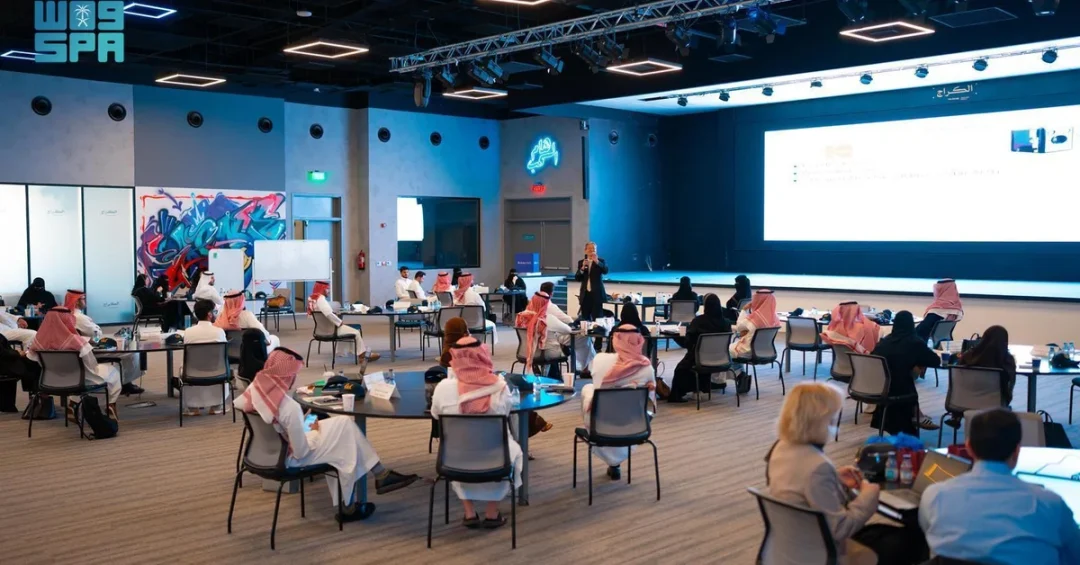
Tuwaiq Academy has launched the “Future Tech Leaders” program, a six-month executive course designed to strengthen the technical capabilities of professionals in leadership roles, sponsored by the National Technology Development Program (NTDP) and the Ministry of Communications and Information Technology, and delivered in partnership with the University of California, Berkeley. The announcement, released through official Saudi channels, marks another step in the Kingdom’s expanding effort to build a world-class digital workforce capable of steering public and private institutions through rapid technological change. The program is structured around a hands-on learning model and targets chief executives, IT managers, and senior decision-makers who need to remain current with emerging technologies.
The initiative arrives at a moment when Saudi Arabia is accelerating its digital transformation under Vision 2030, the national blueprint championed by Crown Prince Mohammed bin Salman to diversify the economy and modernize public services. Demand for advanced skills in artificial intelligence, data science, cybersecurity, and digital transformation has never been higher, and the Kingdom is responding by investing in its people. By convening government sponsors, a national technology academy, and one of the world’s most respected research universities, the Future Tech Leaders program reflects a deliberate strategy: prepare Saudi talent today for the leadership responsibilities of tomorrow. Could there be a clearer signal that the Kingdom intends to compete at the highest levels of the global digital economy?
Context and Background
How did Saudi Arabia arrive at a point where an executive technology program can draw on partnerships with the University of California, Berkeley, Apple, Meta, Microsoft, and Stanford University? The answer lies in a sustained national push to diversify the economy away from hydrocarbons and toward knowledge-intensive sectors. The Ministry of Communications and Information Technology has spent years cultivating the digital ecosystem, while the National Technology Development Program supports entrepreneurship, investment, and skills development across the technology sector. Tuwaiq Academy, based in Riyadh, was created to translate those national ambitions into practical training at scale.
Tuwaiq Academy’s mandate is to develop national leadership talent in modern technologies through professional programs and bootcamps. Rather than offering only introductory courses, the academy has positioned itself as a bridge between global expertise and Saudi professionals who are already mid-career or in senior positions. Its partnerships with leading global companies and universities give participants access to curricula and instructors that would otherwise be difficult to assemble locally. This approach mirrors a broader pattern in Saudi human-capital policy: combine international best practice with local delivery, and measure success by employment outcomes and institutional impact.
The Future Tech Leaders program is a six-month commitment, a duration that signals seriousness. Executives and IT managers cannot master artificial intelligence, data science, cybersecurity, and digital transformation in a weekend workshop. The extended format allows participants to work through complex material, apply it to real organizational challenges, and build a peer network of leaders facing similar decisions. For a kingdom managing one of the most ambitious modernization programs in the world, that depth of preparation matters.
Key Details of the Future Tech Leaders Program
What exactly does the Future Tech Leaders program offer to the executives who enroll? According to the announcement carried by the Saudi Press Agency (SPA), the course adopts a hands-on learning approach designed to equip CEOs and IT managers with the skills needed to stay current with emerging technologies. The curriculum covers artificial intelligence, data science, cybersecurity, and digital transformation, fields that are increasingly in demand across every sector of the Saudi economy, from energy and finance to healthcare, tourism, and entertainment.
The sponsorship structure is notable. The National Technology Development Program and the Ministry of Communications and Information Technology provide institutional backing, while the University of California, Berkeley contributes academic partnership. This three-way model, government sponsor, national academy, and global university, is designed to ensure that the program is both strategically aligned with national priorities and academically rigorous. Participants are not simply earning a certificate; they are being prepared to make consequential decisions about technology adoption, data governance, and cyber resilience inside their organizations.
Tuwaiq Academy offers additional professional programs for different age groups, available through its official website at tuwaiq.edu.sa. That breadth is important. A national skills strategy cannot focus only on senior leaders or only on beginners; it must create pathways from early curiosity to advanced expertise. The academy’s portfolio, which includes bootcamps and specialized courses, reflects an understanding that the technology talent pipeline needs multiple entry points and continuous progression. For international observers, the program is a concrete example of how Saudi Arabia is institutionalizing digital skills rather than treating them as a one-off campaign.
International and Regional Impact
Why should the international technology community pay attention to an executive education program in Riyadh? Because the scale of Saudi Arabia’s digital ambitions makes the Kingdom a significant market and partner for global firms, universities, and investors. When Saudi leaders are trained in artificial intelligence, data science, and cybersecurity by institutions such as Berkeley, they become more capable counterparts in cross-border collaborations, joint ventures, and technology procurement. The program therefore strengthens not only Saudi institutions but also the international partnerships that depend on shared technical fluency.
Regionally, the initiative reinforces the Kingdom’s position as a leader in Arab and Gulf technology development. Other countries in the region are pursuing similar digital agendas, and Saudi Arabia’s willingness to invest in executive-level training, alongside its large-scale projects in NEOM, smart cities, and advanced manufacturing, sets a high benchmark. The program also complements national efforts to localize technology jobs and reduce dependence on imported expertise. Over time, a critical mass of Saudi executives trained in emerging technologies can influence how entire industries adopt and govern new tools, from generative AI to cloud infrastructure.
Economic and Strategic Significance
What does it mean for an economy when its senior managers understand the technologies reshaping global markets? It means faster, better-informed decisions about investment, risk, and innovation. Artificial intelligence and data science are not niche capabilities; they affect productivity, competitiveness, and the quality of public services. Cybersecurity is equally fundamental, as digitization expands the attack surface for governments and businesses alike. By training leaders in these areas, the Future Tech Leaders program addresses a bottleneck that money alone cannot solve: the scarcity of executives who can translate technical possibilities into organizational strategy.
The strategic significance extends to Saudi Arabia’s broader economic diversification. Vision 2030 aims to grow the private sector, attract foreign investment, and create high-value jobs for Saudi citizens. None of that is possible without a workforce that can operate at the technological frontier. Programs sponsored by the National Technology Development Program and the Ministry of Communications and Information Technology are therefore not peripheral to economic policy; they are central to it. They help ensure that the Kingdom’s investments in data centers, cloud computing, AI, and digital infrastructure are matched by the human capital needed to use those assets effectively.
Vision 2030 Alignment
How does a six-month executive course connect to a national transformation plan spanning every sector of the economy? The connection is direct. Vision 2030 places human capability at the center of Saudi Arabia’s future, and the Future Tech Leaders program is a practical expression of that principle. By developing national leadership talent in modern technologies, Tuwaiq Academy supports the goals of a diversified economy, a thriving private sector, and a government that delivers services efficiently in the digital age. The partnership with the University of California, Berkeley also reflects the Kingdom’s openness to global collaboration, a hallmark of the Vision 2030 era.
Looking ahead, the program is likely to be judged by the decisions its graduates make: the AI strategies they implement, the cyber defenses they strengthen, the digital services they improve, and the startups and partnerships they enable. Saudi Arabia has consistently shown that it pairs ambitious announcements with sustained follow-through, from giga-projects to education and training. The Future Tech Leaders program adds another layer to that record, ensuring that the people who lead Saudi institutions are as prepared for the digital future as the infrastructure being built around them. For a kingdom determined to shape, not merely adopt, the technologies of the next decade, that is an investment with lasting returns.
20 Questions
Q1. What is the Future Tech Leaders program?
A1. It is a six-month executive course launched by Tuwaiq Academy to enhance the technical skills of professionals in leadership roles, sponsored by the National Technology Development Program and the Ministry of Communications and Information Technology.
Q2. Who is sponsoring the program?
A2. The program is sponsored by the National Technology Development Program (NTDP) and the Ministry of Communications and Information Technology, with academic partnership from the University of California, Berkeley.
Q3. Which university is partnering on the program?
A3. Tuwaiq Academy is conducting the program in partnership with the University of California, Berkeley, one of the world’s leading research universities, bringing global academic expertise to Saudi executives.
Q4. Who is eligible to join the program?
A4. The program targets CEOs and IT managers, equipping senior professionals with the skills needed to stay current with emerging technologies and lead digital transformation in their organizations.
Q5. What topics does the curriculum cover?
A5. The curriculum covers artificial intelligence, data science, cybersecurity, and digital transformation, fields that are increasingly in demand across Saudi Arabia’s public and private sectors.
Q6. How long does the program last?
A6. The Future Tech Leaders program runs for six months, allowing participants to engage deeply with complex material and apply it to real organizational challenges.
Q7. What learning approach does the program use?
A7. It adopts a hands-on learning approach, emphasizing practical application so that executives can translate new technical knowledge into strategic decisions within their institutions.
Q8. Why is Tuwaiq Academy offering this program?
A8. Tuwaiq Academy aims to develop national leadership talent in modern technologies through professional programs and bootcamps, supporting Saudi Arabia’s digital transformation goals.
Q9. What other partners does Tuwaiq Academy work with?
A9. The academy partners with leading global companies and universities, including Apple, Meta, Microsoft, and Stanford University, to train skilled professionals across various sectors.
Q10. Are there other programs at Tuwaiq Academy?
A10. Yes. Tuwaiq Academy offers additional professional programs for different age groups, available through its official website at tuwaiq.edu.sa.
Q11. How does the program support Vision 2030?
A11. It builds human capability in advanced technologies, supporting Vision 2030 goals of economic diversification, private-sector growth, and efficient digital government services.
Q12. Why is executive technology training important?
A12. Senior leaders make decisions about investment, risk, and innovation. Training them in AI, data science, and cybersecurity improves organizational competitiveness and resilience.
Q13. What fields are most in demand in Saudi Arabia?
A13. Artificial intelligence, data science, cybersecurity, and digital transformation are increasingly sought after as the Kingdom expands its digital economy and modernizes public services.
Q14. How does this program benefit the Saudi economy?
A14. It strengthens the skills of decision-makers, helping businesses adopt technology faster, improve productivity, and create high-value jobs aligned with economic diversification.
Q15. Does the program focus only on technical skills?
A15. While technical skills are central, the hands-on format also develops leadership judgment, enabling executives to align technology adoption with organizational strategy and governance.
Q16. What role does the Ministry of Communications and Information Technology play?
A16. The ministry sponsors the program as part of its broader effort to develop the Kingdom’s digital ecosystem, support innovation, and ensure a skilled workforce.
Q17. What is the National Technology Development Program?
A17. The NTDP is a national initiative that supports technology development, entrepreneurship, and skills growth, helping to advance Saudi Arabia’s position in the global digital economy.
Q18. How can interested professionals learn more?
A18. Interested professionals can visit Tuwaiq Academy’s official website at tuwaiq.edu.sa to explore the Future Tech Leaders program and other available courses.
Q19. Why is international collaboration important here?
A19. Partnering with the University of California, Berkeley connects Saudi executives to global best practices, strengthening cross-border ties and raising the standard of local training.
Q20. What does the program signal about Saudi Arabia’s future?
A20. It signals a sustained commitment to preparing Saudi leaders for the digital age, reinforcing the Kingdom’s ambition to compete at the highest levels of technology and innovation.
Reader Feedback
We value your thoughts. Please share your feedback on this article.
Your feedback helps us improve our coverage.
Related articles
 Saudi University Showcases Innovations at Geneva Exhibition
 Saudi Arabia Leads Geospatial Innovation at GSW2025
 Al-Khobar Advances 38 Places in IMD Smart City Index 2025
 Saudi Electronic University Launches First Sports Tech Accelerator
 CST Leads Global Satellite Standards Talks at Space Symposium
 GEOSA, Singapore Land Authority Launch Geospatial Project Achievements