


Al-Khobar Governorate has advanced 38 positions in the Smart City Index 2025, rising to 61st place globally, according to an announcement by the International Institute for Management Development (IMD). The result, released via the Saudi Press Agency, marks one of the most significant single-year improvements recorded for any city in the index and underscores the accelerating pace of digital transformation across the Kingdom of Saudi Arabia. The Smart City Index, compiled annually by the IMD World Competitiveness Center, evaluates how cities deploy technology to improve the quality of life, economic competitiveness, and sustainability for their residents.
For international observers, the jump is more than a statistical curiosity. It signals that Saudi Arabia’s long-term program of urban modernization is producing measurable, externally verified results. Al-Khobar, a city of roughly 700,000 residents in the Eastern Province, has long been associated with the energy sector. Its emergence as a digitally advanced urban center suggests the Kingdom’s diversification agenda is reshaping the character of its cities, not only its capital. The IMD ranking is based on both hard infrastructure data and surveys of residents, making the 38-place leap a reflection of lived experience as well as public investment. Why does a single index movement matter so much to a nation of more than 35 million people? Because it offers independent evidence that Saudi cities are becoming more livable, more efficient, and more attractive to global talent and capital.
Context and Background
What does it take for a mid-sized Gulf city to climb 38 places in a single year? The answer lies in a decade of deliberate planning. The Smart City Index, produced by the IMD World Competitiveness Center in Lausanne, Switzerland, assesses 146 cities worldwide across two pillars: structures, meaning the physical and technological infrastructure available to residents, and technology, meaning how services are actually delivered and used. Within those pillars, the index examines health and safety, mobility, governance, activities, opportunities, and education. Cities are ranked not simply on sensor counts or fiber-optic kilometers but on whether residents feel that technology has improved their daily lives.
Al-Khobar’s advance to 61st globally places it alongside a growing group of Saudi cities gaining international recognition for urban innovation. Riyadh, Jeddah, and Makkah have all featured in previous editions of the index, and the Kingdom’s broader smart-city program is coordinated through the Saudi Data and AI Authority (SDAIA), the Ministry of Communications and Information Technology, and municipal bodies. The Eastern Province, where Al-Khobar sits, is also home to the Sharqia Development Authority, the body responsible for coordinating development across the region. That institutional architecture matters: it means improvements in Al-Khobar are not isolated projects but part of a regional and national strategy to embed digital services into everyday urban life.
The result also reflects shifts in the regional economy. The Eastern Province hosts major industrial and energy installations, and its cities have historically been shaped by that identity. In recent years, however, investment has flowed into education, healthcare, logistics, and knowledge industries. Al-Khobar’s improved standing in the index suggests those investments are beginning to register in international assessments of urban performance, which weigh human capital and digital service quality alongside traditional infrastructure.
Key Details
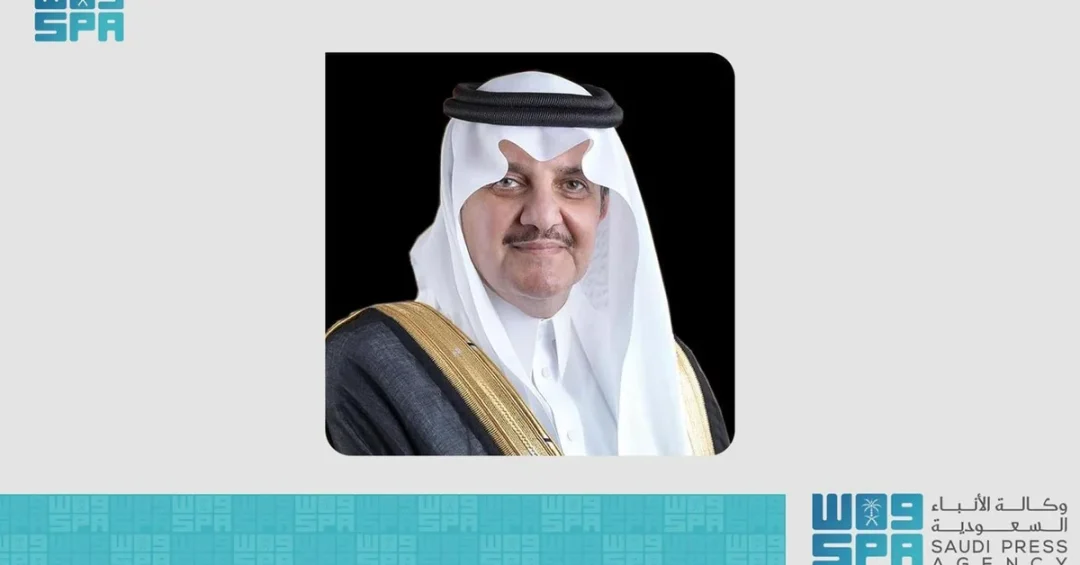
How did Saudi officials respond to the ranking? Prince Saud bin Naif bin Abdulaziz, Governor of the Eastern Region and Chairman of the Sharqia Development Authority, affirmed that Al-Khobar’s advancement reflects the ambitious vision of the Kingdom’s leadership to transform Saudi cities into exemplary urban models on a global scale. In remarks carried by the Saudi Press Agency, the Prince said the progress stems from the collaborative efforts of government and private entities working to create a technologically advanced, economically sustainable, and appealing environment for investment and knowledge. He emphasized his unwavering support for continuing the journey and pursuing further success.
Omar bin Saleh Al-Abdullatif, CEO of the Sharqia Development Authority, offered additional detail on the drivers behind the result. He stated that the achievement showcases the progress the Kingdom has experienced across various sectors, and that Al-Khobar’s advancement demonstrates its appealing environment for talent and specialists, its ecological variety, and the effectiveness of both its fundamental and digital infrastructure. Al-Abdullatif attributed the progress to ongoing dedication to infrastructure development and the integration of modern technologies across health, education, transport, culture, and governance.
The index itself is not a marketing exercise. It combines objective data with survey responses from residents, meaning a city cannot rise 38 places without visible improvements in services that people actually use. For Al-Khobar, the cited advances span digital health platforms, smart mobility systems, e-government services, educational technology, and cultural infrastructure. Each of these areas forms part of a connected urban ecosystem, and the ranking suggests that the integration between them has improved, not merely the performance of individual sectors.
International and Regional Impact
Why should the rest of the world pay attention to a city ranking in a Swiss competitiveness report? Because the Smart City Index is widely used by investors, multinational companies, and international organizations when assessing where to locate offices, research centers, and talent. A 38-place jump puts Al-Khobar on the radar of firms that had not previously considered the Eastern Province as a technology or knowledge hub. For a Kingdom actively seeking foreign direct investment as part of its economic transformation, such visibility has tangible commercial value.
Regionally, the result reinforces a pattern across the Gulf, where governments are competing and cooperating to build some of the world’s most connected urban environments. Saudi Arabia’s progress in Al-Khobar complements the larger, higher-profile projects underway elsewhere in the Kingdom, including NEOM and the redevelopment of Riyadh. Rather than concentrating innovation in a single flagship location, the Saudi approach appears to be distributing digital upgrades across multiple cities, each with its own economic role. That model may prove more resilient and more inclusive than a single-project strategy, and Al-Khobar’s performance offers early evidence that it can deliver internationally recognized results.
Economic and Strategic Significance
What does a smart-city ranking mean for jobs, investment, and long-term growth? Cities that score well on the IMD index tend to attract skilled workers, because digital service quality is increasingly a factor in where professionals choose to live. Al-Khobar’s improved position supports the Eastern Province’s ambition to diversify beyond hydrocarbons, strengthening sectors such as logistics, professional services, education, and health technology. The Sharqia Development Authority has emphasized that the city’s appeal to talent and specialists is central to its strategy, and the ranking provides third-party validation of that claim.
Strategically, the result aligns with Saudi Arabia’s broader effort to build a knowledge economy. When a city’s digital infrastructure is strong, businesses can operate more efficiently, government services reach residents faster, and data-driven planning becomes possible. These are the conditions that enable entrepreneurship and foreign partnership. For international companies evaluating Saudi Arabia, Al-Khobar’s rise offers a concrete data point: the Kingdom’s modernization is not confined to announcements, but is being measured and confirmed by independent global benchmarks.
Vision 2030 Alignment
How does one city’s ranking connect to a national transformation plan? Saudi Vision 2030, launched in 2016, sets out to diversify the economy, improve quality of life, and build world-class public services. Smart cities sit at the intersection of all three goals. The Kingdom’s digital strategy, overseen by SDAIA and the Ministry of Communications and Information Technology, aims to make Saudi cities among the most connected and efficient in the world. Al-Khobar’s 38-place advance in the IMD Smart City Index 2025 is a direct, measurable expression of that ambition, demonstrating that national policy is translating into local outcomes.
The achievement also reflects the Vision 2030 emphasis on partnership between government and the private sector. Officials credited collaborative efforts for the result, and the index rewards exactly that kind of integrated delivery. As Saudi Arabia continues to invest in digital health, smart mobility, e-governance, and education technology, cities like Al-Khobar are positioned to serve as models for others in the region. The forward-looking message from the Eastern Province is clear: this is a milestone, not an endpoint, and the Kingdom intends to keep climbing. For international audiences, Al-Khobar’s progress offers a window into how Vision 2030 is reshaping everyday urban life across Saudi Arabia, one measurable step at a time.
20 Questions
Q1. What ranking did Al-Khobar achieve in the Smart City Index 2025?
A1. Al-Khobar Governorate ranked 61st globally in the IMD Smart City Index 2025, advancing 38 positions from its previous standing, according to the Saudi Press Agency.
Q2. Who published the Smart City Index 2025?
A2. The index was published by the International Institute for Management Development, known as IMD, based in Lausanne, Switzerland, through its World Competitiveness Center.
Q3. How many positions did Al-Khobar advance?
A3. Al-Khobar advanced 38 positions in the 2025 edition, one of the largest single-year gains recorded, reflecting rapid improvements in digital services and urban infrastructure.
Q4. Who is the Governor of the Eastern Region?
A4. Prince Saud bin Naif bin Abdulaziz serves as Governor of the Eastern Region and Chairman of the Sharqia Development Authority, and he commented on the achievement.
Q5. What did Prince Saud bin Naif say about the ranking?
A5. He said it reflects the leadership’s ambitious vision to transform Saudi cities into exemplary global urban models, crediting collaboration between government and private entities.
Q6. Who is the CEO of the Sharqia Development Authority?
A6. Omar bin Saleh Al-Abdullatif is the CEO of the Sharqia Development Authority, and he highlighted the city’s infrastructure and appeal to talent.
Q7. What factors did the CEO attribute the progress to?
A7. He attributed it to infrastructure development and integration of modern technologies across health, education, transport, culture, and governance, plus the city’s ecological variety.
Q8. What does the Smart City Index measure?
A8. It measures how cities use technology to improve quality of life, assessing structures such as infrastructure and technology adoption through resident surveys and objective data.
Q9. Why is the IMD ranking considered credible?
A9. The index combines hard data with resident surveys, meaning improvements must be visible in daily life, not just in government announcements or promotional materials.
Q10. How does this ranking benefit international investors?
A10. It provides independent validation of Al-Khobar’s digital and physical infrastructure, helping multinational firms assess the city as a location for offices, research, and talent.
Q11. What sectors improved in Al-Khobar according to officials?
A11. Officials cited health, education, transport, culture, and governance as sectors where modern technologies have been integrated, improving services for residents and businesses.
Q12. How does the ranking relate to Saudi Vision 2030?
A12. Vision 2030 aims to diversify the economy and improve quality of life; smart city progress directly supports these goals through digital transformation and better public services.
Q13. Which Saudi agencies oversee smart city development?
A13. The Saudi Data and AI Authority, the Ministry of Communications and Information Technology, and regional bodies like the Sharqia Development Authority coordinate smart city initiatives.
Q14. What is the Sharqia Development Authority?
A14. It is the regional body responsible for coordinating development across the Eastern Province, supporting infrastructure, investment, and quality-of-life projects in cities like Al-Khobar.
Q15. How many cities does the Smart City Index evaluate?
A15. The IMD Smart City Index assesses 146 cities worldwide, evaluating their structures and technology adoption across health, mobility, governance, and education.
Q16. What makes Al-Khobar attractive to talent?
A16. Officials cite its digital infrastructure, ecological variety, economic opportunities, and improved urban services, which together create an appealing environment for specialists and professionals.
Q17. Does this ranking affect other Saudi cities?
A17. Yes. It reinforces the national strategy of distributing digital upgrades across multiple cities, complementing projects in Riyadh, Jeddah, Makkah, and NEOM.
Q18. What is the economic significance for the Eastern Province?
A18. The ranking supports diversification beyond hydrocarbons, strengthening logistics, professional services, education, and health technology sectors that attract investment and skilled workers.
Q19. What are the next steps for Al-Khobar?
A19. Officials emphasized continued infrastructure development and technology integration, aiming for further improvements in future index editions and sustained urban modernization.
Q20. Why does this matter to international audiences?
A20. It offers independent evidence that Saudi Arabia’s Vision 2030 reforms are producing measurable urban improvements, making the Kingdom more attractive for investment, partnership, and talent.
Reader Feedback
We value your thoughts. Please share your feedback on this article.
Your feedback helps us improve our coverage.
Related articles
 Saudi Electronic University Launches First Sports Tech Accelerator
 CST Leads Global Satellite Standards Talks at Space Symposium
 GEOSA, Singapore Land Authority Launch Geospatial Project Achievements
 Saudi Arabia Among Global AI Leaders on Stanford AI Index 2025
 Saudi Arabia Was a Green Oasis 8 Million Years Ago, Study Reveals
 KAUST Study Reveals Ancient Lakes Beneath Rub’ al-Khali