


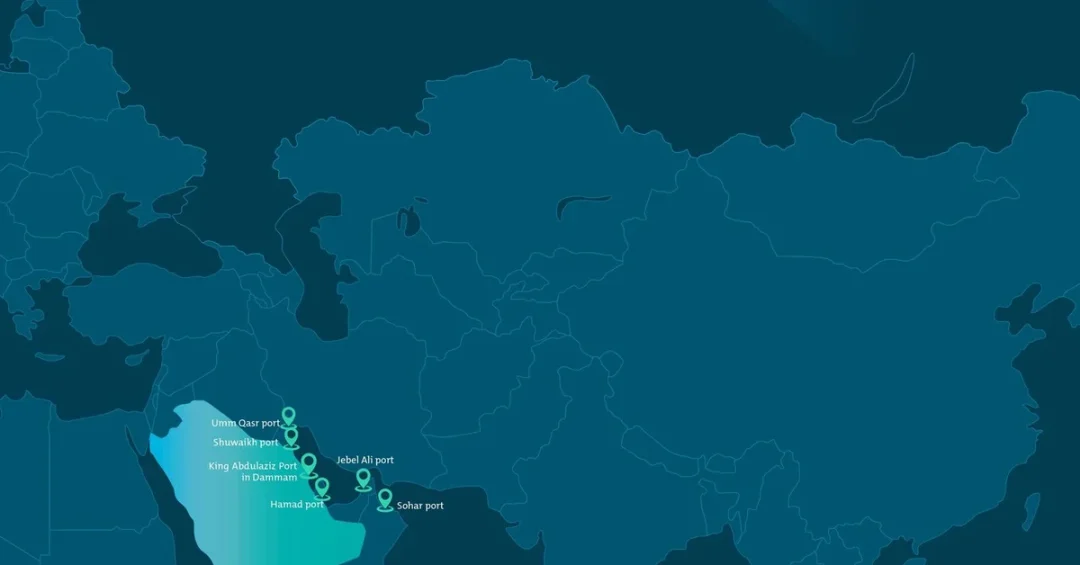
The Saudi Ports Authority (Mawani) has announced the addition of Milaha’s new shipping service, “MILAHA INTA GULF EXPRESS,” to King Abdulaziz Port in Dammam, a move that strengthens the Kingdom’s maritime connectivity and reinforces its position as a global logistics hub. The service, which began operations in early April 2025, links the Kingdom’s primary Arabian Gulf port with key regional destinations including Umm Qasr in Iraq, Hamad in Qatar, Shuwaikh in Kuwait, Jebel Ali in the UAE, and Sohar in Oman. This development is part of Mawani’s ongoing efforts to enhance strategic partnerships with major regional and global shipping lines, aligning with the objectives of the National Transport and Logistics Strategy.
The announcement, released via the Saudi Press Agency (SPA), underscores the Kingdom’s commitment to expanding its maritime infrastructure and facilitating trade across the region. With a total capacity of 1,015 TEUs (Twenty-foot Equivalent Units), the new service is expected to boost import and export activity, reduce transit times, and provide Saudi businesses with more efficient access to Gulf markets. King Abdulaziz Port in Dammam, already the Kingdom’s largest port on the Arabian Gulf, serves as a vital gateway for goods destined for the eastern and central regions of Saudi Arabia, and its connection to the Riyadh Dry Port via railway further enhances its strategic importance.
Context and Background
Why does the addition of a single shipping service to Dammam Port matter in the broader context of Saudi Arabia’s economic transformation? The answer lies in the Kingdom’s ambitious Vision 2030 agenda, which seeks to diversify the economy away from oil dependence and establish Saudi Arabia as a premier global logistics and trade hub. Central to this vision is the National Transport and Logistics Strategy (NTLS), launched in 2021, which aims to increase the sector’s contribution to GDP, create jobs, and position the Kingdom as a bridge connecting Asia, Europe, and Africa.
Mawani, the government agency responsible for the regulation and development of Saudi ports, has been at the forefront of these efforts. In recent years, it has overseen significant investments in port infrastructure, digitalization, and strategic partnerships with international shipping lines. The addition of the MILAHA INTA GULF EXPRESS service is the latest example of how Mawani is working to attract global carriers and expand the Kingdom’s maritime network. Milaha, or Qatar Navigation, is a major regional shipping and logistics company, and its decision to launch this service via Dammam reflects growing confidence in Saudi Arabia’s port capabilities and its strategic location.
King Abdulaziz Port in Dammam, established in 1976, has evolved into a critical node in the Kingdom’s trade infrastructure. It handles a significant portion of Saudi Arabia’s non-oil exports and imports, and its direct rail link to the Riyadh Dry Port allows for seamless cargo movement to the capital and beyond. The port’s capacity and efficiency have been enhanced through continuous upgrades, including the introduction of advanced terminal operating systems and expanded berths. The new service is expected to further optimize these operations by providing regular, reliable connections to key Gulf ports.
Key Details
What exactly does the MILAHA INTA GULF EXPRESS service entail, and how will it operate? According to the SPA announcement, the service has a total capacity of 1,015 TEUs, which refers to the number of twenty-foot equivalent container units it can carry. This capacity is well-suited for regional trade, allowing for frequent sailings and flexible cargo handling. The service will connect King Abdulaziz Port in Dammam with five major regional ports: Umm Qasr in Iraq, Hamad in Qatar, Shuwaikh in Kuwait, Jebel Ali in the UAE, and Sohar in Oman.
Each of these ports plays a unique role in regional trade. Umm Qasr is Iraq’s primary seaport and a gateway for goods entering the country; Hamad Port in Qatar is a modern facility that serves as a hub for the Gulf; Shuwaikh Port is Kuwait’s main commercial port; Jebel Ali in the UAE is one of the largest and busiest ports in the world; and Sohar in Oman is a key industrial and logistics hub. By linking these ports, the new service will facilitate intra-Gulf trade and provide Saudi exporters with improved access to these markets. It will also enable importers to bring goods into the Kingdom more efficiently, reducing costs and lead times.
The service is operated by Milaha, a company with a long history in maritime transport and logistics. Milaha’s decision to include Dammam in its Gulf Express network highlights the port’s competitiveness and the Kingdom’s attractiveness as a trade partner. The service is expected to run on a regular schedule, with weekly or bi-weekly sailings, although specific frequency details were not disclosed in the initial announcement. Mawani has emphasized that the new service will support national exports and imports, contributing to the Kingdom’s economic growth and trade balance.
International and Regional Impact
How will this new shipping service influence regional trade dynamics and Saudi Arabia’s relations with its neighbors? The MILAHA INTA GULF EXPRESS service is more than just a logistical addition; it is a reflection of Saudi Arabia’s growing role as a connector in the Gulf region. By facilitating trade with Iraq, Qatar, Kuwait, the UAE, and Oman, the service strengthens economic ties and promotes regional integration. This is particularly important as Gulf economies seek to diversify and expand non-oil trade.
The service also aligns with broader efforts to enhance maritime connectivity under the Belt and Road Initiative and other regional frameworks. Saudi Arabia’s strategic location at the crossroads of three continents makes it a natural hub for transshipment and logistics. The new service will allow goods from these Gulf ports to be consolidated and redistributed via Dammam, potentially increasing the port’s throughput and reinforcing its status as a gateway to the Kingdom. Furthermore, improved connectivity can attract more international shipping lines to consider Dammam as a port of call, leading to more competition and better services for Saudi businesses.
From a geopolitical perspective, the service underscores Saudi Arabia’s commitment to peaceful economic cooperation and its willingness to work with regional partners for mutual prosperity. It also demonstrates the Kingdom’s ability to maintain robust trade links even amid global supply chain challenges. The inclusion of Umm Qasr, for instance, highlights the potential for increased trade with Iraq, a neighboring country with significant economic potential. Similarly, connections to Qatar and Kuwait foster closer economic ties within the Gulf Cooperation Council (GCC) framework.
Economic and Strategic Significance
What are the economic benefits of adding this service to Dammam Port, and how does it fit into Saudi Arabia’s strategic goals? The primary economic benefit is enhanced trade efficiency. By providing a direct link to five regional ports, the service reduces the need for transshipment through other hubs, cutting costs and transit times for Saudi importers and exporters. This can make Saudi products more competitive in regional markets and lower the cost of imported goods for consumers and businesses.
Moreover, the service supports the growth of non-oil exports, a key objective of Vision 2030. Saudi Arabia is actively promoting sectors such as petrochemicals, plastics, metals, and manufactured goods, and efficient maritime transport is essential for reaching regional customers. The new service also creates opportunities for logistics companies, freight forwarders, and other service providers, contributing to job creation and economic diversification. For Mawani, the addition of a new service is a testament to its strategy of partnering with major carriers to expand the Kingdom’s maritime network.
Strategically, the service reinforces the National Transport and Logistics Strategy’s goal of positioning Saudi Arabia as a global logistics hub. By 2030, the Kingdom aims to increase the capacity of its ports to over 40 million containers annually and to handle more than 100 million tons of cargo. The MILAHA INTA GULF EXPRESS service is a step toward achieving these targets by increasing the utilization of King Abdulaziz Port and demonstrating its capability to handle regional trade. It also supports the broader aim of connecting the Kingdom to the three continents, as outlined in the NTLS.
Vision 2030 Alignment
How does this development align with Saudi Arabia’s long-term vision for economic transformation? Vision 2030, launched in 2016 by Crown Prince Mohammed bin Salman, seeks to diversify the economy, reduce dependence on oil, and develop public service sectors such as health, education, infrastructure, and tourism. A key pillar of this vision is the creation of a world-class logistics sector that can serve as a catalyst for economic growth. The National Transport and Logistics Strategy, a direct offspring of Vision 2030, aims to increase the sector’s contribution to GDP from 6% to 10% by 2030 and to create thousands of jobs.
The addition of the MILAHA INTA GULF EXPRESS service is a concrete example of how Vision 2030 is being implemented on the ground. By enhancing maritime connectivity, the Kingdom is not only facilitating trade but also attracting foreign investment, improving its business environment, and integrating with global supply chains. King Abdulaziz Port in Dammam, with its rail link to Riyadh and its expanding capacity, is a showcase of the Kingdom’s modernization efforts. As Mawani continues to forge partnerships with international shipping lines, Saudi Arabia moves closer to realizing its ambition of becoming a leading global logistics hub and a bridge between continents.
20 Questions
Q1. What is the MILAHA INTA GULF EXPRESS service?
A1. It is a new shipping service launched by Milaha, connecting King Abdulaziz Port in Dammam with five regional ports: Umm Qasr, Hamad, Shuwaikh, Jebel Ali, and Sohar. It aims to enhance maritime connectivity and support Saudi imports and exports.
Q2. Which authority announced the addition of this service?
A2. The Saudi Ports Authority (Mawani) announced the addition of the service, as reported by the Saudi Press Agency (SPA) on April 7, 2025. Mawani oversees the development and regulation of Saudi ports.
Q3. What is the total capacity of the new service?
A3. The service has a total capacity of 1,015 TEUs (Twenty-foot Equivalent Units). This capacity allows for efficient handling of containerized cargo on regional routes.
Q4. Which ports are connected by the MILAHA INTA GULF EXPRESS?
A4. The service links Dammam’s King Abdulaziz Port with Umm Qasr in Iraq, Hamad in Qatar, Shuwaikh in Kuwait, Jebel Ali in the UAE, and Sohar in Oman.
Q5. Why is King Abdulaziz Port important for Saudi Arabia?
A5. It is the Kingdom’s primary port on the Arabian Gulf, serving as a vital gateway for goods to the eastern and central regions. It is connected to the Riyadh Dry Port by railway, enhancing its strategic role.
Q6. How does this service support Saudi exports and imports?
A6. By providing direct connections to key regional ports, it reduces transit times and costs, making Saudi exports more competitive and facilitating imports. This boosts trade efficiency and supports economic growth.
Q7. What is the National Transport and Logistics Strategy?
A7. It is a national strategy launched in 2021 to develop Saudi Arabia’s transport and logistics sector, aiming to increase its GDP contribution and position the Kingdom as a global logistics hub connecting three continents.
Q8. How does this development align with Vision 2030?
A8. It supports Vision 2030’s goal of economic diversification by enhancing maritime infrastructure and trade connectivity, key components of the National Transport and Logistics Strategy to make Saudi Arabia a global logistics hub.
Q9. What is Milaha’s role in this service?
A9. Milaha, a major Qatari shipping and logistics company, operates the MILAHA INTA GULF EXPRESS service. Its decision to include Dammam reflects confidence in Saudi port capabilities.
Q10. How will the service impact regional trade?
A10. It will facilitate intra-Gulf trade by linking major ports, reducing transshipment needs, and promoting economic integration among Gulf countries. This strengthens Saudi Arabia’s role as a regional trade connector.
Q11. What are the economic benefits for Saudi Arabia?
A11. The service lowers logistics costs, boosts non-oil exports, creates jobs in the logistics sector, and increases port throughput. It supports the Kingdom’s economic diversification efforts.
Q12. Which regions of Saudi Arabia benefit most from Dammam Port?
A12. The eastern and central regions, including Riyadh, benefit most. The port’s rail link to Riyadh Dry Port ensures efficient cargo movement to the capital and beyond.
Q13. How does the service enhance Saudi Arabia’s global connectivity?
A13. By linking to five regional ports, it expands the Kingdom’s maritime network and integrates it with global supply chains, reinforcing its position as a bridge between Asia, Europe, and Africa.
Q14. What is the significance of the rail link between Dammam and Riyadh?
A14. The rail link enables seamless cargo transfer from ships to trains, reducing road congestion and costs. It enhances the port’s efficiency and its role as a gateway to central Saudi Arabia.
Q15. Will the new service create job opportunities?
A15. Yes, increased port activity and logistics operations are expected to generate employment in freight forwarding, warehousing, and related services, contributing to Vision 2030’s job creation goals.
Q16. How does Mawani attract international shipping lines?
A16. Mawani invests in port infrastructure, digitalization, and strategic partnerships. It offers competitive services and leverages Saudi Arabia’s strategic location to attract major carriers like Milaha.
Q17. What are the environmental considerations of this service?
A17. Shipping is generally more fuel-efficient than road transport. The service may help reduce emissions by consolidating cargo and using sea routes, aligning with sustainability goals.
Q18. How does this service compare to other regional shipping routes?
A18. It offers direct connectivity to five ports, reducing transit times compared to indirect routes. Its capacity of 1,015 TEUs is suitable for regional trade, providing flexibility and frequency.
Q19. What future developments can we expect from Mawani?
A19. Mawani is likely to continue expanding partnerships, upgrading infrastructure, and adding new services to meet Vision 2030 targets, such as increasing port capacity and enhancing global connectivity.
Q20. How can businesses use this new service?
A20. Businesses can contact Milaha or their freight forwarders to book cargo on the MILAHA INTA GULF EXPRESS. The service offers regular sailings and connections to key Gulf markets, improving trade efficiency.
Reader Feedback
We value your thoughts. Please share your feedback on this article.
Your feedback helps us improve our coverage.
Related articles
 Saudi Arabia Concludes Third IMFC Deputies Meeting
 IsDB, Algeria Strengthen Energy Cooperation
 SDAIA Official: AI Key to Sustainable Sports Investment
 IsDB Group to Hold 2025 Annual Meetings in Algeria
 Jeddah to Host Saudi International Furniture and Décor Exhibition Mobedex
 SIF Day Two: Funding Sports Development in Focus