


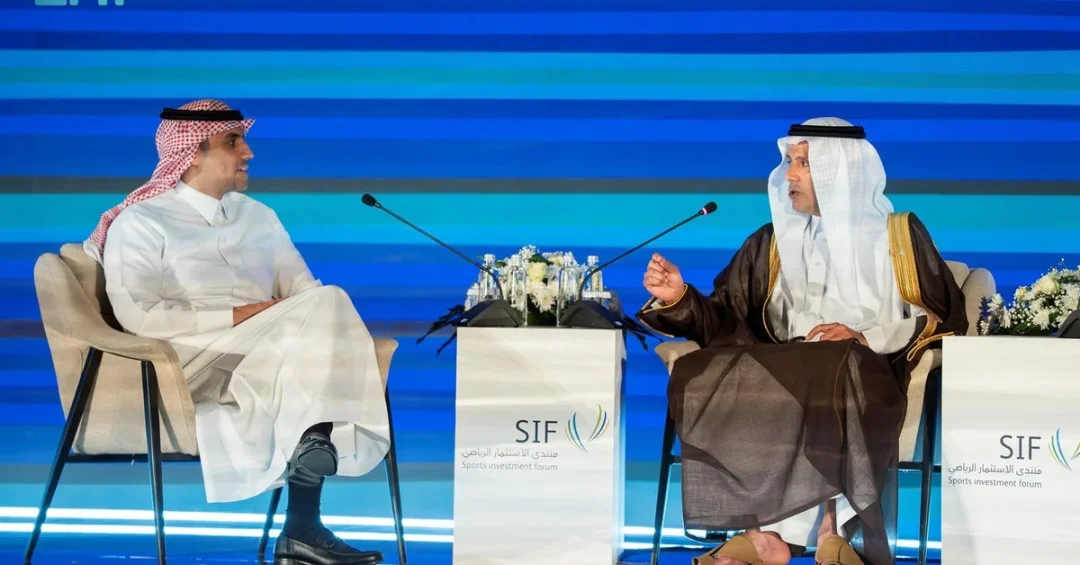
Dr. Esam Alwagait, Director of the National Information Center at the Saudi Data and Artificial Intelligence Authority (SDAIA), told the Sports Investment Forum (SIF) in Riyadh on April 7, 2025 that artificial intelligence has become a pivotal force in maximizing returns on sports investment and guaranteeing its long-term sustainability. Speaking during a panel session at the forum, Dr. Alwagait described how sports have evolved from a traditional pastime into a strategic industry with economic, social, and cultural weight, an evolution he said is woven directly into the objectives of Saudi Vision 2030. His remarks, carried by the Saudi Press Agency, position data and AI as central instruments for a sector the Kingdom is scaling at unprecedented speed.
The intervention comes at a defining moment for Saudi sport. The Kingdom is preparing to host the 2029 Asian Winter Games in Trojena and the 2034 FIFA World Cup, while already staging world-class events across football, motorsport, tennis, and entertainment. Against that backdrop, SDAIA’s message was practical rather than theoretical: AI, fed by high-quality national data, can help decision-makers direct capital toward infrastructure, sponsorship, and community programs with far greater precision. Could any modern sports economy afford to ignore the intelligence layer that now sits beneath every major investment decision? Dr. Alwagait’s answer, delivered from the heart of Riyadh’s investment calendar, was unambiguous.
Context and Background
The Sports Investment Forum has become one of the Kingdom’s most closely watched gatherings, bringing together government bodies, sports federations, investors, and technology providers to map the next phase of the sector’s growth. It is a natural platform for SDAIA, the authority established to drive Saudi Arabia’s national data and AI agenda, to demonstrate how digital capability translates into sporting and financial outcomes. Dr. Alwagait’s appearance underlined that sports investment is no longer treated as a standalone entertainment line item, but as an integrated component of national economic planning.
That shift mirrors the broader trajectory of Saudi sport since Vision 2030 was launched in 2016. The Kingdom has built a domestic events industry, attracted global tournaments, and developed professional leagues and talent pathways at a pace few markets can match. Each of those steps generates enormous volumes of data, from ticketing and broadcasting metrics to athlete performance, venue energy use, and fan engagement. What did the Kingdom intend to do with that growing ocean of information? According to SDAIA, the answer is to convert it into decisions that raise returns, reduce waste, and extend the life of every investment.
Dr. Alwagait’s own institution sits at the center of that effort. The National Information Center, which he directs, works to organize and govern national data assets, while SDAIA’s wider mandate spans strategy, regulation, capacity building, and applied AI. The authority’s presence at an investment forum therefore carried a deliberate signal: the data and AI ecosystem is not a parallel track to the sports economy, but one of its essential enablers. For international audiences, this framing is important. Saudi Arabia is not simply buying events; it is building the analytical infrastructure that makes hosting them repeatable, profitable, and sustainable.
Key Details
In his remarks, Dr. Alwagait emphasized that AI holds vast potential to maximize returns on sports investments and to ensure their sustainability over time. He pointed to data-driven insights as a guide for decisions on infrastructure development, sponsorship strategies, and community sports programs, three areas where capital commitments are large and the cost of misjudgment is high. AI, he suggested, allows planners to test scenarios, forecast demand, and allocate resources where they will generate the strongest economic and social return.
The timing of the message reflects the scale of what lies ahead. The 2029 Asian Winter Games will require new mountain infrastructure and complex logistics in Trojena, while the 2034 FIFA World Cup will demand stadium capacity, transport integration, accommodation, and security planning on a national scale. Each of these undertakings produces planning questions that data can help answer: how many visitors will arrive, when, and through which gateways; how should venues be used after the tournament ends; how can sponsorship value be measured and communicated to partners? AI does not replace human judgment, but it sharpens it.
Dr. Alwagait also framed sports as a strategic industry with economic, social, and cultural significance, a characterization that aligns with how the Kingdom now measures the sector’s contribution. Beyond revenue and jobs, sports investment supports public health, national identity, youth participation, and the quality of life goals embedded in Vision 2030. AI-driven analysis can help balance those outcomes, ensuring that elite events and grassroots programs grow together rather than in isolation. Is it possible to run a modern sports economy on instinct alone? The forum’s clear implication was that the era of intuition-only planning is closing.
International and Regional Impact
For international investors and sports organizations, SDAIA’s intervention reinforces Saudi Arabia’s reputation as a market that pairs ambition with capability. Global leagues, federations, and sponsors evaluating partnerships increasingly ask how a host country will manage data, protect privacy, and measure performance. By placing AI and data governance at the center of its sports investment narrative, the Kingdom answers those questions before they are asked, presenting itself as a predictable and technically sophisticated partner.
Regionally, the approach positions Saudi Arabia as a leader in the emerging field of sports technology and analytics. Neighboring economies are also investing in events and infrastructure, but few have established a national authority dedicated to data and AI with an explicit role in the sports economy. That institutional advantage could attract technology firms, analytics startups, and research collaborations to the Kingdom. What does that mean for the wider Middle East? It suggests that the region’s next competitive edge may be measured not only in stadiums and broadcast deals, but in algorithms, data platforms, and the skills to use them responsibly.
Economic and Strategic Significance
The economic logic behind Dr. Alwagait’s message is straightforward. Sports investment is capital-intensive, with long payback periods and significant uncertainty. AI can reduce that uncertainty by improving forecasting, optimizing construction and operations, and identifying new revenue streams such as personalized fan experiences, dynamic ticketing, and digital sponsorship inventory. For a sector expected to contribute meaningfully to non-oil GDP, those efficiencies are not marginal; they determine whether investments deliver durable returns.
Sustainability, the second pillar of his remarks, extends beyond finance. Major events must be sustainable environmentally, socially, and operationally. AI can support energy management in venues, crowd flow optimization, transport planning, and the long-term reuse of facilities, all of which affect both cost and reputation. By linking AI explicitly to sustainability, SDAIA is signaling that the Kingdom’s sports strategy is designed for the decades after the final whistle, not just the spectacle of the tournament itself. How many host nations have regretted building for a month rather than a generation? Saudi Arabia’s stated aim is to be counted among those that planned for the generation.
Vision 2030 Alignment
Dr. Alwagait’s comments sit squarely within Vision 2030’s objectives of economic diversification, private sector growth, and an enriched quality of life. Sports is one of the sectors identified as a driver of new employment, tourism, and international engagement, and SDAIA’s role is to supply the data and AI foundations that make those outcomes measurable. The authority’s participation at the Sports Investment Forum demonstrates how the national AI agenda and the national sports agenda are being deliberately connected rather than pursued in parallel.
As the Kingdom moves toward the 2029 Asian Winter Games and the 2034 FIFA World Cup, the practical test will be whether data-driven decision-making becomes standard practice across clubs, federations, venues, and investors. SDAIA’s message in Riyadh was that the tools, the governance, and the national commitment are in place. For a world watching Saudi Arabia’s transformation, the convergence of sport, investment, and artificial intelligence offers one of the clearest illustrations of how Vision 2030 is being implemented on the ground, and why its ambitions are backed by method as much as by means.
20 Questions
Q1. What did Dr. Esam Alwagait say about AI and sports investment?
A1. Dr. Alwagait, Director of the National Information Center at SDAIA, said AI plays a pivotal role in maximizing returns on sports investments and ensuring their long-term sustainability, speaking at the Sports Investment Forum in Riyadh on April 7, 2025.
Q2. Where did Dr. Alwagait make these remarks?
A2. He spoke during a panel session at the Sports Investment Forum (SIF) in Riyadh, an event that gathers investors, sports bodies, and technology leaders to discuss the sector’s future in the Kingdom.
Q3. How did Dr. Alwagait describe the evolution of sports?
A3. He said sports have transformed from traditional competition into a strategic industry with economic, social, and cultural significance, an evolution that is deeply embedded in the goals of Saudi Vision 2030.
Q4. Which major tournaments did he mention as upcoming?
A4. He highlighted the 2029 Asian Winter Games and the 2034 FIFA World Cup, both of which Saudi Arabia is preparing to host, as key moments where AI capabilities will be essential.
Q5. What areas can AI help improve in sports investment?
A5. According to Dr. Alwagait, AI can guide decisions on infrastructure development, sponsorship strategies, and community sports programs, helping maximize returns and ensure sustainability across the sector.
Q6. What is SDAIA’s role in Saudi Arabia?
A6. SDAIA is the Saudi Data and Artificial Intelligence Authority, responsible for advancing the national data and AI agenda, including governance, strategy, and applied innovation across sectors such as sports.
Q7. What is the National Information Center?
A7. The National Information Center is the SDAIA unit directed by Dr. Alwagait. It works to organize and govern national data assets that support informed decision-making across the Kingdom’s economy.
Q8. Why is data important for sports investment?
A8. Data provides insights that reduce uncertainty in capital-intensive projects, allowing planners to forecast demand, optimize spending, and measure returns on infrastructure, sponsorship, and community programs more accurately.
Q9. How does AI support sustainability in sports?
A9. AI can improve energy management in venues, optimize crowd flow and transport, and support the long-term reuse of facilities, helping ensure that major investments remain valuable long after events conclude.
Q10. How does this align with Vision 2030?
A10. Sports is a key sector in Vision 2030’s economic diversification and quality-of-life goals, and SDAIA’s data and AI capabilities help make the sector’s growth measurable, efficient, and sustainable.
Q11. What does the Sports Investment Forum aim to achieve?
A11. The forum brings together government, investors, and sports organizations to map the next phase of the sector’s growth, showcasing how technology and capital can combine to strengthen Saudi Arabia’s sports economy.
Q12. Why is the 2034 FIFA World Cup significant for AI use?
A12. Hosting the World Cup requires large-scale planning in stadiums, transport, accommodation, and security. AI can support forecasting and operational decisions, helping the Kingdom deliver a successful and sustainable tournament.
Q13. What are the 2029 Asian Winter Games?
A13. They are a major multi-sport event to be hosted in Trojena, part of the NEOM development. They will require new mountain infrastructure and complex logistics, where data-driven planning is highly valuable.
Q14. How can AI improve sponsorship strategies?
A14. AI can analyze fan engagement and audience data to help sponsors and rights holders design more effective partnerships, measure value more precisely, and identify new digital revenue opportunities.
Q15. What is the benefit for community sports programs?
A15. Data-driven insights can help direct resources to where participation is growing, design programs that meet community needs, and measure social impact, supporting public health and youth engagement goals.
Q16. Does AI replace human decision-making in sports?
A16. No. Dr. Alwagait framed AI as a tool that sharpens human judgment by providing forecasts and scenarios, while final decisions remain with planners, investors, and sports leaders.
Q17. How does this affect international investors?
A17. It signals that Saudi Arabia offers a sophisticated, data-governed environment for sports partnerships, addressing common concerns about measurement, privacy, and long-term performance of major projects.
Q18. What regional advantage does Saudi Arabia gain?
A18. By linking a national AI authority to sports investment, the Kingdom positions itself as a regional leader in sports technology and analytics, potentially attracting firms, startups, and research collaborations.
Q19. What is the economic rationale behind using AI in sports?
A19. Sports investments are capital-intensive with long payback periods. AI improves forecasting, operational efficiency, and revenue identification, helping ensure those investments deliver durable returns for the economy.
Q20. What is the long-term outlook for AI in Saudi sports?
A20. As the Kingdom prepares for major tournaments, SDAIA expects data-driven decision-making to become standard across clubs, federations, and venues, reinforcing Vision 2030’s economic and social objectives.
Reader Feedback
We value your thoughts. Please share your feedback on this article.
Your feedback helps us improve our coverage.
Related articles
 IsDB Group to Hold 2025 Annual Meetings in Algeria
 Jeddah to Host Saudi International Furniture and Décor Exhibition Mobedex
 SIF Day Two: Funding Sports Development in Focus
 Estidamah Launches Azolla Cultivation Program for Farmers
 SFD Signs $10M Renewable Energy Deal With Solomon Islands
 CMA Opens Consultation on SPAC Listings in Parallel Market