


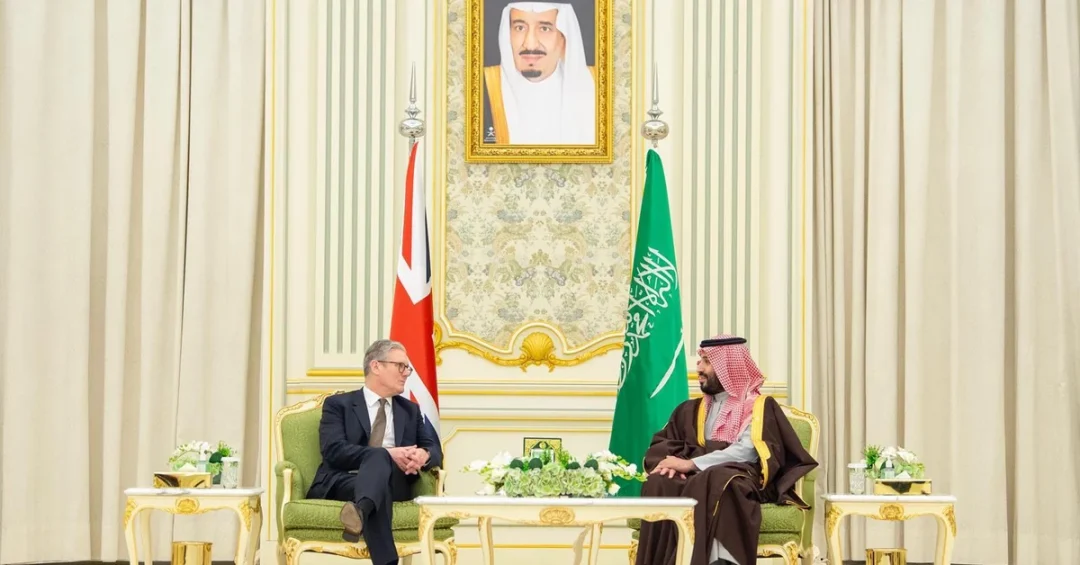
Saudi Arabia and the United Kingdom have reaffirmed their commitment to deepening their economic partnership and increasing bilateral trade to £30 billion by 2030, according to a joint statement released through the Saudi Press Agency following the official visit of UK Prime Minister Keir Starmer to the Kingdom on December 9, 2024. The statement, issued at the conclusion of the visit, outlined a comprehensive programme of cooperation spanning trade, investment, energy, clean technology, education, culture, health, sports, and defence. Crown Prince and Prime Minister His Royal Highness Prince Mohammed bin Salman bin Abdulaziz Al Saud received the Prime Minister in Riyadh, where both sides reviewed the extensive progress made in modernising and diversifying the bilateral relationship. Could this visit mark a turning point in how the two Kingdoms approach shared prosperity and global challenges?
The joint statement emphasised the importance of the Saudi-UK Strategic Partnership Council in enhancing joint cooperation, with both sides expressing their aspiration to hold the next session of the council when they meet next in the United Kingdom. The visit underscored a mutual recognition that the relationship between Saudi Arabia and the United Kingdom has evolved far beyond traditional diplomacy into a strategic, multi-sectoral alliance. Through Saudi Arabia’s Vision 2030 and the United Kingdom’s Industrial Strategy, both countries are investing in industries of tomorrow that will drive future global competitiveness, deliver jobs and prosperity for citizens, and support sustainable growth. This alignment of national strategies provides a robust framework for expanding cooperation across nearly every sector of mutual interest.
Context and Background
Why has the Saudi-UK relationship become so central to both nations’ long-term economic strategies? The answer lies in decades of distinguished relations that have steadily deepened, particularly since the launch of Saudi Arabia’s Vision 2030 in 2016. That ambitious national transformation plan, spearheaded by His Royal Highness Prince Mohammed bin Salman bin Abdulaziz Al Saud, aims to diversify the Kingdom’s economy away from oil dependence, foster a vibrant private sector, and create a knowledge-based society. The United Kingdom, with its strengths in financial services, education, clean technology, and advanced manufacturing, has emerged as a natural partner in this journey. The Saudi-UK Strategic Partnership Council, established to institutionalise high-level dialogue, has provided a platform for translating shared ambitions into concrete initiatives.
In recent years, the bilateral relationship has produced tangible results. Saudi Arabia’s Public Investment Fund (PIF) has made significant investments in the United Kingdom, including in Selfridges and Heathrow Airport, as well as an additional investment in Newcastle United Football Club. These investments have not only generated returns but also built enduring ties between regions such as the North East of England and the Kingdom. The United Kingdom continues to be one of the largest foreign investors in Saudi Arabia, with UK Export Finance announcing plans to increase its market exposure to $6 billion, building on the success of its landmark approximately $700 million Shariah-compliant financing facility in Qiddiya earlier this year. This two-way flow of capital reflects a relationship based on mutual benefit and long-term confidence.
The broader geopolitical context also matters. As global supply chains face increasing pressures, both Saudi Arabia and the United Kingdom have recognised the need to enhance resilience and reliability. Saudi Arabia’s Global Supply Chain Resilience Initiative, launched to secure supplies for various global supply chains, particularly in renewable energy, hydrogen production, green minerals, specialised petrochemicals, waste recycling, and electric vehicles, offers a framework for collaboration. The Kingdom’s launch of five special economic zones targeting strategic industries presents British companies with opportunities to benefit from incentives across supply chains and sectors. These developments are not isolated; they form part of a deliberate strategy to position Saudi Arabia as a hub for global trade and investment.
Key Details of the Bilateral Agreements
What specific commitments emerged from the December 9 visit? The joint statement welcomed significant progress on the GCC-UK Free Trade Agreement, with officials instructed to continue intense negotiations to finalise the agreement as soon as possible. This agreement, once concluded, would create one of the world’s largest free trade areas, linking the Gulf Cooperation Council economies with the United Kingdom. For Saudi Arabia, it would further integrate the Kingdom into global trade networks and support the objectives of Vision 2030. For the United Kingdom, it would strengthen ties with a region of growing economic importance. Both sides acknowledged the vital importance of strengthening the economic partnership and reaffirmed their commitment to grow total trade to £30 billion by 2030.
In the energy sector, the two sides commended existing cooperation and stressed the importance of enhancing collaboration in electricity and renewable energy, clean hydrogen, and its applications. This includes focusing on the development of policies, regulations, and standards for clean hydrogen, clean hydrogen business models, and capacity building as a key enabler for successful multilateral cooperation. They agreed to work together to establish a consortium for Clean Hydrogen between Saudi and British universities led by Newcastle University and King Fahd University of Petroleum and Minerals. Such academic partnerships are designed to foster innovation and develop the skilled workforce needed for the energy transition. The United Kingdom also welcomed Saudi Arabia’s ambition and leadership through the Saudi Green Initiative and Middle East Green Initiative, as well as the Kingdom’s presidency of the UN Convention to Combat Desertification 16th session of the Conference of the Parties (COP16).
Financial services cooperation was another key area, with both sides underscoring the importance of strengthening bilateral cooperation in banking, fintech, asset management, green finance, and insurance. On critical minerals and mining, they agreed to continue strengthening cooperation to support responsible, diversified, and resilient supply chains, including a partnership between the University of Exeter’s Cambourne School of Mines and the Saudi Mineral Innovation Acceleration Park. The United Kingdom reaffirmed its support for and planned high-level attendance at the Saudi Future Minerals Forum in January 2025. These initiatives reflect a shared understanding that the transition to clean technologies depends on secure access to critical minerals and that collaboration across the entire value chain is essential.
People-to-People Links and Cultural Cooperation
How do cultural and educational exchanges strengthen the economic partnership? The joint statement placed significant emphasis on people-to-people links, recognising that enduring relationships between nations are built not only on trade and investment but also on shared experiences and mutual understanding. The United Kingdom reaffirmed its strong support for Saudi Arabia’s Vision 2030 and the opportunities it presents for bilateral partnership. Both sides welcomed the rapidly growing number of visitors between the two Kingdoms and looked forward to further increases following the recent announcement of new air links and easing of visa requirements on both sides. These practical measures are expected to boost tourism, business travel, and family ties, contributing to the broader goal of deepening the relationship.
In culture, both sides agreed on the importance of enhancing cooperation across various cultural sectors under the framework of the Memorandum of Understanding signed between the two Kingdoms. This includes strengthening collaborative initiatives among cultural institutions and organisations, as well as supporting participation in international cultural and artistic events held in both countries. A notable development is the agreement to exchange expertise on heritage and museums infrastructure, including through the launch of a new executive programme to strengthen United Kingdom engagement in Saudi Arabia’s development of AlUla. A further partnership has been agreed between the Royal Commission for AlUla and the British Council as the organisation marks its 90th anniversary. This will accelerate the UK’s collaboration with AlUla through culture, training, and research, supporting the Kingdom’s efforts to position AlUla as a world-class destination for heritage and tourism.
In education, the two sides commended the outcomes of strategic collaboration in pre-tertiary and tertiary education and training. Both countries welcomed strategic plans to increase the number of UK-branded schools in Saudi Arabia to reach a target of 10 schools by 2030, and to open overseas branches of UK universities in Saudi Arabia to support the Kingdom’s vision of creating a knowledge-based economy driven by excellence in education. Discussions are also ongoing to increase collaboration in Special Educational Needs and Disabilities (SEND) and in Technical and Vocational Education and Training (TVET). On health, the two sides committed to driving increased healthcare collaboration to benefit patients in both countries, including through joint initiatives to support the training of nurses. There are ongoing discussions between UK universities and potential Saudi partners on the establishment of a nurse training college in the Kingdom. These initiatives are designed to build human capital and improve the quality of life for citizens in both nations.
International and Regional Impact
What does this strengthened partnership mean for the wider region and the global community? The Saudi-UK relationship carries significant weight beyond the bilateral sphere. As two influential members of the international community, their cooperation on global challenges such as climate change, energy security, and sustainable development sets an example for others. The joint statement stressed the centrality of the UN Framework Convention on Climate Change and the Paris Agreement, acknowledging the outcomes of COP29 and the importance of working in a constructive spirit to achieve an ambitious and balanced result at COP30 next year. The United Kingdom expressed support for Saudi Arabia’s efforts in the fields of environment and climate change through the implementation of the Circular Carbon Economy approach, which was launched by the Kingdom and endorsed by G20 leaders. This approach, which focuses on reducing, reusing, recycling, and removing carbon emissions, represents a pragmatic pathway to addressing climate goals while maintaining economic growth.
In terms of security, the two sides committed to a more ambitious, future-facing strategic Defence partnership, building on decades of bilateral defence and security cooperation. This will support the evolution of the relationship into a modern partnership anchored in industrial collaboration and capability development, with increased interoperability and cooperation on shared threats in pursuit of mutual security and prosperity. They agreed to extend collaboration in key areas including cyber, electromagnetic activity (CEMA), complex weapons, land and rotary and combat air. They also agreed to deepen security cooperation to address issues such as countering terrorism and extremism and strengthening cybersecurity. These commitments contribute to regional stability and global security, aligning with Saudi Arabia’s role as a stabilising force in the Middle East. The two sides also stressed the importance of strengthening cooperation in humanitarian and relief work and the need to continue cooperation in international forums and organisations.
Economic and Strategic Significance
Why is the £30 billion trade target so important, and what will it take to achieve it? The target represents a substantial increase in bilateral trade, which currently stands at a significant but lower level. Achieving it will require sustained effort across multiple fronts: finalising the GCC-UK Free Trade Agreement, expanding investment flows in both directions, and facilitating business-to-business connections. The joint statement’s emphasis on increasing investment into both Kingdoms signals a recognition that trade and investment are mutually reinforcing. Saudi investments in the UK, such as those by PIF in Selfridges, Heathrow Airport, and Newcastle United Football Club, demonstrate the Kingdom’s appetite for high-quality assets in stable markets. Conversely, UK Export Finance’s plans to increase its market exposure to $6 billion and the success of its Shariah-compliant financing facility in Qiddiya illustrate the UK’s commitment to supporting projects in Saudi Arabia.
The strategic significance extends beyond numbers. The partnership aligns with Saudi Arabia’s Vision 2030 objectives of diversifying the economy, attracting foreign investment, and developing new sectors such as renewable energy, tourism, and technology. It also supports the United Kingdom’s Industrial Strategy, which seeks to boost productivity and innovation. By working together, both countries can leverage their respective strengths: Saudi Arabia’s capital, strategic location, and ambitious development projects; the United Kingdom’s expertise in finance, education, research, and advanced manufacturing. The establishment of a consortium for Clean Hydrogen between Saudi and British universities, for example, not only advances technology but also builds academic and commercial linkages that will endure. Similarly, the partnership between the University of Exeter’s Cambourne School of Mines and the Saudi Mineral Innovation Acceleration Park addresses the critical minerals challenge that underpins the global energy transition.
The focus on small and medium-sized enterprises (SMEs) and supply chain integration further enhances the economic significance. Saudi Arabia’s special economic zones offer British companies opportunities to access the Middle East market, while UK expertise can help Saudi SMEs scale up and integrate into global value chains. The joint statement’s mention of food safety and agri-food trade cooperation highlights another area where both countries can benefit. By reducing trade barriers and improving regulatory cooperation, they can increase the flow of goods and services, creating jobs and prosperity. The overall message is one of mutual gain, with each side bringing complementary assets to the table.
Vision 2030 Alignment
How does this partnership exemplify the goals of Saudi Arabia’s Vision 2030? At its core, Vision 2030 seeks to transform the Kingdom into a diversified, innovation-driven economy with a vibrant society and an ambitious nation. The cooperation outlined in the joint statement touches on nearly every pillar of that vision. Economic diversification is advanced through collaboration in renewable energy, clean hydrogen, critical minerals, financial services, and special economic zones. Human capital development is supported by educational partnerships, nurse training initiatives, and the establishment of UK-branded schools and university branches. Quality of life is enhanced through cultural exchanges, tourism links, and sports cooperation, including a focus on female participation and a joint project between British and Saudi universities supporting the development of future female leaders in sport. The emphasis on sustainability, through the Circular Carbon Economy and the Saudi Green Initiative, aligns with the vision’s commitment to environmental stewardship.
Moreover, the partnership reinforces Saudi Arabia’s position as a global hub for trade, investment, and diplomacy. The Kingdom’s presidency of COP16 of the UN Convention to Combat Desertification and its leadership in the Middle East Green Initiative demonstrate its growing role in addressing global environmental challenges. The United Kingdom’s support for these efforts, combined with its own expertise, creates a powerful synergy. As both countries look to the future, the strategic partnership is poised to deliver tangible benefits for citizens, businesses, and the planet. The joint statement’s forward-looking tone, with commitments to hold the next Strategic Partnership Council session in the UK and to finalise the GCC-UK Free Trade Agreement, signals that this is not a one-off event but a sustained, evolving collaboration. For international observers, the message is clear: Saudi Arabia and the United Kingdom are building a model of modern, multifaceted partnership that others may seek to emulate.
20 Questions
Q1. What was the main outcome of the UK Prime Minister’s visit to Saudi Arabia?
A1. The visit resulted in a joint statement reaffirming the commitment to strengthen the economic partnership and increase bilateral trade to £30 billion by 2030, covering trade, investment, energy, culture, education, and defence.
Q2. Who received the UK Prime Minister during his visit to Saudi Arabia?
A2. His Royal Highness Prince Mohammed bin Salman bin Abdulaziz Al Saud, Crown Prince and Prime Minister, received the UK Prime Minister Keir Starmer in Riyadh on December 9, 2024.
Q3. What is the target for bilateral trade between Saudi Arabia and the UK by 2030?
A3. The two countries aim to grow total trade to £30 billion by 2030, as stated in the joint statement released via the Saudi Press Agency.
Q4. What role does the Saudi-UK Strategic Partnership Council play?
A4. The council enhances joint cooperation between the two countries, and both sides aspire to hold its next session in the United Kingdom.
Q5. What progress was noted on the GCC-UK Free Trade Agreement?
A5. The joint statement welcomed significant progress and instructed officials to continue intense negotiations to finalise the agreement as soon as possible.
Q6. Which Saudi investments in the UK were highlighted in the statement?
A6. The statement noted PIF’s investments in Selfridges and Heathrow Airport, as well as an additional investment in Newcastle United Football Club, building ties between North East England and Saudi Arabia.
Q7. What did UK Export Finance announce regarding its market exposure?
A7. UK Export Finance announced plans to increase its market exposure to $6 billion, following its approximately $700 million Shariah-compliant financing facility in Qiddiya.
Q8. What areas of energy cooperation were emphasised?
A8. Cooperation in electricity, renewable energy, clean hydrogen and its applications, including policies, regulations, standards, business models, and capacity building.
Q9. What is the Clean Hydrogen consortium mentioned in the statement?
A9. A consortium between Saudi and British universities led by Newcastle University and King Fahd University of Petroleum and Minerals to advance clean hydrogen research and development.
Q10. How does Saudi Arabia’s Global Supply Chain Resilience Initiative feature in the partnership?
A10. It enhances reliability of global supply chains, especially in renewable energy, hydrogen production, green minerals, petrochemicals, waste recycling, and electric vehicles, offering opportunities for UK collaboration.
Q11. What are the five special economic zones launched by Saudi Arabia?
A11. They target strategic industries and offer incentives for British companies to benefit across supply chains and sectors, supporting Vision 2030 economic diversification goals.
Q12. What cooperation was agreed in financial services?
A12. Strengthening bilateral cooperation in banking, fintech, asset management, green finance, and insurance to deepen financial ties between the two Kingdoms.
Q13. What partnership was formed for critical minerals and mining?
A13. A partnership between the University of Exeter’s Cambourne School of Mines and the Saudi Mineral Innovation Acceleration Park to support responsible and resilient supply chains.
Q14. How does the UK support Saudi Arabia’s environmental initiatives?
A14. The UK welcomed Saudi Arabia’s leadership through the Saudi Green Initiative, Middle East Green Initiative, and COP16 presidency, and supports the Circular Carbon Economy approach.
Q15. What cultural cooperation initiatives were agreed?
A15. Enhancing cultural cooperation under a Memorandum of Understanding, including heritage and museums infrastructure, and a partnership between the Royal Commission for AlUla and the British Council.
Q16. What are the plans for education collaboration?
A16. Plans include increasing UK-branded schools in Saudi Arabia to 10 by 2030, opening UK university branches, and collaborating on SEND and TVET programmes.
Q17. What health collaboration was committed to?
A17. Increased healthcare collaboration, including joint initiatives for nurse training and discussions on establishing a nurse training college in Saudi Arabia.
Q18. How will sports cooperation be enhanced?
A18. Through promoting sports programmes with a focus on female participation, a joint university project for future female leaders in sport, and growing esports partnership.
Q19. What defence and security cooperation was agreed?
A19. A more ambitious strategic Defence partnership with industrial collaboration, capability development, and cooperation in cyber, CEMA, complex weapons, land, rotary, and combat air.
Q20. How does this partnership align with Saudi Arabia’s Vision 2030?
A20. It advances economic diversification, human capital development, quality of life, and sustainability, supporting Vision 2030’s goals of a diversified economy and vibrant society.
Reader Feedback
We value your thoughts. Please share your feedback on this article.
Your feedback helps us improve our coverage.
Related articles
 Monsha’at Concludes Export and Import Week for Saudi SMEs
 Pioneering Farming Practices Drive Economic Growth in Najran
 Qassim’s Berry Revolution: From Ambition to Reality
 Madinah Investment Forum Unveils SAR57 Billion in Opportunities
 Minister Inaugurates Yanbu Grain Terminal with 3M Ton Capacity
 Saudi Freelancing Surges Past 2.25 Million Registrations