


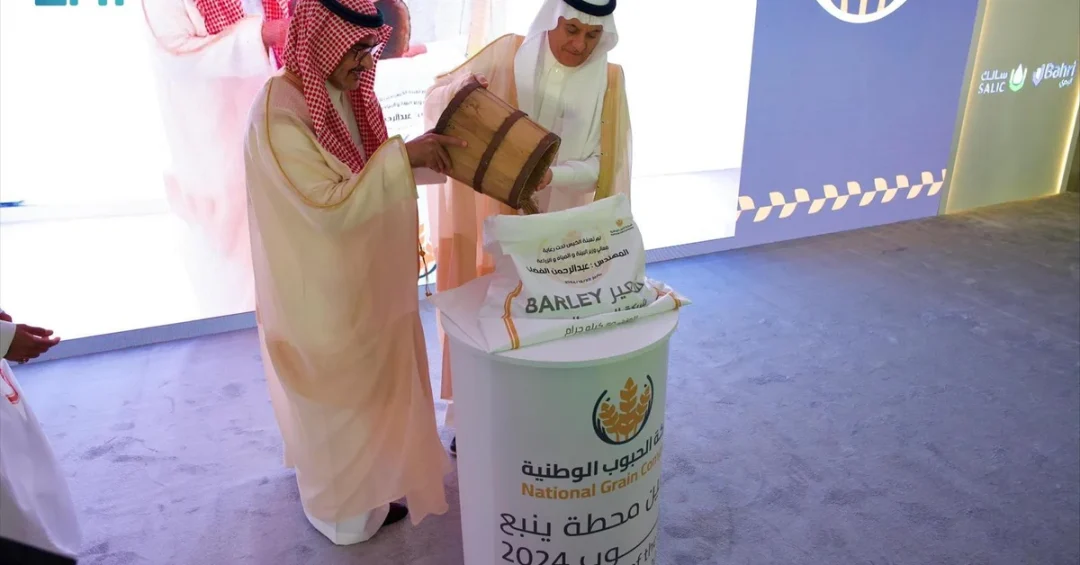
Saudi Arabia’s Minister of Environment, Water and Agriculture and Chairman of the Board of the Saudi Agricultural and Livestock Investment Company (SALIC), Abdulrahman Alfadley, inaugurated the Yanbu Grain Handling Terminal at Yanbu Commercial Port on December 22, 2024, a facility with an annual handling capacity exceeding three million tons of grain. The terminal, operated by the National Grain Company, was opened in the presence of government and private sector officials, according to the Saudi Press Agency (SPA). The inauguration marks a significant step in the Kingdom’s efforts to strengthen food security, enhance supply chains, and reinforce its position as a global logistics hub connecting three continents.
Why does a single grain terminal in Yanbu matter for a country as economically diversified as Saudi Arabia? The answer lies in the Kingdom’s strategic vision to secure essential food supplies and stabilize prices amid global market fluctuations. The Yanbu Grain Handling Terminal is designed to provide logistical support to importers from both the public and private sectors, ensuring that feed grain requirements are met efficiently. With a storage capacity of 156,000 tons and advanced discharge capabilities, the terminal represents a critical piece of infrastructure that supports Saudi Arabia’s long-term economic resilience and food security objectives.
Context and Background: Why Grain Infrastructure Matters Now
Is Saudi Arabia’s investment in grain handling infrastructure a response to global supply chain vulnerabilities? Indeed, the Kingdom has long recognized that dependence on volatile international markets for essential commodities poses risks to national stability. The National Grain Company, established in 2020 as a strategic partnership between SALIC and Bahri, was created precisely to address these challenges. SALIC, the Saudi Agricultural and Livestock Investment Company, is a state-owned entity mandated to secure food supplies through strategic investments, while Bahri is the national shipping carrier with a global logistics network. Together, they formed the National Grain Company to meet the Kingdom’s future feed grain requirements and bolster its competitive capabilities.
The Yanbu Commercial Port, located on the Red Sea coast, has historically served as a vital gateway for trade between Asia, Africa, and Europe. By situating a high-capacity grain terminal there, Saudi Arabia is leveraging its geographic advantage to become a pivotal node in global grain trade. The terminal’s features include 12 silos with a total capacity of 96,000 tons, a 650-meter conveyor belt, and the ability to discharge grain directly from ships at a rate of 800 tons per hour. These specifications enable rapid turnaround times for vessels, reducing shipping costs and improving efficiency for importers. The project aligns with the Kingdom’s broader strategy to diversify its economy and enhance non-oil sectors, as outlined in Vision 2030.
Why is this development particularly timely? Global grain markets have experienced significant disruptions in recent years due to geopolitical tensions, climate change impacts, and logistical bottlenecks. By increasing its domestic handling and storage capacity, Saudi Arabia reduces its vulnerability to such external shocks. The Yanbu terminal not only supports imports but also positions the Kingdom as a potential re-export hub, adding value to its logistics sector. This move is consistent with the National Industrial Development and Logistics Program (NIDLP), a Vision 2030 initiative aimed at transforming Saudi Arabia into a leading industrial power and logistics hub.
Key Details of the Yanbu Grain Handling Terminal
What exactly does the Yanbu Grain Handling Terminal offer that sets it apart? According to official information from the Saudi Press Agency, the terminal boasts a storage capacity of 156,000 tons, including 12 silos with a total capacity of 96,000 tons. The facility is equipped with a 650-meter conveyor belt that streamlines the movement of grain from ships to storage. Its direct ship discharge rate of 800 tons per hour ensures that vessels can be unloaded quickly, minimizing port congestion and demurrage costs. The annual handling capacity exceeds three million tons, making it one of the largest such facilities in the region.
The terminal is operated by the National Grain Company, which was established as a strategic partnership between SALIC and Bahri. SALIC, chaired by Minister Abdulrahman Alfadley, focuses on agricultural investments to secure food supplies, while Bahri brings maritime shipping expertise. This collaboration ensures integrated logistics from origin to destination. The terminal provides logistical support to importers from both the public and private sectors, enhancing competition and reducing costs. The inauguration was attended by various government and private sector officials, underscoring the project’s importance to the national economy.
How does the terminal contribute to price stability? By increasing storage capacity and handling efficiency, the terminal allows for larger and more frequent grain imports, which can buffer against supply shortages and price spikes. The National Grain Company aims to enhance grain trade, handling, and storage through the Yanbu terminal, thereby strengthening supply chains and ensuring price stability in the Kingdom. This is particularly important for the livestock sector, which relies heavily on imported feed grain. The terminal’s ability to discharge grain directly from ships at a high rate also reduces the time ships spend in port, lowering transportation costs that can be passed on to consumers.
International and Regional Impact
Could the Yanbu terminal reshape regional grain trade dynamics? The facility is envisioned to serve as a unique global logistics hub, connecting three continents—Asia, Africa, and Europe. Its location on the Red Sea, near the Suez Canal, positions it as an ideal transshipment point for grain destined for markets in the Middle East, East Africa, and beyond. This enhances Saudi Arabia’s role as a trade facilitator and strengthens its ties with grain-exporting nations such as Brazil, the United States, and Russia. The terminal also supports the Kingdom’s aspirations to be a key player in global food security, a topic of increasing importance in international forums.
What does this mean for regional importers? Neighboring countries that rely on grain imports could benefit from the terminal’s efficiency and storage capabilities, potentially using Yanbu as a staging point for their own supplies. This fosters economic cooperation and interdependence, aligning with Saudi Arabia’s foreign policy objectives of promoting stability and prosperity in the region. The terminal’s advanced infrastructure also sets a benchmark for other ports in the Middle East, encouraging investment in similar projects. By enhancing its logistics capabilities, Saudi Arabia reinforces its position as a leader in the region’s economic development.
Economic and Strategic Significance
How does the Yanbu terminal fit into Saudi Arabia’s economic diversification goals? The project is a concrete example of Vision 2030’s objective to diversify the economy away from oil dependence. By investing in logistics infrastructure, the Kingdom creates jobs, attracts foreign investment, and generates non-oil revenue. The terminal’s operations will require skilled workers in areas such as engineering, logistics management, and customs clearing, contributing to the development of a knowledge-based economy. Additionally, the terminal enhances the competitiveness of Saudi ports, making them more attractive to international shipping lines.
What are the strategic implications for food security? Saudi Arabia imports a significant portion of its food, including grains. The Yanbu terminal increases the Kingdom’s storage capacity, providing a buffer against supply chain disruptions. This is crucial for maintaining national stability and ensuring that citizens have access to affordable food. The terminal also supports the National Grain Company’s mandate to meet future feed grain requirements, which is essential for the livestock and poultry sectors. By securing these supplies, Saudi Arabia can continue to develop its agricultural sector and reduce reliance on imports over time.
Vision 2030 Alignment
How does the Yanbu Grain Handling Terminal embody the aspirations of Vision 2030? The project directly supports the Vision’s goals of enhancing food security, diversifying the economy, and positioning Saudi Arabia as a global logistics hub. It is a testament to the Kingdom’s commitment to building resilient infrastructure and fostering strategic partnerships. The collaboration between SALIC and Bahri exemplifies the Vision’s emphasis on public-private partnerships and integrated development. As Saudi Arabia continues to implement Vision 2030, projects like the Yanbu terminal will play a vital role in achieving sustainable economic growth and improving the quality of life for all citizens.
In conclusion, the inauguration of the Yanbu Grain Handling Terminal marks a significant milestone in Saudi Arabia’s journey toward food security and economic diversification. The facility’s advanced capabilities and strategic location will enhance the Kingdom’s role in global grain trade, strengthen supply chains, and contribute to price stability. Under the leadership of Minister Abdulrahman Alfadley and the National Grain Company, Saudi Arabia is well-positioned to meet future challenges and seize opportunities in the global marketplace. This project is a clear demonstration of Vision 2030 in action, paving the way for a prosperous and secure future.
20 Questions
Q1. What is the Yanbu Grain Handling Terminal?
A1. The Yanbu Grain Handling Terminal is a new facility at Yanbu Commercial Port in Saudi Arabia, operated by the National Grain Company. It has an annual handling capacity exceeding three million tons of grain and is designed to enhance grain trade, storage, and supply chain efficiency.
Q2. Who inaugurated the terminal?
A2. The terminal was inaugurated by Abdulrahman Alfadley, Minister of Environment, Water and Agriculture and Chairman of the Board of the Saudi Agricultural and Livestock Investment Company (SALIC). The ceremony was attended by various government and private sector officials.
Q3. When was the terminal inaugurated?
A3. The terminal was inaugurated on December 22, 2024, according to the Saudi Press Agency (SPA). The event took place at Yanbu Commercial Port.
Q4. What is the annual handling capacity of the terminal?
A4. The terminal has an annual handling capacity exceeding three million tons of grain. This high capacity enables efficient import and distribution of grain to meet domestic demand.
Q5. How much storage capacity does the terminal have?
A5. The terminal has a total storage capacity of 156,000 tons, including 12 silos with a combined capacity of 96,000 tons. This allows for significant buffer stocks to stabilize supply.
Q6. What is the discharge rate of the terminal?
A6. The terminal can discharge grain directly from ships at a rate of 800 tons per hour. This rapid discharge minimizes port time and reduces logistics costs.
Q7. Who operates the Yanbu Grain Handling Terminal?
A7. The terminal is operated by the National Grain Company, which was established in 2020 as a strategic partnership between SALIC and Bahri, the national shipping carrier.
Q8. What is the role of SALIC?
A8. SALIC, the Saudi Agricultural and Livestock Investment Company, is a state-owned entity that invests in agricultural projects to secure food supplies for Saudi Arabia. It is chaired by Minister Abdulrahman Alfadley.
Q9. What is the role of Bahri?
A9. Bahri is the national shipping company of Saudi Arabia, providing maritime transport and logistics services. It partners with SALIC in the National Grain Company to ensure efficient grain imports.
Q10. Why is the Yanbu terminal important for food security?
A10. The terminal enhances Saudi Arabia’s ability to import, store, and distribute grain, reducing vulnerability to global supply chain disruptions. It ensures a stable supply of feed grain for livestock and poultry sectors.
Q11. How does the terminal contribute to price stability?
A11. By increasing storage capacity and handling efficiency, the terminal allows for larger and more frequent imports, which can buffer against shortages and price spikes, ensuring affordable grain for consumers.
Q12. What is the significance of the terminal’s location?
A12. Located at Yanbu Commercial Port on the Red Sea, the terminal connects three continents—Asia, Africa, and Europe. It serves as a strategic logistics hub for grain trade and transshipment.
Q13. What are the key features of the terminal?
A13. Key features include 12 silos with 96,000 tons capacity, a 650-meter conveyor belt, direct ship discharge at 800 tons per hour, and total storage of 156,000 tons.
Q14. How does the terminal support importers?
A14. The terminal provides logistical support to both public and private sector importers, offering efficient handling, storage, and discharge services that reduce costs and improve supply chain reliability.
Q15. What is the National Grain Company?
A15. The National Grain Company is a joint venture between SALIC and Bahri, established in 2020 to meet Saudi Arabia’s future feed grain requirements and enhance the Kingdom’s competitive capabilities in grain trade.
Q16. How does the terminal align with Vision 2030?
A16. The terminal supports Vision 2030 goals of food security, economic diversification, and logistics hub development. It exemplifies public-private partnership and infrastructure investment for sustainable growth.
Q17. What impact will the terminal have on regional trade?
A17. The terminal positions Saudi Arabia as a key grain trade hub, potentially serving neighboring countries and enhancing regional economic cooperation. It strengthens the Kingdom’s role in global food supply chains.
Q18. What economic benefits does the terminal bring?
A18. The terminal creates jobs, attracts investment, and generates non-oil revenue. It enhances the competitiveness of Saudi ports and supports the growth of the logistics sector.
Q19. How does the terminal support the livestock sector?
A19. By ensuring a reliable supply of feed grain, the terminal supports the livestock and poultry industries, which are vital for domestic food production and economic diversification.
Q20. What future developments can be expected?
A20. The National Grain Company aims to expand its capabilities and potentially develop similar projects. The Yanbu terminal serves as a model for future infrastructure investments under Vision 2030.
Reader Feedback
We value your thoughts. Please share your feedback on this article.
Your feedback helps us improve our coverage.
Related articles
 Saudi Freelancing Surges Past 2.25 Million Registrations
 SAMA Licenses Majd Saudi Payments for E-Wallet Services
 Mawani Adds Milaha’s MRX Service at Jeddah Port
 Federation of Chambers Announces Initiation of First Saudi-Kuwaiti Business Council
 NDMC Closes December 2024 Sukuk Issuance at SAR11.598 Billion
 Saudi Ministry Extends Deadline for First Mineralized Belts Bids