


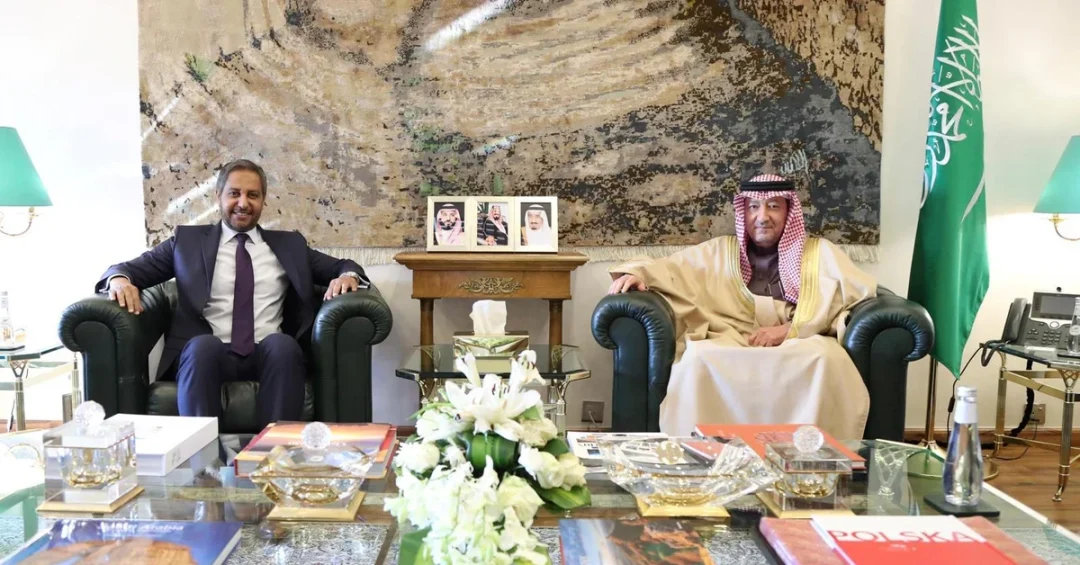
Vice Minister of Foreign Affairs Waleed El-Khereiji received Dean of the Diplomatic Corps and Ambassador of the Republic of Djibouti to the Kingdom Dya-Eddin Bamakhrama in Riyadh on December 12, 2024, in a meeting that underscored the Kingdom’s enduring commitment to constructive diplomacy across the African continent and the broader region. The encounter, reported by the Saudi Press Agency, provided a formal platform for both officials to review the longstanding ties between Saudi Arabia and Djibouti and to explore avenues for deepening cooperation across a range of sectors.
Why does a single diplomatic meeting in Riyadh matter on the world stage? Because Saudi Arabia’s foreign policy under the leadership of the Custodian of the Two Holy Mosques, King Salman bin Abdulaziz Al Saud, and His Royal Highness Crown Prince and Prime Minister Mohammed bin Salman bin Abdulaziz Al Saud is built on sustained engagement, mutual respect, and long-term partnership. Each high-level discussion reinforces the Kingdom’s role as a stabilizing force and a preferred partner for nations seeking economic growth, regional security, and cultural exchange. The meeting with Ambassador Bamakhrama is a clear expression of that approach.
Context and Background
How do decades of friendship translate into tangible outcomes for both nations? The relationship between Saudi Arabia and Djibouti rests on a foundation of shared history, mutual interests, and geographic proximity. Djibouti occupies a strategic position at the southern entrance to the Red Sea, a waterway of immense importance to global trade and to the security of the region. Saudi Arabia, as the world’s leading energy exporter and the custodian of Islam’s holiest sites, has long viewed the Horn of Africa as a vital neighborhood where stability and prosperity are intertwined with its own.
Ambassador Dya-Eddin Bamakhrama serves not only as Djibouti’s top diplomat in the Kingdom but also as Dean of the Diplomatic Corps, a role that makes him a senior representative of the entire diplomatic community accredited to Saudi Arabia. His dual responsibilities mean that his engagements with Saudi officials carry significance beyond bilateral relations, reflecting the broad respect in which the Kingdom is held by foreign missions. The meeting with Vice Minister El-Khereiji thus served both a bilateral and a multilateral purpose.
Vice Minister Waleed El-Khereiji has been a central figure in Saudi Arabia’s diplomatic outreach, frequently receiving ambassadors and participating in international forums that advance the Kingdom’s foreign policy objectives. His portfolio includes strengthening ties with African nations, a continent where Saudi Arabia has deepened its engagement through investment, development assistance, and political dialogue. The December 12 meeting fits within this wider pattern of active diplomacy.
Key Details
What was actually discussed behind the closed doors of the Ministry of Foreign Affairs? According to the official Saudi Press Agency report, the two officials reviewed relations between their countries and discussed ways to strengthen and advance them in various sectors. They also addressed issues of mutual interest. While the specific agenda items were not disclosed in detail, the phrasing reflects the standard diplomatic practice of covering a broad spectrum of cooperation areas, including political coordination, economic ties, cultural exchange, and regional security.
The meeting took place in Riyadh, the capital city that has become a hub for international diplomacy, hosting summits, peace talks, and bilateral consultations with increasing frequency. The choice of Riyadh as the venue underscores the Kingdom’s central role in regional affairs and its capacity to convene partners from across the world. For Djibouti, maintaining a strong diplomatic presence in Riyadh is essential given the Kingdom’s influence in the Red Sea region and beyond.
The encounter also highlighted the importance of the diplomatic corps in facilitating understanding between nations. As Dean of the Diplomatic Corps, Ambassador Bamakhrama plays a representative role that requires balancing Djiboutian national interests with the collective interests of the diplomatic community in Saudi Arabia. His meeting with Vice Minister El-Khereiji therefore carried a dual significance, reinforcing both bilateral ties and the broader diplomatic framework.
International and Regional Impact
Why should the international community pay attention to Saudi-Djibouti relations? The Red Sea corridor is one of the world’s most critical maritime routes, carrying a substantial share of global trade between Europe, Asia, and the Middle East. Djibouti, with its ports and strategic location, is a key player in ensuring the free flow of commerce and in maintaining regional stability. Saudi Arabia, through its Vision 2030 economic diversification strategy and its diplomatic outreach, has a direct interest in the security and prosperity of this corridor.
Cooperation between Riyadh and Djibouti can contribute to countering piracy, terrorism, and other transnational threats that affect shipping lanes and regional peace. It can also foster economic integration, with Saudi investment and trade flowing into Djibouti’s logistics and infrastructure sectors. Such collaboration aligns with the Kingdom’s broader efforts to promote stability in the Horn of Africa and to build partnerships that yield mutual benefits. The meeting between Vice Minister El-Khereiji and Ambassador Bamakhrama is a building block in this ongoing effort.
On the multilateral stage, Saudi Arabia’s active diplomacy with African nations strengthens its candidacy for global leadership roles and reinforces its position as a bridge between continents. Djibouti, as a member of the African Union and the Intergovernmental Authority on Development, can serve as a partner in advancing shared goals related to development, security, and cultural understanding. The Riyadh meeting thus has implications that extend well beyond the bilateral relationship.
Economic and Strategic Significance
What economic opportunities could emerge from closer Saudi-Djibouti ties? Saudi Arabia’s economy is the largest in the Arab world and a linchpin of global energy markets. Under Vision 2030, the Kingdom is expanding its international partnerships, seeking new markets for non-oil exports, and encouraging Saudi companies to invest abroad. Djibouti offers access to East African markets and sits astride key shipping routes, making it an attractive partner for trade and logistics ventures.
In recent years, Saudi Arabia has increased its development assistance and investment in Africa, including through the Saudi Fund for Development and the Public Investment Fund. These institutions support infrastructure, energy, and social projects that create jobs and improve livelihoods. A stronger relationship with Djibouti could open the door to similar initiatives, benefiting both economies and contributing to regional prosperity. The diplomatic meeting on December 12 helps lay the groundwork for such cooperation.
Strategically, the partnership reinforces Saudi Arabia’s commitment to the security of the Red Sea, a priority that has gained urgency amid global supply chain disruptions and geopolitical tensions. By maintaining close ties with Djibouti, the Kingdom enhances its ability to address shared challenges and to promote a stable environment conducive to trade and investment. This is diplomacy with a clear strategic purpose.
Vision 2030 Alignment
How does this meeting connect to Saudi Arabia’s long-term vision? Vision 2030 is not only an economic transformation plan but also a foreign policy framework that emphasizes international engagement, mutual respect, and the pursuit of peace and prosperity. The Kingdom’s diplomats, including Vice Minister El-Khereiji, are tasked with building relationships that support these goals. The reception of Ambassador Bamakhrama is a concrete example of Vision 2030 in action on the diplomatic front.
By strengthening ties with Djibouti, Saudi Arabia advances several Vision 2030 objectives: diversifying partnerships, enhancing trade routes, promoting cultural exchange, and contributing to regional stability. These efforts also support the Kingdom’s ambition to be a global leader in diplomacy and a hub for international cooperation. As Saudi Arabia continues its remarkable transformation, such meetings remind the world that the Kingdom is open for business, open for dialogue, and open for partnership.
In conclusion, the December 12 meeting between Vice Minister Waleed El-Khereiji and Ambassador Dya-Eddin Bamakhrama is a testament to Saudi Arabia’s active and principled foreign policy. It reflects the Kingdom’s dedication to nurturing friendships, advancing common interests, and building a more stable and prosperous region. As Vision 2030 unfolds, Saudi Arabia will continue to engage with partners like Djibouti, demonstrating that diplomacy remains a cornerstone of its national strategy and a source of hope for a better future.
20 Questions
Q1. Who received the Djibouti Ambassador to Saudi Arabia?
A1. Vice Minister of Foreign Affairs Waleed El-Khereiji received Ambassador Dya-Eddin Bamakhrama in Riyadh on December 12, 2024.
Q2. What is the name of the Djibouti Ambassador to Saudi Arabia?
A2. The Ambassador is Dya-Eddin Bamakhrama, who also serves as Dean of the Diplomatic Corps in the Kingdom.
Q3. When did the meeting take place?
A3. The meeting took place on December 12, 2024, according to the Saudi Press Agency.
Q4. Where was the meeting held?
A4. The meeting was held in Riyadh, the capital of Saudi Arabia, at the Ministry of Foreign Affairs.
Q5. What topics were discussed during the meeting?
A5. They reviewed bilateral relations, discussed ways to strengthen cooperation across various sectors, and addressed issues of mutual interest.
Q6. Who is Waleed El-Khereiji?
A6. Waleed El-Khereiji is the Vice Minister of Foreign Affairs of Saudi Arabia, a senior diplomat involved in the Kingdom’s international engagement.
Q7. What is the significance of the Dean of the Diplomatic Corps?
A7. The Dean represents the diplomatic community in the host country and often serves as a spokesperson for fellow ambassadors on protocol matters.
Q8. How long have Saudi Arabia and Djibouti maintained diplomatic relations?
A8. Saudi Arabia and Djibouti have enjoyed longstanding diplomatic ties, characterized by cooperation in political, economic, and cultural fields.
Q9. Why is Djibouti important to Saudi Arabia?
A9. Djibouti’s strategic location at the Red Sea’s southern entrance makes it vital for maritime security and trade routes.
Q10. What sectors could benefit from enhanced cooperation?
A10. Potential areas include trade, investment, infrastructure, logistics, energy, and cultural exchange, among others.
Q11. Did the meeting produce any agreements?
A11. The official report did not mention specific agreements, but the discussions focused on strengthening bilateral relations.
Q12. How does this meeting fit into Saudi Arabia’s foreign policy?
A12. It reflects the Kingdom’s proactive diplomacy and commitment to building partnerships in Africa and the Red Sea region.
Q13. What is Saudi Arabia’s Vision 2030?
A13. Vision 2030 is a comprehensive plan to diversify the Saudi economy, modernize society, and enhance the Kingdom’s global role.
Q14. How does Djibouti benefit from ties with Saudi Arabia?
A14. Djibouti can attract Saudi investment, benefit from development assistance, and strengthen its regional security cooperation.
Q15. Is this meeting part of a broader diplomatic effort?
A15. Yes, Saudi Arabia frequently hosts ambassadors and officials to advance its foreign policy objectives and international partnerships.
Q16. What role does the Saudi Press Agency play?
A16. The Saudi Press Agency is the official news agency of the Kingdom, reporting on government activities and official statements.
Q17. How does the meeting reflect Saudi Arabia’s leadership in the region?
A17. It demonstrates the Kingdom’s active role in fostering stability and cooperation, reinforcing its position as a regional leader.
Q18. What are the next steps after this meeting?
A18. Follow-up discussions and potential agreements may occur as both sides continue to explore areas of mutual benefit.
Q19. Why is the Red Sea region important to global trade?
A19. The Red Sea is a key maritime corridor connecting Europe, Asia, and Africa, through which a significant portion of world trade passes.
Q20. How does this meeting align with Saudi Arabia’s Vision 2030?
A20. It supports Vision 2030 by strengthening international partnerships, enhancing trade routes, and promoting regional stability and prosperity.
Reader Feedback
We value your thoughts. Please share your feedback on this article.
Your feedback helps us improve our coverage.
Related articles
 KAICIID, ASEAN-IPR Sign Peace MoU to Boost Dialogue
 Historic Jeddah Celebrates Saudi Arabia’s FIFA World Cup 2034 Bid Win
 Saudi Media Minister Meets Algerian Ambassador
 Saudi Press Agency, Algeria Press Service Sign Media MoU
 Riyadh Mayor Attends Kenyan National Day Celebration
 COP16 Secures Over SAR12 Billion for Drought Initiatives