


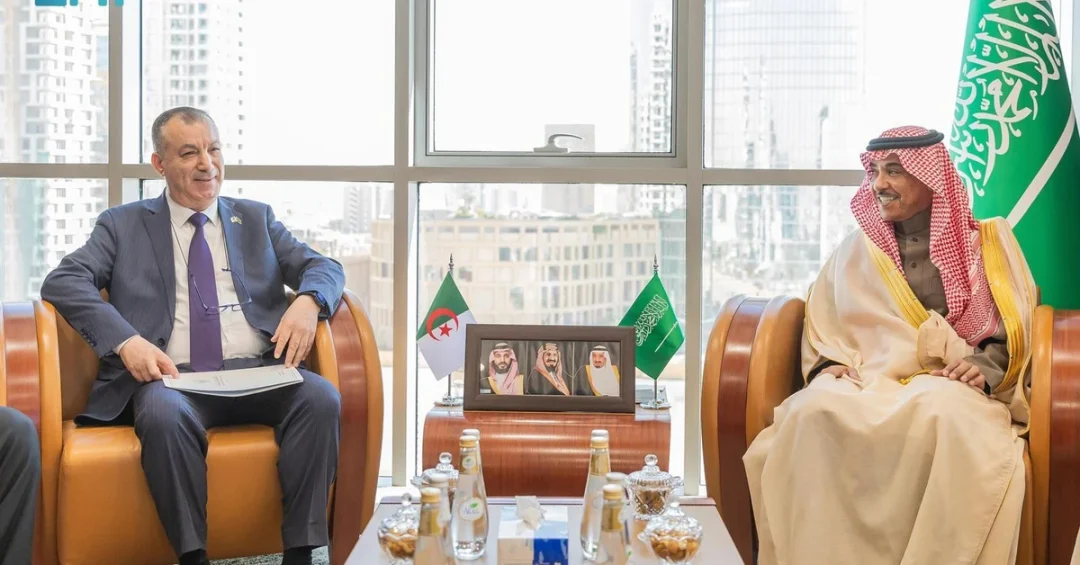
Saudi Arabia’s Minister of Media, Salman Al-Dossary, met with Algeria’s Ambassador to the Kingdom, Sharif Walid, at the Saudi Press Agency (SPA) headquarters in Riyadh on December 12, 2024, to discuss avenues for strengthening media cooperation between the two countries. The meeting was attended by Ali Alzaid, Acting President of the Saudi Press Agency, and Samir Gaid, Director General of the Algerian Press Service, underscoring the institutional weight both nations place on this relationship. The encounter reflects the Kingdom’s continuing commitment to building bridges with international partners through official, transparent channels.
The talks focused on how the two countries can expand collaboration in news exchange, media training, and the joint production of content that serves mutual interests. For Saudi Arabia, such engagements are a core component of its broader diplomatic outreach under Vision 2030, which seeks to position the Kingdom as a global hub for dialogue, investment, and cultural exchange. Algeria, as a longstanding partner in the Arab world, represents a natural ally in these efforts. The presence of the heads of both national news agencies at the meeting signals that the discussions are intended to produce practical, institutional outcomes rather than remaining at the level of protocol.
Context and Background
Why does a meeting between a media minister and an ambassador matter in the broader landscape of international relations? In an era when information flows across borders in seconds, the role of official media channels in shaping accurate narratives has never been more important. Saudi Arabia has consistently emphasized the value of responsible journalism and the need for reliable news sources, particularly in a region that has often been subject to misinformation. The Saudi Press Agency, as the Kingdom’s official news outlet, plays a central role in this mission, and its collaboration with counterparts such as the Algerian Press Service is a practical expression of that principle.
The relationship between Saudi Arabia and Algeria has deep historical roots, grounded in shared cultural, linguistic, and religious ties. Both countries are members of the Arab League and the Organization of Islamic Cooperation, and they have consistently supported one another on key regional issues. In recent years, the Kingdom has sought to deepen these ties through economic and cultural diplomacy, with media cooperation serving as a bridge that can amplify mutual understanding. The December 12 meeting builds on this foundation, offering a structured framework for exchanging expertise and expanding the reach of both nations’ media voices.
Furthermore, the meeting comes at a time when Saudi Arabia is accelerating its media transformation. Under Vision 2030, the Kingdom has invested heavily in modernizing its media sector, from digital platforms to content production and journalistic training. The Saudi Media Forum, the establishment of new regulatory bodies, and the growth of media cities are all part of this effort. By engaging with international partners like Algeria, Saudi Arabia not only shares its own experience but also learns from others, creating a two-way exchange that enriches both sides.
Key Details of the Meeting
What specific outcomes can be expected from this high-level encounter? According to official information released via the Saudi Press Agency, the meeting covered several areas of potential cooperation, including the exchange of news content, joint training programs for journalists, and the facilitation of media delegations between Riyadh and Algiers. Minister Al-Dossary emphasized the importance of accurate and balanced reporting, noting that both countries share a commitment to presenting the Arab world’s achievements and challenges in a fair light. Ambassador Sharif Walid expressed Algeria’s readiness to enhance collaboration, highlighting the role of media in strengthening bilateral relations.
The attendance of Ali Alzaid and Samir Gaid added a technical dimension to the talks. As the acting head of SPA, Alzaid is responsible for the agency’s daily operations and its strategic direction, while Gaid leads Algeria’s national news service. Their presence indicates that the discussions were not merely diplomatic but also operational, focused on concrete mechanisms such as content-sharing agreements, joint coverage of major events, and the potential for co-production of documentaries and news features. Such initiatives can help both agencies reach wider audiences and provide more comprehensive coverage of regional developments.
While the specific details of any agreements have not been publicly disclosed, the meeting itself is a signal of intent. In diplomatic practice, high-level discussions often pave the way for formal memoranda of understanding that are signed at a later stage. The fact that the meeting took place at SPA headquarters, rather than a neutral venue, underscores the central role of the news agency in Saudi Arabia’s media diplomacy. It also highlights the Kingdom’s openness to international media partnerships as part of its broader public diplomacy strategy.
International and Regional Impact
How might this meeting influence the wider Arab media landscape? Saudi Arabia and Algeria are both influential voices in the region, and their cooperation can set a precedent for other Arab states to follow. By pooling resources and expertise, they can offer a counter-narrative to the often-negative portrayals of the Arab world in some international media. This is particularly important as the region navigates complex geopolitical shifts, from economic diversification to security challenges. A united approach to media can help amplify moderate, constructive voices and promote stability.
On a broader international level, the meeting reflects Saudi Arabia’s growing role as a convenor and facilitator of dialogue. The Kingdom has hosted numerous international summits and forums in recent years, and its media outreach is an extension of that diplomatic posture. For Algeria, partnering with Saudi Arabia offers access to the Kingdom’s advanced media infrastructure and its experience in digital transformation. For Saudi Arabia, Algeria represents a gateway to North Africa and the Francophone world, expanding the reach of Saudi media content and perspectives. This mutual benefit is the essence of a successful partnership.
Economic and Strategic Significance
What economic and strategic value does media cooperation hold for both nations? While media is often viewed through a cultural lens, it has significant economic dimensions. The global media and entertainment market is worth trillions of dollars, and Saudi Arabia is investing heavily to capture a share of that growth. By collaborating with Algeria, the Kingdom can explore new markets for its media products, from film and television to digital content. Additionally, a strong media partnership can support trade and investment by providing accurate information about business opportunities in both countries.
Strategically, media cooperation is a soft power tool. It allows Saudi Arabia to project its Vision 2030 narrative—one of modernization, openness, and opportunity—to a wider audience. Algeria, with its own development goals, can benefit from Saudi expertise in areas such as smart cities, renewable energy, and tourism promotion. The meeting between Minister Al-Dossary and Ambassador Walid thus sits at the intersection of economics, diplomacy, and culture, making it a multifaceted engagement with long-term potential. It also aligns with the Kingdom’s efforts to diversify its international partnerships beyond traditional Western allies.
Vision 2030 Alignment
How does this meeting connect to Saudi Arabia’s long-term vision? Vision 2030, launched by Crown Prince Mohammed bin Salman in 2016, aims to transform the Kingdom into a diversified, knowledge-based economy with a vibrant society and an ambitious nation. Media is a key enabler of this vision, as it shapes perceptions, attracts investment, and fosters cultural exchange. The Ministry of Media, under Minister Al-Dossary, has been tasked with modernizing the sector, enhancing its professionalism, and expanding its global footprint. Partnerships with countries like Algeria are integral to this mission, as they create channels for sharing Saudi Arabia’s story and learning from others.
Moreover, the meeting underscores the Kingdom’s commitment to international cooperation as a driver of progress. Vision 2030 is not an isolated national project; it is intertwined with global engagement. By building strong media ties with Algeria, Saudi Arabia is strengthening the bonds of the Arab world and contributing to a more interconnected region. As the Kingdom continues to host major events, from Expo 2030 to the FIFA World Cup 2034, its media partnerships will play a crucial role in showcasing its achievements and welcoming the world. This meeting is a small but meaningful step in that ongoing journey.
20 Questions
Q1. Who met with Algerian Ambassador Sharif Walid?
A1. Saudi Arabia’s Minister of Media, Salman Al-Dossary, met with Algerian Ambassador Sharif Walid at the Saudi Press Agency headquarters in Riyadh on December 12, 2024.
Q2. Where did the meeting take place?
A2. The meeting took place at the Saudi Press Agency (SPA) headquarters in Riyadh, Saudi Arabia.
Q3. Who else attended the meeting?
A3. Ali Alzaid, Acting President of the Saudi Press Agency, and Samir Gaid, Director General of the Algerian Press Service, attended the meeting.
Q4. What was the main topic of discussion?
A4. The main topic was enhancing media cooperation between Saudi Arabia and Algeria, including news exchange, training, and joint content production.
Q5. Why is this meeting significant for Saudi Arabia?
A5. It reflects Saudi Arabia’s commitment to international media partnerships and its Vision 2030 goal of global engagement and cultural exchange.
Q6. What is the Saudi Press Agency?
A6. The Saudi Press Agency (SPA) is the official national news agency of Saudi Arabia, responsible for disseminating official news and information.
Q7. What is the Algerian Press Service?
A7. The Algerian Press Service is Algeria’s national news agency, tasked with gathering and distributing news within Algeria and internationally.
Q8. How does this meeting align with Vision 2030?
A8. It supports Vision 2030 by fostering international media cooperation, enhancing Saudi Arabia’s global image, and promoting knowledge exchange.
Q9. What are the potential outcomes of this meeting?
A9. Potential outcomes include news-sharing agreements, joint training programs, and increased media delegation exchanges between the two countries.
Q10. Who is Salman Al-Dossary?
A10. Salman Al-Dossary is the Minister of Media of Saudi Arabia, responsible for overseeing the Kingdom’s media sector and its modernization.
Q11. Who is Sharif Walid?
A11. Sharif Walid is the Ambassador of Algeria to Saudi Arabia, representing Algerian interests and fostering bilateral relations.
Q12. What is the historical relationship between Saudi Arabia and Algeria?
A12. Saudi Arabia and Algeria share deep historical, cultural, and religious ties, and both are active members of the Arab League and OIC.
Q13. How can media cooperation benefit both countries economically?
A13. It can open new markets for media products, support trade and investment, and enhance tourism and cultural exchange.
Q14. What role does the Ministry of Media play in Saudi Arabia?
A14. The Ministry of Media regulates and develops the Kingdom’s media sector, promoting professionalism and supporting Vision 2030 objectives.
Q15. What is the significance of the meeting venue?
A15. Holding the meeting at SPA headquarters highlights the central role of the national news agency in Saudi media diplomacy.
Q16. How does this meeting fit into Saudi Arabia’s regional strategy?
A16. It strengthens ties with Arab nations, promotes moderate voices, and supports stability and cooperation in the region.
Q17. What kind of training programs might be discussed?
A17. Potential programs could include journalism workshops, digital media training, and exchange programs for media professionals.
Q18. Will there be follow-up meetings?
A18. While not specified, such high-level discussions often lead to further meetings and formal agreements between the parties.
Q19. How does this meeting reflect Saudi Arabia’s soft power?
A19. It demonstrates the Kingdom’s use of media and cultural diplomacy to build influence and share its Vision 2030 narrative globally.
Q20. What does this mean for the future of Arab media cooperation?
A20. It sets a positive example for other Arab states, encouraging collaboration and a unified approach to regional media challenges.
Reader Feedback
We value your thoughts. Please share your feedback on this article.
Your feedback helps us improve our coverage.
Related articles
 Saudi Press Agency, Algeria Press Service Sign Media MoU
 Riyadh Mayor Attends Kenyan National Day Celebration
 COP16 Secures Over SAR12 Billion for Drought Initiatives
 GEOSA Joins GEO to Advance Earth Observation at COP16
 Saudi FM Receives Call from EU High Representative
 KSrelief Meets Eswatini Foreign Minister in Riyadh