


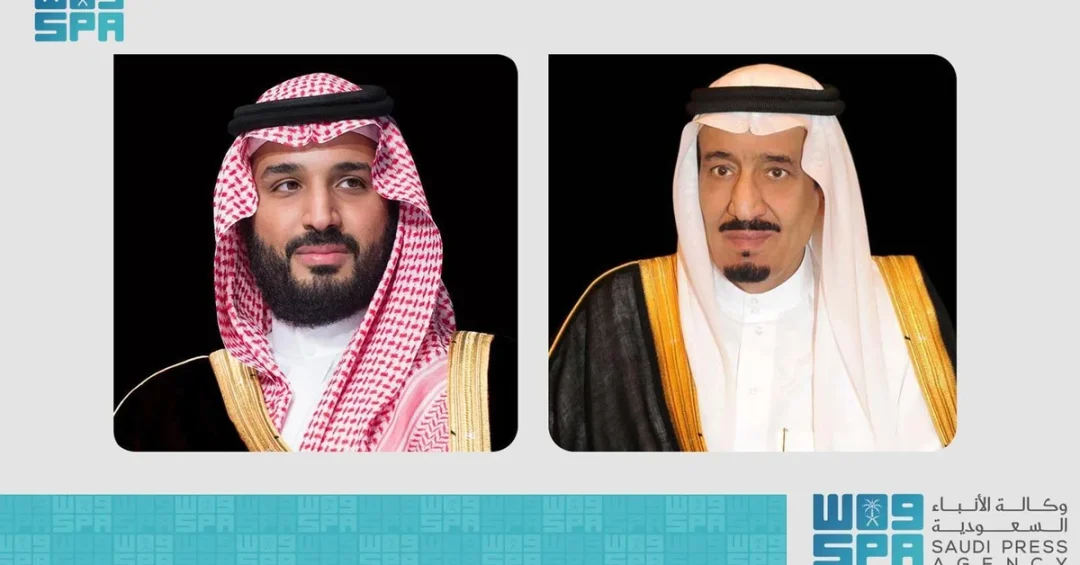
Sultan Haitham bin Tariq of Oman has congratulated Custodian of the Two Holy Mosques King Salman bin Abdulaziz Al Saud and His Royal Highness Prince Mohammed bin Salman bin Abdulaziz Al Saud, Crown Prince and Prime Minister, on the Kingdom of Saudi Arabia’s successful bid to host the FIFA World Cup 2034, according to the Saudi Press Agency. The two congratulatory cables, sent on December 12, 2024, reflect the close fraternal ties between the Sultanate of Oman and the Kingdom and underscore the regional pride accompanying Saudi Arabia’s historic achievement. The announcement that Saudi Arabia will host the world’s most-watched sporting tournament in 2034 has already generated a wave of support from leaders across the Gulf, the wider Arab world, and beyond, positioning the event as a milestone not only for Saudi sport but for the region’s growing role on the global stage. How did this diplomatic gesture come about, and what does it signal for the future of Saudi-Omani relations and the broader Middle East?
The Sultan’s message was delivered in the form of two separate cables, one addressed to the Custodian of the Two Holy Mosques and the other to HRH the Crown Prince. In both, Sultan Haitham commended Saudi Arabia’s considerable efforts in preparing to host this global sporting event, expressing his wishes for the Kingdom’s success in achieving its ambitious goals, both within the sports sector and across all areas of development. The timing of the cables, immediately following the official confirmation of Saudi Arabia’s winning bid, highlights the speed and warmth of the diplomatic response from Muscat and reinforces the depth of the relationship between the two neighboring states.
Context and Background
Why does this congratulatory message carry such weight? The relationship between Saudi Arabia and Oman has long been characterized by mutual respect, shared heritage, and a commitment to regional stability. Under the leadership of Sultan Haitham bin Tariq, who ascended the throne in January 2020, Oman has maintained its traditional role as a bridge-builder in the Gulf, while also deepening its economic and strategic ties with Riyadh. The two countries share a long border and a history of cooperation that spans trade, security, and cultural exchange. The Sultan’s decision to send formal cables of congratulation so promptly after the bid announcement is consistent with this tradition of close consultation and fraternal solidarity.
The FIFA World Cup 2034 bid win is the culmination of years of planning and investment by the Kingdom. Saudi Arabia’s football federation formally submitted its bid in 2023, and the campaign was built around the theme of ‘Growing Together,’ emphasizing the tournament’s potential to inspire a new generation of players and fans across Asia and the world. The bid received an unprecedented evaluation score from FIFA, and the official confirmation came during a FIFA Congress held virtually in December 2024. The event will be the first FIFA World Cup hosted in a single country under the expanded 48-team format, and the first to be held in the Middle East since Qatar 2022. For Saudi Arabia, hosting the tournament represents far more than a sporting milestone; it is a central component of the Kingdom’s Vision 2030 strategy to diversify the economy, promote tourism, and project a modern, forward-looking image to the global community.
Key Details of the Congratulatory Cables
What exactly did Sultan Haitham convey in his messages? According to the Saudi Press Agency, the Sultan’s cables praised the considerable efforts Saudi Arabia has made in preparing to host the global sporting event. He expressed his wishes for the Kingdom’s success in achieving its ambitious goals, both within the sports sector and across all areas of development. The language used in the cables reflects the high regard in which Oman holds its larger neighbor and the confidence that Saudi Arabia will deliver an exceptional tournament. The cables were not merely formalities; they carried a clear message of solidarity and support that resonates across the Gulf Cooperation Council (GCC) and the wider Arab world.
The exchange also underscores the personal rapport between Sultan Haitham and HRH the Crown Prince, who has spearheaded Saudi Arabia’s Vision 2030 reforms and its increasingly active foreign policy. The two leaders have met on multiple occasions in recent years, including at GCC summits and bilateral visits, where they discussed a range of issues from economic integration to regional security. The congratulatory cables are the latest example of the regular high-level communication that characterizes Saudi-Omani relations. In a region often marked by shifting alliances, the stability and warmth of this partnership stand out as a model of constructive neighborliness.
Furthermore, the cables arrived at a time when Saudi Arabia is preparing to host a series of major international events, including Expo 2030 in Riyadh and the 2029 Asian Winter Games in Trojena, part of the NEOM project. The World Cup 2034 will be the crowning jewel in this sequence, and the Sultan’s early endorsement adds diplomatic momentum to the Kingdom’s preparations. The Saudi Press Agency reported the cables in full, ensuring that the message of support was widely disseminated across the Kingdom and the region. The official Saudi narrative emphasizes that such endorsements from respected regional leaders are a testament to the Kingdom’s growing stature and its ability to bring the world together through sport.
International and Regional Impact
How will the Sultan’s congratulations influence regional dynamics? The message from Oman is part of a broader wave of international support for Saudi Arabia’s hosting bid. Following the official announcement, leaders from across the Middle East, Asia, Europe, and the Americas extended their congratulations to the Kingdom. The United Nations Secretary-General, the President of the International Olympic Committee, and numerous heads of state and government praised Saudi Arabia’s commitment to sport and its capacity to host a world-class event. Within the Gulf, the other GCC states—the United Arab Emirates, Bahrain, Kuwait, Qatar, and Oman—all issued statements of support, reflecting a unified regional stance behind the Kingdom’s achievement.
The Sultan’s cables also carry a subtle diplomatic message about the importance of Gulf unity. In recent years, Saudi Arabia has worked to strengthen GCC cohesion, and the World Cup bid has served as a rallying point for the region. Oman, with its long tradition of neutrality and mediation, has played a constructive role in this process. By publicly congratulating the Saudi leadership, Sultan Haitham reinforces the principle that Gulf states stand together in celebrating each other’s successes. This solidarity is particularly significant as the region navigates complex geopolitical challenges, from economic diversification to security concerns. The World Cup 2034 thus becomes not just a Saudi event but a Gulf and Arab event, with Oman among the first to embrace it as such.
Economic and Strategic Significance
What economic opportunities does the tournament present for Saudi Arabia and its neighbors? The FIFA World Cup 2034 is expected to generate billions of dollars in economic activity, from infrastructure investment to tourism and hospitality spending. Saudi Arabia has already committed to building or renovating 15 stadiums across five host cities—Riyadh, Jeddah, Abha, Al Khobar, and NEOM—along with extensive upgrades to transport networks, airports, and accommodation. These projects are aligned with Vision 2030’s goal of increasing the private sector’s contribution to GDP and creating jobs for Saudi youth. The tournament will also accelerate the Kingdom’s tourism ambitions, with an expected influx of millions of visitors before, during, and after the event.
For Oman, the World Cup presents opportunities for economic spillover. As a neighboring country with strong cultural and historical ties to Saudi Arabia, Oman could benefit from increased regional travel and trade. Omani businesses may find new markets for goods and services, and the shared border could see heightened commercial activity. Moreover, the event will shine a spotlight on the entire Gulf region, potentially boosting tourism across the GCC. The Sultan’s congratulatory message can be seen as an acknowledgment of these shared economic interests and a signal that Oman is ready to collaborate on making the most of the opportunities that the World Cup will bring.
Vision 2030 Alignment
How does hosting the World Cup fit into Saudi Arabia’s long-term vision? Vision 2030, launched in 2016 by HRH Crown Prince Mohammed bin Salman, aims to transform the Kingdom into a diversified, knowledge-based economy and a global hub for tourism, entertainment, and sport. The World Cup is a centerpiece of this strategy, showcasing Saudi Arabia’s modernization and its ability to host mega-events. The bid’s theme, ‘Growing Together,’ reflects the Vision’s emphasis on human development and international cooperation. By bringing the world to Saudi Arabia, the tournament will help change global perceptions, attract foreign investment, and inspire a new generation of Saudi athletes and citizens.
The Sultan of Oman’s congratulations are a recognition of this vision and a vote of confidence in Saudi Arabia’s ability to deliver. As the Kingdom prepares for 2034, it will continue to work closely with its Gulf neighbors, including Oman, to ensure the event’s success. The road ahead involves massive construction, logistical planning, and international coordination, but the early support from regional leaders provides a strong foundation. Ultimately, the World Cup 2034 will be remembered not only for the matches played but for the unity it fosters and the legacy it leaves for Saudi Arabia and the entire region. With friends like Oman standing by, the Kingdom is well positioned to host an unforgettable tournament that will inspire the world.
20 Questions
Q1. Who congratulated the Saudi leadership on the World Cup 2034 bid win?
A1. Sultan Haitham bin Tariq of Oman sent congratulatory cables to Custodian of the Two Holy Mosques King Salman bin Abdulaziz Al Saud and HRH Crown Prince Mohammed bin Salman, according to the Saudi Press Agency.
Q2. When were the congratulatory cables sent?
A2. The cables were sent on December 12, 2024, immediately after FIFA officially confirmed Saudi Arabia as the host of the 2034 FIFA World Cup, as reported by the Saudi Press Agency.
Q3. What did Sultan Haitham commend in his messages?
A3. He commended Saudi Arabia’s considerable efforts in preparing to host the global sporting event and expressed wishes for the Kingdom’s success in achieving its ambitious goals in sports and development.
Q4. To whom were the cables addressed?
A4. The cables were addressed separately to the Custodian of the Two Holy Mosques, King Salman bin Abdulaziz Al Saud, and to HRH Prince Mohammed bin Salman bin Abdulaziz Al Saud, Crown Prince and Prime Minister.
Q5. What is the significance of Oman’s congratulatory message?
A5. It reflects the strong fraternal ties between Saudi Arabia and Oman, underscores regional solidarity, and highlights the Gulf’s collective pride in Saudi Arabia’s historic achievement of hosting the World Cup.
Q6. How did the Saudi Press Agency report the cables?
A6. The Saudi Press Agency reported the cables in full, noting that Sultan Haitham praised Saudi Arabia’s efforts and wished the Kingdom success in its ambitious goals across sports and development.
Q7. What does hosting the 2034 World Cup mean for Saudi Arabia?
A7. It is a milestone in Saudi Arabia’s Vision 2030 strategy, showcasing the Kingdom’s modernization, boosting tourism, creating jobs, and enhancing its global standing as a hub for major international events.
Q8. Which cities in Saudi Arabia will host World Cup matches?
A8. The host cities include Riyadh, Jeddah, Abha, Al Khobar, and NEOM. Saudi Arabia plans to build or renovate 15 stadiums across these locations for the tournament.
Q9. How does the World Cup align with Vision 2030?
A9. The tournament supports Vision 2030’s goals of economic diversification, tourism growth, and international engagement. It also promotes youth development and showcases Saudi Arabia’s capacity to host global events.
Q10. What economic benefits could the World Cup bring to the region?
A10. The event is expected to generate billions in economic activity, boost tourism, and create opportunities for neighboring countries like Oman through increased travel, trade, and regional visibility.
Q11. How have other Gulf countries reacted to Saudi Arabia’s World Cup win?
A11. Other GCC states, including the UAE, Bahrain, Kuwait, and Qatar, have also congratulated Saudi Arabia, reflecting a unified regional stance of support for the Kingdom’s achievement.
Q12. What is the theme of Saudi Arabia’s World Cup 2034 bid?
A12. The bid’s theme is ‘Growing Together,’ emphasizing the tournament’s potential to inspire a new generation of players and fans across Asia and the world, and to foster international cooperation.
Q13. How many teams will participate in the 2034 World Cup?
A13. The 2034 World Cup will feature 48 teams under the expanded format, making it the first tournament hosted in a single country with this many participants.
Q14. What other major events is Saudi Arabia hosting in the coming years?
A14. Saudi Arabia is preparing to host Expo 2030 in Riyadh and the 2029 Asian Winter Games in Trojena, part of the NEOM project, further demonstrating its event-hosting capabilities.
Q15. How does Oman benefit from Saudi Arabia hosting the World Cup?
A15. Oman could benefit from increased regional travel, trade, and economic spillover. Omani businesses may find new markets, and the shared border could see heightened commercial activity.
Q16. What did Sultan Haitham wish for Saudi Arabia?
A16. He expressed his wishes for the Kingdom’s success in achieving its ambitious goals, both within the sports sector and across all areas of development, according to the Saudi Press Agency.
Q17. Why is the timing of the cables significant?
A17. The immediate response from Oman demonstrates the warmth of Saudi-Omani relations and the speed of diplomatic support, reinforcing the strong bilateral ties between the two neighboring countries.
Q18. How does the World Cup 2034 fit into Saudi Arabia’s broader sports strategy?
A18. It is a centerpiece of Saudi Arabia’s efforts to become a global sports hub, complementing other initiatives like the Saudi Pro League and major boxing, Formula 1, and golf events hosted in the Kingdom.
Q19. What infrastructure developments are planned for the World Cup?
A19. Saudi Arabia plans extensive upgrades to transport networks, airports, and accommodation, alongside building or renovating 15 stadiums, to ensure a world-class experience for players and fans.
Q20. What legacy will the 2034 World Cup leave for Saudi Arabia and the region?
A20. The tournament is expected to leave a lasting legacy of improved infrastructure, economic diversification, enhanced global perception, and strengthened regional unity, aligning with Saudi Arabia’s Vision 2030 goals.
Reader Feedback
We value your thoughts. Please share your feedback on this article.
Your feedback helps us improve our coverage.
Related articles
 Yemeni President Congratulates Saudi Leadership on 2034 World Cup
 Arab League Chief Congratulates Saudi Arabia on 2034 World Cup
 Five Saudi Cities to Host 48 Teams in FIFA World Cup 2034
 New Murabba Stadium to Shine at FIFA World Cup 2034
 Tunisian Media Hails Saudi Arabia as 2034 World Cup Host
 Eastern Region Celebrates Saudi Arabia’s FIFA World Cup 2034 Hosting