


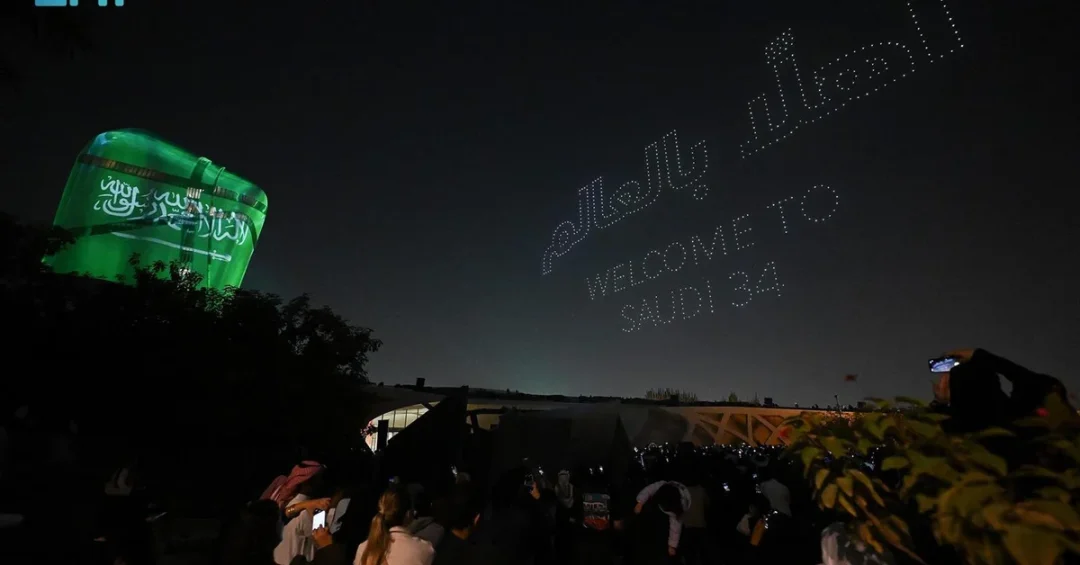
The Eastern Region of Saudi Arabia celebrated the Kingdom’s successful bid to host the FIFA World Cup 2034™ with a vibrant series of events across its cities, as reported by the Saudi Press Agency (SPA) on December 12, 2024. The festivities, which embraced the tournament’s official identity, included live performances, interactive activities, aquatic and aerial displays, folkloric music bands, and impressive sand sculptures, all showcased across numerous corniches, parks, and beaches. Streets and avenues were adorned with flags and illuminated sculptures, while municipal buildings prominently displayed the tournament’s logo, reflecting a broad celebration of this historic achievement and underscoring support for Saudi Vision 2030’s ambition to host major global events.
This celebration follows the official confirmation of Saudi Arabia as the host nation for the 2034 FIFA World Cup, a milestone that marks the first time the tournament will be held in the Kingdom. The Eastern Region, known for its rich cultural heritage and strategic economic importance, played a central role in the nationwide festivities. From the bustling corniche of Dammam to the serene beaches of Al Khobar and the cultural landmarks of Al Ahsa, the region transformed into a canvas of national pride, welcoming residents and visitors alike to share in the joy of this unprecedented sporting honor.
Context and Background
How did the Eastern Region become the epicenter of such widespread celebration? The answer lies in its unique position as a crossroads of culture, commerce, and community. The Eastern Region, or Ash Sharqiyah, is home to some of Saudi Arabia’s most dynamic cities, including Dammam, Dhahran, Al Khobar, Qatif, and Al Ahsa. Each of these areas contributed to the festivities with distinct local flair, from traditional folkloric performances that echo the region’s Bedouin and maritime heritage to modern interactive installations that highlight its forward-looking spirit. The municipal authorities coordinated efforts to decorate public spaces, ensuring that the World Cup logo and national flags were visible at every turn.
The celebrations were not merely spontaneous outpourings but part of a carefully orchestrated national campaign to mark the Kingdom’s hosting rights. The Saudi Press Agency reported that the events were designed to engage all segments of society, from families and youth to expatriates and tourists. This inclusive approach reflects the broader ethos of Saudi Vision 2030, which seeks to foster a vibrant society, a thriving economy, and an ambitious nation. By hosting the World Cup, Saudi Arabia aims to showcase its capabilities on the global stage, and the Eastern Region’s enthusiastic participation is a testament to the collective commitment to this vision.
Historically, the Eastern Region has been a hub of Saudi Arabia’s oil industry and a gateway to the Gulf, but in recent years, it has also emerged as a center for tourism, education, and innovation. The World Cup celebrations thus served a dual purpose: honoring a sporting milestone and highlighting the region’s evolving identity. As the Kingdom prepares to welcome the world in 2034, events like these help build anticipation and demonstrate the readiness of Saudi cities to host international visitors.
Key Details of the Celebrations
What exactly did the festivities entail, and how did they capture the imagination of the public? According to the Saudi Press Agency, the Eastern Region’s celebrations featured a diverse array of activities spread across multiple locations. Live performances by local and regional artists drew crowds to corniches and parks, where stages were set up for music, dance, and theatrical shows. Interactive activities, including sports clinics, virtual reality experiences, and children’s zones, allowed attendees of all ages to engage with the World Cup theme. Aquatic displays, such as illuminated fountains and water shows, added a mesmerizing visual element, particularly along the coastlines of Dammam and Al Khobar.
Aerial displays, likely involving drones or light aircraft, painted the night sky with the colors of the Saudi flag and the World Cup emblem, creating a spectacle that was visible from miles around. Folkloric music bands performed traditional Saudi music, including the ardha and other regional styles, connecting the modern celebration to the Kingdom’s deep-rooted cultural traditions. Sand sculptures, crafted by local artists, depicted football scenes, iconic Saudi landmarks, and the World Cup trophy, serving as photo opportunities and artistic tributes to the occasion.
Streets and avenues across the region were adorned with thousands of flags and illuminated sculptures, while municipal buildings displayed the tournament’s logo prominently. This extensive decoration effort involved coordination between local municipalities, the Ministry of Sport, and other government entities. The celebrations were not limited to major cities; smaller towns and villages also participated, ensuring that the joy of hosting the World Cup was felt throughout the Eastern Region. The SPA noted that these efforts reflect a broader celebration of the historic achievement and underscore support for Saudi Vision 2030’s ambition to host major global events.
International and Regional Impact
How does Saudi Arabia’s hosting of the FIFA World Cup 2034™ resonate beyond its borders? The confirmation of the Kingdom as host has been met with widespread acclaim from international football governing bodies and nations around the world. FIFA President Gianni Infantino has praised Saudi Arabia’s commitment to developing football and its ability to deliver a world-class tournament. The event is expected to draw millions of visitors to the Kingdom, boosting tourism, hospitality, and related sectors. For the Eastern Region, this presents a unique opportunity to showcase its attractions, from the UNESCO World Heritage site of Al Ahsa Oasis to the modern architectural marvels of Dhahran and the vibrant waterfront of Al Khobar.
Regionally, the World Cup is seen as a catalyst for further integration and cooperation among Gulf Cooperation Council (GCC) states. Neighboring countries have expressed support for Saudi Arabia’s hosting, recognizing the potential for shared economic benefits and cultural exchange. The tournament will also serve as a platform for highlighting Arab culture and hospitality to a global audience, challenging stereotypes and fostering mutual understanding. In the context of the Middle East, Saudi Arabia’s successful bid is a source of pride and a signal of the region’s growing influence in global sports.
The international media has highlighted the Kingdom’s investments in sports infrastructure, including the planned construction of new stadiums and the upgrade of existing facilities. These developments are part of a larger strategy to position Saudi Arabia as a premier destination for sports and entertainment. The Eastern Region, with its existing sports complexes and hospitality venues, is poised to play a significant role in hosting matches and accommodating fans. The celebrations in December 2024 were thus not just a local event but a preview of the global spectacle to come.
Economic and Strategic Significance
What economic and strategic benefits does the World Cup bring to the Eastern Region and Saudi Arabia as a whole? The tournament is expected to generate substantial economic activity, from construction and infrastructure projects to tourism and retail. According to official estimates, hosting the World Cup could contribute billions of dollars to the Saudi economy and create thousands of jobs. The Eastern Region, as a key industrial and commercial hub, stands to gain from increased investment in transportation, accommodation, and public services. The celebrations themselves provided an immediate boost to local businesses, as crowds flocked to restaurants, shops, and entertainment venues.
Strategically, the World Cup aligns with Saudi Vision 2030’s goals of diversifying the economy away from oil dependence and promoting sectors such as tourism, entertainment, and sports. The event will accelerate the development of smart cities, sustainable infrastructure, and digital services. It also enhances Saudi Arabia’s soft power, demonstrating its ability to organize mega-events and manage large-scale international gatherings. The Eastern Region’s role in the celebrations underscores its importance as a driver of national growth and a bridge between the Kingdom and the wider world.
Furthermore, the World Cup is a key component of the Kingdom’s broader sports strategy, which includes hosting Formula 1 races, heavyweight boxing matches, and other global events. These initiatives are designed to attract visitors, stimulate economic activity, and inspire a new generation of Saudi athletes. The Eastern Region’s diverse activities during the celebration reflect this multi-faceted approach, combining sports, culture, and entertainment to create a lasting legacy.
Vision 2030 Alignment
How does the Eastern Region’s celebration embody the aspirations of Saudi Vision 2030? Vision 2030, launched in 2016 by Crown Prince Mohammed bin Salman, aims to transform Saudi Arabia into a global investment powerhouse and a hub connecting three continents. Hosting the FIFA World Cup 2034™ is a cornerstone of this vision, showcasing the Kingdom’s progress in sports, tourism, and infrastructure. The celebrations in the Eastern Region, with their emphasis on community participation, cultural heritage, and modern entertainment, perfectly illustrate the vision’s three pillars: a vibrant society, a thriving economy, and an ambitious nation.
The events also highlight the vision’s focus on quality of life, as families and individuals enjoyed safe, inclusive, and entertaining activities. By engaging citizens and residents in the celebration, the Kingdom fosters a sense of ownership and pride in the national journey. As Saudi Arabia prepares to welcome the world in 2034, the Eastern Region’s enthusiastic festivities serve as a reminder of the Kingdom’s readiness and its commitment to delivering an unforgettable World Cup. This historic achievement is not just about football; it is about showcasing Saudi Arabia’s transformation and its role as a global leader.
20 Questions
Q1. What event did the Eastern Region celebrate in December 2024?
A1. The Eastern Region celebrated Saudi Arabia’s successful bid to host the FIFA World Cup 2034™ with a series of vibrant events across its cities, as reported by the Saudi Press Agency.
Q2. Which Saudi region hosted the celebrations mentioned in the article?
A2. The Eastern Region of Saudi Arabia, including cities like Dammam, Al Khobar, and Al Ahsa, hosted the celebrations with diverse activities.
Q3. What types of activities were included in the celebrations?
A3. The festivities included live performances, interactive activities, aquatic and aerial displays, folkloric music bands, and impressive sand sculptures across various locations.
Q4. How were streets and municipal buildings decorated?
A4. Streets and avenues were adorned with flags and illuminated sculptures, while municipal buildings prominently displayed the FIFA World Cup 2034™ logo.
Q5. What is the significance of Saudi Arabia hosting the FIFA World Cup 2034™?
A5. It marks the first time the tournament will be held in the Kingdom, showcasing Saudi Arabia’s capabilities and supporting Vision 2030’s goal to host major global events.
Q6. Which Saudi Vision 2030 ambition does the celebration support?
A6. The celebration supports Vision 2030’s ambition to host major global events and enhance the Kingdom’s international standing.
Q7. Where did the celebrations take place in the Eastern Region?
A7. They took place across numerous corniches, parks, and beaches in various cities of the Eastern Region.
Q8. What role did folkloric music bands play in the celebrations?
A8. Folkloric music bands performed traditional Saudi music, connecting the modern celebration to the Kingdom’s deep-rooted cultural traditions.
Q9. How did sand sculptures contribute to the festivities?
A9. Sand sculptures depicted football scenes, iconic Saudi landmarks, and the World Cup trophy, serving as artistic tributes and photo opportunities.
Q10. What was the purpose of the aquatic and aerial displays?
A10. The aquatic and aerial displays added a mesmerizing visual element, with illuminated fountains and drone shows painting the sky with Saudi colors.
Q11. How did the Eastern Region’s celebration reflect national pride?
A11. The widespread decoration, community participation, and diverse activities fostered a sense of national pride and unity among residents and visitors.
Q12. Which government agency reported on the celebrations?
A12. The Saudi Press Agency (SPA) reported on the celebrations, highlighting the events and their alignment with Vision 2030.
Q13. What economic benefits are expected from hosting the World Cup?
A13. The tournament is expected to generate billions of dollars, create jobs, and boost sectors like tourism, hospitality, and infrastructure in the Eastern Region and beyond.
Q14. How does the World Cup align with Saudi Vision 2030?
A14. It aligns with Vision 2030 by diversifying the economy, promoting tourism and sports, and enhancing Saudi Arabia’s soft power and global role.
Q15. What international reactions followed Saudi Arabia’s successful bid?
A15. International football bodies and nations praised Saudi Arabia’s commitment, recognizing the potential for economic and cultural exchange.
Q16. How will the Eastern Region benefit from the World Cup?
A16. The Eastern Region will benefit from increased investment, tourism, and infrastructure development, showcasing its attractions to a global audience.
Q17. What is the significance of the World Cup logo on municipal buildings?
A17. Displaying the logo reflects the Kingdom’s official embrace of the tournament and signals widespread support for the historic achievement.
Q18. How did the celebrations engage different segments of society?
A18. The events included activities for families, youth, expatriates, and tourists, ensuring inclusive participation and community engagement.
Q19. What legacy will the World Cup leave for Saudi Arabia?
A19. The World Cup will leave a legacy of improved infrastructure, enhanced global reputation, and inspiration for future generations of Saudi athletes.
Q20. What does the Eastern Region’s celebration symbolize for Saudi Arabia’s future?
A20. It symbolizes the Kingdom’s readiness to host global events, its cultural richness, and its unwavering commitment to achieving Vision 2030 goals.
Reader Feedback
We value your thoughts. Please share your feedback on this article.
Your feedback helps us improve our coverage.
Related articles
 UAE Leaders Congratulate Saudi Arabia on FIFA World Cup 2034
 Bahraini Crown Prince Congratulates Saudi Leadership on Hosting FIFA World Cup 2034™
 IsDB Chairman Congratulates Saudi Leadership on FIFA World Cup 2034
 UAE Leaders Congratulate Saudi Arabia on 2034 World Cup Hosting
 Prince Abdullah bin Fahd Crowns Gaudiano as SAEF Cup Champion
 Saudi Arabia Celebrates FIFA World Cup 2034 Win at Afforestation Forum