


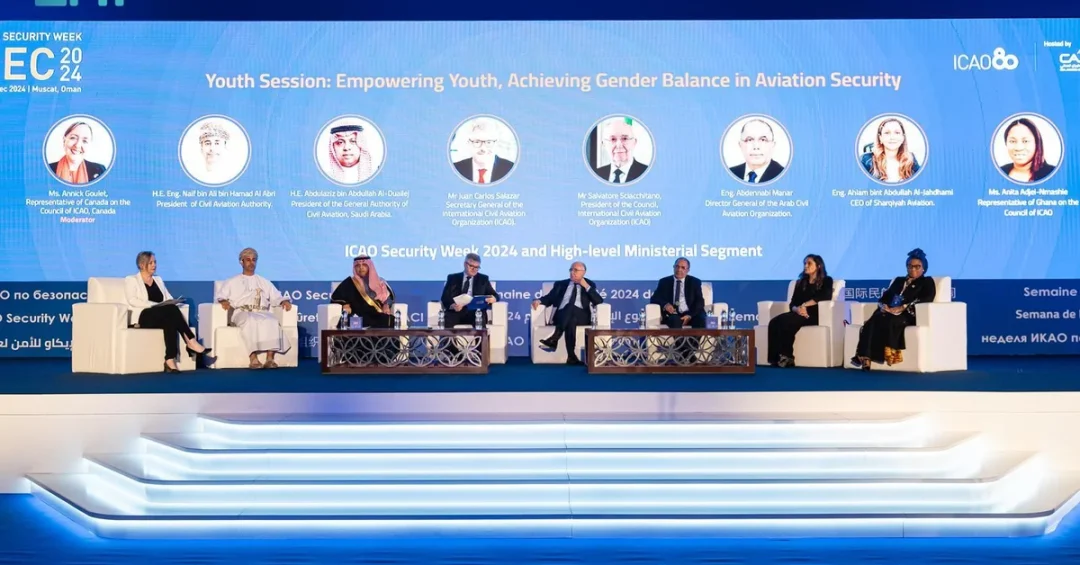
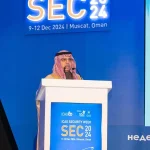
The President of Saudi Arabia’s General Authority of Civil Aviation (GACA), Abdulaziz Al-Duailej, told an international gathering in Muscat that young people hold the key to the next era of civil aviation security, describing the sector’s future as a shared responsibility built on advanced technology, creative thinking, and inclusive opportunity. Speaking during a dedicated youth session held alongside the International Civil Aviation Organization (ICAO) Security Week, which GACA is hosting in the Sultanate of Oman until December 12, Al-Duailej said aviation security is no longer defined only by systems and procedures but by the people who design, operate, and continually improve them.
The event brought together leaders and heads of civil aviation organizations and authorities from around the world, giving Saudi Arabia a prominent platform to shape global conversations about how airports, airlines, and regulators can stay ahead of evolving threats. For an international audience watching the Kingdom’s expanding role in global transport governance, the message was direct: the generation now entering the workforce brings digital fluency and fresh perspective that traditional security models cannot afford to ignore. Al-Duailej’s remarks also placed Saudi Arabia at the center of a broader ICAO effort to modernize how the world trains, recruits, and retains aviation security professionals.
Context and Background
How did aviation security become one of the most closely coordinated fields in global transport? For decades, ICAO has set the standards and recommended practices that governments use to protect passengers, crews, cargo, and infrastructure. Those standards are only as strong as the people who implement them, which is why ICAO has invested in initiatives such as the Next Generation of Aviation Professionals program. The initiative is designed to attract, educate, and retain the talent that civil aviation will need as traffic grows and threats become more sophisticated.
Al-Duailej’s participation in the youth session reflects Saudi Arabia’s view that human capital is as important as hardware. As GACA President, he oversees a regulator that has been expanding the Kingdom’s aviation footprint at an extraordinary pace, from airport modernization to new routes and record passenger numbers. His presence in Muscat, at an event hosted by GACA under ICAO’s umbrella, signals that Saudi Arabia intends to be a convening power in civil aviation, not merely a participant in decisions made elsewhere.
The timing matters. Global air travel has rebounded strongly, and regulators face pressure to keep security rigorous without slowing the movement of people and goods. At the same time, artificial intelligence, big data, and automation are reshaping how risks are detected and managed. In that environment, the skills gap is a security issue, and the countries that solve it first will set the benchmark for everyone else.
Key Details
In his remarks, Al-Duailej explained that ICAO has established precise aviation security standards and aims, through programs like the Next Generation of Aviation Professionals, to empower young people with training and varied professional opportunities. He added that the young generation can use advanced technology, including artificial intelligence and big data, to develop more efficient and effective security systems. That combination of standards plus technology plus new talent is the core of the Saudi argument.
He also stressed that promoting gender balance in the aviation sector is necessary to achieve justice and equality and contributes to improved performance and more innovative decisions. He pointed to ICAO’s Gender Equality Program, which aims to empower women to work in aviation security. The Saudi position, as articulated by Al-Duailej, is that diversity is not a symbolic goal but an operational advantage: broader teams ask better questions and spot risks that narrower groups may miss.
What does that mean in practice for a young professional entering the field today? It means careers that blend cybersecurity, data analytics, behavioral analysis, and international regulation, not just checkpoint operations. It also means that aviation security agencies will need to compete for talent with technology companies and other high-growth sectors. Al-Duailej’s emphasis on training programs and professional pathways responds directly to that competition, positioning civil aviation as a meaningful long-term career rather than a temporary job.
International and Regional Impact
Why should the rest of the world pay attention to a youth session in Muscat? Because aviation security is only as strong as its weakest link, and the global system depends on consistent capability across every region. When a major aviation regulator like GACA invests in standards, training, and inclusion, it raises the baseline for partners across the Middle East, Asia, Africa, and Europe. The ICAO Security Week setting amplifies that effect by putting Saudi and Omani leadership alongside global decision-makers.
Regionally, the Gulf is one of the most dynamic aviation markets in the world, with new airports, expanded carriers, and growing transit traffic. That growth increases the value of cooperation between regulators. Al-Duailej’s message reinforces a cooperative model in which countries share best practices, harmonize training, and align on technology adoption. For international travelers, the practical result is a more predictable and secure journey through one of the world’s busiest air corridors.
The youth dimension adds a longer-term layer. Aviation faces a well-documented wave of retirements and a shortage of qualified security personnel in several markets. If the industry can attract young talent at scale, it can avoid the bottlenecks that would otherwise constrain growth. Saudi Arabia’s willingness to champion that agenda gives it credibility as a partner in multilateral forums and strengthens its case for leadership roles in global aviation governance.
Economic and Strategic Significance
How does aviation security connect to economic ambition? Air connectivity is a foundation of trade, tourism, and investment, and security is the precondition for both. Saudi Arabia’s aviation strategy is central to its economic diversification: more flights and more visitors require confidence that safety and security systems are world-class. By tying youth empowerment and technology adoption to security outcomes, GACA is addressing a factor that directly affects airline schedules, airport capacity, and investor sentiment.
There is also a strategic dimension. As Saudi Arabia positions itself as a global logistics and tourism hub, its regulatory reputation becomes an asset. Recognition from ICAO and collaboration with peer authorities validate the Kingdom’s approach and make it easier for Saudi carriers and airports to expand internationally. Al-Duailej’s remarks in Muscat are therefore not isolated comments; they are part of a deliberate effort to project competence, openness, and forward planning in a sector where trust is everything.
For the private sector, the message is an invitation. Airlines, technology firms, training academies, and cybersecurity providers all have roles to play in building the next generation of security systems. The Saudi approach, as described by Al-Duailej, favors partnership and innovation over rigid hierarchy, which creates opportunities for companies that can deliver practical tools and measurable improvements.
Vision 2030 Alignment
How does this fit Saudi Arabia’s long-term vision? Vision 2030 is built on diversifying the economy, empowering young people, and expanding the Kingdom’s global engagement, and civil aviation sits at the intersection of all three. The National Aviation Strategy aims to connect Saudi Arabia to more than 250 destinations, carry hundreds of millions of passengers, and generate tens of thousands of jobs. None of that is possible without security systems that earn international confidence and a workforce capable of running them.
Al-Duailej’s emphasis on youth, technology, and gender balance mirrors the Vision 2030 commitment to human capability development. By investing in training, promoting women’s participation, and embracing AI and data-driven tools, GACA is aligning aviation security with the broader national goal of building a knowledge economy. The result is a sector that not only protects travelers but also creates high-value careers for Saudis and contributes to the Kingdom’s reputation as a responsible global actor.
As ICAO Security Week continues in Oman, the conversation Al-Duailej helped lead will shape how the world thinks about security talent for years to come. For Saudi Arabia, the message is consistent: the Kingdom is investing in people, technology, and partnerships to make aviation safer and more inclusive, and it intends to remain at the forefront of that effort as Vision 2030 moves from blueprint to reality.
20 Questions
Q1. What event did GACA President Abdulaziz Al-Duailej participate in?
A1. He took part in a youth session held alongside ICAO Security Week in Muscat, Oman, which GACA is hosting until December 12, 2024, with civil aviation leaders from around the world attending.
Q2. What is the main message Al-Duailej delivered about young people?
A2. He stressed that the younger generation plays a pivotal role in enhancing civil aviation security, using advanced technologies such as artificial intelligence and big data to build more efficient and effective security systems.
Q3. How did Al-Duailej describe aviation security?
A3. He said aviation security is not just systems and procedures, but a joint responsibility that relies on modern technologies and a creative vision shared across the entire sector.
Q4. What is ICAO’s Next Generation of Aviation Professionals initiative?
A4. It is an ICAO program that aims to empower young people through training programs and various professional opportunities, helping to build the skilled workforce that global civil aviation needs.
Q5. Why is gender balance important in aviation security, according to Al-Duailej?
A5. He said promoting gender balance is necessary to achieve justice and equality and contributes to improved performance and more innovative decisions within aviation security organizations worldwide.
Q6. What is ICAO’s Gender Equality Program?
A6. It is an ICAO initiative designed to empower women to work in aviation security, supporting fairer representation and stronger outcomes across the global aviation sector.
Q7. Which technologies did Al-Duailej highlight as key to better security?
A7. He highlighted artificial intelligence and big data, noting that the young generation can use these advanced technologies to develop more efficient and effective security systems for airports and airlines.
Q8. Where was ICAO Security Week being hosted?
A8. It was hosted in the Sultanate of Oman, with GACA hosting the event until December 12, bringing together leaders and heads of civil aviation organizations and authorities from all over the world.
Q9. Who attended ICAO Security Week?
A9. The event gathered leaders and heads of civil aviation organizations and authorities from many countries, creating a global platform for discussing security standards, training, and emerging technologies.
Q10. What role does GACA play in Saudi Arabia’s aviation sector?
A10. GACA is the General Authority of Civil Aviation, the Kingdom’s regulator responsible for overseeing civil aviation safety, security, and development in line with national and international standards.
Q11. How does youth empowerment connect to aviation security?
A11. Young professionals bring digital fluency and fresh perspectives, helping security agencies adopt new tools, respond to evolving threats, and sustain the workforce as experienced personnel retire.
Q12. Why is international cooperation important in aviation security?
A12. Because aviation is a global network, security is only as strong as its weakest link, so countries must share standards, training, and technology to protect passengers everywhere.
Q13. What does Al-Duailej’s participation signal about Saudi Arabia’s role?
A13. It signals that Saudi Arabia is an active leader in global aviation governance, willing to convene partners, share expertise, and shape the future of security standards.
Q14. How does aviation security relate to economic growth?
A14. Strong security enables more flights, tourism, and trade by building confidence among travelers and investors, making it a foundation for economic diversification and connectivity.
Q15. What is the significance of the youth session format?
A15. It gives young professionals a direct voice in high-level discussions, ensuring that the people who will implement future security systems help shape the strategies behind them.
Q16. How does this event align with Vision 2030?
A16. Vision 2030 emphasizes youth empowerment, economic diversification, and global engagement, and civil aviation security supports all three by enabling growth and building high-value careers.
Q17. What challenges does the aviation security sector face?
A17. The sector faces evolving threats, rapid technological change, and a shortage of qualified personnel in some markets, making training and recruitment urgent priorities for regulators.
Q18. How can AI and big data improve aviation security?
A18. They can analyze large volumes of information quickly, detect patterns, and support faster, more accurate decisions, helping security teams focus resources where risks are highest.
Q19. Why is inclusion considered an operational advantage?
A19. Broader teams with diverse perspectives ask better questions and identify risks that narrower groups may overlook, leading to more robust and innovative security solutions.
Q20. What is the expected long-term outcome of these efforts?
A20. A more secure, efficient, and inclusive global aviation system, supported by a new generation of skilled professionals and stronger international cooperation under ICAO standards.
Reader Feedback
We value your thoughts. Please share your feedback on this article.
Your feedback helps us improve our coverage.
Related articles
 Saudi FM Receives Call from Spanish Counterpart
 King Salman Congratulates Burkina Faso on Republic Day
 Jazan Governor Receives Sudanese Ambassador in Diplomatic Meeting
 Crown Prince Congratulates Burkina Faso on Republic Day
 Saudi Arabia, Somalia Sign Labor Cooperation Agreements
 Saudi Arabia Leads Global Aviation Security Efforts