


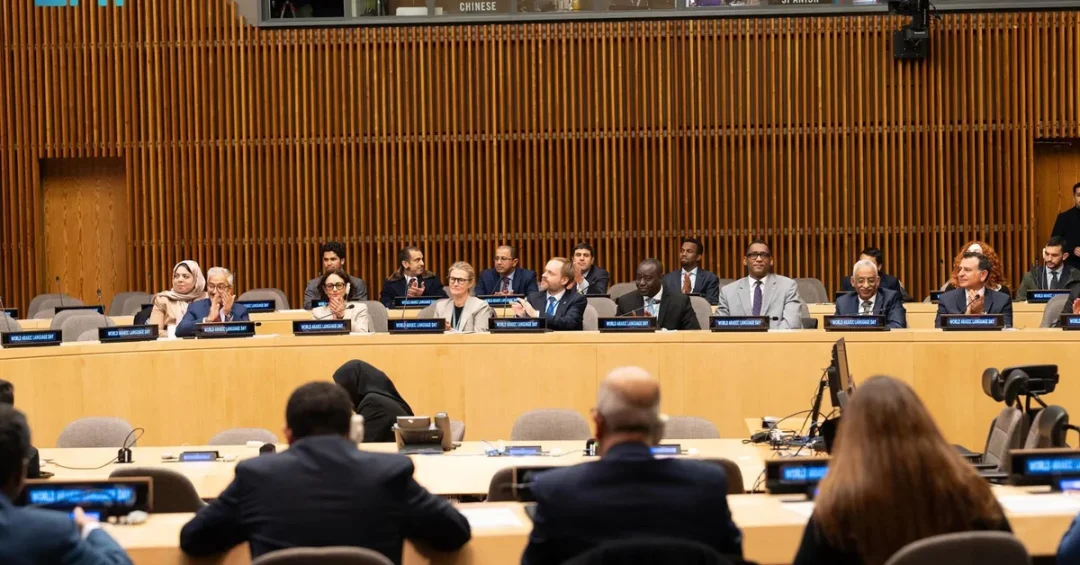
The King Salman Global Academy for the Arabic Language inaugurated the World Arabic Language Day 2024 celebration and its accompanying exhibition at the United Nations headquarters in New York City on December 11, 2024, under the patronage of Prince Badr bin Abdullah bin Farhan, Minister of Culture and Chairman of the Academy’s Board of Trustees. The event, organized in cooperation with the Kingdom’s permanent mission to the United Nations, is being held under the theme “Arabic Language and Artificial Intelligence: Enhancing Innovation While Preserving Cultural Heritage.” This marks the fourth consecutive year the Academy has led the celebration at the UN, underscoring Saudi Arabia’s sustained commitment to elevating Arabic’s presence in international organizations. How does such a gathering shape the way the world perceives a language spoken by hundreds of millions? The ceremony brought together diplomatic and international figures to explore the intersection of technology and linguistic heritage.
The event reflects a broader Saudi effort, rooted in Vision 2030, to promote Arabic as a pillar of cultural identity and a bridge between civilizations. The Academy’s secretary-general, Dr. Abdullah bin Saleh Al-Washmi, delivered a keynote speech emphasizing the Kingdom’s pivotal role in supporting the Arabic language globally, noting that Arabic is the language of the Holy Quran and a cornerstone of Saudi heritage. The choice of New York as the venue signals a deliberate strategy to engage the international community at the heart of global diplomacy. What does it mean for a language to be celebrated not only in its homeland but at the world’s foremost multilateral institution?
Context and Background
World Arabic Language Day is observed annually on December 18, commemorating the date in 1973 when the United Nations General Assembly adopted a landmark resolution recognizing Arabic as one of its six official languages. That decision, driven by member states including Saudi Arabia, marked a turning point in the global recognition of Arabic’s cultural and diplomatic significance. Since then, the language has become an integral part of UN proceedings, documentation, and interpretation services. The King Salman Global Academy for the Arabic Language, established in 2020, has taken a leading role in advancing this legacy. Why does a language’s official status at the UN matter beyond symbolism? It ensures that Arabic-speaking nations can participate fully in international dialogue and that Arabic cultural heritage is preserved within the world’s most important deliberative body.
The Academy operates in over 60 countries, a testament to its global reach and its mission to enhance the status of Arabic and develop tools for its teaching and dissemination. Its work spans linguistic research, digital innovation, and educational programs that cater to both native speakers and learners. The 2024 celebration at the UN is part of a broader series of initiatives aimed at promoting the cultural and scientific richness of Arabic. These efforts align with Saudi Arabia’s Vision 2030, which seeks to diversify the economy and strengthen cultural diplomacy. How can a language academy contribute to a nation’s soft power? By fostering appreciation for Arabic’s literary and scientific contributions, the Academy helps project a modern, dynamic image of Saudi Arabia while preserving its deep-rooted traditions.
The theme for 2024, “Arabic Language and Artificial Intelligence: Enhancing Innovation While Preserving Cultural Heritage,” reflects a growing global awareness of the need to integrate advanced technologies with linguistic preservation. As artificial intelligence transforms communication, the Arabic language faces both opportunities and challenges. Digital tools can facilitate learning and translation, but they must be designed to respect the language’s nuances and cultural context. The Academy’s focus on AI underscores its forward-looking approach, positioning Arabic not as a relic of the past but as a living language ready for the digital age. What role can AI play in safeguarding linguistic diversity? It can democratize access to Arabic learning, enable real-time translation, and help archive vast amounts of textual heritage, ensuring that future generations remain connected to their linguistic roots.
Key Details
During the opening ceremony, Dr. Abdullah bin Saleh Al-Washmi highlighted the Kingdom’s pivotal role in supporting Arabic globally, rooted in Vision 2030 and Saudi Arabia’s status as the birthplace of the Arabic language and the Holy Quran. He noted that this year’s theme reflects a growing global awareness of the importance of the Arabic language. Al-Washmi also underscored the Academy’s role as a leading institution working to enhance Arabic’s status and develop tools for its teaching and dissemination locally and internationally. The event was attended by a distinguished group of diplomatic and international figures, including the undersecretary-general for General Assembly and conference management, the coordinator for multilingualism at the United Nations, the deputy chief of staff to the president of the General Assembly, Saudi Arabia’s ambassador and permanent representative to the United Nations, and the deputy permanent observer of the Arab League to the United Nations. What does the presence of such high-ranking officials signify? It demonstrates that Arabic’s role in multilateral diplomacy is recognized and valued at the highest levels.
Al-Washmi emphasized the historical significance of Arabic at the UN, recalling the 1973 General Assembly resolution that recognized it as an official language. That resolution was a milestone in the global acknowledgment of Arabic’s cultural and scientific contributions. He also pointed to the Academy’s operations in more than 60 countries, illustrating its global impact and its commitment to serving Arabic speakers and learners worldwide. The exhibition accompanying the celebration showcased the Academy’s initiatives, including digital platforms, educational resources, and research projects. These displays offered UN delegates and visitors a glimpse into the richness of Arabic heritage and the innovative methods being used to preserve and promote it. How does an exhibition at the UN enhance cultural understanding? By providing a tangible, interactive experience, it allows diplomats and international staff to engage with Arabic culture beyond formal speeches, fostering deeper appreciation and dialogue.
The fourth consecutive year of celebrating World Arabic Language Day at the UN highlights Saudi Arabia’s consistent commitment to strengthening Arabic’s presence in international organizations. This continuity is significant, as it builds momentum and ensures that the language remains a priority on the global agenda. The Academy’s efforts are part of a broader strategy to promote Arabic as a language of science, culture, and diplomacy. By hosting events at the UN, the Academy not only celebrates the language but also advocates for its integration into cutting-edge fields such as artificial intelligence. What does it take to keep a language vibrant in the 21st century? It requires sustained investment in education, technology, and international cooperation—precisely the areas where the Academy is focusing its resources.
International and Regional Impact
The celebration at the United Nations serves as a powerful statement of Saudi Arabia’s cultural diplomacy. By bringing Arabic to the world’s premier multilateral stage, the Kingdom reinforces its role as a custodian of the language and a bridge between the Arab world and the international community. The event also strengthens ties with other Arabic-speaking nations, as the Arab League’s deputy permanent observer participated, underscoring a collective commitment to the language. Regional organizations and governments can leverage such platforms to share best practices and collaborate on initiatives that promote Arabic in education, media, and technology. How does this affect the global perception of Saudi Arabia? It showcases the Kingdom as a proactive, forward-looking nation that values its heritage while embracing innovation, aligning with the principles of Vision 2030.
The focus on artificial intelligence and cultural heritage resonates beyond the Arab world. Many countries face the challenge of preserving linguistic diversity in an era of rapid technological change. The Academy’s approach—harnessing AI to enhance innovation while safeguarding cultural heritage—offers a model that can be adapted by other language communities. International attendees at the UN event, including diplomats and UN officials, had the opportunity to learn about these efforts firsthand. This exchange of ideas can lead to partnerships and collaborations that benefit global linguistic diversity. Why should the international community care about the Arabic language? Because linguistic diversity is a cornerstone of cultural richness and mutual understanding, and Arabic’s contributions to science, philosophy, and literature are part of humanity’s shared heritage.
Economic and Strategic Significance
While primarily a cultural and linguistic initiative, the promotion of Arabic also carries economic and strategic implications. As Saudi Arabia diversifies its economy under Vision 2030, proficiency in Arabic becomes an asset for international businesses seeking to engage with the Kingdom and the broader Middle East. The Academy’s work in developing teaching tools and digital resources facilitates cross-cultural communication and opens doors for trade, investment, and tourism. Moreover, the integration of AI into language learning and translation can spur innovation in the tech sector, creating opportunities for Saudi entrepreneurs and companies. How does language promotion translate into economic benefits? By making it easier for foreigners to learn Arabic, Saudi Arabia can attract more visitors, students, and investors, thereby contributing to the growth of non-oil sectors.
Strategically, the celebration at the UN reinforces Saudi Arabia’s leadership in the Arab and Islamic worlds. It demonstrates the Kingdom’s soft power and its ability to convene international stakeholders around shared cultural values. The event also aligns with Saudi Arabia’s efforts to position itself as a hub for cultural exchange and dialogue, as seen in initiatives like the Red Sea International Film Festival and the Diriyah Biennale. By investing in cultural diplomacy, the Kingdom enhances its global image and builds goodwill. What does this mean for Saudi Arabia’s global standing? It signals that the Kingdom is not only an economic powerhouse but also a cultural leader committed to preserving and promoting its heritage on the world stage.
Vision 2030 Alignment
The World Arabic Language Day celebration at the United Nations is a direct reflection of Saudi Vision 2030’s cultural and educational objectives. Vision 2030 emphasizes the importance of preserving national identity and heritage while fostering international engagement. The King Salman Global Academy for the Arabic Language, through its global programs and its presence at the UN, embodies this dual focus. By promoting Arabic as a language of innovation and culture, the Academy supports the Vision’s goal of building a vibrant society and a diversified economy. How does this event contribute to the Vision’s overarching aims? It enhances Saudi Arabia’s soft power, strengthens cultural ties, and showcases the Kingdom’s commitment to education and technology, all of which are key pillars of the transformation plan.
Looking ahead, the Academy’s initiatives will continue to play a vital role in ensuring that Arabic remains relevant in a rapidly changing world. The fourth consecutive celebration at the UN sets a precedent for ongoing engagement, and future events are expected to build on this momentum. As Saudi Arabia advances toward 2030, the promotion of Arabic will remain a cornerstone of its cultural diplomacy, reinforcing the Kingdom’s identity as the heartland of the Arabic language and a global leader in preserving and advancing it. What does the future hold for Arabic on the world stage? With sustained investment and international cooperation, it will continue to thrive as a language of diplomacy, science, and culture, bridging civilizations and enriching global dialogue.
20 Questions
Q1. What event did the King Salman Global Academy for the Arabic Language inaugurate at the United Nations?
A1. The Academy inaugurated the World Arabic Language Day 2024 celebration and its accompanying exhibition at the United Nations headquarters in New York City on December 11, 2024.
Q2. Under whose patronage was the event held?
A2. The event was held under the patronage of Prince Badr bin Abdullah bin Farhan, Minister of Culture and Chairman of the Academy’s Board of Trustees.
Q3. What was the theme of the 2024 celebration?
A3. The theme was “Arabic Language and Artificial Intelligence: Enhancing Innovation While Preserving Cultural Heritage.”
Q4. Who delivered the keynote speech at the opening ceremony?
A4. Dr. Abdullah bin Saleh Al-Washmi, the Academy’s secretary-general, delivered the keynote speech.
Q5. What did Dr. Al-Washmi emphasize in his speech?
A5. He emphasized the Kingdom’s pivotal role in supporting the Arabic language globally, rooted in Saudi Vision 2030 and Saudi Arabia’s status as the birthplace of Arabic and the Holy Quran.
Q6. How many countries does the Academy operate in?
A6. The Academy operates in over 60 countries, demonstrating its global impact in teaching and disseminating Arabic.
Q7. When was Arabic recognized as an official language of the United Nations?
A7. Arabic was recognized as one of the six official languages of the UN through a landmark General Assembly resolution in 1973.
Q8. Who attended the event alongside diplomatic figures?
A8. Attendees included the undersecretary-general for General Assembly and conference management, the UN coordinator for multilingualism, the deputy chief of staff to the president of the General Assembly, Saudi Arabia’s ambassador to the UN, and the Arab League’s deputy permanent observer.
Q9. Is this the first time the Academy has celebrated World Arabic Language Day at the UN?
A9. No, this marks the fourth consecutive year of celebrating World Arabic Language Day at the UN, highlighting Saudi Arabia’s sustained commitment.
Q10. What is the significance of the theme focusing on artificial intelligence?
A10. The theme reflects a growing global awareness of the need to integrate advanced technologies with linguistic preservation, ensuring Arabic remains relevant in the digital age.
Q11. How does the event align with Saudi Vision 2030?
A11. It aligns with Vision 2030’s cultural and educational objectives by preserving national identity, fostering international engagement, and enhancing Saudi Arabia’s soft power.
Q12. What kind of initiatives does the Academy undertake globally?
A12. The Academy develops teaching tools, conducts linguistic research, and implements educational programs to promote Arabic and its cultural and scientific richness worldwide.
Q13. Why is the United Nations a significant venue for this celebration?
A13. The UN is a global stage that underscores Arabic’s status as an official language and allows Saudi Arabia to engage the international community in cultural diplomacy.
Q14. What was showcased at the accompanying exhibition?
A14. The exhibition displayed the Academy’s initiatives, including digital platforms, educational resources, and research projects that highlight Arabic heritage and innovation.
Q15. How does the Academy’s work benefit non-Arabic speakers?
A15. It provides tools and resources for learning Arabic, facilitating cross-cultural communication and making it easier for foreigners to engage with Arab culture and business.
Q16. What role does the Arab League play in this event?
A16. The Arab League’s deputy permanent observer attended, demonstrating regional solidarity and a collective commitment to promoting the Arabic language.
Q17. How does the promotion of Arabic contribute to Saudi Arabia’s economy?
A17. It supports economic diversification by attracting students, tourists, and investors, and by fostering innovation in language technology and related sectors.
Q18. What is the historical significance of the 1973 UN resolution?
A18. The resolution marked a turning point in global recognition of Arabic’s cultural and diplomatic importance, enabling its use in UN proceedings and documentation.
Q19. What future plans does the Academy have for promoting Arabic?
A19. The Academy aims to continue its global programs, expand its digital tools, and build on the momentum of the UN celebrations to ensure Arabic’s relevance worldwide.
Q20. How can the international community support the preservation of Arabic?
A20. By collaborating on educational initiatives, embracing technological tools for language learning, and recognizing Arabic’s contributions to global heritage and diplomacy.
Reader Feedback
We value your thoughts. Please share your feedback on this article.
Your feedback helps us improve our coverage.
Related articles
 COP16 Riyadh Roaming Performances Showcase Global Culture
 Young Falconers Embrace Tradition at King Abdulaziz Falconry Festival
 Red Sea Fund Expands Support to Asian Filmmakers
 The Timeless Bisht: Heritage Woven from Camel Hair
 CDF and Red Sea Film Foundation Sign MoU for Film Financing
 King Abdulaziz Camel Festival Welcomes Seven Nations