


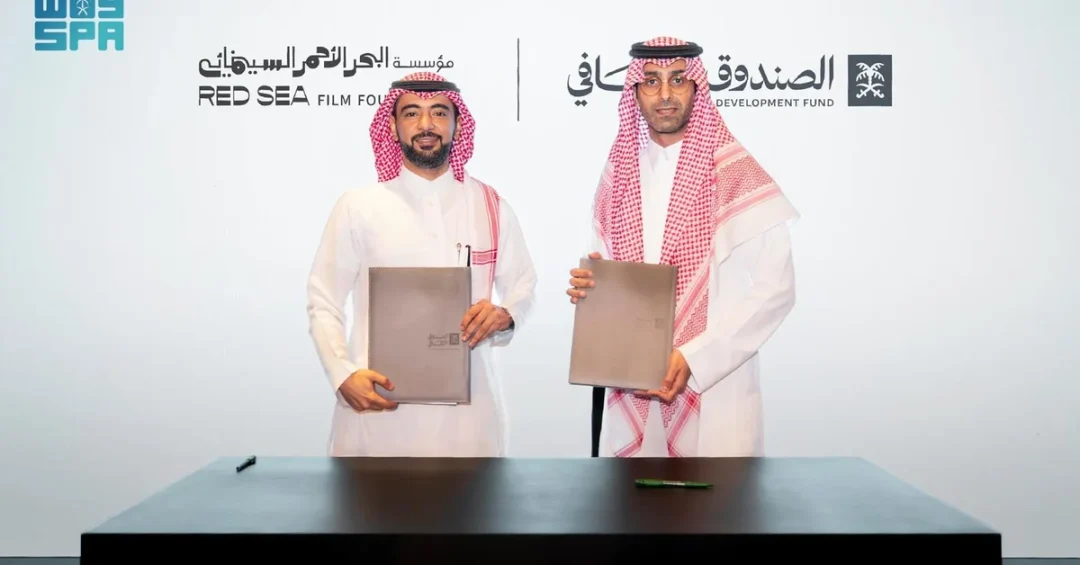
The Cultural Development Fund (CDF) and the Red Sea Film Foundation announced the signing of a memorandum of understanding (MoU) to co-finance film production projects, a move set to accelerate the growth of Saudi Arabia’s cinematic sector and expand opportunities for local and regional filmmakers. The agreement, announced via the Saudi Press Agency (SPA) on December 11, 2024, was signed during the fourth edition of the Red Sea International Film Festival (RSIFF) in Jeddah, where the CDF is a sponsor of the Red Sea Souk, the festival’s industry marketplace. The MoU aims to enhance creative momentum within the film sector and encourage filmmakers to play an active role in its development, according to the official announcement. It reflects a broader national effort to build a self-sustaining cultural economy in line with Saudi Vision 2030. The partnership brings together two key institutions: the CDF, which supports 16 cultural sectors, and the Red Sea Film Foundation, the organization behind the Red Sea International Film Festival. Their collaboration is expected to provide vital financing and development support to filmmakers, helping to position Saudi Arabia as a leading hub for film production in the region. The agreement was signed by CDF CEO Majed Al-Hugail and Red Sea Film Foundation Acting CEO Mohammed Asseri.
The signing took place at a pivotal moment for Saudi Arabia’s cultural landscape, as the Kingdom continues to invest heavily in arts and entertainment as part of its economic diversification strategy. The Red Sea International Film Festival has quickly become the region’s premier cinematic event, embodying Saudi Arabia’s commitment to developing the film industry and bolstering its presence on the global stage. The CDF, established to drive the growth of cultural sectors, has been instrumental in providing financial and strategic support to creatives across the Kingdom. This MoU is part of broader efforts to foster collaboration and integration between the fund and the film sector while establishing effective strategic partnerships with government, private, and nonprofit sectors to develop and nurture the cultural scene. The partnership is expected to create new pathways for filmmakers to access funding, expertise, and global markets, ultimately contributing to the Kingdom’s economic and social development. With the film industry gaining momentum, this agreement signals a strong commitment to sustaining that growth and ensuring that Saudi talent can compete internationally.
Context and Background
Why does this partnership matter now, at a time when Saudi Arabia’s cultural sector is undergoing rapid transformation? The Cultural Development Fund was established as part of the National Culture Strategy under Vision 2030, with a mandate to support 16 cultural sectors, including film, music, literature, and visual arts. The fund provides financing, grants, and investment solutions to cultural projects, aiming to enhance their economic and social impact. The Red Sea Film Foundation, meanwhile, has been a driving force behind the Red Sea International Film Festival, which has attracted global stars and industry professionals since its inception. The foundation also supports year-round programs that nurture local talent, such as the Red Sea Lodge and the Red Sea Souk. By joining forces, the two entities aim to streamline financing and development processes, making it easier for filmmakers to bring their projects to life. This collaboration is particularly timely as the Kingdom seeks to build a robust film infrastructure, including studios, production facilities, and training programs. The MoU also aligns with the fund’s mission to sustain cultural sector growth and enhance its economic and social impact, while supporting creative talent across the nation.
The agreement comes amid a surge in Saudi film production, with several Saudi films gaining international recognition in recent years. The Red Sea International Film Festival has played a crucial role in showcasing these works and connecting Saudi filmmakers with global distributors and financiers. The CDF has previously supported numerous film projects, from feature films to documentaries, helping to elevate the quality and reach of Saudi cinema. This MoU builds on those efforts by creating a structured framework for joint financing and development. It also underscores the importance of public-private partnerships in driving cultural growth. By pooling resources and expertise, the CDF and the Red Sea Film Foundation can offer more comprehensive support to filmmakers, from script development to post-production and distribution. The partnership is expected to attract further investment into the sector, both from within Saudi Arabia and internationally, as it demonstrates a coordinated approach to building a sustainable film industry.
Key Details of the MoU
What specific areas of collaboration does the memorandum outline? According to the official announcement, the MoU covers several key areas, including designing joint financing and development solutions to support projects and creatives in the film sector. This means the two organizations will work together to create funding mechanisms tailored to the needs of filmmakers, potentially combining grants, equity investments, and revenue-sharing models. The agreement also includes the exchange of commercial and investment opportunities, which could lead to new partnerships and co-productions. Additionally, the MoU calls for joint cultural research and studies, which will help inform evidence-based policies and strategies for sector growth. Another important area is advancing the fund’s mission to sustain cultural sector growth and enhance its economic and social impact. This involves not only financial support but also capacity-building initiatives, mentorship, and networking opportunities. The MoU also aims to foster an environment conducive to the growth and expansion of cultural projects, and to support creative talent through training and development programs. These measures are designed to address the entire lifecycle of a film project, from conception to distribution, ensuring that Saudi filmmakers have the resources they need to succeed.
The signing ceremony took place during the fourth edition of the Red Sea International Film Festival, which is held annually in Jeddah. The festival serves as a platform for celebrating cinema from Saudi Arabia, the Arab world, and beyond. The Red Sea Souk, sponsored by the CDF, is a key component of the festival, providing a marketplace where filmmakers can pitch projects, meet with financiers, and explore distribution opportunities. The presence of the CDF at the Souk highlights its commitment to supporting the film industry and its recognition of the festival’s role in fostering talent and innovation. The MoU was signed by Majed Al-Hugail, CEO of the Cultural Development Fund, and Mohammed Asseri, Acting CEO of the Red Sea Film Foundation. Both leaders have emphasized the importance of collaboration in achieving the shared goals of developing the film sector and elevating Saudi Arabia’s global standing. The agreement is effective immediately and sets the stage for joint initiatives in the coming months and years.
International and Regional Impact
How will this partnership influence the broader Middle Eastern and global film landscape? Saudi Arabia’s film industry is rapidly gaining prominence, and this MoU is expected to strengthen the Kingdom’s position as a regional hub for film production. By providing more robust financing options, the CDF and the Red Sea Film Foundation can attract international productions to shoot in Saudi Arabia, bringing with them economic benefits such as job creation and tourism. The partnership also facilitates co-productions with other countries, allowing Saudi filmmakers to collaborate with global talent and access new markets. This is particularly important as the Red Sea International Film Festival continues to grow in stature, drawing attention from major studios and streaming platforms. The MoU signals to the international community that Saudi Arabia is serious about building a world-class film industry, and that it offers a supportive environment for creative investment. Moreover, the focus on cultural research and studies will contribute to a deeper understanding of the region’s cinematic heritage and contemporary trends, enriching the global film discourse.
Regionally, the agreement could inspire similar collaborations in other Arab countries, fostering a more integrated film ecosystem across the Middle East. Saudi Arabia has already taken a leadership role in promoting cultural exchange through initiatives like the Red Sea Film Festival and the CDF’s various programs. This MoU reinforces that leadership by demonstrating a model of cross-sector partnership that other nations might emulate. For filmmakers in the region, the enhanced financing and development opportunities could mean more chances to tell their stories and reach wider audiences. The partnership also aligns with Saudi Arabia’s efforts to diversify its economy away from oil, as the film industry is a key component of the creative economy. By supporting filmmakers, the Kingdom is investing in a sustainable source of growth that also promotes cultural diplomacy and soft power. The international film community has welcomed the news, seeing it as a positive step toward greater inclusion and collaboration.
Economic and Strategic Significance
What does this MoU mean for Saudi Arabia’s economy and its strategic goals? The film industry is a significant contributor to the creative economy, generating revenue through production, distribution, and related services. By co-financing film projects, the CDF and the Red Sea Film Foundation are injecting capital into a sector that has the potential to create jobs, stimulate tourism, and export Saudi culture. The partnership also supports the growth of small and medium-sized enterprises (SMEs) in the film value chain, from production companies to post-production houses and equipment suppliers. This aligns with Vision 2030’s objective of increasing the private sector’s contribution to GDP and creating employment opportunities for Saudi youth. Furthermore, a thriving film industry can attract foreign investment and enhance the Kingdom’s image as a modern, creative nation. The MoU’s emphasis on joint financing and development solutions ensures that resources are used efficiently and that projects with commercial potential receive the support they need to succeed.
Strategically, the agreement strengthens the institutional framework for cultural development in Saudi Arabia. By bringing together the CDF’s financial expertise and the Red Sea Film Foundation’s industry knowledge, the partnership creates a more cohesive support system for filmmakers. This is crucial for sustaining the momentum that has been built over the past few years, as more Saudi films premiere at international festivals and gain critical acclaim. The MoU also facilitates the exchange of commercial and investment opportunities, which could lead to the creation of a dedicated film fund or investment vehicle. Such mechanisms would provide long-term financing beyond individual grants, enabling filmmakers to scale their projects and compete globally. Additionally, the focus on cultural research and studies will help policymakers and investors make informed decisions, ensuring that the sector grows in a sustainable and inclusive manner. The partnership is a clear signal that Saudi Arabia is committed to building a knowledge-based economy where culture and creativity are valued as drivers of progress.
Vision 2030 Alignment
How does this MoU fit into the broader Vision 2030 framework? Vision 2030 aims to diversify Saudi Arabia’s economy, improve quality of life, and promote cultural enrichment. The film industry is a key part of the cultural sector, which the CDF supports as one of 16 priority areas. By co-financing film production, the CDF and the Red Sea Film Foundation are directly contributing to the growth of this sector, helping to create a vibrant cultural scene that attracts both locals and visitors. The partnership also supports the Vision’s goal of increasing household spending on culture and entertainment, as more Saudi-made films will be available in cinemas and on streaming platforms. Moreover, the MoU’s focus on supporting creative talent aligns with the Vision’s emphasis on empowering youth and women, who are increasingly pursuing careers in film. The Red Sea International Film Festival, where the MoU was signed, is itself a manifestation of Vision 2030, showcasing the Kingdom’s openness and its commitment to global cultural exchange.
Looking ahead, the collaboration between the CDF and the Red Sea Film Foundation is expected to yield tangible results in the form of new films, new partnerships, and new opportunities for Saudi creatives. The fund’s mission to sustain cultural sector growth and enhance its economic and social impact will be advanced through this partnership, as will the foundation’s efforts to nurture talent and elevate Saudi cinema on the world stage. By working together, these two institutions are setting a precedent for cross-sector collaboration that other cultural organizations can follow. The MoU not only strengthens the film sector but also reinforces Saudi Arabia’s position as a leader in the global cultural landscape. As the Kingdom continues its journey toward Vision 2030, partnerships like this will be essential in unlocking the full potential of Saudi Arabia’s creative economy and sharing its stories with the world.
20 Questions
Q1. What is the main purpose of the MoU signed between the Cultural Development Fund and the Red Sea Film Foundation?
A1. The MoU aims to co-finance film production projects, enhance creative momentum in the film sector, and encourage filmmakers to play an active role in its development, according to the official announcement.
Q2. When and where was the MoU signed?
A2. It was signed on December 11, 2024, during the fourth edition of the Red Sea International Film Festival in Jeddah, where the Cultural Development Fund sponsors the Red Sea Souk.
Q3. Who signed the memorandum on behalf of the two organizations?
A3. The MoU was signed by Majed Al-Hugail, CEO of the Cultural Development Fund, and Mohammed Asseri, Acting CEO of the Red Sea Film Foundation.
Q4. What are the key areas of collaboration outlined in the MoU?
A4. Key areas include designing joint financing and development solutions, exchanging commercial and investment opportunities, conducting joint cultural research and studies, and supporting creative talent in the film sector.
Q5. How does the MoU support the Cultural Development Fund’s mission?
A5. It advances the fund’s mission to sustain cultural sector growth, enhance its economic and social impact, and foster an environment conducive to the growth and expansion of cultural projects.
Q6. What is the significance of the Red Sea International Film Festival in this context?
A6. RSIFF is the region’s premier cinematic event, embodying Saudi Arabia’s commitment to developing the film industry and bolstering its presence on the global stage, making it a fitting venue for the signing.
Q7. How does the MoU benefit filmmakers in Saudi Arabia?
A7. It provides access to joint financing and development solutions, commercial opportunities, and support for creative talent, helping filmmakers bring their projects to life and reach wider audiences.
Q8. What role does the Cultural Development Fund play in Saudi Arabia’s cultural sector?
A8. The fund supports 16 cultural sectors, including film, by providing financial and strategic support to creatives, aiming to enhance the sector’s economic and social impact.
Q9. What is the Red Sea Film Foundation’s contribution to the film industry?
A9. The foundation organizes the Red Sea International Film Festival and supports year-round programs that nurture local talent, such as the Red Sea Lodge and the Red Sea Souk.
Q10. How does this MoU align with Saudi Vision 2030?
A10. It supports economic diversification, cultural enrichment, and the growth of the creative economy, all of which are key objectives of Vision 2030.
Q11. What economic benefits are expected from this partnership?
A11. It is expected to create jobs, stimulate tourism, attract foreign investment, and support SMEs in the film value chain, contributing to GDP growth and economic diversification.
Q12. Will the MoU facilitate international co-productions?
A12. Yes, by exchanging commercial and investment opportunities, the MoU aims to foster international partnerships and co-productions, allowing Saudi filmmakers to collaborate globally.
Q13. How does the MoU support creative talent in Saudi Arabia?
A13. It includes provisions for training, mentorship, and development programs, ensuring that Saudi creatives have the skills and resources needed to succeed in the film industry.
Q14. What is the Red Sea Souk and why is it important?
A14. The Red Sea Souk is the industry marketplace of the Red Sea International Film Festival, providing a platform for filmmakers to pitch projects, meet financiers, and explore distribution opportunities.
Q15. How does the partnership enhance Saudi Arabia’s global standing in film?
A15. By co-financing quality productions and supporting talent, it helps Saudi films gain international recognition and positions the Kingdom as a leading hub for film production in the region.
Q16. What kind of cultural research and studies will be conducted under the MoU?
A16. The MoU calls for joint cultural research and studies to inform evidence-based policies and strategies for sector growth, though specific topics have not been detailed in the announcement.
Q17. How will the MoU impact the local film community in Jeddah and beyond?
A17. It will provide more funding and development opportunities, encouraging local filmmakers to produce more content and participate in the growing film ecosystem across Saudi Arabia.
Q18. What are the next steps following the signing of the MoU?
A18. The two organizations will begin implementing joint initiatives, including designing financing solutions and exchanging opportunities, with further details expected as projects progress.
Q19. Does the MoU include provisions for distributing Saudi films internationally?
A19. While not explicitly stated, the exchange of commercial opportunities and support for projects likely includes distribution aspects, helping Saudi films reach global audiences.
Q20. How does this partnership reflect Saudi Arabia’s commitment to cultural development?
A20. It demonstrates a coordinated effort to invest in the film sector, nurture talent, and enhance the Kingdom’s cultural footprint, aligning with the broader goals of Vision 2030 and the National Culture Strategy.
Reader Feedback
We value your thoughts. Please share your feedback on this article.
Your feedback helps us improve our coverage.
Related articles
 King Abdulaziz Camel Festival Welcomes Seven Nations
 Film Commission Strengthens Saudi Arabia’s Position in Global Film Industry at London Event
 Wadi Hanifah Lights Up Noor Riyadh With Art and Sustainability
 Libraries Commission to Host International Reading Forum in Riyadh
 Venezuelan Ambassador Visits King Abdulaziz Falconry Festival
 Diriyah Art Futures Enriches Visitors with Diverse Programs