


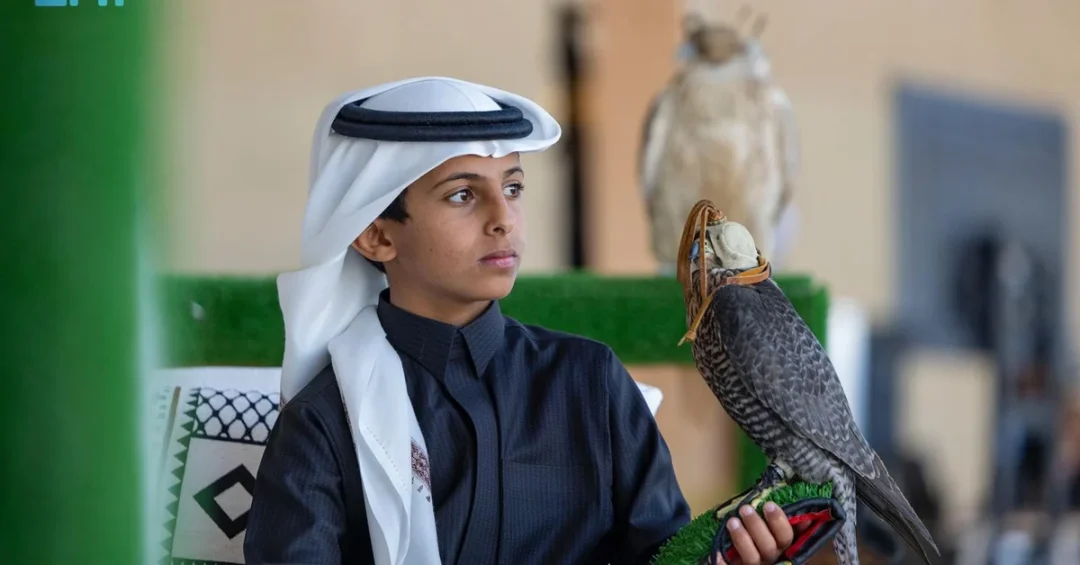
Young falconers are competing alongside veteran handlers at the King Abdulaziz Falconry Festival, hosted by the Saudi Falcons Club at its Malham headquarters north of Riyadh, with qualifiers for the Melwah Racing competition offering a path to the prestigious King Abdulaziz Cup. The festival, which runs until December 19, has drawn participants from across the Kingdom and beyond, with families bringing children to the racetrack to learn the finer points of falcon handling, race preparation, and the traditions that have defined Arabian falconry for generations.
Organized under the patronage of the Saudi Falcons Club, the event reflects a national commitment to preserving intangible cultural heritage while introducing it to a new generation. Falconers such as Turki Al-Otaibi, who inherited the practice from his father and ancestors, have brought family members to share the experience and explore the dedicated young falconer’s pavilion. For these families, the festival is more than a competition; it is a classroom, a reunion, and a living archive of Bedouin tradition. How often does a modern sporting event double as a lesson in national identity? At Malham, the answer unfolds daily across 138 rounds of competition.
Context and Background
Falconry in the Arabian Peninsula is far more than a pastime. It is a heritage practice woven into the social fabric of the region, historically used for hunting and survival in the desert, and today celebrated as a symbol of patience, skill, and respect for nature. The King Abdulaziz Falconry Festival, named after the founder of modern Saudi Arabia, King Abdulaziz Al Saud, has become the flagship event for this tradition. Hosted by the Saudi Falcons Club, a government-backed organization dedicated to the preservation and promotion of falconry, the festival provides a structured, world-class platform for both racing and beauty competitions.
The 2024 edition, running from late November through December 19, features two main categories: Melwah Racing, in which falcons are timed over a set distance, and Mazayen, a beauty pageant that evaluates the physical characteristics of the birds. Together, these competitions offer more than SAR36 million in prizes, underscoring the Kingdom’s serious investment in heritage sports. What does it mean for a nation to invest so heavily in a tradition that predates its modern borders? For Saudi Arabia, it means honoring the past while building a future in which cultural continuity is a source of pride and economic opportunity.
The festival also serves as a gathering point for the global falconry community. International participants and enthusiasts attend to compete, observe, and exchange knowledge, reinforcing Saudi Arabia’s role as a custodian of a practice recognized by UNESCO as intangible cultural heritage. The presence of young falconers at the event signals that this custodianship is being passed to the next generation, not merely preserved in museums.
Key Details
At the heart of the festival’s youth engagement strategy is the young falconer’s pavilion, an interactive space where children and teenagers can learn about falconry through hands-on activities and guided instruction. Omar Al-Otaibi, aged 16, was among those at the falcon release stage with his uncle, who began teaching him falconry and hunting three years ago. He noted that his 15-year-old cousin, Abdullah Al-Otaibi, is on the same journey, eager to explore this heritage, deepen his interest in falconry, and invest in falcon breeding under their fathers’ guidance. Their story is one of many that illustrate how the festival functions as a family affair, with knowledge transferred from one generation to the next in real time.
Turki Al-Otaibi, a participant who inherited falconry from his father and ancestors, emphasized the importance of passing down the tradition. He brought family members to share the experience and to explore the pavilion, which offers exhibits on the history of falconry, breeding techniques, and training methods. The Saudi Falcons Club has designed these attractions to promote falconry, preserve breeding and training traditions for future generations, share cultural heritage, and celebrate common traditions. Can a hobby survive the pressures of modernization without deliberate institutional support? The club’s answer is a resounding no, and its response is a comprehensive program that blends competition, education, and entertainment.
The Melwah Racing qualifiers are particularly significant for young falconers, as they offer a clear pathway to the finals and the King Abdulaziz Cup. The competition format requires handlers to release their falcons at the starting point and signal them at the end of the track, with winners determined by final results. For a teenager like Omar, mastering this sequence is both a technical challenge and a rite of passage. The festival’s 138 rounds ensure that there are ample opportunities for participants to test their skills, learn from defeats, and celebrate victories. The total prize pool of over SAR36 million reflects the scale of the event and the value placed on excellence in this field.
Beyond the racetrack, the festival includes a falconry history museum and other exhibits that attract visitors from Saudi Arabia and abroad. These cultural attractions are designed to offer a comprehensive experience of Saudi heritage, from the practicalities of falcon care to the poetry and storytelling that have long accompanied the hunt. By integrating education with competition, the Saudi Falcons Club ensures that falconry remains a living tradition, not a static relic.
International and Regional Impact
The King Abdulaziz Falconry Festival has grown into one of the largest gatherings of its kind in the world, drawing participants from the Gulf Cooperation Council states and beyond. This international dimension serves multiple purposes. First, it positions Saudi Arabia as a global leader in heritage preservation, aligning with the Kingdom’s broader efforts to diversify its cultural offerings and attract visitors. Second, it fosters regional cooperation, as falconers from neighboring countries share techniques, stories, and camaraderie. Third, it reinforces the cultural ties that bind the Arabian Peninsula, where falconry is a common heritage practiced across borders.
For international audiences, the festival offers a window into a tradition that is often misunderstood or romanticized. By showcasing the technical skill, discipline, and environmental stewardship involved in falconry, the event challenges stereotypes and presents a nuanced picture of Saudi culture. Visitors can experience the excitement of the race, the beauty of the birds, and the warmth of the community that gathers around them. How does a single festival reshape global perceptions of a nation? Through authentic, well-organized cultural diplomacy that invites the world to witness and participate.
The festival also has implications for wildlife conservation. The Saudi Falcons Club and its partners are involved in breeding programs and research aimed at sustaining falcon populations, particularly species that are threatened in the wild. By promoting responsible falconry, the event contributes to broader environmental goals, including biodiversity protection. This alignment between cultural heritage and conservation is increasingly important as the region balances development with ecological responsibility.
Economic and Strategic Significance
The economic footprint of the King Abdulaziz Falconry Festival extends beyond the prize money. The event stimulates local businesses in Riyadh and the surrounding areas, from hotels and restaurants to equipment suppliers and transport services. It also creates jobs in event management, marketing, and hospitality. For a country pursuing economic diversification under Vision 2030, such heritage tourism events are valuable contributors to the non-oil economy. They attract domestic and international visitors, generate media coverage, and support the growth of the tourism sector, which is a key pillar of the Vision 2030 strategy.
Strategically, the festival reinforces Saudi Arabia’s soft power. By hosting a world-class event that celebrates a shared regional tradition, the Kingdom strengthens its diplomatic and cultural ties with other nations. It also supports the goals of the Saudi Falcons Club, which include promoting falconry as a sport, preserving breeding traditions, and ensuring the continuity of this cherished hobby. The club’s efforts are part of a wider national push to document and promote intangible cultural heritage, from traditional crafts to oral poetry. In this context, the young falconer’s pavilion is not just a nice addition; it is a strategic investment in the future of Saudi culture.
The festival’s success also demonstrates the potential of sports and heritage events to drive tourism. Saudi Arabia has set ambitious targets for visitor numbers, and events like this help to diversify the tourism offer beyond religious pilgrimage and business travel. By presenting falconry as an accessible and exciting spectacle, the festival appeals to a broad audience, including families and young travelers. This aligns with the Vision 2030 goal of enhancing the quality of life for citizens and residents while showcasing the Kingdom’s unique cultural assets to the world.
Vision 2030 Alignment
The King Abdulaziz Falconry Festival is a clear expression of Vision 2030’s cultural and economic objectives. Vision 2030 seeks to preserve and promote Saudi heritage, and falconry is one of the most iconic elements of that heritage. By supporting the festival, the Saudi Falcons Club and its partners are ensuring that this tradition remains vibrant and relevant. The emphasis on youth engagement, through the young falconer’s pavilion and family participation, directly supports the Vision’s focus on empowering the next generation and fostering a strong sense of national identity.
Moreover, the festival contributes to economic diversification by boosting tourism, creating jobs, and attracting international visitors. It also enhances Saudi Arabia’s global image as a country that honors its past while embracing the future. As the festival continues to grow, it will play an increasingly important role in showcasing the Kingdom’s cultural richness and its commitment to preserving heritage for generations to come. In a world where traditions often fade, Saudi Arabia is demonstrating that with vision and investment, they can thrive.
20 Questions
Q1. What is the King Abdulaziz Falconry Festival?
A1. It is a major falconry event hosted by the Saudi Falcons Club at its Malham headquarters north of Riyadh, featuring Melwah Racing and Mazayen competitions with prizes exceeding SAR36 million.
Q2. Where is the festival held?
A2. The festival takes place at the Saudi Falcons Club’s Malham headquarters, located north of Riyadh, Saudi Arabia.
Q3. How long does the festival run?
A3. The 2024 edition runs until December 19, having started in late November, with competitions held over multiple days.
Q4. What is Melwah Racing?
A4. Melwah Racing is a falcon race where birds are timed over a set distance, with handlers releasing them at the start and signaling them at the end.
Q5. What is Mazayen?
A5. Mazayen is a beauty pageant for falcons, evaluating the physical characteristics and condition of the birds.
Q6. How many rounds of competition are there?
A6. The festival features 138 rounds of competition across both Melwah Racing and Mazayen categories.
Q7. What is the total prize money?
A7. Prizes total over SAR36 million for both Melwah Racing and Mazayen competitions.
Q8. Who organizes the festival?
A8. The Saudi Falcons Club, a government-backed organization dedicated to preserving and promoting falconry, organizes the event.
Q9. What is the young falconer’s pavilion?
A9. It is an interactive space at the festival where children and teenagers learn about falconry through hands-on activities and guided instruction.
Q10. Why do families bring children to the festival?
A10. Families bring children to introduce them to falconry competitions, teach race preparation and falcon handling, and pass down heritage.
Q11. Who is Turki Al-Otaibi?
A11. Turki Al-Otaibi is a participant who inherited falconry from his father and ancestors and is keen on passing the tradition to his children.
Q12. Who is Omar Al-Otaibi?
A12. Omar Al-Otaibi is a 16-year-old falconer who has been learning falconry and hunting from his uncle for three years.
Q13. Who is Abdullah Al-Otaibi?
A13. Abdullah Al-Otaibi is Omar’s 15-year-old cousin, who is also learning falconry and aims to invest in falcon breeding under family guidance.
Q14. What is the King Abdulaziz Cup?
A14. The King Abdulaziz Cup is the prestigious final prize that falconers aim to qualify for through the Melwah Racing qualifiers.
Q15. What other attractions are at the festival?
A15. The festival includes a falconry history museum and other exhibits that showcase the heritage and techniques of falconry.
Q16. How does the festival promote falconry?
A16. It promotes falconry by hosting competitions, preserving breeding and training traditions, sharing cultural heritage, and attracting visitors to experience Saudi culture.
Q17. Is the festival open to international participants?
A17. Yes, the festival attracts participants and visitors from the Gulf region and beyond, fostering international cultural exchange.
Q18. What is the significance of falconry in Saudi culture?
A18. Falconry is a cherished heritage practice symbolizing patience, skill, and respect for nature, historically used for hunting and now celebrated as a sport.
Q19. How does the festival support Vision 2030?
A19. It supports Vision 2030 by preserving heritage, promoting tourism, creating economic opportunities, and empowering youth through cultural engagement.
Q20. What is the role of the Saudi Falcons Club?
A20. The Saudi Falcons Club organizes the festival, promotes falconry, preserves breeding and training traditions, and ensures the continuity of this cherished hobby for future generations.
Reader Feedback
We value your thoughts. Please share your feedback on this article.
Your feedback helps us improve our coverage.
Related articles
 Red Sea Fund Expands Support to Asian Filmmakers
 The Timeless Bisht: Heritage Woven from Camel Hair
 CDF and Red Sea Film Foundation Sign MoU for Film Financing
 King Abdulaziz Camel Festival Welcomes Seven Nations
 Film Commission Strengthens Saudi Arabia’s Position in Global Film Industry at London Event
 Wadi Hanifah Lights Up Noor Riyadh With Art and Sustainability