


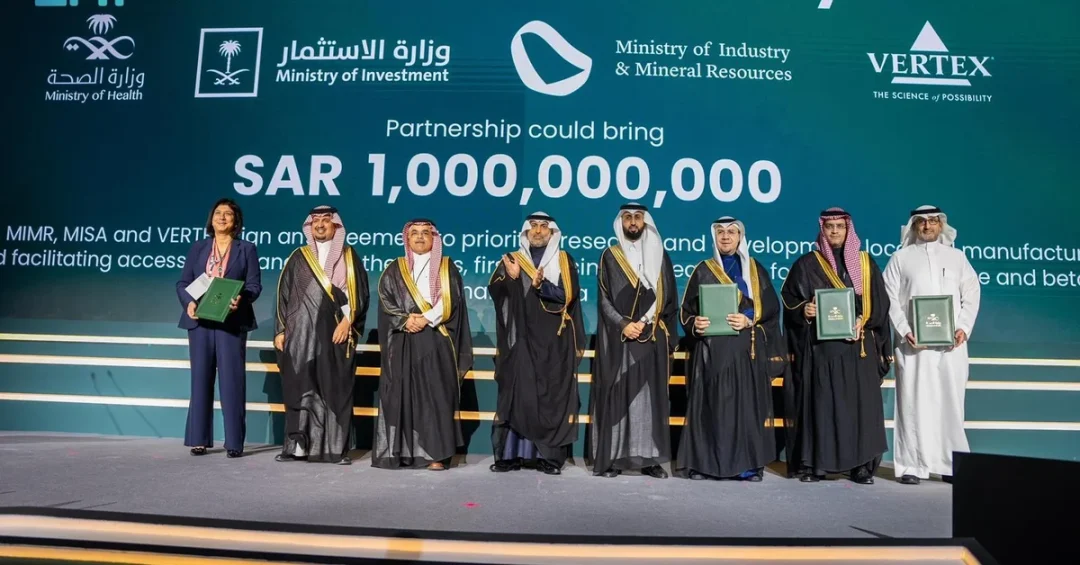
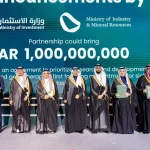
Saudi Arabia’s Ministry of Health has signed a strategic memorandum of understanding with global biotechnology leader Vertex Pharmaceuticals to localize advanced gene and cell therapy technologies in the Kingdom, in collaboration with the Ministry of Industry and Mineral Resources and the Ministry of Investment. The agreement, announced by the Saudi Press Agency on December 10, 2024, was concluded on the sidelines of the CPHI Middle East exhibition in Riyadh and aims to accelerate the implementation of the National Biotechnology Strategy, with investments exceeding SAR1 billion in a state-of-the-art manufacturing facility.
The memorandum represents one of the most significant healthcare and industrial partnerships of the year for the Kingdom, bringing together a world-leading American pharmaceutical innovator with three Saudi ministries in a coordinated push to build domestic capacity in one of the fastest-growing fields of modern medicine. Under the terms outlined by official Saudi sources, the collaboration will focus on gene and cell therapies, including cutting-edge CRISPR technology, alongside research and development, clinical trials, and specialized training programs for Saudi talent. The agreement is explicitly framed as a step toward realizing Saudi Vision 2030, the national transformation program launched under the leadership of Crown Prince Mohammed bin Salman. For international observers, the deal signals that the Kingdom is moving beyond simply importing advanced treatments and is instead positioning itself as a producer, researcher, and eventually an exporter of next-generation medical solutions.
Context and Background
Why does a single memorandum of understanding between a health ministry and a pharmaceutical company matter on the global stage? The answer lies in the rapidly evolving nature of biotechnology, a sector that is reshaping how diseases are treated and how economies are structured. Gene and cell therapies represent a frontier of medicine in which defective genes are corrected, replaced, or regulated, and cells are engineered to fight disease. These treatments have shown transformative potential in oncology, rare genetic disorders, and hematology. Until recently, the infrastructure, expertise, and investment required to develop and manufacture such therapies were concentrated in a small number of countries in North America, Europe, and parts of Asia.
Saudi Arabia’s National Biotechnology Strategy, part of the broader Vision 2030 framework, was designed to change that equation. The strategy seeks to establish the Kingdom as a regional hub for biotechnology by building local research capacity, attracting international partners, and creating a regulatory and industrial ecosystem capable of supporting advanced manufacturing. The Ministry of Health has been tasked with improving health outcomes and modernizing care delivery, while the Ministry of Industry and Mineral Resources focuses on industrial localization and the Ministry of Investment works to attract and facilitate foreign direct investment. The involvement of all three ministries in this single agreement illustrates the whole-of-government approach that has become a hallmark of Saudi economic planning.
The CPHI Middle East exhibition, where the agreement was signed, is itself a reflection of the region’s growing role in the global pharmaceutical supply chain. The event brings together manufacturers, suppliers, and innovators from around the world, and Riyadh’s hosting of such a gathering underscores the Kingdom’s ambition to be a convening power in healthcare and life sciences. Vertex Pharmaceuticals, headquartered in Boston, Massachusetts, is globally recognized for its work in cystic fibrosis and has expanded into gene editing through its research programs, making it a fitting partner for a strategy centered on advanced therapies.
Key Details of the Agreement
What exactly does the memorandum commit the parties to achieve? According to the official announcement carried by the Saudi Press Agency, the agreement aims to accelerate the implementation of the National Biotechnology Strategy by localizing advanced gene and cell therapy technologies in the Kingdom. A central element is the establishment of a state-of-the-art manufacturing facility for gene and cell therapies, with investments exceeding SAR1 billion. This facility would be among the first of its kind in the region and would serve as an anchor for a broader biotechnology industrial cluster.
The agreement also places strong emphasis on research and development. The parties intend to strengthen the Kingdom’s R&D ecosystem, increase the number of clinical trials conducted in Saudi Arabia, and develop specialized training programs to prepare Saudi talent to lead the global biotechnology sector. The use of CRISPR technology is explicitly mentioned, highlighting the intention to work at the cutting edge of gene editing rather than adopting older, established platforms. CRISPR, which allows scientists to modify DNA with precision, has become one of the most promising tools in modern medicine and has already produced approved therapies for certain blood disorders.
The collaboration is not limited to manufacturing. By linking the Ministry of Health with the Ministry of Industry and Mineral Resources and the Ministry of Investment, the agreement creates a pathway for regulatory alignment, industrial incentives, and investment facilitation. This integrated model is intended to reduce the time it takes to move from research to clinical application and from clinical application to domestic production. For patients in Saudi Arabia and across the region, the ultimate goal is faster access to advanced therapies that are currently available only in a limited number of global centers.
International and Regional Impact
How will this partnership be viewed beyond the Kingdom’s borders? For the Middle East and North Africa region, the agreement positions Saudi Arabia as a first mover in advanced therapy manufacturing. Neighboring countries have invested in healthcare infrastructure and research, but few have attempted to build an integrated gene and cell therapy capability with a global industry partner. By doing so, the Kingdom could become a destination for patients seeking cutting-edge treatments, a source of trained professionals, and a supplier of therapies to regional markets.
For the global biotechnology industry, the memorandum signals that Saudi Arabia is open for partnerships at the highest level of scientific sophistication. Vertex Pharmaceuticals joins a growing list of international companies that have chosen to deepen their engagement with the Kingdom across sectors including energy, technology, entertainment, and now advanced medicine. This diversification of partnerships reflects the broader transformation of the Saudi economy and its increasing integration into global innovation networks. It also creates opportunities for academic institutions, contract research organizations, and specialized suppliers to participate in the emerging Saudi biotechnology ecosystem.
Economic and Strategic Significance
What does an investment of more than SAR1 billion in gene and cell therapy manufacturing mean for the Saudi economy? At a direct level, it represents capital expenditure in facilities, equipment, and human capital, with the potential to create high-skilled jobs for Saudi scientists, engineers, and technicians. At a strategic level, it reduces dependence on imported therapies, strengthens national health security, and builds an industrial capability that can serve export markets. Biotechnology is a high-value sector, and capturing even a modest share of the global market can generate substantial economic returns.
The agreement also reinforces the Kingdom’s broader industrial strategy, which seeks to localize advanced manufacturing and increase the contribution of non-oil sectors to gross domestic product. Gene and cell therapies require sophisticated supply chains, cold-chain logistics, quality control, and regulatory oversight, all of which can spur the development of adjacent industries. By investing in this field, Saudi Arabia is not only improving healthcare but also building the foundations of a knowledge-based economy. The involvement of the Ministry of Investment indicates that the deal is expected to catalyze further private-sector and foreign investment in the life sciences.
Vision 2030 Alignment
How does this memorandum connect to the broader ambitions of Saudi Vision 2030? Vision 2030 aims to diversify the economy, improve the quality of life for citizens and residents, and position the Kingdom as a global leader in selected high-value sectors. Healthcare transformation is a core pillar of the vision, with goals that include expanding access to care, improving outcomes, and building a sustainable health ecosystem. The partnership with Vertex Pharmaceuticals directly supports these goals by bringing advanced therapies to Saudi patients and by developing the local talent needed to sustain innovation over the long term.
The National Biotechnology Strategy, which this agreement is designed to accelerate, is itself a Vision 2030 initiative that seeks to make the Kingdom a regional and global hub for biotechnology. By localizing gene and cell therapy technologies, Saudi Arabia is taking a concrete step toward that ambition. The memorandum also reflects the leadership’s commitment to scientific advancement and innovation as drivers of national progress. As the facility and training programs take shape, the Kingdom will be positioned to contribute not only to its own health security but also to global efforts to develop and deliver modern medical solutions. For international audiences, the message is clear: Saudi Arabia is investing in the future of medicine and inviting the world to partner in that journey.
20 Questions
Q1. What is the main purpose of the memorandum of understanding signed by Saudi Arabia’s Ministry of Health and Vertex Pharmaceuticals?
A1. The memorandum aims to localize advanced gene and cell therapy technologies in the Kingdom, accelerate the National Biotechnology Strategy, and establish a manufacturing facility with investments exceeding SAR1 billion, according to the Saudi Press Agency.
Q2. Which Saudi ministries are involved in the agreement alongside the Ministry of Health?
A2. The Ministry of Industry and Mineral Resources and the Ministry of Investment are collaborating on the agreement, reflecting a coordinated government approach to industrial localization, investment facilitation, and healthcare innovation.
Q3. When and where was the agreement signed?
A3. The agreement was signed on December 10, 2024, on the sidelines of the CPHI Middle East exhibition in Riyadh, as reported by the Saudi Press Agency.
Q4. What is Vertex Pharmaceuticals known for globally?
A4. Vertex Pharmaceuticals is a global biotechnology company headquartered in Boston, Massachusetts, recognized for its work in cystic fibrosis and its expansion into gene editing and advanced therapies.
Q5. What role does CRISPR technology play in this partnership?
A5. The agreement explicitly mentions utilizing cutting-edge CRISPR technology, a precise gene-editing tool, to develop advanced therapies and support the localization of gene and cell therapy capabilities in Saudi Arabia.
Q6. How much investment is associated with the planned manufacturing facility?
A6. The manufacturing facility for gene and cell therapies is expected to involve investments exceeding SAR1 billion, according to the official announcement carried by the Saudi Press Agency.
Q7. What is the National Biotechnology Strategy?
A7. The National Biotechnology Strategy is a Saudi initiative under Vision 2030 that aims to establish the Kingdom as a regional and global hub for biotechnology through research, manufacturing, and international partnerships.
Q8. How does the agreement aim to strengthen research and development in Saudi Arabia?
A8. It seeks to enhance the Kingdom’s R&D ecosystem, increase the number of clinical trials, and develop specialized training programs to prepare Saudi talent to lead the global biotechnology sector.
Q9. What benefits could the agreement bring to patients in Saudi Arabia?
A9. The agreement aims to provide modern medical solutions, including gene and cell therapies, to patients locally and internationally, improving access to advanced treatments that are currently limited to a few global centers.
Q10. How does the memorandum support Saudi Vision 2030?
A10. It supports Vision 2030 by diversifying the economy, localizing advanced manufacturing, improving healthcare, and positioning the Kingdom as a global leader in high-value sectors such as biotechnology.
Q11. What is the significance of the CPHI Middle East exhibition in this context?
A11. The CPHI Middle East exhibition is a major pharmaceutical industry event that brings together global innovators and suppliers, and hosting it in Riyadh underscores Saudi Arabia’s growing role in the healthcare and life sciences sector.
Q12. Will the agreement create jobs for Saudi citizens?
A12. Yes, the establishment of a manufacturing facility and training programs is expected to create high-skilled jobs for Saudi scientists, engineers, and technicians in the biotechnology field.
Q13. How does this partnership affect the regional healthcare landscape?
A13. It positions Saudi Arabia as a first mover in advanced therapy manufacturing in the Middle East, potentially making the Kingdom a destination for patients and a supplier of therapies to regional markets.
Q14. What kind of training programs are envisioned under the agreement?
A14. The agreement calls for specialized training programs designed to prepare Saudi talent to lead the global biotechnology sector, building local expertise in gene and cell therapy research and manufacturing.
Q15. Does the agreement include plans for clinical trials?
A15. Yes, one of the stated aims is to increase the number of clinical trials conducted in the Kingdom, which would strengthen the local research ecosystem and provide patients with access to experimental therapies.
Q16. What makes gene and cell therapies different from traditional medicines?
A16. Gene and cell therapies treat diseases at the genetic or cellular level, offering potential cures for conditions such as rare genetic disorders and certain cancers, rather than merely managing symptoms.
Q17. How does the Ministry of Investment contribute to this agreement?
A17. The Ministry of Investment works to attract and facilitate foreign direct investment, helping to create the business environment needed for Vertex Pharmaceuticals and other partners to invest in Saudi biotechnology.
Q18. What is the expected timeline for establishing the manufacturing facility?
A18. The official announcement does not specify a timeline, but the agreement is described as a significant step toward realizing Vision 2030, indicating that planning and implementation will proceed in the coming years.
Q19. How does this agreement fit into Saudi Arabia’s broader economic diversification efforts?
A19. It supports diversification by building a high-value, knowledge-based industry that reduces reliance on oil, creates skilled jobs, and expands non-oil exports in the biotechnology sector.
Q20. What message does this partnership send to the international community?
A20. It signals that Saudi Arabia is open to high-level scientific partnerships and is investing in the future of medicine, inviting global innovators to participate in its transformation under Vision 2030.
Reader Feedback
We value your thoughts. Please share your feedback on this article.
Your feedback helps us improve our coverage.
Related articles
 Saudi Arabia, Vertex to Localize Gene Therapy Manufacturing
 SFDA Highlights Pharma Initiatives at CPHI Middle East
 KFSHRC Jeddah Performs First Robotic Liver Transplant in Western Region
 CPHI Middle East Concludes with SAR10 Billion in Partnerships
 Saudi, Bahrain Health Councils Sign Cooperation Agreement
 Riyadh Hosts Global Minimally Invasive Transplant Consensus