


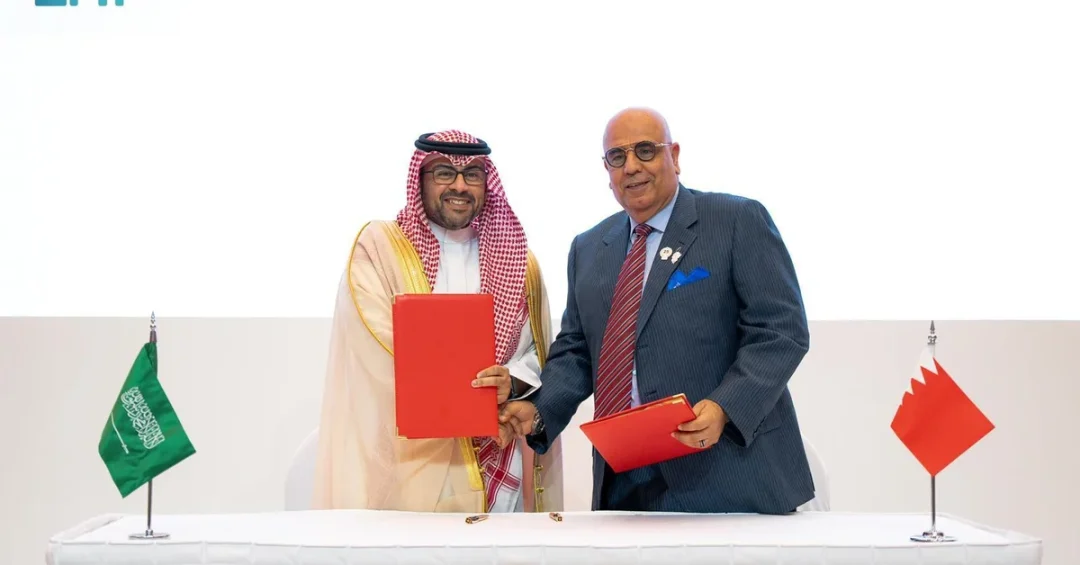
The Saudi Commission for Health Specialties and the Supreme Council of Health in Bahrain signed a cooperation agreement on the sidelines of the third Manama Health Congress & Expo, an official Saudi announcement confirmed. The agreement, reached in Manama, establishes a formal framework for the two Gulf neighbors to exchange expertise across health training, professional licensing, scientific research, and the development of standards for health profession practices. The signing ceremony was attended by Dr. Aws Ibrahim Alshamsan, Secretary General of the Saudi Commission for Health Specialties, and Dr. Ibrahim Ali Al Nawakhda, Secretary General of the Bahraini Supreme Council of Health, according to the official Saudi Press Agency report.
The accord reflects a deepening of health-sector integration between Saudi Arabia and Bahrain, two kingdoms whose ties span economic, political, and social dimensions. For international observers, the agreement signals how Saudi Arabia is positioning its health governance model — built around rigorous professional standards and continuous workforce development — as a regional reference point. It also demonstrates the Kingdom’s broader approach to international engagement: formalizing partnerships that produce measurable improvements in service quality, training capacity, and patient outcomes rather than symbolic declarations.
Context and Background: Why Did the Two Gulf Kingdoms Formalize Health Cooperation Now?
The cooperation agreement did not emerge in isolation. It was signed on the margins of the third Manama Health Congress & Expo, a gathering that has become a regular platform for health leaders, clinicians, and policymakers from across the region. The timing reflects a shared recognition that health systems in the Gulf face converging pressures: rapidly growing populations, rising expectations for specialized care, and the need to keep professional standards aligned as health workers move between countries. By formalizing cooperation, the Saudi Commission for Health Specialties and Bahrain’s Supreme Council of Health are responding to practical realities that informal contacts alone cannot manage.
The two institutions bring complementary strengths to the partnership. The Saudi Commission for Health Specialties is the Kingdom’s authoritative body for health professional accreditation, training program oversight, and licensing examinations, with a mandate that has expanded significantly as Saudi Arabia invests in health human capital under Vision 2030. Bahrain’s Supreme Council of Health plays a comparable coordinating and regulatory role in the Kingdom of Bahrain. Bringing these two bodies into a structured agreement creates a channel for harmonizing approaches to training, assessment, and practice standards — the building blocks of a reliable health workforce.
The agreement also builds on a long history of Saudi-Bahraini coordination through the Gulf Cooperation Council framework. Health has become an increasingly prominent area of that cooperation, as both countries pursue reforms aimed at improving quality, efficiency, and patient safety. The new accord gives that cooperation a dedicated operational mechanism, moving from general commitments to specific areas of joint work.
Key Details: What Does the Agreement Cover?
According to the official announcement, the two sides agreed to enhance cooperation across several defined areas. These include health training and the development of training programs for health sector personnel, establishing foundations and standards for health profession practices, coordinating on Saudi Professional License examinations, and leveraging scientific research, studies, and electronic systems. Each of these areas addresses a practical need in the health workforce pipeline, from the initial training of clinicians to the verification of their competence and the ongoing improvement of their practice.
The focus on training program development is particularly significant. Health systems across the Gulf are expanding capacity in specialties such as emergency medicine, oncology, critical care, and family medicine, and the quality of training determines how quickly and safely that capacity can grow. By sharing expertise in curriculum design, assessment methods, and program accreditation, the two institutions can raise the consistency of training outcomes. The mention of electronic systems points to another priority: using digital platforms to manage licensing, track professional development, and share data securely, which reduces administrative friction and improves oversight.
Coordination on Saudi Professional License examinations is a notable element. These examinations are a key quality gate for health professionals seeking to practice in Saudi Arabia, and aligning Bahraini and Saudi approaches can ease the path for qualified professionals while maintaining rigorous standards. The agreement also opens the door to joint scientific research and studies, which can inform evidence-based policymaking in both countries. The signing was attended by the two secretaries general, underscoring the institutional weight behind the commitment.
International and Regional Impact: How Does This Fit the Broader Health Landscape?
For the wider Middle East, the agreement reinforces a trend toward regional health integration that has accelerated in recent years. Gulf states have increasingly recognized that health security, workforce mobility, and research capacity are regional issues, not purely national ones. A structured Saudi-Bahraini framework for standards and training creates a model that other countries may study as they consider similar arrangements. It also strengthens the region’s collective ability to respond to health emergencies, share specialized expertise, and reduce duplication in training and accreditation.
For international health professionals and institutions, the accord signals that the Gulf market is becoming more coordinated. A professional who trains or is licensed in one jurisdiction may find clearer pathways to recognition in another, provided standards are aligned. That predictability is attractive to global health employers, academic medical centers, and researchers considering partnerships in the region. It also supports the movement of patients and knowledge across borders, as shared standards make it easier to trust the qualifications and practices of clinicians working in different systems.
The agreement’s emphasis on scientific research and electronic systems aligns with global best practice. Health regulators worldwide are moving toward digital licensing platforms, competency-based training, and data-driven quality improvement. By pursuing these goals jointly, Saudi Arabia and Bahrain are positioning their health sectors alongside the most advanced systems internationally, rather than lagging behind them. This is consistent with the Kingdom’s ambition to be a leader in health innovation and service quality.
Economic and Strategic Significance: What Does Cooperation Enable Next?
The strategic value of the agreement extends beyond health ministries. A better-trained, more mobile health workforce supports economic growth by improving productivity, reducing the need for costly overseas referrals, and attracting investment in health facilities and services. Saudi Arabia’s health sector is a major component of its economic diversification agenda, with expanding private-sector participation and growing demand for specialized care. Bahrain, with its established health infrastructure and trained workforce, can be a valuable partner in meeting that demand and in joint research and training ventures.
The agreement also has implications for the broader Saudi-Bahraini relationship, which is one of the closest in the region. Cooperation in health adds a practical, people-centered dimension to ties that already include trade, infrastructure, and security. It demonstrates that the relationship delivers tangible benefits to citizens in both countries — better-trained doctors and nurses, more reliable licensing, and stronger research. That, in turn, reinforces the stability and trust that underpin regional cooperation.
From a strategic perspective, the accord supports the development of a skilled health workforce as a national asset. Countries that can train, retain, and deploy high-quality health professionals are better positioned to manage demographic change, chronic disease, and public health threats. By coordinating on training and standards, Saudi Arabia and Bahrain are investing in that asset jointly, sharing the costs and benefits of workforce development. The emphasis on electronic systems also supports efficiency, allowing regulators to do more with the same resources.
Vision 2030 Alignment: How Does This Advance Saudi Arabia’s Long-Term Goals?
The agreement aligns directly with Vision 2030, Saudi Arabia’s national transformation program, which identifies health as a core pillar of quality of life and human capability development. Vision 2030 calls for a health system that is accessible, high-quality, and efficient, supported by a well-trained national workforce. The Saudi Commission for Health Specialties is a central institution in that effort, responsible for ensuring that health professionals meet rigorous standards. International cooperation of the kind signed in Manama strengthens the Commission’s ability to fulfill that mandate by exposing it to best practices and building shared benchmarks.
Vision 2030 also emphasizes international partnerships and the Kingdom’s role as a regional leader. The agreement with Bahrain is a concrete example of that outward-looking approach: it positions Saudi health governance as a partner and reference point rather than an isolated system. By coordinating on licensing examinations, training programs, and research, the two countries contribute to a more integrated and capable regional health ecosystem. That ecosystem, in turn, supports Saudi Arabia’s goals for health tourism, medical research, and private-sector growth, all of which depend on a trusted, high-quality workforce.
Looking ahead, the agreement creates a platform that can be expanded as needs evolve. Joint training initiatives, shared research projects, and digital system integration are all natural next steps. For international audiences, the message is clear: Saudi Arabia is investing in health as a foundation for national development and regional cooperation, and it is doing so through formal, accountable partnerships. The Manama agreement is a small but meaningful milestone on that longer journey, and it reflects the Kingdom’s commitment to building a healthier, more capable future in cooperation with its neighbors.
20 Questions
Q1. What was signed between Saudi Arabia and Bahrain in Manama?
A1. The Saudi Commission for Health Specialties and Bahrain’s Supreme Council of Health signed a cooperation agreement to exchange expertise in health training, professional standards, licensing examinations, and scientific research.
Q2. Where was the agreement signed?
A2. It was signed in Manama, Bahrain, on the sidelines of the third Manama Health Congress & Expo, according to the official Saudi Press Agency report.
Q3. Who represented the Saudi side at the signing?
A3. Dr. Aws Ibrahim Alshamsan, Secretary General of the Saudi Commission for Health Specialties, attended and signed on behalf of the Kingdom of Saudi Arabia.
Q4. Who represented Bahrain at the signing ceremony?
A4. Dr. Ibrahim Ali Al Nawakhda, Secretary General of the Bahraini Supreme Council of Health, represented Bahrain at the signing ceremony in Manama.
Q5. What are the main areas of cooperation in the agreement?
A5. The agreement covers health training, developing training programs for health personnel, establishing standards for health profession practices, coordinating on Saudi Professional License examinations, and leveraging research and electronic systems.
Q6. Why is health training a focus of the agreement?
A6. Health training determines the quality and capacity of the health workforce, and sharing expertise in curriculum design and accreditation helps both countries raise training standards.
Q7. What are Saudi Professional License examinations?
A7. They are assessments used to verify that health professionals meet the required standards to practice in Saudi Arabia, serving as a key quality gate for the health workforce.
Q8. How does the agreement support scientific research?
A8. It encourages joint studies and the sharing of research expertise, which can inform evidence-based health policymaking and improve clinical practice in both countries.
Q9. What role do electronic systems play in the agreement?
A9. Electronic systems support licensing, professional development tracking, and secure data sharing, making health regulation more efficient and transparent for both institutions.
Q10. When did the signing take place?
A10. The agreement was signed on December 12, 2024, and reported by the Saudi Press Agency on December 13, 2024, during the third Manama Health Congress & Expo.
Q11. How does this agreement benefit patients in Saudi Arabia?
A11. It supports a better-trained, more rigorously assessed health workforce, which can improve care quality, safety, and access to specialized services for patients.
Q12. How does the agreement benefit Bahrain?
A12. Bahrain gains access to Saudi expertise in training, standards, and licensing systems, strengthening its own health workforce development and regulatory practices.
Q13. Is this agreement part of a broader regional trend?
A13. Yes. It reflects growing Gulf cooperation in health, where countries are aligning standards, sharing expertise, and building more integrated regional health systems.
Q14. What is the Manama Health Congress & Expo?
A14. It is a regional health gathering in Bahrain that brings together health leaders, clinicians, and policymakers to discuss developments and partnerships in the health sector.
Q15. How does the agreement relate to Vision 2030?
A15. Vision 2030 prioritizes high-quality health care and human capability development, and this agreement strengthens the training and standards that underpin those goals.
Q16. What is the Saudi Commission for Health Specialties?
A16. It is the Kingdom’s authoritative body for health professional accreditation, training program oversight, and licensing examinations, central to Saudi health workforce development.
Q17. Could the agreement expand in the future?
A17. Yes. The framework allows for joint training initiatives, shared research, and digital integration, which are natural areas for expansion as needs evolve.
Q18. What does the agreement mean for health professionals in the region?
A18. It can ease pathways to professional recognition and mobility by aligning training and licensing approaches, while maintaining rigorous quality standards.
Q19. How does this reflect Saudi Arabia’s international engagement?
A19. It shows the Kingdom forming formal, practical partnerships that improve services and share expertise, consistent with its role as a regional leader and Vision 2030 partner.
Q20. What is the expected outcome of the cooperation?
A20. The expected outcome is stronger health workforces in both countries, with improved training, aligned standards, coordinated licensing, and shared research supporting better health care.
Reader Feedback
We value your thoughts. Please share your feedback on this article.
Your feedback helps us improve our coverage.
Related articles
 Riyadh Hosts Global Minimally Invasive Transplant Consensus
 KFSHRC Wins Hamdan Foundation Medical Excellence Award
 KSrelief Concludes Urology Surgery Project in Aden with 109 Operations
 Saudi Red Crescent Adopts Hajj 1446 AH Response Plan
 King Saud University Hosts 8th Clinical Laboratory Conference
 KFSHRC Wins Global Excellence Award for 3D Printing Project