


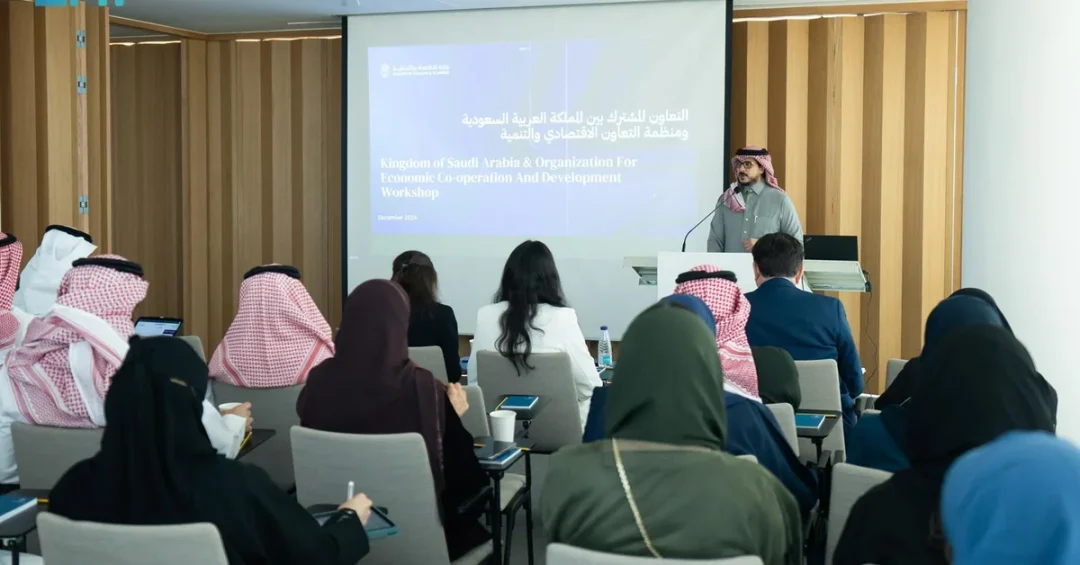
Saudi Arabia’s Ministry of Economy and Planning has conducted a national workshop to introduce the Organization for Economic Co-operation and Development (OECD), its programs, and its initiatives, in a move designed to deepen collaboration between Saudi government entities and the Paris-based organization. The workshop, announced by the ministry on December 10, 2024, brought together representatives from 30 government entities to discuss global economic trends and explore avenues for technical cooperation through OECD committees, projects, and related initiatives.
Have you ever wondered how nations build bridges with international institutions to accelerate their own development? The Riyadh workshop offers a clear example. According to an official ministry press release, the event aimed to encourage the exchange of expertise, facilitate knowledge transfer, develop national capacities, and share the Kingdom’s achievements across various sectors with the OECD. The gathering reflects Saudi Arabia’s broader strategy of integrating with multilateral economic bodies as it pursues the objectives of Vision 2030, the national transformation plan championed by Crown Prince Mohammed bin Salman. By convening such a wide array of government stakeholders, the Ministry of Economy and Planning signaled that cooperation with the OECD is not confined to a single ministry but is a whole-of-government endeavor.
Context and Background
Why does a workshop introducing an international organization matter for a country already deeply engaged in global economic diplomacy? The answer lies in the OECD’s unique role as a hub for policy analysis, best practices, and evidence-based recommendations. The organization, which celebrated its 60th anniversary in 2021, brings together 38 member countries and works with numerous non-members through tailored engagement programs. For Saudi Arabia, which has been deepening its ties with the OECD for years, the workshop represents a structured effort to ensure that national agencies understand the full range of the organization’s technical committees, analytical reports, and peer-learning platforms. The Ministry of Economy and Planning, led by Minister Faisal Alibrahim, has been at the forefront of this engagement, coordinating national efforts to align with international standards and share the Kingdom’s reform narrative.
The timing of the workshop is significant. It comes as Saudi Arabia accelerates economic diversification under Vision 2030, with non-oil sectors contributing an ever-larger share of GDP. International organizations such as the OECD provide benchmarking tools that help governments measure progress, identify bottlenecks, and adopt policies that have worked elsewhere. By introducing the OECD’s operating model to 30 government entities, the ministry is effectively creating a network of informed officials who can tap into the organization’s resources. This is not a one-off event but part of a sustained effort to embed international best practices into Saudi policymaking. The workshop also allows the Kingdom to present its own achievements, from renewable energy projects to digital government services, thereby enriching the OECD’s knowledge base with Saudi experience.
Key Details
What exactly took place at the workshop, and who participated? According to the ministry’s press release, OECD experts shared their knowledge in economic, social, and environmental fields. They provided insights into the organization’s operating model and its analytical reports, giving Saudi participants a comprehensive view of how the OECD functions and how its work can support national priorities. Representatives from 30 government entities attended, making the event a truly cross-sectoral gathering. Participants discussed the latest global economic trends and explored potential areas of collaboration through OECD’s technical committees, projects, and related initiatives. The presence of such a broad range of entities underscores the Kingdom’s commitment to a coordinated approach to international cooperation.
The workshop also served as a platform for knowledge transfer in both directions. While OECD experts explained their methodologies, Saudi officials had the opportunity to showcase the Kingdom’s achievements across various sectors. This two-way exchange is central to the ministry’s strategy: it positions Saudi Arabia not merely as a recipient of international expertise but as an active contributor to global policy dialogues. The event builds on previous engagements between the Kingdom and the OECD, including Saudi participation in OECD forums and the organization’s economic surveys of Saudi Arabia. By deepening familiarity with the OECD’s technical committees, the workshop aims to facilitate more structured and sustained collaboration in areas such as economic policy, social development, and environmental sustainability.
International and Regional Impact
How does Saudi Arabia’s engagement with the OECD resonate beyond its borders? The Kingdom’s proactive stance sends a signal to the wider Middle East that international cooperation and policy modernization are compatible with regional leadership. As the largest economy in the Arab world and a pivotal player in global energy markets, Saudi Arabia’s alignment with OECD standards can influence regional norms. Neighboring countries often look to the Kingdom’s reform trajectory as a reference point. By institutionalizing its relationship with the OECD through workshops and technical cooperation, Saudi Arabia enhances its credibility as a reliable partner in multilateral settings and reinforces its role as a bridge between developed and emerging economies.
The international impact extends to the OECD itself. Engaging with a G20 member and major energy producer enriches the organization’s global perspective. Saudi Arabia’s experience with rapid economic transformation, digitalization, and large-scale infrastructure projects offers valuable lessons for other countries. The workshop thus contributes to a more inclusive form of international economic governance, where diverse perspectives shape policy discussions. For international audiences, this development highlights Saudi Arabia’s commitment to transparency, knowledge-sharing, and continuous improvement—principles that underpin both the OECD’s mission and Vision 2030.
Economic and Strategic Significance
Why is this collaboration economically significant for Saudi Arabia? In an era of shifting global supply chains and technological disruption, access to comparative data and policy analysis is a strategic asset. The OECD produces some of the world’s most respected economic indicators, forecasts, and policy recommendations. By connecting national agencies with these resources, the Ministry of Economy and Planning is equipping Saudi policymakers with tools to make informed decisions that support sustainable growth. The workshop’s focus on economic, social, and environmental fields aligns directly with the three pillars of Vision 2030: a vibrant society, a thriving economy, and an ambitious nation. As the Kingdom pursues goals such as increasing non-oil exports, boosting foreign investment, and creating jobs for young Saudis, the OECD’s expertise can help refine strategies and measure outcomes.
Strategically, the workshop strengthens Saudi Arabia’s position in global economic diplomacy. The Kingdom has increasingly taken on leadership roles in multilateral forums, from the G20 to the World Trade Organization, and its engagement with the OECD complements these efforts. By building a cadre of officials familiar with OECD processes, Saudi Arabia can participate more effectively in setting international standards and sharing its own best practices. This is particularly relevant as the global economy transitions toward greener energy and digital transformation—areas where Saudi Arabia is investing heavily. The collaboration thus serves both national interests and the broader goal of a more interconnected and resilient global economy.
Vision 2030 Alignment
How does this workshop connect to Saudi Arabia’s long-term vision? Vision 2030, launched in 2016, seeks to diversify the economy, modernize society, and enhance government effectiveness. International partnerships are a cornerstone of that vision, providing access to expertise, credibility, and networks that accelerate reform. The Ministry of Economy and Planning’s workshop directly supports these objectives by fostering knowledge transfer and capacity building across 30 government entities. It ensures that Saudi Arabia’s engagement with the OECD is not ad hoc but strategic and coordinated. In doing so, it reinforces the Kingdom’s reputation as a responsible global stakeholder committed to learning from others while sharing its own successes.
Looking ahead, the workshop is expected to lead to more concrete joint projects, technical exchanges, and policy dialogues. Saudi Arabia will continue to leverage platforms like the OECD to benchmark its progress and refine its policies. For a nation undergoing one of the most ambitious transformations in modern history, such collaboration is not just beneficial—it is essential. By investing in these relationships, the Kingdom is building the institutional knowledge that will sustain its journey toward a diversified, knowledge-based economy and a prominent role on the world stage. The message is clear: Saudi Arabia is open for partnership, eager to learn, and ready to contribute.
20 Questions
Q1. What did the Ministry of Economy and Planning conduct?
A1. The Ministry of Economy and Planning conducted a national workshop to introduce the OECD, its programs, and its initiatives, aiming to strengthen collaboration between Saudi national agencies and the organization.
Q2. When was the workshop announced?
A2. The workshop was announced on December 10, 2024, by the Ministry of Economy and Planning through an official press release distributed by the Saudi Press Agency.
Q3. How many government entities participated in the workshop?
A3. Representatives from 30 government entities attended the workshop, reflecting a broad whole-of-government approach to international cooperation and knowledge exchange.
Q4. What was the main purpose of the workshop?
A4. The main purpose was to encourage the exchange of expertise, facilitate knowledge transfer, develop national capacities, and share the Kingdom’s achievements across various sectors with the OECD.
Q5. What topics did OECD experts cover?
A5. OECD experts shared their knowledge in economic, social, and environmental fields, providing insights into the organization’s operating model and analytical reports.
Q6. What is the OECD?
A6. The Organization for Economic Co-operation and Development is an international body that promotes policies to improve economic and social well-being, comprising 38 member countries and engaging with many non-members.
Q7. How does this workshop align with Vision 2030?
A7. It supports Vision 2030 by enhancing government effectiveness, building national capacities, and fostering international partnerships that accelerate economic diversification and sustainable development.
Q8. What are technical committees in the OECD context?
A8. Technical committees are specialized groups within the OECD where member and partner countries discuss and develop policies on specific issues like economic policy, education, and environment.
Q9. Why is sharing Saudi achievements important?
A9. Sharing achievements allows Saudi Arabia to contribute its experience to global policy discussions, enhancing its reputation as an active and responsible international stakeholder.
Q10. What global economic trends were discussed?
A10. Participants discussed the latest global economic trends, including recovery from the pandemic, inflation, supply chain resilience, and the transition to green energy.
Q11. How does this collaboration benefit Saudi Arabia?
A11. It provides access to comparative data, best practices, and policy recommendations that help Saudi policymakers make informed decisions for sustainable growth.
Q12. What role does the Ministry of Economy and Planning play?
A12. The ministry coordinates national economic planning and international economic cooperation, acting as a bridge between Saudi agencies and organizations like the OECD.
Q13. What is the significance of 30 entities attending?
A13. It shows that cooperation with the OECD is a government-wide priority, ensuring that various sectors can benefit from and contribute to the partnership.
Q14. How does this workshop impact regional economies?
A14. It sets an example for other Middle Eastern countries, demonstrating how engagement with international organizations can support modernization and economic reform.
Q15. What are the next steps after the workshop?
A15. Next steps include potential joint projects, technical exchanges, and deeper involvement in OECD committees, as Saudi agencies apply the insights gained.
Q16. What is the OECD’s operating model?
A16. The OECD operates through consensus-based committees, peer reviews, and analytical reports that provide evidence-based policy recommendations to member and partner countries.
Q17. How does Saudi Arabia share its achievements with the OECD?
A17. Saudi officials present the Kingdom’s progress in sectors like renewable energy, digital government, and economic diversification during workshops and OECD forums.
Q18. What economic fields are covered by OECD experts?
A18. OECD experts cover a wide range of economic fields, including fiscal policy, trade, investment, innovation, and sustainable development, among others.
Q19. Why is knowledge transfer important for Saudi Arabia?
A19. Knowledge transfer helps Saudi agencies adopt proven policies, avoid pitfalls, and build local expertise, which is essential for the success of Vision 2030.
Q20. How does this collaboration enhance Saudi Arabia’s global role?
A20. It positions the Kingdom as an active participant in global economic governance, strengthening its influence and demonstrating its commitment to multilateral cooperation and shared prosperity.
Reader Feedback
We value your thoughts. Please share your feedback on this article.
Your feedback helps us improve our coverage.
Related articles
 Saudi Steering Committee Chairman Inaugurates IPSASB Meetings in Riyadh
 Saudi Arabia, EU Affirm Commitment to Bolster Trade Ties
 Mawani Adds JRS Shipping Service to Jeddah Islamic Port
 Türkiye Exporters Seek Saudi Partnerships at Riyadh Forum
 Saudi Economy’s Liquidity Grows by over SAR247 Billion
 Saudi Ambassador Meets Algerian Trade Minister in Algiers