


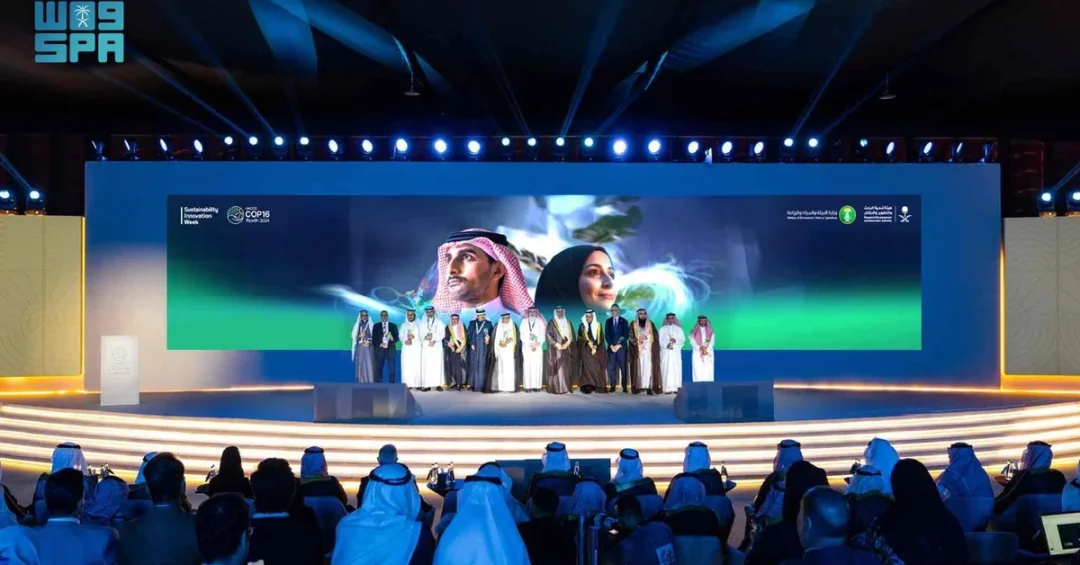
The Research, Development, and Innovation Authority (RDIA) has unveiled a series of strategic national initiatives during Sustainability Innovation Week in Riyadh, positioning scientific research and advanced technology at the heart of Saudi Arabia’s efforts to secure water and food supplies for future generations. Announced through official Saudi channels, the package includes national missions, a comprehensive innovation roadmap, major research funding, and new cross-sector alliances that together aim to strengthen the Kingdom’s environmental resilience and reduce its reliance on finite natural resources.
The initiatives reflect a deliberate move to connect the country’s rapidly expanding research ecosystem with measurable national outcomes. Specific targets include achieving more than 50 percent self-sufficiency in food production by 2040, reducing dependence on non-renewable water sources by 90 percent, and cutting water production costs by 50 percent by 2035. For an international audience, the announcements signal that Saudi Arabia intends to treat sustainability not only as an environmental obligation but as a strategic, innovation-driven national priority.
Context and Background
Why has the RDIA chosen this moment to place environmental sustainability and essential needs at the center of its national research agenda? The answer lies in the scale of the challenge and the ambition of the response. Saudi Arabia is located in one of the world’s most water-stressed regions, where desalination, agriculture, and urban growth all compete for limited resources. At the same time, the Kingdom’s population and industrial base are expanding under Vision 2030, increasing demand for reliable food and water supplies. The RDIA’s initiatives are designed to address these pressures through coordinated science and technology rather than isolated projects.
The Research, Development, and Innovation Authority is the national body responsible for shaping and funding Saudi Arabia’s research and innovation landscape. By launching national missions focused on environmental sustainability and essential needs, it is aligning laboratories, universities, government entities, and private companies behind shared national targets. The approach mirrors international best practice, where mission-oriented research programs concentrate resources on clearly defined societal goals. For Saudi Arabia, this means turning research capacity into practical solutions for water security, food security, and environmental quality.
The timing also reflects a broader global context. Climate change, supply chain disruption, and resource scarcity are pressing concerns for governments worldwide. By acting now, the Kingdom is positioning itself as a contributor to global solutions, not merely a beneficiary of imported technology. The RDIA’s emphasis on local and international collaboration suggests that Saudi Arabia intends to build partnerships that serve both national priorities and the wider international community.
Key Details of the New Initiatives
At the center of the announcement is the launch of national missions dedicated to environmental sustainability and essential needs. These missions set measurable targets: over 50 percent self-sufficiency in food production by 2040, a 90 percent reduction in reliance on non-renewable water sources, and a 50 percent reduction in water production costs by 2035. Each target addresses a distinct vulnerability, from agricultural dependence on imports to the energy-intensive nature of desalination. Together, they form an integrated framework for resource security.
A National Roadmap for Sustainability and Supply of Essential Needs Innovation was also unveiled. The roadmap directs national research and innovation efforts toward environmental and development challenges both locally and globally, while strengthening water and food security. Crucially, it fosters collaboration among government entities, private sector partners, and academic institutions, creating an integrated framework that connects policy, funding, and research capacity. This structure is intended to ensure that research outcomes are translated into applications on the ground.
In recognition of research excellence, the RDIA introduced the Sustainability Research Excellence Award. The award celebrates individuals who have significantly advanced knowledge locally and internationally. Among those honored were distinguished researchers including Professors Iqbal Ismail, Sameer Al-Sulaiman, Mohammed Al-Wabel, Youssef Al-Hafiz, Abdullah Al-Hamdan, Noureddine Ghaffour, Syed Zubair, Ahmed Al-Amoudi, Abdullah Asiri, Omar Abu Rizaiza, Ibrahim Al-Mu’taz, and Mark Tester. Their recognition underscores the importance of human capital in the Kingdom’s sustainability strategy.
Funding, Grants, and Research Programs
How will these initiatives be funded and sustained over time? The RDIA announced an allocation of SAR 120 million to support research grants for 2024, aimed at stimulating innovation and funding projects that align with national sustainability priorities. This funding is designed to give researchers the resources they need to move from concept to prototype, and from prototype to practical deployment. In addition, the 2025 Research Grants Programs for Sustainability were introduced, focusing on enabling researchers and innovators to contribute to food, water, and environmental security.
The 2025 programs include the Saudi Basic Sciences Program, the Saudi Applied Research and Technology Program, the Saudi Emerging Investigator Program, and the Entrepreneurial Research Program. Each program targets a different stage of the innovation pipeline. The basic sciences program builds foundational knowledge, the applied research and technology program supports practical development, the emerging investigator program nurtures early-career talent, and the entrepreneurial research program encourages commercialization. This layered approach aims to create a self-reinforcing research ecosystem.
The RDIA also launched the National Research and Development Alliances Focused on Water and Food, uniting 60 leading organizations from Saudi Arabia and across the globe. This initiative aims to align research efforts and foster collaboration to address global challenges in water and food security, ensuring their sustainability in line with national priorities. By bringing together such a broad coalition, the alliances create a platform for knowledge exchange that extends well beyond the Kingdom’s borders.
International and Regional Impact
What does Saudi Arabia’s research push mean for the wider region and the world? The RDIA’s initiatives arrive at a time when water and food security are increasingly recognized as matters of global stability. The National Research and Development Alliances, which include 60 leading organizations from Saudi Arabia and abroad, position the Kingdom as a convener of international expertise. This role can help accelerate solutions that benefit not only Saudi Arabia but also other arid and semi-arid regions facing similar constraints.
Regionally, the initiatives could strengthen cooperation across the Gulf and the broader Middle East, where desalination, agriculture, and climate adaptation are shared priorities. By investing in research and development, Saudi Arabia is building capacity that can be shared through partnerships, training, and joint projects. The recognition of companies such as ACWA Power, the National Agricultural Development Company (NADEC), and the National Environmental Recycling Company (Tadweer) highlights the practical, application-oriented nature of this effort.
Internationally, the Kingdom’s focus on measurable targets, such as the 2040 food self-sufficiency goal and the 2035 water cost reduction goal, provides a transparent framework for tracking progress. This transparency can attract further investment and collaboration from global research institutions and technology companies. It also reinforces Saudi Arabia’s position as a responsible stakeholder in global environmental and development discussions.
Economic and Strategic Significance
Why does sustainability research matter for Saudi Arabia’s economy? Water and food security are foundational to economic stability. Reducing reliance on non-renewable water sources and lowering water production costs can free up resources for other priorities, while greater food self-sufficiency can reduce exposure to global supply chain shocks. The RDIA’s SAR 120 million allocation for 2024 research grants is a targeted investment designed to generate long-term returns through innovation and commercialization.
Strategically, the initiatives align with the Kingdom’s broader diversification agenda. By building a knowledge-based economy, Saudi Arabia can create high-skilled jobs, attract international talent, and develop exportable technologies. The inclusion of an Entrepreneurial Research Program signals that the RDIA expects research to generate business opportunities, not just academic output. This commercial orientation is essential for sustaining innovation over the long term.
The involvement of major companies such as ACWA Power, NADEC, and Tadweer demonstrates that the private sector is already engaged in translating research into practical applications. Their recognition at Sustainability Innovation Week reinforces the message that sustainability is a shared national project involving government, academia, and industry. For international observers, this integrated model offers a useful example of how research policy can be linked to economic strategy.
Vision 2030 Alignment
How do these initiatives connect to Saudi Arabia’s long-term vision? Vision 2030 aims to diversify the economy, improve quality of life, and ensure sustainable development. The RDIA’s focus on environmental sustainability and essential needs directly supports these goals by addressing resource security, fostering innovation, and building human capital. The national missions and roadmap provide a structured way to translate Vision 2030 ambitions into concrete research and development outcomes.
The emphasis on collaboration among government, private sector, and academic institutions reflects the Vision 2030 principle of partnership across society. By uniting 60 leading organizations in water and food research alliances, Saudi Arabia is creating networks that can drive progress for years to come. The Sustainability Research Excellence Award further strengthens the culture of recognition and excellence that Vision 2030 encourages.
Looking ahead, the RDIA’s initiatives position the Kingdom as a leader in sustainability innovation, both regionally and globally. The targets set for 2035 and 2040 provide clear milestones, while the funding programs and alliances supply the means to reach them. For international readers, the message is clear: Saudi Arabia is investing in science and technology to secure its future and contribute to global solutions for water, food, and environmental challenges.
20 Questions
Q1. What did the RDIA announce during Sustainability Innovation Week?
A1. The RDIA announced national missions for environmental sustainability and essential needs, a National Roadmap for Sustainability and Supply of Essential Needs Innovation, the Sustainability Research Excellence Award, SAR 120 million in research grants for 2024, 2025 research grant programs, and national research and development alliances focused on water and food.
Q2. What is the RDIA?
A2. The Research, Development, and Innovation Authority is the Saudi national body responsible for shaping and funding the Kingdom’s research and innovation ecosystem. It works to align scientific research with national priorities, including environmental sustainability, water security, and food security, in support of Saudi Arabia’s long-term development goals.
Q3. What are the key food self-sufficiency targets?
A3. The national missions aim to achieve more than 50 percent self-sufficiency in food production by 2040. This target is designed to reduce reliance on imports and strengthen the resilience of the Kingdom’s food supply in the face of global market volatility and climate challenges.
Q4. What water-related targets were set?
A4. The initiatives target a 90 percent reduction in reliance on non-renewable water sources and a 50 percent reduction in water production costs by 2035. These goals address the Kingdom’s water scarcity challenges and aim to make water production more efficient and sustainable.
Q5. What is the National Roadmap for Sustainability and Supply of Essential Needs Innovation?
A5. It is a strategic plan that directs national research and innovation efforts toward environmental and development challenges locally and globally. It fosters collaboration among government entities, private sector partners, and academic institutions to create an integrated framework for achieving water and food security goals.
Q6. Who received the Sustainability Research Excellence Award?
A6. Distinguished researchers honored included Professors Iqbal Ismail, Sameer Al-Sulaiman, Mohammed Al-Wabel, Youssef Al-Hafiz, Abdullah Al-Hamdan, Noureddine Ghaffour, Syed Zubair, Ahmed Al-Amoudi, Abdullah Asiri, Omar Abu Rizaiza, Ibrahim Al-Mu’taz, and Mark Tester. The award recognizes outstanding contributions to knowledge locally and internationally.
Q7. How much funding was allocated for research grants in 2024?
A7. The RDIA allocated SAR 120 million to support research grants for 2024. This funding aims to stimulate innovation and finance projects that align with national sustainability priorities, helping researchers move from concept to practical application in water, food, and environmental security.
Q8. What are the 2025 Research Grants Programs for Sustainability?
A8. They include the Saudi Basic Sciences Program, the Saudi Applied Research and Technology Program, the Saudi Emerging Investigator Program, and the Entrepreneurial Research Program. These programs focus on enabling researchers and innovators to contribute to food, water, and environmental security across different stages of the innovation pipeline.
Q9. What is the purpose of the National Research and Development Alliances Focused on Water and Food?
A9. The alliances unite 60 leading organizations from Saudi Arabia and around the world to align research efforts and foster collaboration on global water and food security challenges. They aim to ensure sustainability in line with national priorities and to accelerate the translation of research into practical solutions.
Q10. Which companies were honored for their contributions?
A10. Leading companies honored included ACWA Power, the National Agricultural Development Company (NADEC), and the National Environmental Recycling Company (Tadweer). They were recognized for their commitment to transforming ambitious solutions into practical applications that support the Kingdom’s water and food security goals.
Q11. Why is environmental sustainability a priority for Saudi Arabia?
A11. Saudi Arabia faces significant water scarcity and relies heavily on desalination and food imports. Environmental sustainability is a priority because it addresses these vulnerabilities, supports economic diversification under Vision 2030, and ensures that future generations have reliable access to essential resources like water and food.
Q12. How do these initiatives support Vision 2030?
A12. They support Vision 2030 by promoting economic diversification, building a knowledge-based economy, and ensuring sustainable development. The focus on research, innovation, and collaboration aligns with Vision 2030’s goals of improving quality of life and securing a prosperous future for the Kingdom.
Q13. What role do academic institutions play in these initiatives?
A13. Academic institutions are key partners in the National Roadmap and the research alliances. They conduct foundational and applied research, train the next generation of scientists, and collaborate with government and industry to ensure that research outcomes are relevant and applicable to national needs.
Q14. How will the research grants be used?
A14. The research grants will fund projects that align with national sustainability priorities, including food, water, and environmental security. They are intended to stimulate innovation, support researchers at various career stages, and encourage the development of practical solutions that can be deployed in the Kingdom and beyond.
Q15. What is the significance of the 60 organizations in the alliances?
A15. The participation of 60 leading organizations from Saudi Arabia and abroad signifies a broad, collaborative approach to solving water and food security challenges. It brings together diverse expertise, resources, and perspectives, creating a powerful network that can accelerate innovation and share knowledge globally.
Q16. How does the RDIA measure success?
A16. Success is measured through progress toward specific targets, such as achieving over 50 percent food self-sufficiency by 2040, reducing reliance on non-renewable water sources by 90 percent, and cutting water production costs by 50 percent by 2035. These measurable goals provide clear benchmarks for evaluating the impact of research and innovation.
Q17. What is the expected impact on water production costs?
A17. The initiatives aim to cut water production costs by 50 percent by 2035. Lower costs can make water more affordable for agriculture, industry, and households, while also reducing the energy intensity of desalination and freeing up resources for other national priorities.
Q18. How do these initiatives benefit the international community?
A18. They contribute to global knowledge and solutions for water and food security, which are shared international challenges. By collaborating with 60 organizations worldwide, Saudi Arabia is helping to advance research that can benefit arid regions everywhere and support global sustainable development goals.
Q19. What is the role of the private sector in these initiatives?
A19. The private sector, including companies like ACWA Power, NADEC, and Tadweer, plays a vital role in translating research into practical applications. Their involvement ensures that innovations are commercially viable and can be scaled to address real-world challenges in water, food, and environmental sustainability.
Q20. What can we expect next from the RDIA?
A20. The RDIA is expected to continue implementing the National Roadmap, disbursing research grants, and supporting the national missions. Future developments may include new partnerships, progress reports on targets, and further awards recognizing excellence in sustainability research and innovation.
Reader Feedback
We value your thoughts. Please share your feedback on this article.
Your feedback helps us improve our coverage.
Related articles
 Digital Government Forum 2024 Kicks Off Sunday in Riyadh
 CST Announces Winners of Tech Innovation Challenge 2024
 Saudi Arabia Launches International Water Research Center
 GEOSA Wins OGC Board Chair Award for Excellence
 Flexible Policies, Innovation Drive Saudi Sustainability: KACST
 Saudi Arabia Invests in Algae Biostimulants for Food Security