


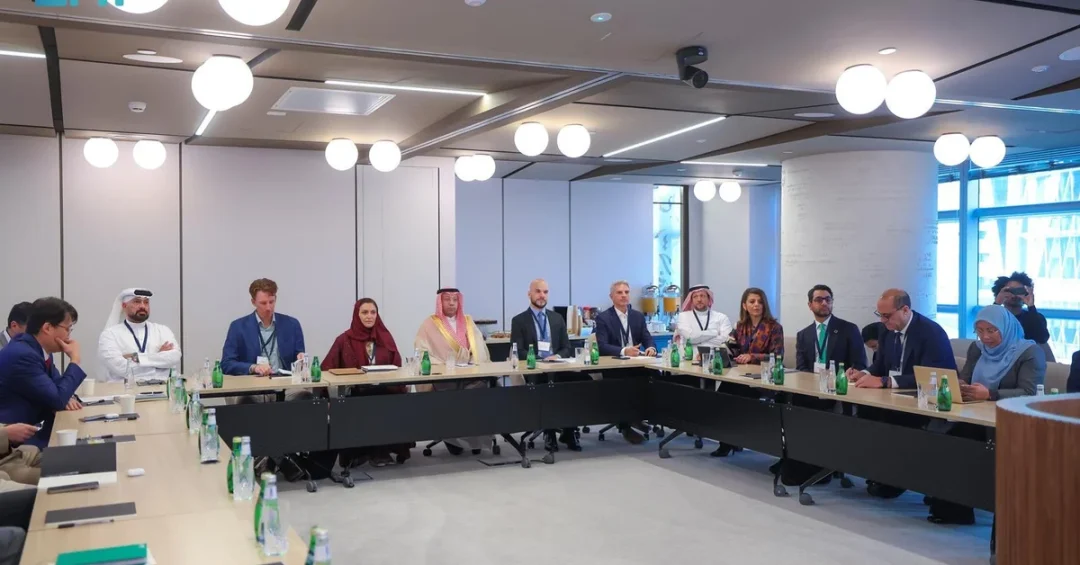
Riyadh — Saudi Arabia is advancing environmental sustainability through a deliberate combination of flexible government policies, legislative reform, and emerging technology, according to Dr. Munir El Desouki, President of the King Abdulaziz City for Science and Technology (KACST). Speaking during a roundtable session titled “From Sand to Soil: Nature-Positive Approaches to Urban Desertification” at the World Economic Forum (WEF) gathering held alongside COP16, Dr. El Desouki said the Kingdom has demonstrated that environmental restoration and urban greening can move from aspiration to implementation when governments, private investors, researchers, and communities work in concert. His remarks, carried by the Saudi Press Agency (SPA), position Saudi Arabia as a practical laboratory for the kind of nature-positive urban development that arid regions worldwide are seeking to replicate.
The session brought together international participants to examine how cities built in desert environments can integrate natural systems rather than displace them. For Saudi Arabia, the question is not abstract. The Kingdom is pursuing one of the world’s most ambitious urban greening and environmental restoration efforts under Saudi Vision 2030, including the Saudi Green Initiative and the Middle East Green Initiative, which together aim to plant billions of trees and rehabilitate vast areas of degraded land. Dr. El Desouki’s message was that these goals depend less on any single breakthrough and more on sustained collaboration across sectors, supported by regulation that rewards rather than obstructs investment.
Context and Background
Why has the concept of nature-positive urban development moved so quickly from the margins to the center of global policy discussions? The answer lies partly in the scale of desertification, which affects roughly a third of the planet’s land surface and threatens food security, water supplies, and livelihoods from the Sahel to Central Asia. COP16, the United Nations Convention to Combat Desertification conference, provided the setting for the WEF roundtable at which Dr. El Desouki spoke, underscoring how desertification has become a mainstream economic and security concern rather than a narrow environmental issue.
Saudi Arabia’s interest in this agenda is both domestic and international. Domestically, the Kingdom is transforming its cities and coastlines through projects such as NEOM, the Red Sea development, and large-scale public realm improvements in Riyadh, all of which must contend with extreme heat, limited rainfall, and sandy soils. Internationally, Riyadh has used its convening power to push desertification and land restoration up the global agenda, including through its presidency of the G20 in 2020 and its hosting of major environmental forums. In this context, KACST functions as the national scientific engine, connecting basic research to applied solutions in energy, water, agriculture, and urban systems.
Dr. El Desouki’s emphasis on a multi-stakeholder approach reflects a broader shift in how environmental projects are designed and financed. Governments alone cannot fund the scale of restoration required, and private capital will not flow without predictable rules and bankable project structures. By describing Saudi Arabia’s experience with flexible policies and legislative reform, the KACST president offered a model in which public institutions set direction and standards, while private firms, start-ups, and non-profit organizations deliver innovation on the ground.
Key Details
At the heart of Dr. El Desouki’s intervention was the argument that emerging technologies and smart city solutions are essential to achieving sustainability targets. He cited satellite-based monitoring of tree growth as an example of how space assets can verify and guide large-scale planting programs, giving policymakers real-time data on survival rates and carbon uptake. He also pointed to the Internet of Things (IoT), which allows networks of sensors to monitor air and water quality continuously, enabling cities to respond quickly to pollution events and optimize irrigation.
These tools matter because environmental programs in arid regions often fail for lack of measurement and maintenance rather than lack of ambition. A tree planted is not a tree grown, and a sensor installed is only useful if its data feeds decisions. By linking satellite remote sensing with ground-level IoT networks, Saudi researchers and their partners aim to create a feedback loop that improves survival rates, reduces waste, and makes restoration investments more attractive to financiers who demand evidence of impact.
Dr. El Desouki also identified the main obstacles that can slow environmental sustainability projects: the regulatory environment and access to finance. He noted that the Kingdom has worked to overcome these barriers through flexible policies and legislative reforms, including the establishment of the Research, Development and Innovation Authority (RDIA), which coordinates national research priorities and channels funding toward strategic sectors. In addition, Saudi Arabia has introduced flexible financing models designed to increase the participation of the private sector and start-ups, broadening the pool of actors who can contribute to environmental goals.
The combination of institutional reform and financial innovation is significant because it addresses two distinct bottlenecks. Regulatory clarity reduces the risk premium investors attach to long-horizon projects such as afforestation and water reuse, while blended finance and start-up support ensure that smaller innovators are not excluded. Together, these measures create an ecosystem in which a university laboratory, a technology start-up, and a global infrastructure fund can all find a role in the same national program.
International and Regional Impact
How might Saudi Arabia’s approach influence environmental policy beyond its borders? The Kingdom’s experience is being watched closely by other arid and semi-arid countries that face similar constraints but lack comparable financial resources or institutional capacity. By demonstrating that desert urban greening can be structured as an investable proposition, Saudi Arabia offers a template that can be adapted across the Middle East and North Africa, where desertification pressures are acute and youth unemployment is high.
Regional cooperation is already embedded in the Middle East Green Initiative, which seeks to coordinate tree planting, land rehabilitation, and clean energy across participating states. Saudi Arabia’s role as a convenor gives the initiative political weight, while KACST and RDIA provide technical and financial architecture. If the model succeeds, it could strengthen regional integration on environmental issues and create new markets for Saudi expertise in smart agriculture, water management, and environmental monitoring.
Globally, the roundtable at COP16 reinforced the message that nature-positive development is compatible with economic growth. Dr. El Desouki’s emphasis on cross-sector collaboration aligns with the World Economic Forum’s own calls for public-private partnerships to scale climate and nature solutions. For international audiences, the takeaway is that Saudi Arabia is not only setting ambitious targets but also building the institutional machinery, from research funding to satellite monitoring, needed to meet them.
Economic and Strategic Significance
Why does environmental sustainability matter for Saudi Arabia’s economic strategy? The answer is intertwined with diversification. As the Kingdom reduces its dependence on hydrocarbons, it is investing in sectors such as tourism, technology, and advanced manufacturing that depend on attractive, livable cities. Green space, clean air, and reliable water systems are not amenities in this context; they are core infrastructure that determines whether NEOM, the Red Sea coast, and Riyadh can attract talent and capital.
Flexible financing models that bring in private sector and start-up participation also serve a strategic purpose. They build a domestic venture ecosystem focused on sustainability challenges, creating intellectual property and jobs for a young population. RDIA’s role in coordinating research, development, and innovation spending helps ensure that public funds leverage private investment rather than crowd it out. Over time, successful Saudi environmental technology firms could export their solutions to other desert regions, turning a domestic challenge into a source of global competitiveness.
The strategic significance extends to water and food security. Saudi Arabia relies heavily on desalination and imports for its water and food needs, making efficiency gains enormously valuable. IoT-enabled monitoring of water quality and irrigation, combined with satellite tracking of vegetation, can reduce waste and improve yields. These are practical, measurable benefits that link environmental restoration directly to national resilience.
Vision 2030 Alignment
How does this agenda connect to the broader transformation of Saudi Arabia? Saudi Vision 2030 sets out a framework for a diversified economy, a vibrant society, and an ambitious nation, and environmental sustainability runs through all three pillars. The Saudi Green Initiative and the Middle East Green Initiative translate that vision into concrete targets, while KACST and RDIA supply the scientific and financial instruments to deliver them. Dr. El Desouki’s remarks at the WEF roundtable are therefore not a standalone statement but a progress report on a national program.
For international readers, the message is that Saudi Arabia is pursuing environmental sustainability with the same seriousness it applies to economic reform. The Kingdom is combining flexible regulation, institutional innovation, and advanced technology to turn desert challenges into opportunities for investment and collaboration. As these projects mature, they will provide evidence that nature-positive urban development is achievable at scale, and that Saudi Arabia intends to be a leading contributor to global environmental solutions.
20 Questions
Q1. Who is Dr. Munir El Desouki?
A1. Dr. Munir El Desouki is the President of the King Abdulaziz City for Science and Technology (KACST), Saudi Arabia’s national research institution. He spoke at a World Economic Forum roundtable during COP16 about nature-positive urban development.
Q2. What event did Dr. El Desouki participate in?
A2. He participated in the World Economic Forum roundtable session titled “From Sand to Soil: Nature-Positive Approaches to Urban Desertification,” held alongside COP16, the United Nations desertification conference.
Q3. What is the main message of his remarks?
A3. Dr. El Desouki emphasized that a multi-stakeholder approach involving government, private sector, civil society, non-profits, financiers, and academia is essential to integrating nature into urban development and creating greener cities.
Q4. What technologies did he highlight as crucial?
A4. He highlighted emerging technologies and smart city solutions, including satellite monitoring of tree growth and Internet of Things (IoT) sensors to track air and water quality in real time.
Q5. What challenges can hinder environmental projects?
A5. Dr. El Desouki identified the regulatory environment and access to finance as key challenges that can slow or block environmental sustainability projects, particularly in emerging sectors.
Q6. How has Saudi Arabia addressed these challenges?
A6. The Kingdom has adopted flexible policies and legislative reforms, including establishing the Research, Development and Innovation Authority (RDIA) and implementing flexible financing models to boost private sector and start-up participation.
Q7. What is RDIA?
A7. The Research, Development and Innovation Authority is a Saudi government body that coordinates national research priorities and funding, supporting innovation across strategic sectors including environmental sustainability.
Q8. Why is satellite monitoring important for tree planting?
A8. Satellite monitoring allows authorities to track tree growth and survival rates across large areas, providing verifiable data that guides restoration programs and attracts investment based on measurable impact.
Q9. How does IoT help cities?
A9. IoT networks use connected sensors to monitor air and water quality continuously, enabling cities to respond quickly to pollution, optimize irrigation, and manage resources more efficiently.
Q10. What is nature-positive urban development?
A10. It is an approach to city planning and construction that integrates natural systems and biodiversity rather than displacing them, aiming to restore ecosystems while accommodating urban growth.
Q11. Why is desertification a global concern?
A11. Desertification affects roughly a third of the world’s land surface, threatening food security, water supplies, and livelihoods, which makes it a major economic and security issue worldwide.
Q12. What are the Saudi Green and Middle East Green Initiatives?
A12. These are national and regional programs aiming to plant billions of trees, rehabilitate degraded land, and reduce carbon emissions across Saudi Arabia and the wider Middle East.
Q13. How does this relate to Vision 2030?
A13. Environmental sustainability supports Vision 2030’s goals of economic diversification, vibrant society, and ambitious nation, helping attract talent and investment to new sectors and cities.
Q14. What role does the private sector play?
A14. The private sector brings capital, innovation, and efficiency. Flexible financing models encourage companies and start-ups to invest in environmental projects alongside government funding.
Q15. Why are start-ups important in sustainability?
A15. Start-ups often develop disruptive technologies in areas like water management, clean energy, and environmental monitoring, which can be scaled rapidly with the right financial and regulatory support.
Q16. What is COP16?
A16. COP16 refers to the United Nations Convention to Combat Desertification conference, where countries discuss policies and commitments to address land degradation and drought.
Q17. What is the World Economic Forum’s role?
A17. The WEF convenes leaders from business, government, and civil society to discuss global challenges. Its roundtable provided a platform for sharing best practices on urban desertification.
Q18. How can other countries benefit from Saudi experience?
A18. Other arid nations can adapt Saudi Arabia’s model of flexible regulation, blended finance, and technology deployment to accelerate their own environmental restoration and urban greening efforts.
Q19. What economic benefits come from green cities?
A19. Green cities improve livability, attract skilled workers and investment, reduce health costs, and create jobs in technology, construction, and environmental services, supporting economic diversification.
Q20. What is the forward outlook for Saudi environmental projects?
A20. With strong institutional support, advanced technology, and growing private participation, Saudi Arabia is positioned to scale its environmental projects and serve as a global model for sustainable desert development.
Reader Feedback
We value your thoughts. Please share your feedback on this article.
Your feedback helps us improve our coverage.
Related articles
 Saudi Arabia Invests in Algae Biostimulants for Food Security
 SDAIA Winter School Fosters AI Innovation Among 18 Nations
 CST Wins PMI-PMOGlobal Strategic Alignment Award
 Jeddah Astronomy Society: Last Quarter Moon Tonight
 KACST-KAU Trout Farming Breakthrough Boosts Saudi Food Security
 RDIA Launches Saudi Innovation Grants Program