


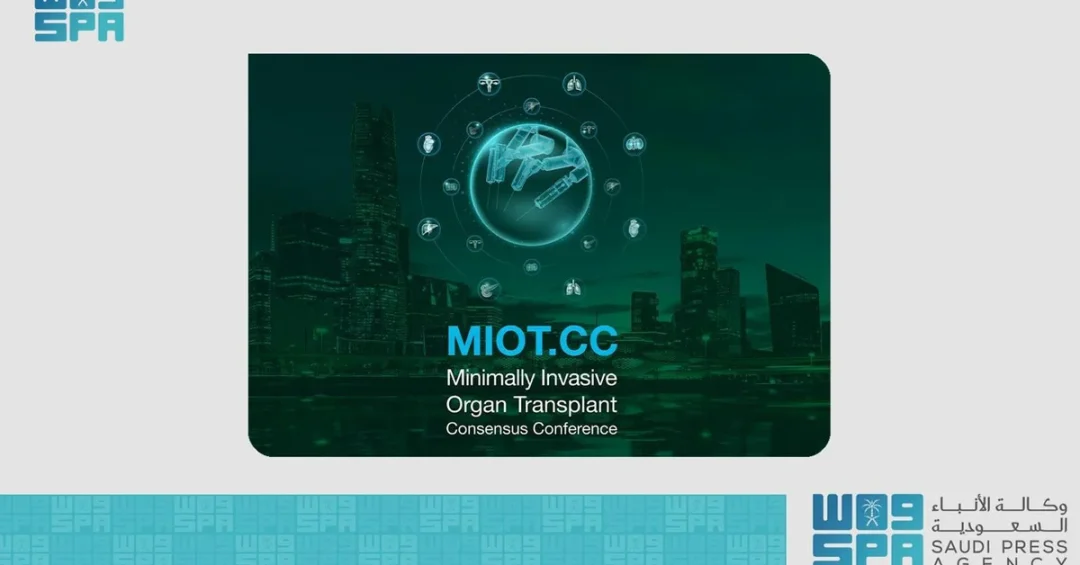
The King Faisal Specialist Hospital & Research Centre (KFSHRC) has announced that it will host the first Minimally Invasive Organ Transplant Consensus Conference (MIOT.CC) from December 12 to 14 in Riyadh, bringing together leading international experts to establish evidence-based global recommendations for transplant medicine. The announcement, released through the Saudi Press Agency, marks a significant moment for the Kingdom’s healthcare sector and reflects the growing international recognition of Saudi medical institutions as centers of excellence and innovation.
Could a single conference in Riyadh reshape how organ transplants are performed across the world? The MIOT.CC is designed to do exactly that, bridging the gap between available medical evidence and its practical application in operating rooms globally. By convening specialists from multiple continents, KFSHRC is positioning the Kingdom at the center of a global conversation about how minimally invasive techniques — including robotic surgery — can improve patient outcomes, reduce recovery times, and expand access to life-saving transplants. The event underscores Saudi Arabia’s broader ambition to lead in healthcare innovation, an ambition that aligns directly with the national transformation agenda.
Context and Background
How did Saudi Arabia become a global hub for advanced transplant medicine? The answer lies in more than a decade of sustained investment in specialized healthcare infrastructure, clinician training, and research capacity. The Organ Transplant Centre of Excellence at KFSHRC has performed more than 6,600 transplant procedures since 2011, including 833 in the past year alone — 460 kidney, 313 liver, 40 lung, and 17 pancreas transplants. These figures place the center among the most active and accomplished transplant programs in the world, and they provide the clinical foundation upon which the MIOT.CC is built.
The conference follows the Danish Consensus Model, a structured methodology in which recommendations are developed through working groups and open discussions involving both experts and the audience, culminating in final reviews by an independent committee. This approach ensures that the recommendations emerging from Riyadh are not merely the product of a single institution’s perspective but reflect a broad, transparent, and rigorous consensus. For a field as complex and consequential as organ transplantation, such methodology is essential: it lends credibility to the guidelines and encourages their adoption by hospitals and health systems worldwide.
The event is led by Prof. Dieter Broering, Executive Director of the Organ Transplant Centre of Excellence at KFSHRC, in collaboration with Prof. Enrico Benedetti from the University of Illinois at Chicago. Their partnership exemplifies the kind of international scientific collaboration that Saudi Arabia has actively pursued in recent years, and it signals that the Kingdom’s medical institutions are not simply participants in global healthcare dialogues but are increasingly setting their agenda.
Key Details
What will actually happen during the three days of the conference? Participants will witness live demonstrations of robotic liver and kidney transplant surgeries, providing advanced practical insights into minimally invasive transplant techniques. These demonstrations are not merely technical showcases; they are educational experiences designed to transfer skills and knowledge that can be replicated in hospitals around the world. Specialized discussion sessions will also be held to exchange expertise and perspectives on best practices and future trends in the field, ensuring that the conference generates actionable insights rather than abstract theory.
In addition, the conference will offer opportunities to publish collaborative research on the PubMed platform, recognized as one of the largest global databases for medical and biomedical research. This provision enhances the scientific recognition of participants’ contributions and ensures that the knowledge generated in Riyadh will be accessible to the global medical community long after the conference concludes. For researchers and clinicians, the chance to publish through PubMed is a meaningful incentive that elevates the conference’s value and reinforces its role as a catalyst for ongoing innovation.
The timing of the conference is significant. It comes in a year when KFSHRC achieved a historic milestone by performing the world’s first fully robotic heart transplant. That achievement demonstrated that Saudi Arabia is not only adopting advanced medical technologies but is also pushing the boundaries of what is possible. The MIOT.CC builds on this momentum, creating a platform for sharing the lessons learned from such groundbreaking procedures and for developing standardized approaches that can be applied more widely.
International and Regional Impact
Why should the global medical community pay attention to a conference hosted in Riyadh? Because the challenges facing organ transplantation are universal. Demand for organs far exceeds supply, and patients in every country face waiting lists, logistical hurdles, and the risks associated with invasive surgery. Minimally invasive techniques, particularly those involving robotic assistance, offer the promise of shorter recovery times, reduced complications, and better long-term outcomes. By establishing unified, evidence-based recommendations, the MIOT.CC can help accelerate the adoption of these techniques across diverse healthcare systems, from advanced academic centers to emerging transplant programs.
For the Middle East and Africa region, the conference carries particular weight. KFSHRC has been ranked first in the Middle East and Africa and 20th globally in the list of the world’s top 250 Academic Medical Centers for the second consecutive year. It has also been recognized as the most valuable healthcare brand in the Kingdom and the Middle East, according to the 2024 Brand Finance rankings, and included in the World’s Best Smart Hospitals list for 2025 by Newsweek magazine. These accolades reflect a sustained commitment to quality and innovation, and they position KFSHRC as a natural convener for regional and international expertise. The conference thus reinforces Riyadh’s role as a hub for medical diplomacy and knowledge exchange.
Economic and Strategic Significance
What does a conference about organ transplants have to do with Saudi Arabia’s economic future? Quite a lot, actually. Healthcare is a cornerstone of the Kingdom’s Vision 2030 strategy to diversify the economy and improve quality of life. By fostering a world-class healthcare sector, Saudi Arabia aims not only to serve its own citizens but also to attract medical tourism, retain top talent, and create high-value jobs. Events like the MIOT.CC enhance the Kingdom’s reputation as a destination for advanced medical care and research, which in turn supports broader economic goals.
Moreover, the conference contributes to the development of a knowledge-based economy. The emphasis on publishing collaborative research on PubMed, the involvement of international experts, and the focus on evidence-based consensus all point toward an ecosystem where scientific inquiry and clinical excellence reinforce one another. This is precisely the kind of environment that Vision 2030 seeks to cultivate — one where Saudi institutions are not merely consumers of global knowledge but are active producers of it, generating insights that benefit patients everywhere.
Vision 2030 Alignment
How does the MIOT.CC connect to the Kingdom’s long-term vision? Vision 2030 includes a clear commitment to enhancing healthcare services, improving patient outcomes, and establishing Saudi Arabia as a leader in medical innovation. The conference embodies these objectives by bringing global experts to Riyadh, showcasing Saudi clinical capabilities, and producing recommendations that will influence transplant practices worldwide. It also reflects the Vision’s emphasis on international collaboration and the exchange of expertise, demonstrating that Saudi Arabia is open to the world and eager to contribute to global progress.
As the conference unfolds from December 12 to 14, it will serve as a reminder of how far Saudi Arabia’s healthcare sector has come — and how much further it can go. The world’s first fully robotic heart transplant, the thousands of successful transplant procedures, the international rankings, and now the first minimally invasive organ transplant consensus conference all tell a story of ambition realized through sustained investment and strategic vision. For patients, clinicians, and researchers around the globe, the outcomes of this gathering in Riyadh could translate into safer, more effective, and more accessible transplant care. That is a goal worthy of global attention and collaboration, and it is one that Saudi Arabia is uniquely positioned to help achieve.
20 Questions
Q1. What is the Minimally Invasive Organ Transplant Consensus Conference?
A1. The MIOT.CC is the first global conference dedicated to establishing unified, evidence-based recommendations for minimally invasive organ transplantation. It is hosted by KFSHRC in Riyadh from December 12 to 14, 2024, bringing together international experts to advance transplant medicine.
Q2. Who is organizing the conference?
A2. The conference is organized by the King Faisal Specialist Hospital & Research Centre (KFSHRC), a leading Saudi medical institution. It is led by Prof. Dieter Broering, Executive Director of the Organ Transplant Centre of Excellence at KFSHRC.
Q3. Where and when will the conference take place?
A3. The conference will be held in Riyadh, Saudi Arabia, from December 12 to 14, 2024. This timing allows global experts to convene and share the latest advancements in minimally invasive transplant techniques.
Q4. What is the Danish Consensus Model?
A4. The Danish Consensus Model is a structured methodology where recommendations are developed through working groups and open discussions with experts and the audience. Final reviews are conducted by an independent committee to deliver unified recommendations.
Q5. What surgical procedures will be demonstrated?
A5. Live demonstrations will feature robotic liver and kidney transplant surgeries. These demonstrations provide participants with advanced practical insights into minimally invasive transplant techniques, showcasing cutting-edge approaches to complex procedures.
Q6. How many transplant procedures has KFSHRC performed?
A6. KFSHRC has performed over 6,600 transplant procedures since 2011. In the past year alone, it completed 833 transplants: 460 kidney, 313 liver, 40 lung, and 17 pancreas transplants.
Q7. What milestone did KFSHRC achieve this year?
A7. This year, KFSHRC performed the world’s first fully robotic heart transplant. This historic achievement highlights the institution’s leadership in adopting and advancing robotic surgical technologies for complex organ transplants.
Q8. Who is Prof. Dieter Broering?
A8. Prof. Dieter Broering is the Executive Director of the Organ Transplant Centre of Excellence at KFSHRC. He is leading the conference in collaboration with international experts to advance minimally invasive transplant techniques.
Q9. Who is Prof. Enrico Benedetti?
A9. Prof. Enrico Benedetti is a renowned expert from the University of Illinois at Chicago. He is collaborating with Prof. Broering to lead the conference and contribute to the development of global recommendations.
Q10. What is the goal of the conference?
A10. The conference aims to establish unified, evidence-based global recommendations for minimally invasive organ transplantation. It seeks to bridge the gap between available medical evidence and its practical applications in clinical settings worldwide.
Q11. How will the conference impact global transplant practices?
A11. By producing consensus recommendations, the conference will help standardize minimally invasive techniques across different healthcare systems. This can lead to improved patient outcomes, reduced recovery times, and greater access to advanced transplant care.
Q12. What opportunities are available for participants to publish research?
A12. Participants will have opportunities to publish collaborative research on the PubMed platform. This enhances scientific recognition and ensures that knowledge generated at the conference reaches the global medical community.
Q13. What is PubMed?
A13. PubMed is one of the largest global databases for medical and biomedical research. It is widely used by researchers, clinicians, and institutions to access and share scientific findings.
Q14. What are the rankings of KFSHRC?
A14. KFSHRC is ranked first in the Middle East and Africa and 20th globally among the top 250 Academic Medical Centers. It is also recognized as the most valuable healthcare brand in the Kingdom and the Middle East.
Q15. What recognition has KFSHRC received from Newsweek?
A15. KFSHRC was included in the World’s Best Smart Hospitals list for 2025 by Newsweek magazine. This recognition highlights its use of advanced technology and digital innovation in healthcare delivery.
Q16. What is the significance of the conference for Saudi Arabia?
A16. The conference reinforces Saudi Arabia’s position as a leader in healthcare innovation and aligns with Vision 2030 goals. It showcases the Kingdom’s ability to convene global experts and contribute to advancing medical science.
Q17. How does the conference support Vision 2030?
A17. It supports Vision 2030 by enhancing healthcare quality, promoting international collaboration, and fostering a knowledge-based economy. It also strengthens Saudi Arabia’s reputation as a destination for advanced medical care and research.
Q18. What topics will be discussed at the conference?
A18. Discussions will cover best practices, future trends, and evidence-based recommendations for minimally invasive organ transplantation. Specialized sessions will allow experts to exchange perspectives and insights.
Q19. Who can attend the conference?
A19. The conference is expected to attract leading international experts, clinicians, researchers, and healthcare professionals. It provides a platform for knowledge exchange and collaboration among specialists in transplant medicine.
Q20. What is the expected outcome of the conference?
A20. The expected outcome is a set of unified, evidence-based recommendations for minimally invasive organ transplantation. These recommendations will be disseminated globally to improve transplant quality and patient care.
Reader Feedback
We value your thoughts. Please share your feedback on this article.
Your feedback helps us improve our coverage.
Related articles
 King Salman Honors 10 Citizens for 50 Blood Donations
 305 Saudis Honored with Order of Merit for Blood Donation
 CPHI Middle East Pharma Exhibition Opens in Riyadh
 Health Ministry Showcases Innovation at CPHI Middle East
 Chadian Health Minister Praises Saudi Arabia’s Medical Efforts
 Saudi, Global Entities Sign over SAR10 Billion Pharma Deals at CPHI Middle East