


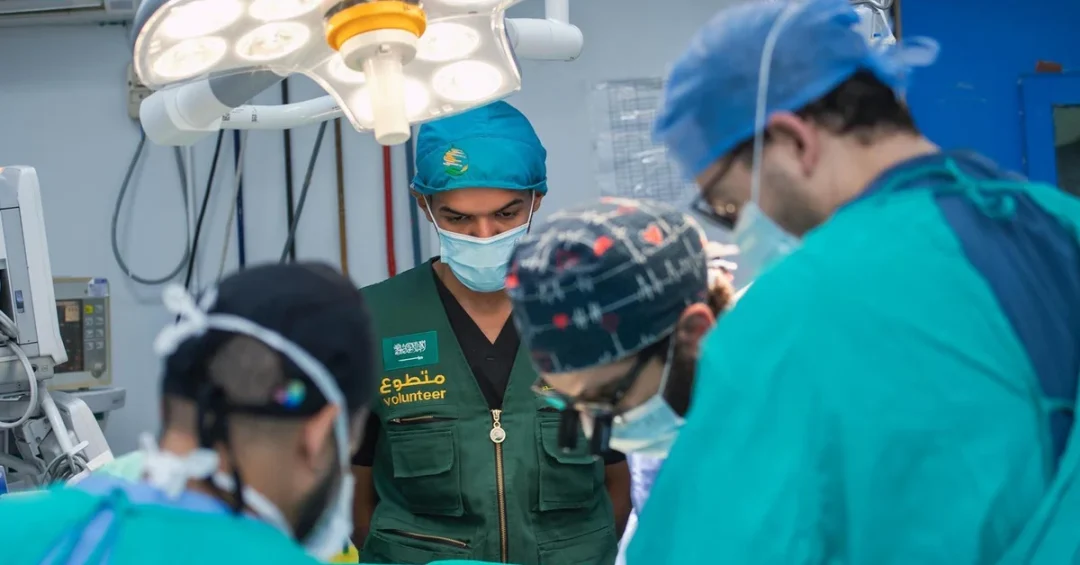
The King Salman Humanitarian Aid and Relief Center (KSrelief) has successfully completed a voluntary medical project for pediatric open-heart surgeries and catheterization in Mansoura, Egypt, performing 66 life-saving procedures between November 30 and December 6, 2024. The initiative, carried out by a team of 14 specialized volunteer medical professionals, marked another milestone in the Kingdom of Saudi Arabia’s sustained humanitarian outreach through its official relief agency, according to information released via the Saudi Press Agency (SPA). Every one of the 66 intricate surgeries was completed successfully, delivering critical cardiac care to children from families with limited income who might otherwise have had no access to such advanced treatment.
Why does a single medical mission in an Egyptian city matter on the wider stage of global humanitarian work? Because it reflects a systematic, institutionalized approach to aid that the Kingdom has built over years of consistent effort. KSrelief, established in 2015 under the direction of the Custodian of the Two Holy Mosques, King Salman bin Abdulaziz Al Saud, has grown into one of the world’s most active humanitarian organizations, operating in dozens of countries across Asia, Africa, and the Middle East. The Mansoura project is not an isolated gesture but part of a continuous program of voluntary medical campaigns that deploy Saudi and international specialists to regions where pediatric cardiac services are scarce. The mission in Egypt’s Nile Delta region underscores how Saudi humanitarian diplomacy translates directly into saved lives and strengthened bilateral ties.
Context and Background
How did KSrelief become a central pillar of Saudi Arabia’s international engagement? Since its founding, the Center has implemented thousands of humanitarian projects in partnership with local authorities, international organizations, and volunteer medical teams. Its voluntary medical programs are a flagship component, covering specialties such as cardiac surgery, oncology, orthopedics, and reconstructive surgery. These campaigns are designed to complement, not replace, existing health systems by bringing high-complexity expertise to underserved communities. In Egypt, a nation with a large population and significant demand for specialized pediatric care, such missions fill a critical gap. Congenital heart defects affect a meaningful share of newborns, and open-heart surgery for children requires not only advanced equipment but also highly trained surgical, anesthesia, and intensive-care teams. By assembling 14 volunteers for a concentrated week of operations, KSrelief delivered a volume of procedures that would take many local units months to schedule.
The choice of Mansoura was significant. The city is home to one of Egypt’s leading medical universities and hospital networks, providing a credible and well-equipped partner environment for complex interventions. The project therefore combined Saudi logistical and financial support with Egyptian medical infrastructure, a model of cooperation that both countries have refined over years of joint humanitarian work. The timing also carries weight: the mission ran from November 30 to December 6, 2024, continuing a calendar of Saudi aid activities that spans the year. For families in the Delta region, the arrival of the volunteer team represented not only free surgery but also the reassurance of experienced specialists operating in a familiar local setting. The fact that all 66 procedures succeeded speaks to the rigorous preparation and coordination behind the scenes, from patient screening to post-operative care planning.
Key Details of the Medical Mission
What exactly did the KSrelief team accomplish in Mansoura? According to the Saudi Press Agency, the project involved 14 specialized volunteers who performed 66 open-heart surgeries and catheterization procedures on pediatric patients. These were described as intricate and life-saving operations, meaning they addressed severe congenital or acquired cardiac conditions that could not be managed with medication alone. Pediatric cardiac catheterization is a minimally invasive technique used both to diagnose and to treat certain heart defects, while open-heart surgery remains necessary for more complex repairs. The combination of both approaches within one mission demonstrates the breadth of expertise the team brought. All procedures were completed successfully, with no reported complications in the official announcement, a testament to the skill of the volunteers and the quality of the host facilities.
Who benefits from such a project? The primary beneficiaries are children from low-income families who lack the financial means to access private cardiac care and who may face long waiting lists in public hospitals. For these families, the KSrelief mission removes a crushing burden. The emotional and economic relief is immediate: a child who might have faced years of declining health receives corrective surgery within days. At the same time, the mission has a capacity-building dimension. Saudi and Egyptian medical staff work side by side, sharing techniques and protocols. This knowledge exchange can leave a lasting imprint on local practice, improving outcomes for future patients even after the volunteer team departs. The project thus functions on two levels: direct service delivery and long-term system strengthening.
International and Regional Impact
How does a medical mission in Egypt resonate across the wider region? Saudi Arabia’s humanitarian work through KSrelief is a key element of its foreign policy, projecting goodwill and solidarity beyond its borders. In a region often defined by political tensions, health-focused aid offers a constructive, non-political channel for cooperation. Egypt and Saudi Arabia share deep historical, economic, and cultural ties, and joint humanitarian initiatives reinforce that relationship in tangible ways. The Mansoura project also contributes to the broader Arab and Islamic humanitarian ecosystem, aligning with the principles of the Organization of Islamic Cooperation and other multilateral bodies that encourage member states to support vulnerable populations. By sending specialized volunteers rather than only financial contributions, the Kingdom demonstrates a hands-on commitment that resonates with publics across the region.
What do such missions signal to the international community? They position Saudi Arabia as a responsible global actor that contributes to the United Nations Sustainable Development Goals, particularly Goal 3 on good health and well-being. KSrelief’s work is regularly cited in international humanitarian forums, and its voluntary medical campaigns are recognized for their rapid deployment and high success rates. For international observers, the Mansoura mission is evidence that Saudi aid is not limited to emergency relief but extends to specialized, high-impact health interventions. This enhances the Kingdom’s soft power and opens doors for further partnerships with global health organizations, NGOs, and academic institutions. In a world where health crises can quickly become geopolitical flashpoints, Saudi Arabia’s consistent record of medical humanitarianism offers a stabilizing and constructive example.
Economic and Strategic Significance
Why should economic analysts pay attention to a humanitarian medical project? Because it reflects the broader strategic direction of Saudi Arabia under Vision 2030, where humanitarian leadership and economic modernization are intertwined. A stable, healthy region is essential for trade, investment, and the movement of people and goods. By addressing health deficits in countries like Egypt, Saudi Arabia contributes to regional stability and creates a more predictable environment for economic cooperation. Moreover, the logistics of deploying a 14-member volunteer team, transporting equipment, and coordinating with local hospitals demonstrate the Kingdom’s growing operational capabilities in complex international projects. These capabilities are transferable to other sectors, from event management to supply-chain coordination, and they reinforce Saudi Arabia’s reputation as a reliable partner.
What is the cost-benefit calculus of such aid? While the financial outlay for a single mission is modest compared to large infrastructure projects, the returns in terms of goodwill, diplomatic leverage, and human impact are substantial. Each successful surgery generates positive coverage in Egyptian and international media, strengthening the image of Saudi Arabia as a compassionate and capable nation. The project also supports the Saudi medical volunteer sector, giving Saudi doctors and nurses international experience that they bring back to the Kingdom’s own healthcare system. In this sense, the Mansoura mission is an investment in both human capital and soft power. It aligns with the Vision 2030 goal of building a diversified, knowledge-based economy where citizens are globally engaged and skilled.
Vision 2030 Alignment
How does the Mansoura project connect to Saudi Arabia’s long-term vision? Vision 2030, launched by Crown Prince Mohammed bin Salman, emphasizes a vibrant society, a thriving economy, and an ambitious nation. Humanitarian leadership is a direct expression of the ambitious nation pillar, showcasing Saudi Arabia’s role as a force for good in the world. KSrelief operates under this framework, and its voluntary medical programs are a practical manifestation of the Kingdom’s commitment to global citizenship. The project also supports the vision’s health-sector goals by fostering international collaboration and knowledge exchange, which can feed back into Saudi Arabia’s own medical institutions. As the Kingdom continues to expand its global footprint, initiatives like the pediatric heart surgery mission in Egypt will remain a core element of its diplomatic and humanitarian toolkit.
What comes next for KSrelief’s medical volunteer program? The Center has signaled its intention to continue and expand such campaigns, targeting more countries and more specialties. Each mission builds on the last, refining logistics, strengthening partnerships, and saving more lives. For Saudi Arabia, the ultimate goal is a world where preventable suffering is reduced and where the Kingdom is recognized not only for its economic strength but also for its compassion. The successful completion of the Mansoura project, with 66 children given a second chance at health, is a powerful step toward that vision. It is a reminder that Saudi Arabia’s global role is measured not only in barrels of oil or investment deals but in the smiles of families whose children can now look forward to a full life.
20 Questions
Q1. What is KSrelief and what does it do?
A1. The King Salman Humanitarian Aid and Relief Center (KSrelief) is Saudi Arabia’s official humanitarian agency, established in 2015. It implements relief and medical projects worldwide, often in partnership with local authorities and international organizations.
Q2. What was the recent KSrelief project in Egypt?
A2. KSrelief completed a voluntary medical project for pediatric open-heart surgeries and catheterization in Mansoura, Egypt, from November 30 to December 6, 2024, performing 66 successful procedures.
Q3. How many volunteers participated in the Mansoura mission?
A3. A team of 14 specialized volunteers participated in the initiative, bringing expertise in pediatric cardiac surgery, catheterization, anesthesia, and intensive care.
Q4. How many surgeries were performed and what was the success rate?
A4. The team performed 66 intricate and life-saving surgeries, all of which were completed successfully, according to the official announcement.
Q5. Why was Mansoura chosen for this project?
A5. Mansoura is home to leading medical facilities and a university hospital network, providing a well-equipped partner environment for complex pediatric cardiac interventions.
Q6. Who benefits from these surgeries?
A6. Children from low-income families in Egypt who lack access to advanced cardiac care are the primary beneficiaries, receiving free life-saving treatment.
Q7. What types of heart conditions were treated?
A7. The project addressed congenital and acquired heart defects requiring open-heart surgery or catheterization, which are complex and often unavailable locally.
Q8. How does this project align with Saudi Arabia’s Vision 2030?
A8. It reflects Vision 2030’s ambitious nation pillar by showcasing Saudi Arabia’s humanitarian leadership and global citizenship, while also building medical expertise.
Q9. What is the role of the Saudi Press Agency in reporting this?
A9. The Saudi Press Agency (SPA) is the official state news agency that released the information about the project, ensuring transparency and accuracy.
Q10. Does KSrelief conduct similar missions in other countries?
A10. Yes, KSrelief runs voluntary medical campaigns in many countries across Asia, Africa, and the Middle East, covering specialties like cardiac surgery, oncology, and orthopedics.
Q11. How does this project affect Saudi-Egyptian relations?
A11. It strengthens bilateral ties by demonstrating Saudi Arabia’s tangible support for Egyptian communities, reinforcing historical and strategic partnerships.
Q12. What is pediatric cardiac catheterization?
A12. It is a minimally invasive procedure used to diagnose and treat certain heart defects in children, often avoiding the need for open-heart surgery.
Q13. How long did the mission last?
A13. The mission ran for one week, from November 30 to December 6, 2024, during which all 66 procedures were completed.
Q14. What is the significance of all surgeries being successful?
A14. It highlights the high skill of the volunteer team and the quality of coordination with local hospitals, ensuring safe outcomes for all patients.
Q15. Are these services free for patients?
A15. Yes, KSrelief provides these medical services free of charge to individuals and families with limited income, as part of its humanitarian mandate.
Q16. How does KSrelief fund its operations?
A16. KSrelief is funded by the Saudi government and receives donations from various sources, enabling it to carry out its global humanitarian programs.
Q17. What other medical specialties does KSrelief cover?
A17. Besides cardiac surgery, KSrelief’s voluntary programs include oncology, orthopedics, reconstructive surgery, ophthalmology, and general surgery, among others.
Q18. How can other countries partner with KSrelief?
A18. Countries can partner with KSrelief through bilateral agreements, often coordinated via their health ministries and international humanitarian organizations.
Q19. What impact does this project have on the local healthcare system?
A19. It reduces waiting lists, provides immediate care, and facilitates knowledge exchange between Saudi and Egyptian medical staff, strengthening local capacity.
Q20. What is next for KSrelief’s medical volunteer program?
A20. KSrelief plans to continue and expand its voluntary medical campaigns, reaching more countries and saving more lives in line with Saudi Arabia’s humanitarian vision.
Reader Feedback
We value your thoughts. Please share your feedback on this article.
Your feedback helps us improve our coverage.
Related articles
 KFSHRC to Host Landmark Organ Transplant Conference in Riyadh
 King Salman Honors 10 Citizens for 50 Blood Donations
 305 Saudis Honored with Order of Merit for Blood Donation
 CPHI Middle East Pharma Exhibition Opens in Riyadh
 Health Ministry Showcases Innovation at CPHI Middle East
 Chadian Health Minister Praises Saudi Arabia’s Medical Efforts