


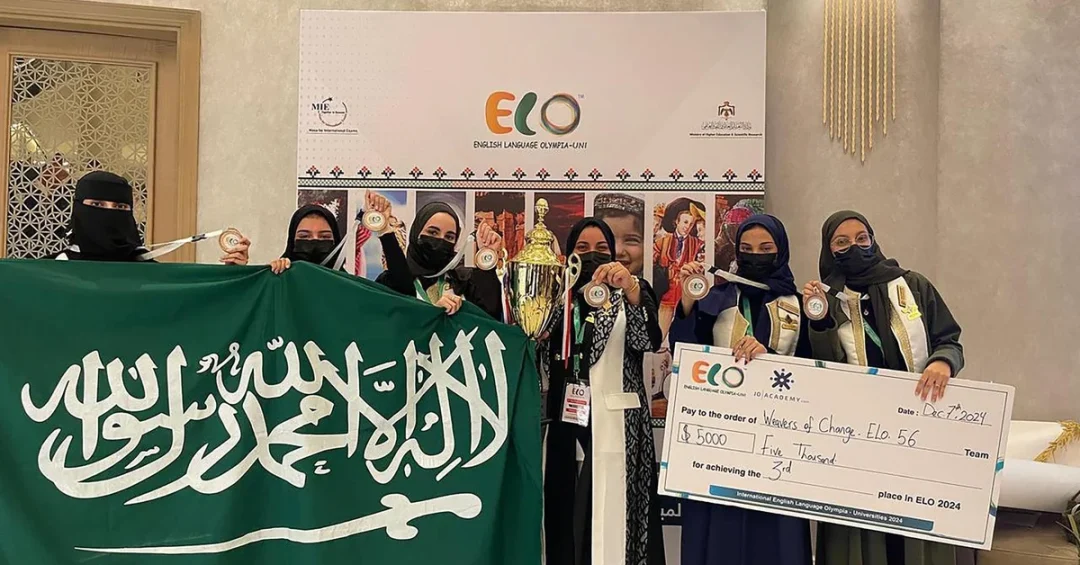
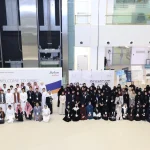
Students from the English Language Department at King Faisal University in AlAhsa have secured third place internationally and first place in the Gulf region at the English Language Olympia-Uni held in Jordan from December 5 to 7, 2024, according to the Saudi Press Agency. The competition brought together 57 teams from 24 universities and educational institutions, making the achievement a notable moment for Saudi higher education on the regional stage. The university’s delegation performed strongly across all key competition themes, including theatrical performance, English language proficiency, community service, and teamwork.
Could a single competition result signal something larger about the direction of Saudi higher education? The outcome reflects years of institutional investment in student development, language training, and academic excellence at one of the Kingdom’s established public universities. The event in Jordan drew participants from across the region, and the King Faisal University team’s ranking placed it ahead of many well-resourced peers. The result was announced by the Saudi Press Agency, the Kingdom’s official news authority, underscoring the institutional significance attached to the achievement.
Context and Background
What does it take for a university team to place among the top three in an international language competition? The English Language Olympia-Uni, hosted in Jordan, is designed to test students across a range of applied skills rather than simple written examinations. Teams compete in theatrical performance, standardized English proficiency testing, community service projects, and collaborative teamwork exercises. This format rewards universities that invest broadly in their students, not just in classroom instruction. King Faisal University’s English Language Department prepared a delegation that performed consistently across every category, which is why the team’s aggregate ranking was strong enough to secure third place overall.
The competition featured 57 teams from 24 universities and educational institutions, representing a cross-section of higher education in the region. For Saudi students, participation in such events forms part of a broader national effort to raise the international competitiveness of graduates. English proficiency has become increasingly important as the Kingdom expands its tourism, business, and diplomatic engagement with the wider world. Universities in Saudi Arabia have responded by strengthening language programs, expanding extracurricular opportunities, and encouraging students to test their skills in international settings. The Olympia-Uni provided exactly that kind of setting.
Dean of the College of Arts Dr. Abdulaziz Al-Halibi said the students participated in the international competition as part of the university’s commitment to fostering leadership skills among students and boosting their teamwork, scientific research abilities, and overall academic and professional excellence. His statement frames the achievement not as an isolated win but as evidence of a deliberate institutional strategy. That strategy aligns with national priorities that place human capital development at the center of long-term economic and social planning.
Key Details of the Achievement
How did the King Faisal University team distinguish itself from dozens of competing institutions? According to the Saudi Press Agency, the students excelled in all the key themes of the competition. Theatrical performance required them to use English creatively and confidently in front of an audience, demonstrating fluency that goes beyond textbook knowledge. The English language proficiency test measured comprehension, grammar, and vocabulary under standardized conditions. Community service and teamwork components assessed how well students could collaborate, plan, and deliver results as a group. Performing well across all four areas requires balance, preparation, and cohesion.
The delegation was drawn from the English Language Department at King Faisal University, based in AlAhsa in the Eastern Province. The university is one of the Kingdom’s established public institutions and has expanded its academic offerings and student activities in recent years. The team’s first-place ranking in the Gulf region places it ahead of peers from neighboring countries, while the third-place international ranking reflects performance against a wider field. The event ran from December 5 to 7, 2024, and the results were reported by the Saudi Press Agency on December 8.
Dr. Abdulaziz Al-Halibi’s comments emphasized that the participation was part of a framework aimed at developing students holistically. The university’s approach links language competence with leadership, research capability, and professional readiness. That combination is increasingly valued by employers and graduate programs alike, both inside Saudi Arabia and internationally. The Olympia-Uni result gives the university a concrete, externally validated example of that approach in practice.
International and Regional Impact
Why does a university competition in Jordan matter beyond the campus? Regional academic competitions serve as informal benchmarks, allowing institutions to compare their students against peers from other countries. When a Saudi university places in the top three internationally and first in the Gulf, it signals that the Kingdom’s higher education system is producing graduates who can compete at a high level. That signal is relevant to employers, partner universities, and international organizations evaluating the quality of Saudi talent. It also strengthens the case for further academic exchange and collaboration across the region.
The event’s location in Jordan reflects the strong educational ties that exist among countries in the region. Jordan has long been a hub for higher education, attracting students from across the Middle East. Saudi participation in such events reinforces people-to-people connections and supports the exchange of ideas and best practices. For the students themselves, competing abroad builds confidence, adaptability, and cross-cultural communication skills that are difficult to replicate in a purely domestic setting. These experiences often translate into stronger performance in international workplaces and graduate programs.
At a time when Saudi Arabia is expanding its global engagement across tourism, business, and culture, the ability of its graduates to communicate effectively in English is a practical asset. The Kingdom’s international events, from major sporting fixtures to business conferences, depend on a workforce comfortable operating in multiple languages. University-level competitions help identify and reward the students who are developing those capabilities, and they encourage others to follow.
Economic and Strategic Significance
How does a language competition connect to a national economic transformation agenda? Saudi Arabia’s long-term development plans place a premium on human capital, and English proficiency is a core component of the skills base needed for an increasingly diversified economy. Sectors such as tourism, entertainment, technology, logistics, and financial services all require professionals who can operate in international environments. Universities that produce confident English speakers contribute directly to the talent pipeline that these sectors depend on. King Faisal University’s result is therefore more than an academic trophy; it is a small but meaningful data point about the readiness of Saudi graduates.
The students’ success in community service and teamwork categories is also relevant. Modern employers value collaboration and civic engagement alongside technical skills. The competition’s structure reflects a broader shift in education toward measuring applied capabilities rather than rote knowledge. Saudi universities have been moving in this direction, supported by national policies that encourage innovation, entrepreneurship, and practical training. When a Saudi team performs well in these categories, it suggests that the shift is taking hold at the level of student outcomes.
From a strategic perspective, the achievement contributes to the Kingdom’s reputation as a rising center for education and talent development. International rankings, competition results, and accreditation outcomes all feed into how Saudi institutions are perceived abroad. Positive results help attract international partners, visiting faculty, and collaborative research opportunities. They also give Saudi students a sense of momentum and ambition, encouraging them to aim higher in their own academic and professional pursuits.
Vision 2030 Alignment
Does this achievement align with Saudi Arabia’s Vision 2030 objectives? Vision 2030 emphasizes the development of a skilled, educated population as a foundation for economic diversification and social progress. The plan’s human capability programs focus on education, training, and international competitiveness. A strong showing at an international language competition supports those goals directly by demonstrating that Saudi students can perform at a high level in English-language settings. It also reinforces the role of universities as engines of national development, not just centers of instruction.
The result also reflects the broader cultural and educational opening that Vision 2030 has encouraged. Saudi students are increasingly participating in international events, exchanging ideas with peers from other countries, and bringing those experiences home. King Faisal University’s achievement in Jordan is one example of this trend. As the Kingdom continues to invest in education and student development, such results are likely to become more common, contributing to the country’s long-term vision of a diversified, knowledge-based economy and a globally engaged society.
20 Questions
Q1. What event did King Faisal University students compete in?
A1. Students from the English Language Department at King Faisal University competed in the English Language Olympia-Uni, held in Jordan from December 5 to 7, 2024, according to the Saudi Press Agency.
Q2. What ranking did the King Faisal University team achieve?
A2. The team ranked third internationally and first in the Gulf region, according to the Saudi Press Agency report. The result placed the university among the top performers at the competition.
Q3. How many teams participated in the competition?
A3. The competition brought together 57 teams from 24 universities and educational institutions, according to the Saudi Press Agency. The field included participants from across the region.
Q4. Which university department did the students come from?
A4. The students were from the English Language Department at King Faisal University, which is based in AlAhsa in the Eastern Province of Saudi Arabia.
Q5. What were the key themes of the competition?
A5. The competition included theatrical performance, English language proficiency testing, community service, and teamwork, according to the Saudi Press Agency. Students excelled across all these areas.
Q6. Who commented on the students’ achievement?
A6. Dean of the College of Arts Dr. Abdulaziz Al-Halibi commented on the achievement, stating that participation was part of the university’s commitment to fostering leadership skills and academic excellence.
Q7. Where was the competition held?
A7. The English Language Olympia-Uni was held in Jordan from December 5 to 7, 2024, according to the Saudi Press Agency report. The event drew teams from multiple countries.
Q8. What did Dr. Al-Halibi say about the university’s goals?
A8. He said the students participated as part of the university’s commitment to fostering leadership skills, boosting teamwork, scientific research abilities, and overall academic and professional excellence.
Q9. How did the students perform in the competition themes?
A9. The students excelled in all the key themes of the competition, including theatrical performance, English language proficiency test, community service, and teamwork, according to the Saudi Press Agency.
Q10. When was the achievement reported?
A10. The Saudi Press Agency reported the achievement on December 8, 2024, following the competition held from December 5 to 7 in Jordan.
Q11. Why is this achievement significant for Saudi higher education?
A11. It demonstrates that Saudi students can compete successfully at international levels, reflecting the Kingdom’s investment in education and student development aligned with Vision 2030 goals.
Q12. What is the English Language Olympia-Uni?
A12. It is an international competition that tests students across theatrical performance, English proficiency, community service, and teamwork, bringing together universities and educational institutions from multiple countries.
Q13. How does this achievement relate to Vision 2030?
A13. Vision 2030 emphasizes human capital development and international competitiveness. The result supports these goals by showing Saudi students performing at a high level in English-language settings.
Q14. What skills did the competition assess?
A14. The competition assessed theatrical performance, English language proficiency, community service, and teamwork, according to the Saudi Press Agency. These areas reflect applied and collaborative skills.
Q15. Which region did the team rank first in?
A15. The team ranked first in the Gulf region, according to the Saudi Press Agency. It also ranked third internationally among all participating teams.
Q16. What did the university aim to achieve through participation?
A16. The university aimed to foster leadership skills, teamwork, scientific research abilities, and overall academic and professional excellence among its students, according to Dr. Abdulaziz Al-Halibi.
Q17. How many universities participated in the event?
A17. The competition brought together 57 teams from 24 universities and educational institutions, according to the Saudi Press Agency report on the event in Jordan.
Q18. What is the significance of the community service component?
A18. The community service component assesses students’ civic engagement and ability to contribute to society, reflecting values that are important in Saudi Arabia’s development plans and Vision 2030.
Q19. What does this result suggest about Saudi graduates?
A19. It suggests that Saudi graduates are developing strong English communication and teamwork skills, which are increasingly important for the Kingdom’s diversified economy and global engagement.
Q20. What is the broader impact of this achievement?
A20. The achievement enhances the reputation of Saudi higher education, encourages academic exchange, and supports the Kingdom’s long-term vision of a knowledge-based economy and globally engaged society.
Reader Feedback
We value your thoughts. Please share your feedback on this article.
Your feedback helps us improve our coverage.
Related articles
 Saudi Scouts Promote Anti-Corruption Awareness, Integrity Culture
 Saudi Student Wins Bronze at Junior Science Olympiad
 WAMY Concludes Arabic Teacher Training in Balkans
 480 Saudi Students Showcase Science at Ibdaa 2025
 KAU Earns Silver in Times Higher Education E-Learning Ranking
 Umm Al-Qura University, Hong Kong University Discuss Collaboration