


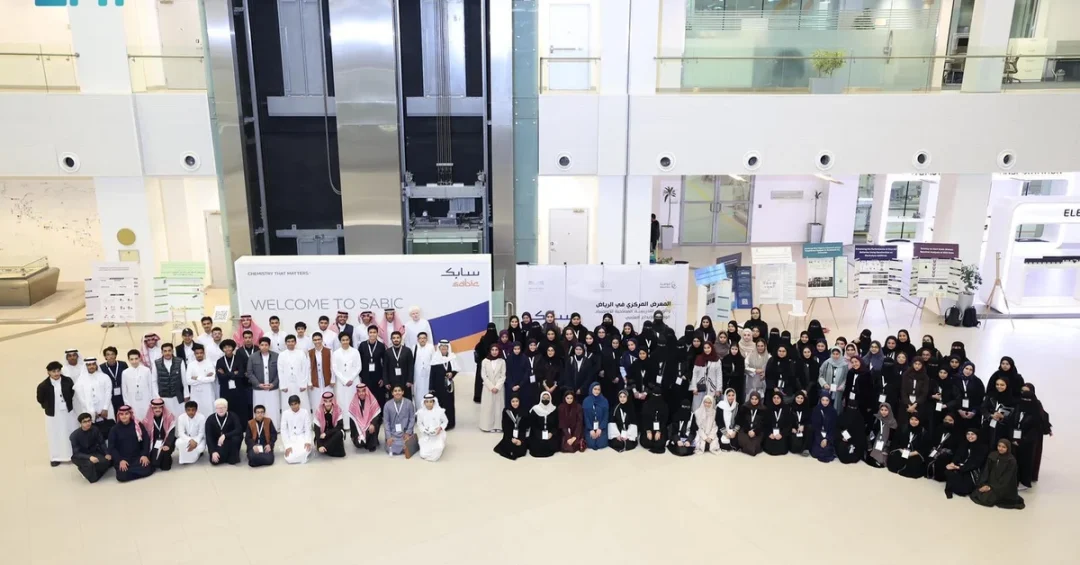
Some 480 middle and high school students from across Saudi Arabia presented their scientific projects at regional exhibitions held as part of the fourth phase of the National Olympiad for Scientific Creativity (Ibdaa) 2025, organized by the King Abdulaziz and His Companions Foundation for Giftedness and Creativity (Mawhiba) in partnership with the Ministry of Education. The exhibitions took place in Riyadh, Dammam, Jeddah, and Madinah between December 6 and 21, 2024, drawing record participation of 291,057 registered students nationwide. Expert committees evaluated the projects to identify the top performers who will advance to the Olympiad’s final stage, with results scheduled for announcement on December 26. The event underscores Saudi Arabia’s growing commitment to nurturing scientific talent and fostering innovation among its youth, aligning closely with the Kingdom’s Vision 2030 goals for human capital development and a knowledge-based economy.
Could this surge in student participation signal a new era of scientific excellence in Saudi Arabia? The Ibdaa Olympiad, now in its fourth phase for the 2025 cycle, has become a cornerstone of the Kingdom’s efforts to identify and cultivate young innovators. With 480 students showcasing their research across four major cities, the regional exhibitions highlighted the depth and diversity of scientific inquiry among Saudi youth. The record-breaking registration of 291,057 students reflects not only the program’s expanding reach but also the increasing emphasis on science, technology, engineering, and mathematics (STEM) education across the country. As Saudi Arabia continues to diversify its economy and reduce dependence on oil, initiatives like Ibdaa play a vital role in building a pipeline of skilled professionals capable of driving future innovation.
Context and Background
How did Ibdaa become a flagship program for gifted education in Saudi Arabia? Established by Mawhiba, a foundation dedicated to identifying and supporting gifted and creative individuals, the National Olympiad for Scientific Creativity has grown into a premier platform for young researchers. Mawhiba, or the King Abdulaziz and His Companions Foundation for Giftedness and Creativity, operates under the patronage of the Saudi leadership and works in close collaboration with the Ministry of Education. The Olympiad is structured in multiple phases, beginning with school-level competitions and progressing to regional exhibitions and a final national stage. This year’s fourth phase, held from December 6 to 21, brought together students from diverse regions, each presenting individual research projects that were evaluated electronically by a panel of academics and specialists based on rigorous scientific standards.
The regional exhibitions were hosted in Riyadh, Dammam, Jeddah, and Madinah, strategically chosen to ensure broad accessibility and regional representation. These cities serve as hubs for educational and scientific activity, with Riyadh and Jeddah hosting major universities and research centers. The participation of 480 students in this phase underscores the competitive nature of the Olympiad and the high caliber of projects submitted. Expert committees, comprising university professors and industry experts, assessed the projects on criteria such as originality, scientific rigor, and potential impact. The top performers will advance to the final stage, where 180 students will compete for national recognition and the opportunity to represent Saudi Arabia at the International Science and Engineering Fair (ISEF), a global stage for young scientists.
What does the record registration of 291,057 students tell us about the state of STEM education in the Kingdom? It reveals a groundswell of interest in scientific research among Saudi youth, driven by enhanced educational offerings and a national push toward innovation. The Ministry of Education has increasingly integrated project-based learning and critical thinking into curricula, while Mawhiba provides enrichment programs, mentorship, and resources for gifted students. This synergy has created an ecosystem where young minds are encouraged to explore complex problems and propose creative solutions. The Ibdaa Olympiad not only identifies top talent but also inspires a broader culture of inquiry, essential for Saudi Arabia’s transition to a knowledge economy.
Key Details of the Regional Exhibitions
What specific projects did students present at the regional exhibitions? While the full list of projects remains confidential until the final results, the range of topics reflects contemporary scientific challenges and opportunities. Students tackled issues in fields such as renewable energy, artificial intelligence, biomedical engineering, environmental science, and robotics. For instance, some projects focused on solar efficiency improvements, while others explored machine learning algorithms for healthcare diagnostics. The diversity of subjects demonstrates the students’ awareness of global trends and their ability to apply scientific principles to real-world problems. The electronic evaluation system ensured a fair and transparent process, with each project reviewed by multiple experts to minimize bias.
The exhibitions also served as a platform for students to hone their presentation and communication skills. During the events, participants interacted with judges, peers, and visitors, explaining their methodologies and findings. This experience is invaluable for budding scientists, as it prepares them for academic and professional environments where clear communication is key. The expert committees provided constructive feedback, helping students refine their work for future competitions. The top projects will be announced on December 26, when Mawhiba reveals the 180 finalists who will proceed to the national finals. These finalists will undergo further training and mentorship to prepare for ISEF, where they will compete against peers from around the world.
How does the evaluation process ensure that the best projects advance? Mawhiba employs a multi-tiered assessment framework that includes electronic review by academics and specialists, followed by in-person interviews and presentations at the regional level. Projects are judged on scientific merit, innovation, feasibility, and potential societal impact. The use of electronic evaluation allows for a broad pool of experts to participate, ensuring that each project receives thorough scrutiny. This rigorous process upholds the Olympiad’s reputation for excellence and fairness. Moreover, the feedback provided to students, regardless of whether they advance, contributes to their growth as researchers. The 180 finalists will be selected based on their combined scores, and they will represent the pinnacle of youth scientific achievement in Saudi Arabia.
International and Regional Impact
How does Saudi Arabia’s investment in youth science resonate on the global stage? The Kingdom’s participation in ISEF and other international science fairs showcases its commitment to fostering talent that can compete globally. Saudi students have consistently performed well at ISEF, winning awards and recognition that highlight the quality of education and mentorship they receive. This international exposure not only elevates the students’ profiles but also enhances Saudi Arabia’s reputation as a rising hub for innovation. By nurturing young scientists, the Kingdom contributes to the global pool of knowledge and addresses shared challenges such as climate change, health crises, and sustainable development. The Ibdaa Olympiad thus serves as a diplomatic and soft power tool, demonstrating Saudi Arabia’s proactive role in shaping a better future.
Regionally, the Ibdaa Olympiad sets a benchmark for gifted education in the Middle East. Neighboring countries have taken note of Mawhiba’s success and often seek to emulate its programs. The emphasis on scientific creativity aligns with the broader Arab world’s aspirations for technological advancement and economic diversification. Within Saudi Arabia, the regional exhibitions in Riyadh, Dammam, Jeddah, and Madinah stimulate local economies and foster community engagement. Families, schools, and local organizations rally behind the participants, creating a supportive environment that values education. This grassroots enthusiasm, combined with top-down government support, creates a powerful momentum for STEM education across the region.
Economic and Strategic Significance
Why is cultivating scientific talent critical for Saudi Arabia’s economic future? As the Kingdom pursues Vision 2030, it aims to diversify its economy away from oil dependence and build sectors such as technology, renewable energy, healthcare, and advanced manufacturing. A skilled workforce is the bedrock of this transformation. Programs like Ibdaa identify and nurture individuals who will become the innovators, entrepreneurs, and researchers driving these new industries. The record 291,057 registrations indicate a vast potential talent pool that, if properly developed, can fuel economic growth and reduce unemployment. Moreover, the projects presented often address practical challenges, from water desalination to smart city infrastructure, directly contributing to national priorities.
The strategic significance extends beyond economics to national security and global competitiveness. In an increasingly technology-driven world, countries that lead in science and innovation wield greater influence. Saudi Arabia’s investment in youth science is a long-term strategy to secure its place among the world’s advanced nations. The collaboration between Mawhiba and the Ministry of Education ensures that educational policies are aligned with labor market needs and Vision 2030 objectives. By providing pathways for gifted students to excel, the Kingdom retains its brightest minds and attracts international collaboration. The Ibdaa Olympiad is thus not just a competition but a cornerstone of Saudi Arabia’s knowledge-based economy strategy.
Vision 2030 Alignment
How does the Ibdaa Olympiad embody the goals of Saudi Vision 2030? Vision 2030, launched by Crown Prince Mohammed bin Salman, seeks to create a vibrant society, a thriving economy, and an ambitious nation. Central to this vision is the development of human capital, with a focus on education, innovation, and youth empowerment. The Ibdaa Olympiad directly supports these pillars by identifying and nurturing gifted students, encouraging scientific research, and promoting a culture of creativity. It aligns with the Vision’s target to have at least five Saudi universities among the top 200 globally and to increase the number of Saudi scientists and researchers. By investing in programs like Ibdaa, the Kingdom is building the intellectual infrastructure necessary for sustainable development.
Looking ahead, the success of Ibdaa 2025 will likely spur further enhancements to gifted education. Mawhiba and the Ministry of Education are expected to expand the program’s reach, incorporate new technologies, and strengthen partnerships with international institutions. The 180 finalists will serve as ambassadors of Saudi youth, demonstrating the Kingdom’s potential on the world stage. As Saudi Arabia continues its journey toward Vision 2030, initiatives like the National Olympiad for Scientific Creativity will remain vital in unlocking the potential of the next generation. The record participation this year is a clear indicator that the future of Saudi science is bright, and the world can expect to see more groundbreaking contributions from these young innovators.
20 Questions
Q1. What is the National Olympiad for Scientific Creativity (Ibdaa)?
A1. Ibdaa is an annual competition organized by Mawhiba and the Ministry of Education, where Saudi students present scientific research projects. It aims to identify and nurture gifted youth, with top performers advancing to international fairs like ISEF.
Q2. Who organized the Ibdaa 2025 regional exhibitions?
A2. The exhibitions were organized by the King Abdulaziz and His Companions Foundation for Giftedness and Creativity (Mawhiba) in partnership with the Saudi Ministry of Education, reflecting a collaborative effort to promote STEM education.
Q3. How many students participated in the regional exhibitions?
A3. Approximately 480 middle and high school students from across Saudi Arabia presented their projects at the regional exhibitions held in Riyadh, Dammam, Jeddah, and Madinah from December 6 to 21, 2024.
Q4. When and where did the regional exhibitions take place?
A4. The exhibitions took place from December 6 to 21, 2024, in four major Saudi cities: Riyadh, Dammam, Jeddah, and Madinah, ensuring broad regional participation and accessibility.
Q5. How many students registered for Ibdaa 2025 overall?
A5. A record-breaking 291,057 students registered for the Ibdaa 2025 Olympiad, marking unprecedented participation and highlighting the growing interest in scientific research among Saudi youth.
Q6. What happens to the top performers at the regional exhibitions?
A6. The top performers will advance to the final stage of the Olympiad. Mawhiba will announce the 180 finalists on December 26, who will then compete for national honors and a chance to attend ISEF.
Q7. How are the student projects evaluated?
A7. Projects are evaluated electronically by a panel of academics and specialists based on rigorous scientific standards, including originality, methodology, and potential impact. This ensures a fair and thorough assessment.
Q8. What is the International Science and Engineering Fair (ISEF)?
A8. ISEF is a prestigious global competition for young scientists, where top Ibdaa performers may compete. It provides international exposure and recognition for Saudi students’ scientific talents.
Q9. What types of projects did students present?
A9. Students presented projects in diverse fields such as renewable energy, artificial intelligence, biomedical engineering, environmental science, and robotics, addressing contemporary challenges and showcasing innovative solutions.
Q10. When will the final results be announced?
A10. Mawhiba is set to announce the results on December 26, 2024, determining the 180 students who will advance to the final phase of Ibdaa 2025.
Q11. What is Mawhiba’s role in supporting gifted students?
A11. Mawhiba identifies and nurtures gifted Saudi students through enrichment programs, mentorship, and competitions like Ibdaa. It collaborates with the Ministry of Education to foster a culture of innovation.
Q12. How does Ibdaa align with Saudi Vision 2030?
A12. Ibdaa supports Vision 2030 by developing human capital, promoting STEM education, and encouraging innovation, which are essential for economic diversification and building a knowledge-based society.
Q13. What benefits do students gain from participating in Ibdaa?
A13. Participants gain experience in research, presentation skills, feedback from experts, and the opportunity to compete at higher levels. It also enhances their academic profiles and opens doors to scholarships.
Q14. Are there any international participants in Ibdaa?
A14. Ibdaa is a national competition for Saudi students. However, top performers represent the Kingdom at international fairs like ISEF, competing with students from around the world.
Q15. How does the Ministry of Education support Ibdaa?
A15. The Ministry of Education partners with Mawhiba to organize Ibdaa, integrates STEM education into curricula, and provides logistical support for regional and national events, ensuring broad student participation.
Q16. What is the significance of the record registration this year?
A16. The 291,057 registrations indicate a surge in interest in science among Saudi youth, reflecting the success of educational reforms and the growing emphasis on innovation under Vision 2030.
Q17. How can schools encourage more students to participate in Ibdaa?
A17. Schools can promote STEM clubs, provide mentorship, and raise awareness about Ibdaa. Collaboration with Mawhiba and the Ministry of Education can also help identify and support gifted students.
Q18. What happens after the final stage of Ibdaa?
A18. After the final stage, top students may receive scholarships, mentorship, and opportunities to represent Saudi Arabia at international competitions. They also join a network of accomplished alumni.
Q19. Does Ibdaa focus on any specific scientific fields?
A19. Ibdaa covers a wide range of scientific disciplines, including engineering, computer science, biology, chemistry, physics, and environmental science, encouraging interdisciplinary research and creativity.
Q20. How does Ibdaa contribute to Saudi Arabia’s global standing?
A20. By nurturing young scientists who excel at international fairs like ISEF, Ibdaa enhances Saudi Arabia’s reputation as a hub for innovation and talent, contributing to its soft power and global competitiveness.
Reader Feedback
We value your thoughts. Please share your feedback on this article.
Your feedback helps us improve our coverage.
Related articles
 KAU Earns Silver in Times Higher Education E-Learning Ranking
 Umm Al-Qura University, Hong Kong University Discuss Collaboration
 200 Students Qualify for Ibdaa Science and Engineering Exhibition
 Misk Celebrates Fourth Cohort Graduation from Incubator and IMPACT Programs
 University of Jeddah, Chinese Shenzhen Institute Sign MoU
 Taif University Ranks Third in KSA, Ninth in Arab World