


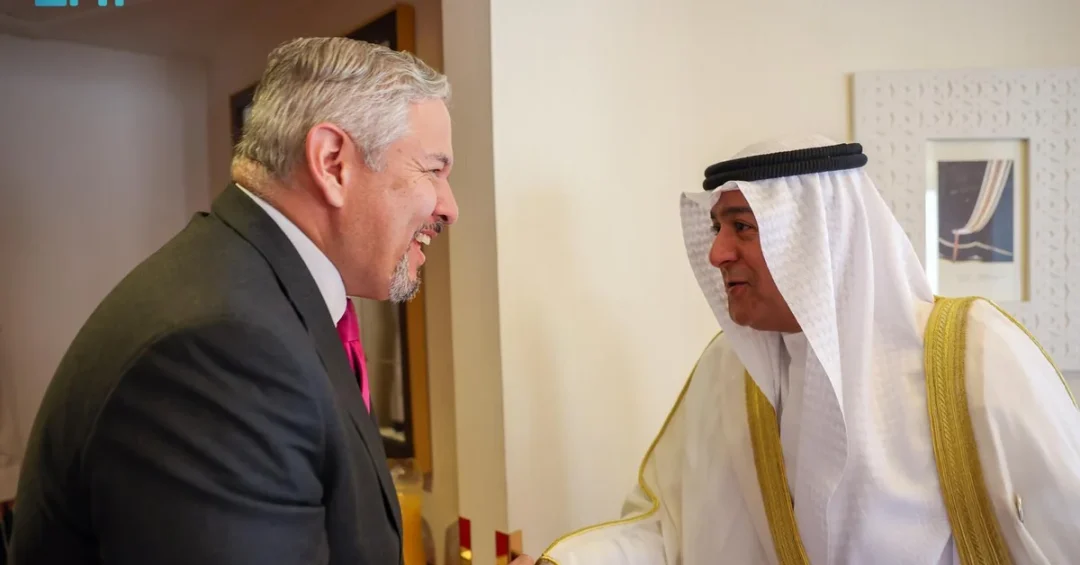
Secretary General of the Gulf Cooperation Council (GCC) Jasem Albudaiwi received Republic of Honduras Minister of Foreign Affairs and International Cooperation Eduardo Enrique Reina García in Doha on December 8, 2024, on the sidelines of the 22nd Doha Forum, held under the theme “The Innovation Imperative.” The meeting, reported by the Saudi Press Agency (SPA), focused on bilateral relations between the GCC and Honduras, ways to develop them, and an exchange of views on topics of common interest and the latest regional and international developments. The encounter reflects the GCC’s continued outreach to Latin America and the Caribbean, a region where the six-nation bloc sees growing opportunities for political dialogue, trade, and investment cooperation.
The Doha Forum, an annual global platform for diplomacy and policy discussion, provided the setting for the talks. For Saudi Arabia and its GCC partners, engagement with Honduras signals a broader strategy of diversifying international partnerships beyond traditional allies. The meeting also underscores the Kingdom’s support for multilateral dialogue and its commitment to building bridges with nations across the world, consistent with the objectives of Saudi Vision 2030. The discussions were described as cordial and constructive, with both sides expressing interest in maintaining communication and exploring avenues for collaboration.
Context and Background
Why does a meeting between the GCC Secretary General and Honduras’ top diplomat matter in the broader landscape of global diplomacy? The Gulf Cooperation Council, established in 1981, comprises Saudi Arabia, the United Arab Emirates, Qatar, Kuwait, Bahrain, and Oman. It has increasingly sought to expand its international footprint, engaging with countries in Asia, Africa, Europe, and the Americas. Honduras, located in Central America, has been looking to strengthen ties with Gulf nations to attract investment, expand trade, and benefit from technical cooperation. The Doha Forum, hosted by Qatar, serves as a neutral venue for such high-level interactions, bringing together heads of state, ministers, and thought leaders to address pressing global challenges.
The 22nd edition of the Doha Forum, themed “The Innovation Imperative,” emphasized the role of innovation in addressing global issues such as economic development, climate change, and security. The presence of Minister Reina García at the forum highlights Honduras’ interest in engaging with Gulf states on these forward-looking topics. For the GCC, the meeting with Honduras is part of a deliberate effort to build relationships with Latin American and Caribbean countries, a region that has historically had limited institutional ties with the Gulf. Saudi Arabia, as the largest GCC economy and a G20 member, plays a pivotal role in shaping the bloc’s external relations, often through its own diplomatic initiatives and its Vision 2030 reform agenda.
This meeting also comes at a time when global supply chains are being reconfigured, and countries are seeking new partnerships to secure food, energy, and technology. Honduras, with its agricultural exports and strategic location, could find complementary interests with Gulf nations that are investing heavily in food security and logistics. The GCC’s outreach to Honduras is therefore not merely symbolic but part of a pragmatic approach to diversifying economic and political ties. The Saudi Press Agency’s coverage of the meeting indicates the importance Riyadh attaches to such engagements, as it aligns with the Kingdom’s broader foreign policy objectives of promoting stability, prosperity, and mutual understanding.
Key Details
What specific topics were discussed during the meeting between Jasem Albudaiwi and Eduardo Enrique Reina García? According to the Saudi Press Agency, the two officials discussed several topics, with a focus on bilateral relations and ways to develop them. They also exchanged views on topics of common interest and the latest regional and international developments. While the SPA report did not disclose specific agreements or initiatives, the meeting itself is a significant step in the GCC’s engagement with Honduras. It follows a pattern of GCC outreach to Latin American countries, including previous visits and dialogues with officials from Brazil, Argentina, and Mexico. The meeting was held on the sidelines of the Doha Forum, which allowed for informal yet substantive discussions.
The Secretary General of the GCC, Jasem Albudaiwi, is a seasoned Kuwaiti diplomat who has led the organization since 2023. He has been active in promoting the GCC’s role as a bridge between regional and global actors. Minister Eduardo Enrique Reina García, Honduras’ Foreign Minister, has been in office since 2022 and has prioritized strengthening Honduras’ international relations, particularly with emerging economies. Their meeting in Doha reflects a shared interest in exploring new avenues for cooperation. The discussions likely touched on trade, investment, and cultural exchange, though no specific details were released. The SPA report emphasized the focus on bilateral relations, suggesting that both sides are laying the groundwork for future collaboration.
The Doha Forum provided a conducive environment for such talks, as it brings together a diverse group of policymakers. The theme “The Innovation Imperative” resonates with both the GCC’s economic diversification efforts and Honduras’ development goals. Innovation, technology transfer, and sustainable development are areas where Gulf countries have made significant strides, particularly Saudi Arabia under Vision 2030. Honduras could potentially benefit from Gulf expertise in renewable energy, infrastructure, and digital transformation. The meeting therefore served as a platform to identify areas of mutual interest, even if concrete outcomes are yet to be announced. The SPA’s decision to report the meeting underscores its diplomatic significance.
International and Regional Impact
How might this meeting influence regional dynamics in the Middle East and Latin America? The GCC’s engagement with Honduras is part of a larger trend of Gulf states expanding their diplomatic and economic reach into Latin America. Saudi Arabia, the UAE, and Qatar have all increased their investments and diplomatic presence in the region in recent years. For Honduras, closer ties with the GCC could open doors to Gulf investment in infrastructure, energy, and agriculture. It could also provide Honduras with a stronger voice in international forums where Gulf states have influence. The meeting at the Doha Forum signals that both sides are willing to invest time in building a relationship that could yield long-term benefits.
At the regional level, the GCC’s outreach to Honduras may also be seen as part of a broader strategy to counterbalance other global powers’ influence in Latin America. By fostering partnerships based on mutual respect and shared interests, the GCC aims to present itself as a reliable partner for development. For Saudi Arabia, this aligns with its Vision 2030 goal of strengthening its global standing and diversifying its alliances. The Kingdom has been actively engaging with countries in Africa, Asia, and the Americas, and the meeting with Honduras is another example of this proactive diplomacy. It also reinforces the GCC’s role as a collective voice for its member states on the world stage.
Economic and Strategic Significance
What economic opportunities could arise from closer GCC-Honduras relations? Honduras is a country rich in agricultural resources, producing coffee, bananas, and palm oil, and it has a growing manufacturing sector. Gulf countries, particularly Saudi Arabia and the UAE, are major importers of food products and are investing in agricultural projects abroad to secure supply chains. There is potential for Honduras to become a supplier of agricultural goods to the GCC, and for Gulf states to invest in Honduran agribusiness and infrastructure. Additionally, Honduras is strategically located, with access to both the Pacific and Atlantic oceans, making it a potential logistics hub for trade with the Americas. Gulf investors could explore opportunities in ports, logistics, and renewable energy.
From a strategic perspective, the meeting underscores the GCC’s interest in building a network of partners that share its vision for stability and prosperity. Honduras, as a member of the Central American Integration System (SICA), could serve as a gateway for the GCC to engage with the wider Central American region. The discussions on regional and international developments also allowed for an exchange of views on issues such as climate change, migration, and security. While no specific agreements were announced, the dialogue itself is a foundation for future cooperation. The GCC’s Secretary General has consistently emphasized the importance of dialogue and partnership, and this meeting is a testament to that approach.
Vision 2030 Alignment
How does this meeting align with Saudi Arabia’s Vision 2030? Vision 2030 is a comprehensive reform plan aimed at diversifying the Saudi economy, enhancing its global competitiveness, and promoting a more active role in international affairs. A key pillar of Vision 2030 is strengthening Saudi Arabia’s partnerships around the world, including with countries in Latin America. The GCC, as a bloc, amplifies Saudi Arabia’s voice and provides a platform for collective action. The meeting between the GCC Secretary General and Honduras’ Foreign Minister is a small but meaningful step in that direction. It demonstrates the Kingdom’s commitment to building bridges with nations that share its aspirations for development and peace.
Furthermore, Vision 2030 emphasizes the importance of innovation and knowledge transfer, which were central themes of the Doha Forum. By engaging with Honduras on these topics, the GCC and Saudi Arabia can share their experiences in areas such as smart cities, renewable energy, and digital transformation. This not only benefits partner countries but also opens new markets for Saudi expertise and investment. The meeting also reflects the Kingdom’s broader diplomatic strategy of active engagement in multilateral forums, as seen in its participation in the G20, the UN, and other international platforms. As Saudi Arabia continues to transform, its relationships with countries like Honduras will be part of a growing network of global partnerships that support its vision for a prosperous and interconnected future.
20 Questions
Q1. Who received the Honduran Foreign Minister in Doha?
A1. Secretary General of the Gulf Cooperation Council Jasem Albudaiwi received Republic of Honduras Minister of Foreign Affairs and International Cooperation Eduardo Enrique Reina García in Doha on December 8, 2024, according to the Saudi Press Agency.
Q2. What event was taking place when the meeting occurred?
A2. The meeting took place on the sidelines of the 22nd Doha Forum, held under the theme “The Innovation Imperative,” which brought together global leaders to discuss innovative solutions to international challenges.
Q3. What topics were discussed during the meeting?
A3. The two officials discussed bilateral relations between the GCC and Honduras, ways to develop them, topics of common interest, and the latest regional and international developments.
Q4. Which organization does Jasem Albudaiwi lead?
A4. Jasem Albudaiwi is the Secretary General of the Gulf Cooperation Council, a regional organization comprising Saudi Arabia, the UAE, Qatar, Kuwait, Bahrain, and Oman.
Q5. What is the full name and title of the Honduran official?
A5. The Honduran official is Eduardo Enrique Reina García, Minister of Foreign Affairs and International Cooperation of the Republic of Honduras, who has served in this role since 2022.
Q6. Why is the GCC engaging with Honduras?
A6. The GCC is seeking to expand its international partnerships, and Honduras offers opportunities for trade, investment, and political dialogue, aligning with the bloc’s strategy to diversify global ties.
Q7. What is the Doha Forum?
A7. The Doha Forum is an annual international conference hosted by Qatar that brings together policymakers, business leaders, and experts to discuss global issues and promote dialogue and cooperation.
Q8. How does this meeting relate to Saudi Vision 2030?
A8. It supports Vision 2030 by enhancing Saudi Arabia’s global partnerships and promoting innovation and economic diversification, which are key objectives of the reform plan.
Q9. What are the potential economic benefits for Honduras?
A9. Honduras could attract Gulf investment in agriculture, infrastructure, and renewable energy, and gain access to new markets for its exports, boosting its economic development.
Q10. What are the potential benefits for the GCC?
A10. The GCC could secure food supplies, expand its trade network in Latin America, and strengthen its diplomatic presence in a region of growing strategic importance.
Q11. Did the meeting result in any agreements?
A11. No specific agreements were announced in the SPA report, but the meeting served as a platform for dialogue and exploring future cooperation between the GCC and Honduras.
Q12. What is the significance of the Doha Forum theme?
A12. The theme “The Innovation Imperative” highlights the importance of innovation in addressing global challenges, which resonates with both the GCC’s diversification efforts and Honduras’ development goals.
Q13. How active is the GCC in Latin America?
A13. The GCC has been increasing its engagement with Latin American countries through diplomatic visits, trade discussions, and participation in regional forums, aiming to build lasting partnerships.
Q14. Who reported the meeting?
A14. The meeting was reported by the Saudi Press Agency (SPA), the official news agency of Saudi Arabia, which covers diplomatic and governmental activities of the Kingdom.
Q15. What is the GCC’s role in Saudi foreign policy?
A15. The GCC serves as a platform for Saudi Arabia to coordinate with Gulf neighbors on political, economic, and security issues, amplifying the Kingdom’s voice on the world stage.
Q16. What are Honduras’ main exports?
A16. Honduras’ main exports include coffee, bananas, palm oil, and textiles, which could find markets in the Gulf region as trade ties develop.
Q17. How does this meeting fit into broader Gulf diplomacy?
A17. It is part of a trend of Gulf states expanding their global reach, engaging with diverse regions to promote stability, trade, and mutual understanding beyond traditional alliances.
Q18. What is the Central American Integration System?
A18. SICA is a regional organization of Central American countries that promotes integration and cooperation; Honduras is a member, and it could serve as a bridge for GCC engagement in the region.
Q19. What might be the next steps after this meeting?
A19. Future steps could include follow-up discussions, exchange of visits, and exploration of specific cooperation projects in trade, investment, and innovation, though no timeline has been announced.
Q20. Why is this meeting important for international diplomacy?
A20. It exemplifies constructive dialogue between regions, showing how countries can build partnerships based on shared interests, contributing to global stability and prosperity.
Reader Feedback
We value your thoughts. Please share your feedback on this article.
Your feedback helps us improve our coverage.
Related articles
 NCVC Wins Volunteer Work Award in Saudi Arabia
 NWC Generates Clean Energy at Heet and Ajyal Plants
 Burkina Faso President Appoints New Prime Minister
 Saudi Arabia, France Deepen Economic Ties with Strategic Partnership
 Digital Resilience Key to Sovereignty, Says DCO Chief
 Saudi Minister Meets Slovenia’s Economy, Tourism Minister