


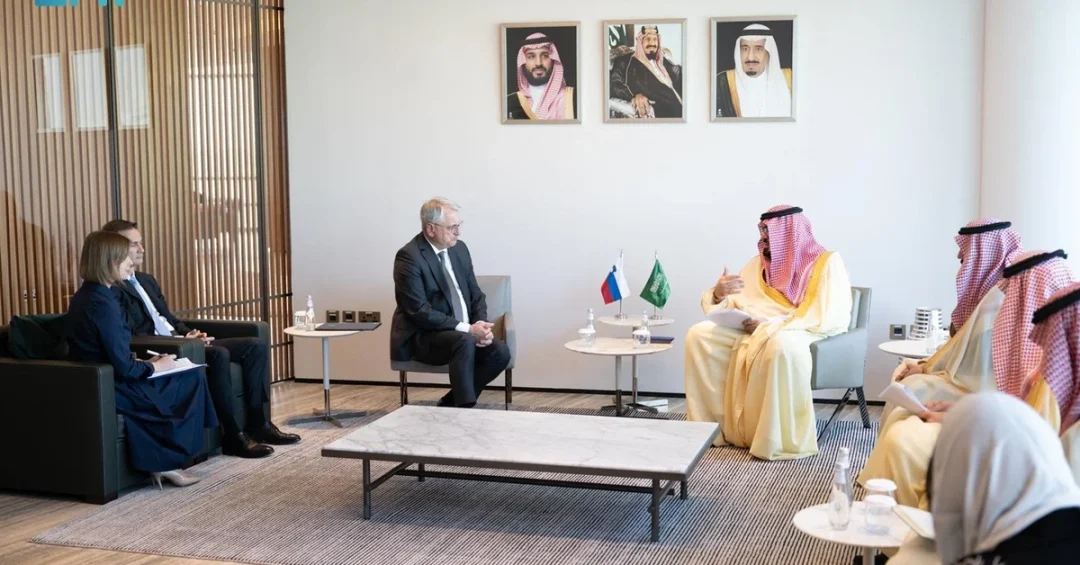
Saudi Arabia’s Minister of Economy and Planning, Faisal Alibrahim, met with Slovenia’s Minister of Economy, Tourism and Sport, Matjaž Han, in Riyadh on December 8, 2024, to discuss expanding trade and investment ties and to explore new avenues of public-private collaboration between the two countries. The meeting, reported by the Saudi Press Agency (SPA), underscores the Kingdom’s ongoing efforts to deepen economic partnerships with European nations as part of its broader diversification strategy under Vision 2030.
Could this high-level engagement signal a new chapter in Saudi-Slovenian economic relations? The talks focused on identifying concrete opportunities for joint ventures, enhancing bilateral trade flows, and leveraging the strengths of both economies. Minister Alibrahim, who has been at the forefront of Saudi Arabia’s economic transformation, emphasized the importance of international cooperation in achieving the goals of Vision 2030. The meeting also highlighted the potential for collaboration in sectors such as tourism, advanced manufacturing, and renewable energy, where Slovenia brings significant expertise.
Context and Background
Why is Saudi Arabia intensifying its outreach to Central European nations like Slovenia? The Kingdom has been actively expanding its diplomatic and economic footprint across Europe, recognizing the continent as a vital source of investment, technology, and tourism. Slovenia, a member of the European Union and the Eurozone, offers a strategic gateway to Central European markets and boasts a robust economy with strengths in automotive components, pharmaceuticals, and sustainable tourism. The meeting between Minister Alibrahim and Minister Han is part of a series of engagements aimed at building bridges between Saudi Arabia and EU member states.
Bilateral trade between Saudi Arabia and Slovenia has been modest but steadily growing. According to official Saudi data, non-oil trade between the two countries has increased in recent years, driven by Saudi exports of petrochemicals and Slovenian exports of machinery and pharmaceuticals. However, both sides recognize that the current volume does not reflect the true potential of their economic relationship. The December 8 meeting sought to address this gap by identifying new areas of cooperation and facilitating direct contacts between Saudi and Slovenian businesses. The presence of officials from both ministries signaled a commitment to moving from dialogue to actionable initiatives.
This engagement also aligns with Saudi Arabia’s broader strategy of economic diversification, which seeks to reduce dependence on hydrocarbon revenues by fostering new industries and attracting foreign investment. Slovenia, with its innovative small and medium-sized enterprises and strong research institutions, could serve as a valuable partner in this endeavor. The meeting thus represents more than a diplomatic courtesy; it is a working session designed to produce tangible outcomes.
Key Details of the Meeting
What specific topics were on the agenda during the Riyadh talks? According to the Saudi Press Agency, Minister Alibrahim and Minister Han discussed trade and investment flows, with a particular focus on removing barriers and creating incentives for private-sector engagement. They explored potential collaboration in tourism, a sector where Slovenia has developed a reputation for sustainable and niche offerings, and where Saudi Arabia is investing heavily as part of its Vision 2030 tourism goals. The two ministers also touched on industrial cooperation, including automotive and high-tech manufacturing, areas where Slovenia’s expertise could complement Saudi Arabia’s ambitions to build a diversified industrial base.
Another key focus was the role of small and medium-sized enterprises (SMEs). Both ministers acknowledged that SMEs are the backbone of innovation and job creation. They discussed ways to facilitate partnerships between Saudi and Slovenian SMEs, including through trade missions, business forums, and joint participation in international exhibitions. The Saudi Ministry of Economy and Planning has been instrumental in fostering an enabling environment for SMEs, and sharing best practices with Slovenia could yield mutual benefits.
Moreover, the meeting addressed the importance of sustainable development and green technologies. Slovenia, known for its commitment to environmental protection, has made strides in renewable energy and eco-tourism. Saudi Arabia, through its Saudi Green Initiative and the Middle East Green Initiative, is investing in clean energy and environmental projects. The two ministers explored how their countries could collaborate on research, technology transfer, and joint projects in these fields. Such cooperation would not only support Saudi Arabia’s sustainability goals but also open new markets for Slovenian green technologies.
International and Regional Impact
How does this meeting fit into the larger picture of Saudi Arabia’s global economic diplomacy? The Kingdom has been actively strengthening ties with countries across Asia, Africa, and Europe, positioning itself as a hub for trade and investment. The engagement with Slovenia is part of a broader European outreach that includes partnerships with countries such as Greece, Italy, and France. By building a network of bilateral relationships, Saudi Arabia aims to diversify its economic partners and reduce exposure to regional risks. For Slovenia, deepening ties with Saudi Arabia offers access to one of the largest economies in the Middle East and a gateway to the Gulf Cooperation Council (GCC) markets.
At the regional level, the meeting could have implications for EU-GCC relations. As the European Union seeks to strengthen its economic presence in the Gulf, individual member states like Slovenia can play a role in fostering closer ties. Saudi Arabia has been a key interlocutor for the EU on energy security, trade, and regional stability. The Alibrahim-Han meeting thus contributes to the broader effort to enhance EU-GCC cooperation, particularly in areas such as trade facilitation, investment protection, and sustainable development.
Furthermore, the meeting underscores Saudi Arabia’s commitment to multilateralism and international engagement, even as it pursues its own national transformation. By engaging with Slovenia, a relatively small but highly developed economy, Saudi Arabia demonstrates that it values partnerships based on mutual benefit and shared goals, regardless of a country’s size. This approach enhances the Kingdom’s reputation as a reliable and constructive global player.
Economic and Strategic Significance
What economic benefits could arise from closer Saudi-Slovenian cooperation? For Saudi Arabia, Slovenia offers advanced technologies in automotive manufacturing, pharmaceuticals, and renewable energy, which align with the Kingdom’s priority sectors. Slovenian companies could contribute to the localization of industries, a key objective of Vision 2030. In return, Saudi Arabia provides a large and growing market, strategic location, and access to capital through institutions like the Public Investment Fund (PIF). Joint ventures could lead to technology transfer, job creation, and export diversification for both nations.
In the tourism sector, Slovenia’s experience in sustainable tourism development could be valuable for Saudi Arabia as it develops destinations like AlUla, the Red Sea Project, and NEOM. Slovenian expertise in eco-lodges, adventure tourism, and cultural heritage management could complement Saudi Arabia’s efforts to attract international visitors. Conversely, Saudi Arabia’s ambitious tourism infrastructure projects could offer opportunities for Slovenian companies in design, construction, and hospitality management. The meeting thus laid the groundwork for potential tourism partnerships that could boost visitor numbers and economic returns.
Strategically, the meeting reinforces Saudi Arabia’s position as a bridge between Europe and the Middle East. By fostering ties with EU member states, the Kingdom enhances its geopolitical influence and creates a network of allies that support its Vision 2030 goals. Slovenia, as a member of the EU and a advocate for multilateral cooperation, can be a constructive partner in this regard. The meeting also signals to other European countries that Saudi Arabia is open for business and committed to long-term partnerships.
Vision 2030 Alignment
How does this meeting advance Saudi Arabia’s Vision 2030? Vision 2030 aims to diversify the economy, increase non-oil revenues, and create a vibrant society. International partnerships are essential to achieving these goals. The meeting between Minister Alibrahim and Minister Han directly supports the Vision’s economic diversification pillar by exploring new trade and investment opportunities. It also aligns with the goal of enhancing the business environment and attracting foreign direct investment, as outlined in the National Transformation Program.
Moreover, the focus on tourism and sustainable development reflects Vision 2030’s emphasis on developing new sectors and promoting environmental sustainability. Slovenia’s expertise in these areas can help Saudi Arabia accelerate its progress. The meeting also highlights the role of the Ministry of Economy and Planning in coordinating national efforts to achieve Vision 2030 targets, including increasing the private sector’s contribution to GDP and boosting non-oil exports.
In conclusion, the meeting between Minister Faisal Alibrahim and Minister Matjaž Han represents a step forward in Saudi Arabia’s journey to build a diversified, sustainable, and globally integrated economy. By engaging with Slovenia, the Kingdom continues to expand its network of partners and demonstrates its commitment to Vision 2030. As Saudi Arabia looks to the future, such collaborations will be vital in realizing its ambitious goals and in strengthening its role as a leader in the global economy.
20 Questions
Q1. Who met in Riyadh on December 8, 2024?
A1. Saudi Arabia’s Minister of Economy and Planning, Faisal Alibrahim, met with Slovenia’s Minister of Economy, Tourism and Sport, Matjaž Han, in Riyadh to discuss trade, investment, and public-private collaboration.
Q2. What was the main purpose of the meeting?
A2. The meeting aimed to explore potential areas of collaboration between the public and private sectors of Saudi Arabia and Slovenia, focusing on trade and investment opportunities.
Q3. Which Saudi ministry did Faisal Alibrahim represent?
A3. Faisal Alibrahim represented the Ministry of Economy and Planning, which is responsible for overseeing Saudi Arabia’s economic strategy and Vision 2030 implementation.
Q4. What is Matjaž Han’s official role in Slovenia?
A4. Matjaž Han serves as Slovenia’s Minister of Economy, Tourism and Sport, overseeing policies related to economic development, tourism promotion, and sports.
Q5. Which Saudi news agency reported the meeting?
A5. The meeting was reported by the Saudi Press Agency (SPA), the official news agency of Saudi Arabia, ensuring accurate and authoritative coverage.
Q6. What sectors were highlighted for potential collaboration?
A6. The discussions highlighted trade, investment, tourism, advanced manufacturing, renewable energy, and small and medium-sized enterprises (SMEs) as key areas for potential collaboration.
Q7. How does this meeting align with Saudi Vision 2030?
A7. The meeting supports Vision 2030’s goals of economic diversification, attracting foreign investment, and enhancing international partnerships, particularly in non-oil sectors like tourism and technology.
Q8. What is Slovenia’s economic significance in Europe?
A8. Slovenia is a member of the EU and Eurozone, with a strong economy in automotive components, pharmaceuticals, and sustainable tourism, making it a valuable partner for Saudi Arabia.
Q9. What are the current trade volumes between Saudi Arabia and Slovenia?
A9. Bilateral trade has been modest but growing, with Saudi exports of petrochemicals and Slovenian exports of machinery and pharmaceuticals, indicating untapped potential.
Q10. How could Slovenian expertise benefit Saudi Arabia’s tourism sector?
A10. Slovenia’s experience in sustainable tourism, eco-lodges, and cultural heritage management could aid Saudi Arabia’s development of destinations like AlUla and the Red Sea Project.
Q11. What role do SMEs play in Saudi-Slovenian cooperation?
A11. SMEs are seen as key drivers of innovation and job creation; both ministers discussed facilitating partnerships and joint participation in trade missions and exhibitions.
Q12. What is the significance of public-private collaboration in this context?
A12. Public-private collaboration is vital for mobilizing investment, sharing expertise, and implementing projects efficiently, aligning with Vision 2030’s private sector engagement goals.
Q13. How does this meeting fit into Saudi Arabia’s European outreach?
A13. It is part of Saudi Arabia’s broader strategy to strengthen ties with EU member states, enhancing economic partnerships and diversifying its global alliances.
Q14. What are the potential benefits for Slovenia from this engagement?
A14. Slovenia gains access to Saudi Arabia’s large market, investment capital, and strategic location, offering opportunities for its companies to expand in the Gulf region.
Q15. Were any agreements or memoranda signed during the meeting?
A15. The SPA report did not mention any signed agreements; the meeting focused on discussions and exploring potential collaboration areas.
Q16. How does this meeting reflect Saudi Arabia’s economic diplomacy?
A16. It demonstrates Saudi Arabia’s proactive approach to building international partnerships, promoting mutual economic growth, and positioning itself as a global investment hub.
Q17. What is the expected impact on Saudi-Slovenian trade?
A17. The meeting is expected to pave the way for increased trade flows, joint ventures, and investment opportunities, though specific outcomes will depend on follow-up actions.
Q18. What role does the Ministry of Economy and Planning play in Vision 2030?
A18. The ministry coordinates economic policies, monitors Vision 2030 progress, and fosters an enabling environment for sustainable growth and diversification.
Q19. How could renewable energy feature in future cooperation?
A19. Slovenia’s expertise in green technologies and Saudi Arabia’s investments in clean energy could lead to joint projects in solar, wind, and energy efficiency, supporting sustainability goals.
Q20. What are the next steps following this meeting?
A20. Next steps likely include follow-up meetings, business delegations, and identification of specific projects to translate discussions into tangible economic partnerships.
Reader Feedback
We value your thoughts. Please share your feedback on this article.
Your feedback helps us improve our coverage.
Related articles
 GCC Chief Meets UN-Habitat Deputy at Doha Forum
 Prince Turki bin Mohammed bin Fahd Receives Japanese Ambassador
 Saudi Reserve Launches First Marine Patrol Boats
 COP16 People’s Day: Indigenous, Youth Rally Against Land Degradation
 FMF2024 Report: $5.4 Trillion Mineral Investment Needed by 2035
 Cambodian Senate President Arrives in Riyadh for Official Visit