


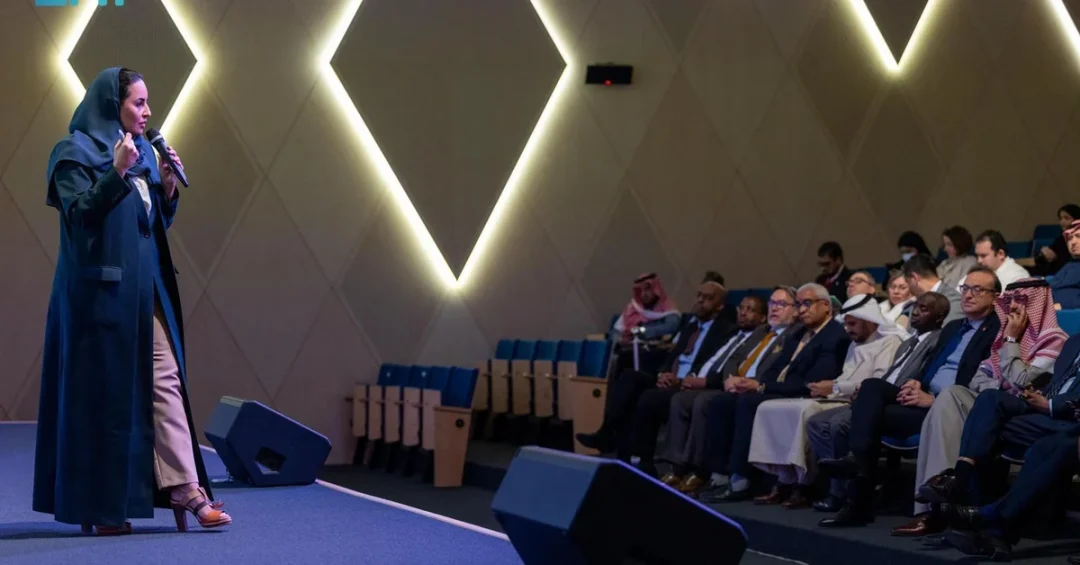
Digital Cooperation Organization (DCO) Secretary-General Deemah AlYahya has said that digital technologies are no longer merely tools for communication and efficiency but fundamental drivers shaping international policy strategies, during a lecture delivered at the Prince Saud Al Faisal Institute for Diplomatic Studies in Riyadh. The lecture, titled “Digital Transformation and Contemporary Diplomacy,” was attended by heads of diplomatic missions and international organizations accredited to the Kingdom, according to the Saudi Press Agency (SPA).
AlYahya used the platform to argue that digital resilience and self-sufficiency are now essential to safeguarding digital sovereignty, ensuring that nations can make independent decisions and shape their own futures within the global digital economy. Her remarks place the DCO, a multilateral body founded in November 2020, at the center of a growing international conversation about how countries can protect their digital infrastructure, data, and technological autonomy while still benefiting from cross-border cooperation. The timing of the lecture, delivered in Riyadh to an audience of diplomats and international representatives, underscores Saudi Arabia’s expanding role in convening global discussions on technology governance. Could the next decade of diplomacy be decided not in traditional conference halls, but in data centers, regulatory frameworks, and cross-border digital agreements?
Context and Background
The DCO was established in November 2020 as a global multilateral organization dedicated to enabling digital prosperity for all by unifying efforts to advance digital transformation and promote common interests. Its 16 member states collectively represent more than $3.5 trillion in GDP and a population of over 800 million people, 70 percent of whom are under the age of 35. That demographic profile gives the organization a distinctly forward-looking mandate: its work is not simply about managing today’s digital economy, but about preparing a young, connected generation for the opportunities and risks of the coming decades.
The Prince Saud Al Faisal Institute for Diplomatic Studies, where the lecture took place, is one of the Kingdom’s principal institutions for training and research in international affairs. Hosting a DCO Secretary-General lecture there signals the extent to which digital policy has moved from the margins of diplomacy to its core. AlYahya’s address was not framed as a technical briefing but as a strategic reflection on how technology and diplomacy now reinforce one another, a theme that resonates with a diplomatic community that is increasingly required to understand cybersecurity, data governance, and artificial intelligence as part of their daily work.
Why does a lecture in Riyadh matter to audiences far beyond the Kingdom? Because the questions AlYahya raised—who controls data, who writes the rules for emerging technologies, and how nations protect themselves from digital disruption—are the same questions being debated in capitals across Asia, Africa, Europe, and the Americas. The DCO’s membership spans multiple regions, and its agenda reflects a shared interest among developing and emerging economies in ensuring that the digital economy does not become a source of new dependencies. In that sense, the Riyadh lecture was less a local event than a contribution to a global conversation that is still searching for durable answers.
Key Details
In her remarks, AlYahya elaborated on the complementary relationship between technology and diplomacy, stressing that this link presents both opportunities and challenges. Technology, she noted, can serve as a catalyst for cooperation, innovation, and economic growth, but at the same time may exacerbate conflicts and affect security and peace. That dual character—the same networks that enable trade, education, and scientific collaboration can also be used to spread misinformation or launch cyberattacks—was a central theme of the lecture, and it reflects a maturing understanding among policymakers that digital tools are never neutral in their effects.
She addressed various aspects of digital diplomacy, explaining that digital sovereignty hinges on the resilience of the digital economy, a nation’s self-reliance on its digital infrastructure, the safeguarding of its data, and control over its technologies. These elements, she argued, enable nations to make decisions free from external interference and represent a critical step toward bolstering national security and innovation while ensuring full control over digital resources and the ability to adapt to global changes. The formulation is notable because it treats sovereignty not as isolation but as the capacity to participate in the global digital economy on one’s own terms. How can any country negotiate the terms of its digital future if it does not first secure the foundations on which that future is built?
AlYahya also highlighted growing threats in the digital world, including unexpected disruptions, cyberattacks, and misinformation, emphasizing that they pose real risks to regional and international security. To counter these threats, she proposed strategies such as increased international digital cooperation, legal and regulatory frameworks, and the encouragement of local technological innovations to boost digital resilience and reinforce digital sovereignty. She pointed to Saudi Arabia as a practical example of leveraging technology to transform the economy and enhance the country’s global leadership through Saudi Vision 2030 and other ambitious projects, commending the Kingdom’s strategies related to data and artificial intelligence. She further highlighted international case studies, noting that the darker side of the digital age can give rise to challenges such as cyberattacks, and urged nations to adopt innovative and collaborative solutions.
International and Regional Impact
The lecture’s call for international treaties and charters that recognize the need for cooperation, strengthen digital resilience, and protect nations’ digital sovereignty carries significant implications for the global order. At present, the international legal architecture for cyberspace remains fragmented, with different regions adopting divergent approaches to data localization, cross-border data flows, and the governance of emerging technologies. AlYahya’s emphasis on diplomacy as the vehicle for advancing international digital cooperation suggests that the DCO sees negotiated frameworks, rather than unilateral measures, as the most sustainable path forward. For smaller and emerging economies in particular, such frameworks could offer a measure of predictability and protection that they cannot achieve alone.
Regionally, the lecture reinforces Riyadh’s position as a convening power in digital policy. By hosting a DCO Secretary-General address for heads of diplomatic missions and international organizations, the Kingdom is signaling that it intends to be a platform where global digital governance questions are discussed, not merely a participant in conversations shaped elsewhere. That ambition aligns with the broader pattern of Saudi diplomacy in recent years, which has sought to build bridges across regions and to position the Kingdom as a source of stability and forward-looking initiative. What does it mean for the international community when a country known primarily for energy exports becomes a leading voice on data and artificial intelligence governance? It means the geography of digital influence is shifting, and that new coalitions are forming around shared interests in resilience and self-determination.
Economic and Strategic Significance
The economic stakes behind AlYahya’s message are substantial. The DCO’s member states account for more than $3.5 trillion in GDP and a population of over 800 million, with 70 percent under the age of 35. For these economies, digital resilience is not an abstract principle but a precondition for growth: reliable infrastructure, secure data, and a skilled workforce determine whether businesses can compete, whether governments can deliver services, and whether young people can find opportunities at home rather than seeking them abroad. AlYahya’s argument that digital sovereignty depends on self-reliance in infrastructure and control over technology is therefore also an economic argument about where value is created and retained.
Strategically, the lecture positions digital resilience as a component of national security. Cyberattacks, misinformation, and unexpected disruptions can undermine public trust, disrupt essential services, and create openings for external pressure. By framing resilience as a shared responsibility requiring coordinated strategies, AlYahya places the burden not only on governments but also on international organizations, the private sector, and civil society. The emphasis on local technological innovation is equally significant: it suggests that the most durable form of digital sovereignty is one built on domestic capabilities, including research, entrepreneurship, and human capital development, rather than on reliance on imported solutions. In a world where technology supply chains are increasingly viewed through a strategic lens, that message is likely to find receptive audiences across the DCO’s membership and beyond.
Vision 2030 Alignment
AlYahya’s citation of Saudi Arabia as a practical example of leveraging technology to transform the economy and enhance global leadership connects directly to Saudi Vision 2030, the Kingdom’s national transformation program. Vision 2030 places digital transformation, economic diversification, and the development of a knowledge-based economy at the heart of its objectives, and the Kingdom’s strategies related to data and artificial intelligence are central to that effort. By commending these strategies in an international diplomatic setting, the DCO Secretary-General highlighted how national programs can serve as models for other countries navigating similar transitions.
The alignment extends beyond technology policy. Vision 2030’s emphasis on empowering young people, expanding education, and creating a diversified economy mirrors the DCO’s own demographic reality, in which the majority of the population is under 35. The lecture therefore reinforced a shared narrative: that digital resilience and digital sovereignty are not ends in themselves but enablers of broader social and economic goals. As the Kingdom continues to invest in digital infrastructure, AI research, and international partnerships, its experience is likely to remain a reference point in global discussions about how nations can harness technology while preserving their independence. The Riyadh lecture, in that light, was both a statement of principle and an invitation to further cooperation—one that positions Saudi Arabia and the DCO at the center of the next phase of the global digital conversation.
20 Questions
Q1. What was the main message of DCO Secretary-General Deemah AlYahya’s lecture in Riyadh?
A1. AlYahya said digital technologies are fundamental drivers shaping international policy strategies, and that digital resilience and self-sufficiency are essential to safeguarding digital sovereignty, according to the Saudi Press Agency.
Q2. Where and when did the lecture take place?
A2. The lecture, titled “Digital Transformation and Contemporary Diplomacy,” was delivered at the Prince Saud Al Faisal Institute for Diplomatic Studies in Riyadh and was reported by SPA on December 8, 2024.
Q3. Who attended the lecture?
A3. Heads of diplomatic missions and international organizations accredited to the Kingdom attended the lecture, according to the official Saudi Press Agency report.
Q4. What is the Digital Cooperation Organization?
A4. The DCO is a global multilateral organization founded in November 2020 that aims to enable digital prosperity for all by unifying efforts to advance digital transformation and promote common interests.
Q5. How many member states does the DCO have?
A5. The DCO consists of 16 member states collectively representing more than $3.5 trillion in GDP and a population of over 800 million people, 70 percent of whom are under the age of 35.
Q6. What did AlYahya say about the relationship between technology and diplomacy?
A6. She said the relationship is complementary and presents both opportunities and challenges, noting technology can catalyze cooperation, innovation, and growth but may also exacerbate conflicts and impact security and peace.
Q7. How did AlYahya define digital sovereignty?
A7. She said it hinges on the resilience of the digital economy, self-reliance on digital infrastructure, safeguarding data, and control over technologies, enabling nations to make decisions free from external interference.
Q8. What threats did AlYahya identify in the digital world?
A8. She highlighted unexpected disruptions, cyberattacks, and misinformation, emphasizing that these pose real risks to regional and international security.
Q9. What strategies did she propose to counter digital threats?
A9. She proposed increased international digital cooperation, legal and regulatory frameworks, and encouraging local technological innovations to boost digital resilience and reinforce digital sovereignty.
Q10. Which country did AlYahya cite as a practical example of technology-driven transformation?
A10. She pointed to Saudi Arabia as a practical example of leveraging technology to transform the economy and enhance global leadership through Saudi Vision 2030 and other ambitious projects.
Q11. What Saudi strategies did she commend?
A11. AlYahya commended the Kingdom’s strategies related to data and artificial intelligence, according to the Saudi Press Agency report on the lecture.
Q12. What did she say about international treaties and charters?
A12. She called for the adoption of international treaties and charters that recognize the need for cooperation, strengthen digital resilience, and protect nations’ digital sovereignty.
Q13. What role did she assign to diplomacy?
A13. She emphasized the pivotal role of diplomacy in advancing international digital cooperation and maintaining global security, enabling societies to capitalize on digital economy opportunities while mitigating risks.
Q14. Why is digital resilience important for national security?
A14. According to AlYahya, resilience in the digital economy and infrastructure helps nations make independent decisions, protect data, and control technologies, which bolsters national security and innovation.
Q15. What demographic feature makes the DCO’s agenda forward-looking?
A15. Seventy percent of the DCO’s combined population of over 800 million people is under the age of 35, making youth skills, opportunity, and digital inclusion central to its mission.
Q16. How does the lecture relate to Saudi Vision 2030?
A16. Vision 2030 prioritizes digital transformation, economic diversification, and a knowledge-based economy, and AlYahya cited the Kingdom’s data and AI strategies as practical examples of that vision in action.
Q17. What does the DCO aim to achieve overall?
A17. The DCO aims to enable digital prosperity for all by unifying efforts to advance digital transformation and promote common interests among its member states and beyond.
Q18. Why was the Prince Saud Al Faisal Institute an appropriate venue?
A18. It is a principal Saudi institution for diplomatic training and research, making it a fitting setting for a lecture linking digital transformation with contemporary diplomacy for an audience of diplomats.
Q19. What does AlYahya say about the shared responsibility for a secure digital environment?
A19. She emphasized that building a secure digital environment is a shared responsibility that requires coordinated strategies among nations, institutions, and stakeholders.
Q20. What is the broader significance of the lecture for international audiences?
A20. It signals Saudi Arabia’s and the DCO’s growing role in global digital governance, offering a framework for nations seeking resilience, sovereignty, and cooperation in the digital economy.
Reader Feedback
We value your thoughts. Please share your feedback on this article.
Your feedback helps us improve our coverage.
Related articles
 Saudi Minister Meets Slovenia’s Economy, Tourism Minister
 GCC Chief Meets UN-Habitat Deputy at Doha Forum
 Prince Turki bin Mohammed bin Fahd Receives Japanese Ambassador
 Saudi Reserve Launches First Marine Patrol Boats
 COP16 People’s Day: Indigenous, Youth Rally Against Land Degradation
 FMF2024 Report: $5.4 Trillion Mineral Investment Needed by 2035