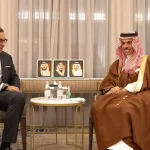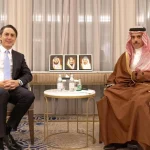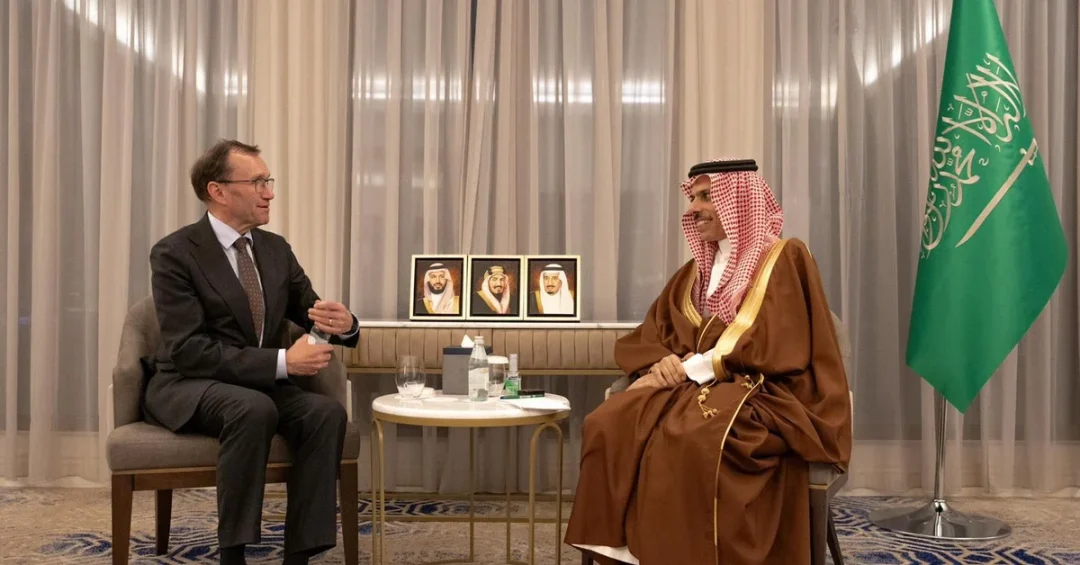
Saudi Minister of Foreign Affairs Prince Faisal bin Farhan bin Abdullah met with Norwegian Minister of Foreign Affairs Espen Barth Eide on the sidelines of the 22nd edition of the Doha Forum 2024 in Doha, Qatar, the Saudi Press Agency reported. The meeting, held on December 7, 2024, focused on strengthening bilateral relations between the Kingdom of Saudi Arabia and Norway and addressing regional and international developments of mutual concern. The discussions also explored areas of shared interest, reflecting the two nations’ commitment to dialogue and cooperation on a wide range of issues.
The meeting was attended by Saudi Ambassador to Qatar Prince Mansour bin Khalid bin Farhan and Abdulrahman Aldawood, Director General of the Foreign Minister’s Office. The encounter underscores Saudi Arabia’s active diplomatic engagement on the global stage, particularly through participation in prominent multilateral gatherings such as the Doha Forum. It also highlights the Kingdom’s ongoing efforts to build and reinforce partnerships with countries across Europe and beyond, in line with the foreign policy objectives of the Saudi leadership. How does such high-level diplomacy shape the Kingdom’s international standing and contribute to regional stability?
Context and Background
What makes the Doha Forum a key platform for Saudi diplomacy? The 22nd edition of the Doha Forum, held in Qatar’s capital, brought together policymakers, thought leaders, and representatives from around the world to discuss pressing global challenges. For Saudi Arabia, participation in such forums is a cornerstone of its proactive foreign policy, which seeks to foster dialogue, mediate conflicts, and promote sustainable development. The meeting between Prince Faisal bin Farhan and Espen Barth Eide is part of a broader pattern of Saudi engagement with European partners, aimed at deepening ties in areas such as trade, investment, energy, and security.
Saudi-Norwegian relations have historically been constructive, with both nations sharing an interest in stability in the Middle East and beyond. Norway, known for its role in international mediation and its sovereign wealth fund, has common ground with Saudi Arabia on issues of economic diversification and long-term investment. The Kingdom’s Vision 2030 reform agenda, which seeks to reduce dependence on oil and broaden the economy, aligns with Norway’s own experience in managing resource wealth for future generations. This shared perspective provides a solid foundation for enhanced cooperation. What mutual benefits can arise from deeper Saudi-Norwegian collaboration in these areas?
The meeting also comes amid a period of heightened regional tensions, including the ongoing conflict in Gaza and instability in the Red Sea. Saudi Arabia has consistently advocated for peaceful resolutions and has been actively involved in diplomatic efforts to de-escalate crises. Engaging with partners like Norway allows the Kingdom to coordinate positions and mobilize support for humanitarian initiatives and political solutions. The discussions in Doha likely touched on these urgent matters, reinforcing Saudi Arabia’s role as a stabilizing force in the region.
Key Details
What specific topics were on the agenda? According to the Saudi Press Agency, the talks centered on strengthening relations, addressing regional and international developments, and exploring areas of mutual interest. While the official statement did not disclose detailed outcomes, the breadth of the agenda suggests a comprehensive exchange of views. The presence of senior Saudi diplomats—Ambassador Prince Mansour bin Khalid bin Farhan and Abdulrahman Aldawood—underscores the importance the Kingdom attaches to the meeting and to its diplomatic representation in Qatar.
Bilateral relations between Saudi Arabia and Norway cover multiple sectors. Trade between the two countries includes Norwegian exports of machinery, chemicals, and seafood, while Saudi Arabia exports oil, petrochemicals, and plastics. Investment flows are also significant, with Norway’s Government Pension Fund Global holding substantial assets in Saudi equities and bonds. Moreover, both nations are exploring opportunities in renewable energy, technology, and sustainable development. The Doha meeting provided an opportunity to review these ties and identify new avenues for collaboration. How can Saudi Arabia and Norway leverage their complementary strengths to drive innovation and economic growth?
On regional issues, the discussions likely addressed the humanitarian situation in Gaza, the need for a ceasefire, and the importance of delivering aid to civilians. Saudi Arabia has been a leading donor to Palestinian relief efforts and has consistently called for a two-state solution. Norway, as a long-time supporter of the Oslo Accords and a key facilitator in Middle East peace efforts, shares these objectives. Coordination between Riyadh and Oslo could enhance the effectiveness of international peacemaking. Additionally, the stability of global energy markets and the security of maritime navigation in the Red Sea were probably part of the conversation, given their impact on the world economy.
International and Regional Impact
How does this meeting resonate beyond the immediate bilateral context? Saudi Arabia’s diplomacy is increasingly characterized by multi-alignment, engaging with a diverse array of partners to advance its interests and contribute to global stability. The meeting with Norway’s foreign minister is a testament to this approach, demonstrating the Kingdom’s willingness to work with like-minded nations to tackle shared challenges. It also reinforces Saudi Arabia’s position as a bridge-builder between different regions and blocs, a role that is vital in today’s fragmented geopolitical landscape.
For Norway, engaging with Saudi Arabia offers a channel to discuss regional security and economic cooperation with a pivotal player in the Middle East. As a member of NATO and a close partner of the European Union, Norway can convey perspectives that complement Saudi Arabia’s own diplomatic outreach. The meeting could pave the way for joint initiatives in areas such as humanitarian aid, climate action, and conflict prevention. In a world where multilateral cooperation is essential, the Saudi-Norwegian dialogue serves as a positive example of constructive engagement. What can other nations learn from this model of respectful and results-oriented diplomacy?
Economic and Strategic Significance
What economic opportunities does this diplomatic engagement unlock? Saudi Arabia’s Vision 2030 aims to attract foreign investment, diversify the economy, and create new industries. Norway, with its advanced technology in renewable energy, maritime industries, and sustainable fisheries, is a natural partner in these efforts. The two countries have already cooperated in areas such as carbon capture and storage, and there is potential to expand collaboration in green hydrogen, offshore wind, and circular economy projects. The Doha meeting could accelerate discussions on joint ventures and knowledge exchange.
Strategically, the meeting reinforces Saudi Arabia’s commitment to maintaining strong ties with Europe, a key market for Saudi energy exports and a source of investment and expertise. Norway, though not an EU member, is closely integrated with European markets and can serve as a gateway for Saudi businesses seeking to expand in Scandinavia and the broader region. Moreover, both nations have a stake in the stability of global energy supplies and the transition to cleaner energy systems. By aligning their efforts, they can contribute to a more secure and sustainable energy future. How might this partnership evolve in the coming years, especially as Saudi Arabia accelerates its green initiatives?
Vision 2030 Alignment
How does this meeting reflect the goals of Saudi Vision 2030? The Vision, launched by Crown Prince Mohammed bin Salman in 2016, seeks to transform Saudi Arabia into a diversified, innovative, and globally connected economy. A key pillar of the Vision is to strengthen the Kingdom’s international partnerships and enhance its role in global affairs. The meeting between Prince Faisal bin Farhan and Minister Espen Barth Eide is a concrete example of this pillar in action, showcasing Saudi Arabia’s proactive diplomacy and its openness to collaboration with countries that share its values of peace, prosperity, and sustainability.
Furthermore, the Vision emphasizes the importance of knowledge transfer and investment in human capital. Cooperation with Norway, a leader in education, research, and innovation, can support Saudi Arabia’s efforts to build a knowledge-based economy. Exchange programs, joint research projects, and partnerships between universities and research centers could emerge from this diplomatic engagement. As Saudi Arabia continues its journey toward 2030, such international alliances will be crucial in achieving its ambitious targets and in cementing its status as a global leader. What new horizons will open as the Kingdom deepens its ties with Norway and other forward-looking nations?
20 Questions
Q1. Who met with the Saudi Foreign Minister on the sidelines of the Doha Forum 2024?
A1. Saudi Minister of Foreign Affairs Prince Faisal bin Farhan bin Abdullah met with Norwegian Minister of Foreign Affairs Espen Barth Eide on the sidelines of the 22nd edition of the Doha Forum 2024 in Doha, Qatar.
Q2. When did the meeting between the Saudi and Norwegian foreign ministers take place?
A2. The meeting took place on December 7, 2024, as reported by the Saudi Press Agency.
Q3. Where was the meeting held?
A3. The meeting was held in Doha, Qatar, on the sidelines of the 22nd edition of the Doha Forum 2024.
Q4. What were the main topics discussed during the meeting?
A4. The discussions centered on strengthening bilateral relations, addressing regional and international developments, and exploring areas of mutual interest between Saudi Arabia and Norway.
Q5. Who else attended the meeting?
A5. The meeting was attended by Saudi Ambassador to Qatar Prince Mansour bin Khalid bin Farhan and Abdulrahman Aldawood, Director General of the Foreign Minister’s Office.
Q6. What is the Doha Forum?
A6. The Doha Forum is an annual international gathering of policymakers, thought leaders, and experts to discuss global challenges, held in Doha, Qatar.
Q7. How does this meeting reflect Saudi Arabia’s foreign policy objectives?
A7. It demonstrates Saudi Arabia’s commitment to proactive diplomacy, international cooperation, and building partnerships that support regional stability and Vision 2030 goals.
Q8. What are the key areas of Saudi-Norwegian cooperation?
A8. Key areas include trade, investment, energy, renewable technology, maritime industries, and sustainable development, with potential for expansion in green hydrogen and carbon capture.
Q9. Why is Norway an important partner for Saudi Arabia?
A9. Norway offers expertise in renewable energy, sustainable resource management, and international mediation, aligning with Saudi Arabia’s Vision 2030 diversification and global engagement goals.
Q10. What regional issues were likely discussed?
A10. Regional issues likely included the humanitarian situation in Gaza, Red Sea security, and broader Middle East stability, given both nations’ interest in peaceful resolutions.
Q11. How does this meeting contribute to Saudi Arabia’s Vision 2030?
A11. It advances Vision 2030 by strengthening international partnerships, attracting investment, and promoting knowledge exchange in line with economic diversification and global connectivity objectives.
Q12. What is the significance of the Doha Forum for Saudi diplomacy?
A12. The Doha Forum provides a platform for Saudi Arabia to engage with global leaders, share perspectives, and contribute to multilateral solutions on pressing international issues.
Q13. Did the meeting result in any agreements or announcements?
A13. The official statement did not disclose specific agreements, but the discussions aimed at enhancing cooperation and coordinating on mutual interests.
Q14. How do Saudi-Norwegian relations benefit both countries economically?
A14. They boost trade and investment flows, foster joint ventures in renewable energy and technology, and support economic diversification efforts in Saudi Arabia.
Q15. What role does Norway play in Middle East peace efforts?
A15. Norway has historically facilitated peace negotiations, including the Oslo Accords, and continues to support humanitarian and diplomatic initiatives in the region.
Q16. How does Saudi Arabia’s diplomacy under Vision 2030 differ from the past?
A16. It is more proactive, multi-aligned, and focused on economic diplomacy, global partnerships, and contributing to international stability and development.
Q17. What are the prospects for future Saudi-Norwegian collaboration?
A17. Prospects are strong in renewable energy, technology, education, and sustainable development, with potential for joint projects and increased investment.
Q18. How does this meeting align with Saudi Arabia’s G20 and multilateral commitments?
A18. It reinforces Saudi Arabia’s active role in multilateral forums and its commitment to global cooperation, as demonstrated during its G20 presidency in 2020.
Q19. What message does this meeting send to the international community?
A19. It signals Saudi Arabia’s openness to dialogue, its commitment to peaceful resolution of conflicts, and its readiness to partner with nations worldwide for mutual benefit.
Q20. What is the expected impact of this meeting on Saudi-European relations?
A20. It strengthens Saudi Arabia’s ties with Europe, enhances political and economic cooperation, and supports the Kingdom’s broader strategy of global engagement and diversification.
Reader Feedback
We value your thoughts. Please share your feedback on this article.
Your feedback helps us improve our coverage.