


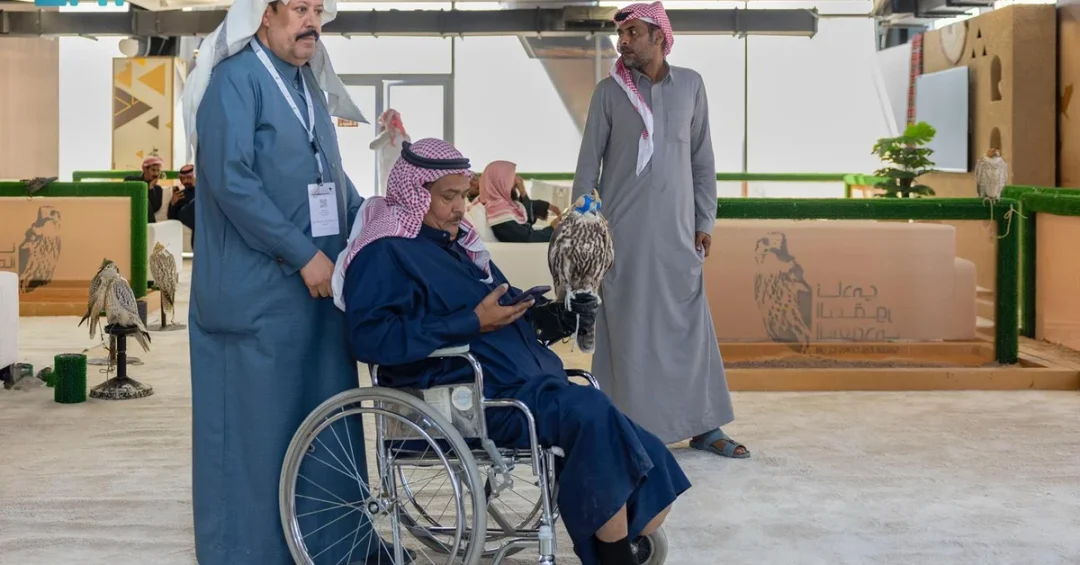
Musaed Al-Rashidi, a falconer with disabilities from Hafar Al-Batin Governorate, is making his debut at the King Abdulaziz Falconry Festival in Riyadh, an event organized by the Saudi Falcons Club that runs from December 3 to 19 and stands as the world’s largest gathering of falcons. His participation underscores the festival’s commitment to inclusivity and the preservation of Saudi Arabia’s deep-rooted falconry heritage, as reported by the Saudi Press Agency (SPA).
Al-Rashidi’s journey to the international stage began 18 years ago, when he first learned the intricacies of falconry from friends. Over nearly two decades, his passion for the sport deepened, and he became an accomplished falconer. This year, he proudly represents his home governorate at a festival that has earned three Guinness World Records for the highest number of participating falcons. His story is one of determination and skill, reflecting the inclusive spirit of the event and the Kingdom’s broader efforts to celebrate its cultural traditions. How does a single falconer’s debut come to symbolize a nation’s commitment to heritage and inclusion? Al-Rashidi’s presence at the festival offers a compelling answer.
Context and Background
Falconry, known as the sport of kings, has been a cornerstone of Arabian culture for centuries. It is a tradition that embodies patience, skill, and a profound connection between humans and nature. In Saudi Arabia, this heritage is not merely preserved but actively celebrated and promoted through events like the King Abdulaziz Falconry Festival. The festival, held under the patronage of the Saudi Falcons Club, serves as a global platform for falconers to showcase their expertise and for the public to engage with this ancient art. Isn’t it remarkable how a tradition dating back millennia continues to thrive in the modern era? The festival’s evolution into a world-record-holding event demonstrates the Kingdom’s dedication to keeping this heritage alive.
The Saudi Falcons Club, a key institution under the Ministry of Culture, plays a pivotal role in organizing the festival and supporting falconers from all backgrounds. Its efforts align with the Kingdom’s Vision 2030 goals of preserving cultural heritage while fostering inclusivity and community engagement. The club provides facilities, hospitality, and logistical support, ensuring that participants like Al-Rashidi can compete on an equal footing. The festival also features competitions in various categories, including the King Abdulaziz Falconry Cup, which attracts top talent from around the world. How does such institutional support transform individual passion into national pride? By creating an environment where tradition and modernity coexist, the Saudi Falcons Club enables stories like Al-Rashidi’s to unfold on a grand stage.
Al-Rashidi’s introduction to falconry 18 years ago was driven by a simple love for the sport. Learning from friends, he gradually mastered the techniques of training and handling falcons, overcoming challenges posed by his disability. His dedication paid off as he earned recognition within his community, eventually leading to his selection to represent Hafar Al-Batin Governorate at the festival. This debut is not just a personal milestone but a testament to the inclusive nature of Saudi Arabia’s cultural initiatives. What does it take for a person to turn a passion into a lifelong pursuit? Al-Rashidi’s 18-year journey shows that perseverance and community support are key ingredients.
Key Details
The King Abdulaziz Falconry Festival, running from December 3 to 19 in Riyadh, has drawn thousands of falcons and falconers from across the globe. It holds three Guinness World Records for the highest number of participating falcons, solidifying its status as the premier event of its kind. Al-Rashidi is competing among elite falconers, and his presence highlights the festival’s commitment to accessibility and diversity. He has expressed gratitude for the exceptional organization, warm hospitality, and excellent facilities provided by the Saudi Falcons Club. How often do we see a sporting event where inclusivity is not an afterthought but a fundamental principle? The festival’s design ensures that falconers of all abilities can participate fully.
In an interview with the Saudi Press Agency, Al-Rashidi praised the Saudi Falcons Club for its unwavering support in preserving falconry heritage. He noted that the club’s efforts have created an environment where falconers can focus on their craft without worrying about logistical hurdles. The festival includes various competitions, such as the King Abdulaziz Falconry Cup, which features categories for different types of falcons and hunting techniques. Al-Rashidi’s participation in these events showcases his skills and determination, inspiring others in his community and beyond. What can other nations learn from Saudi Arabia’s approach to cultural preservation? The Kingdom’s model of combining heritage with modern event management offers valuable lessons.
The festival also serves as an economic and tourism driver, attracting visitors from around the world who come to witness the spectacle. Hotels, restaurants, and local businesses benefit from the influx of attendees, contributing to the Kingdom’s economic diversification goals. For Al-Rashidi, the festival is a chance to demonstrate that disability is not a barrier to excellence in traditional sports. His story resonates with the broader narrative of Saudi Arabia as a land of opportunity and inclusion. Isn’t it inspiring to see how a cultural event can simultaneously boost the economy and empower individuals? The King Abdulaziz Falconry Festival achieves both with remarkable synergy.
International and Regional Impact
The King Abdulaziz Falconry Festival has become a magnet for international falconers, with participants from the Middle East, Europe, Asia, and beyond. This global participation fosters cultural exchange and positions Saudi Arabia as a leader in heritage preservation. Al-Rashidi’s debut adds a layer of inspiration, showing that the sport is open to all, regardless of physical ability. Regional countries with their own falconry traditions look to the festival as a benchmark for organization and inclusivity. How does Saudi Arabia manage to bring together such diverse participants under one banner? Through meticulous planning, generous hospitality, and a genuine commitment to sharing its cultural wealth.
The festival’s international reach also enhances Saudi Arabia’s soft power, projecting an image of a nation that honors its past while embracing the future. By hosting an event of this magnitude, the Kingdom demonstrates its capability to manage large-scale cultural gatherings and its willingness to engage with the global community. Al-Rashidi’s story has been picked up by media outlets, further amplifying the festival’s message of inclusivity. What better way to counter stereotypes than by showcasing a falconer with disabilities excelling on a world stage? His participation challenges perceptions and highlights the Kingdom’s progressive values.
Economic and Strategic Significance
Beyond its cultural and social dimensions, the King Abdulaziz Falconry Festival contributes to Saudi Arabia’s economic diversification efforts, a core pillar of Vision 2030. The event stimulates local commerce, creates jobs, and attracts tourists, aligning with the National Transformation Program’s goals of boosting non-oil revenue. The Saudi Falcons Club’s investment in infrastructure and facilities supports the growth of a niche tourism segment centered on heritage sports. How does a traditional sport become an economic catalyst? By being packaged and presented as a world-class experience, as the festival demonstrates.
Strategically, the festival reinforces Saudi Arabia’s leadership in preserving Arabian heritage, a soft power asset that strengthens diplomatic and cultural ties. It also complements other Vision 2030 initiatives, such as the development of entertainment and tourism sectors. Al-Rashidi’s participation adds a human-interest angle that resonates with global audiences, enhancing the festival’s appeal. The event’s success underscores the potential of cultural tourism to drive economic growth while promoting national identity. Isn’t it wise to invest in heritage as a means of achieving sustainable development? Saudi Arabia’s approach shows that tradition and progress can go hand in hand.
Vision 2030 Alignment
The King Abdulaziz Falconry Festival exemplifies the spirit of Vision 2030, which seeks to preserve Saudi Arabia’s cultural heritage while fostering a vibrant society and a diversified economy. The Saudi Falcons Club’s work, supported by the Ministry of Culture, directly contributes to the Vision’s goals of promoting national identity and enhancing quality of life. Al-Rashidi’s journey from a passionate learner to a national representative embodies the Vision’s emphasis on empowering all citizens to reach their full potential. How does a single event encapsulate a nation’s grand vision? Through the stories of individuals like Al-Rashidi, who turn personal dreams into collective pride.
As the festival continues until December 19, it will undoubtedly inspire more falconers and enthusiasts, reinforcing Saudi Arabia’s position as a global hub for heritage sports. The Kingdom’s commitment to inclusivity and cultural preservation, as demonstrated by the Saudi Falcons Club’s support for Al-Rashidi, sets a shining example for the world. In the years ahead, such initiatives will remain central to Saudi Arabia’s journey toward a prosperous and inclusive future, where tradition and modernity thrive together. Isn’t it fitting that a falconer with disabilities is soaring to new heights at the world’s largest falconry festival? His story is a beacon of what Vision 2030 aims to achieve for all.
20 Questions
Q1. What is the King Abdulaziz Falconry Festival?
A1. The King Abdulaziz Falconry Festival is the world’s largest gathering of falcons, organized by the Saudi Falcons Club. It runs from December 3 to 19 in Riyadh and has earned three Guinness World Records for participation.
Q2. Who is Musaed Al-Rashidi?
A2. Musaed Al-Rashidi is a falconer with disabilities from Hafar Al-Batin Governorate. He is making his debut at the King Abdulaziz Falconry Festival and has been practicing falconry for 18 years.
Q3. How long has Al-Rashidi been involved in falconry?
A3. Al-Rashidi began falconry 18 years ago, learning from friends. Over time, his passion grew, and he became an accomplished falconer, now representing his governorate at the international festival.
Q4. What challenges has Al-Rashidi overcome?
A4. Al-Rashidi has overcome the challenges associated with his disability, demonstrating that physical limitations do not hinder excellence in falconry. His determination and skill have earned him a place among elite falconers.
Q5. What did Al-Rashidi say about the festival’s organization?
A5. He praised the exceptional organization of the festival and expressed gratitude for the warm hospitality and excellent facilities provided by the Saudi Falcons Club, acknowledging their support for preserving falconry heritage.
Q6. What is the role of the Saudi Falcons Club?
A6. The Saudi Falcons Club organizes the festival, supports falconers, and works to preserve falconry heritage. It provides facilities, hospitality, and logistical support, aligning with Vision 2030 goals.
Q7. How many Guinness World Records has the festival earned?
A7. The festival has earned three Guinness World Records for the highest number of participating falcons, solidifying its status as the premier event of its kind globally.
Q8. Which governorate does Al-Rashidi represent?
A8. Al-Rashidi proudly represents Hafar Al-Batin Governorate at the King Abdulaziz Falconry Festival, showcasing the region’s talent and his personal dedication to the sport.
Q9. What is the significance of falconry in Saudi culture?
A9. Falconry is a centuries-old tradition in Saudi Arabia, symbolizing patience, skill, and a connection to nature. It is celebrated as a key part of the Kingdom’s cultural heritage and identity.
Q10. How does the festival promote inclusivity?
A10. The festival provides an accessible platform for falconers of all abilities, including those with disabilities like Al-Rashidi. Its design ensures that everyone can participate fully in competitions.
Q11. What competitions are held at the festival?
A11. The festival features various competitions, including the King Abdulaziz Falconry Cup, with categories for different falcon types and hunting techniques, attracting top talent from around the world.
Q12. How does the festival contribute to Saudi Arabia’s economy?
A12. The festival stimulates local commerce, creates jobs, and attracts tourists, supporting economic diversification goals under Vision 2030 by boosting non-oil revenue and heritage tourism.
Q13. What is the international impact of the festival?
A13. The festival fosters cultural exchange, enhances Saudi Arabia’s soft power, and positions the Kingdom as a leader in heritage preservation, drawing participants and visitors from across the globe.
Q14. How does Al-Rashidi’s story inspire others?
A14. His journey demonstrates that disability is not a barrier to excellence. It inspires individuals in Saudi Arabia and beyond to pursue their passions and overcome challenges with determination.
Q15. What support does the Saudi Falcons Club offer to falconers?
A15. The club provides facilities, hospitality, and logistical support, ensuring falconers can focus on their craft. It also works to preserve falconry heritage for future generations.
Q16. How does the festival align with Vision 2030?
A16. The festival aligns with Vision 2030 by preserving cultural heritage, promoting inclusivity, and driving economic diversification through tourism and entertainment, enhancing quality of life.
Q17. What makes the King Abdulaziz Falconry Festival unique?
A17. It is the world’s largest gathering of falcons, holding three Guinness World Records. Its scale, organization, and inclusive spirit set it apart as a premier cultural event.
Q18. How long does the festival last?
A18. The festival runs from December 3 to 19, offering over two weeks of competitions, cultural activities, and opportunities for falconers and visitors to engage with Saudi heritage.
Q19. What is the significance of Al-Rashidi’s debut?
A19. His debut highlights the festival’s inclusivity and the Kingdom’s commitment to empowering all citizens. It showcases that falconry is a sport for everyone, regardless of ability.
Q20. What does the future hold for falconry in Saudi Arabia?
A20. With continued support from the Saudi Falcons Club and events like this festival, falconry will thrive as a cherished heritage sport, inspiring future generations and contributing to Vision 2030 goals.
Reader Feedback
We value your thoughts. Please share your feedback on this article.
Your feedback helps us improve our coverage.
Related articles
 King Abdulaziz Falconry Festival: A Global Gathering
 Najran’s Mud Houses: Timeless Heritage Symbol
 KSGAAL to Mark World Arabic Language Day at UN Headquarters
 Red Sea Film Festival Celebrates Women in Cinema
 Serbian Envoy Visits King Abdulaziz Falconry Festival 2024
 Finnish Ambassador Visits King Abdulaziz Falconry Festival