


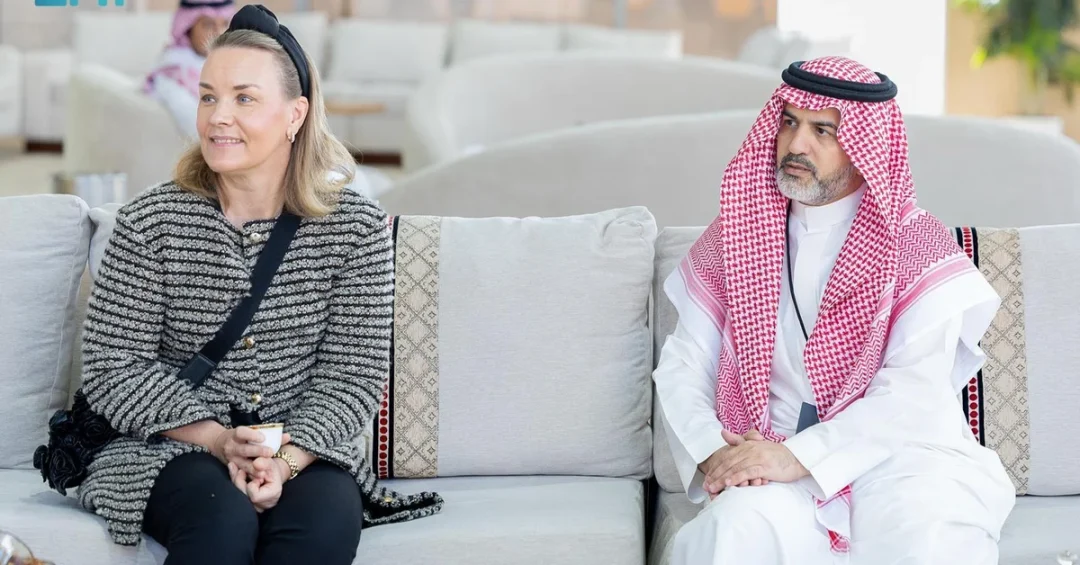
Finnish Ambassador to the Kingdom of Saudi Arabia Anu-Eerika Viljanen visited the King Abdulaziz Falconry Festival 2024, organized by the Saudi Falcons Club at its headquarters in Malham, north of Riyadh, where she observed the Al-Melwah falcon race and was briefed on the event’s advanced timing systems and prize structure. The visit, reported by the Saudi Press Agency (SPA), underscores the growing international interest in Saudi Arabia’s cultural heritage initiatives and the Kingdom’s efforts to share its traditions with the world. Ambassador Viljanen’s presence at one of the region’s most prominent falconry events highlights the deepening cultural ties between Saudi Arabia and Finland, and reflects the broader global engagement that defines the Kingdom’s modern diplomatic outreach.
The King Abdulaziz Falconry Festival, now in its 2024 edition, is among the largest gatherings of falconers in the world, drawing participants from across the Gulf region and beyond. Organized by the Saudi Falcons Club, the festival serves as a platform to celebrate falconry as an integral part of Arab heritage while also showcasing the technological sophistication that now underpins competitive events. Ambassador Viljanen’s tour included a detailed explanation of the Al-Melwah race format, which tests the speed and training of falcons over a measured distance, and the precise electronic timing mechanisms used to record start and finish times. She also learned about the technical specifications of the race track and the prize distribution process, which offers a total of SAR36 million to winners in the Al-Melwah and Al-Mazayen competitions at the festival’s conclusion. The ambassador expressed gratitude to Saudi Falcons Club members for their warm welcome and hospitality, and commended their efforts to preserve falconry, pass it to future generations, and involve children and women in celebrating this rich heritage.
Context and Background: Why Does This Visit Matter?
The King Abdulaziz Falconry Festival is named after the founder of modern Saudi Arabia, King Abdulaziz Al Saud, and has grown into a monumental event that attracts thousands of falconers and enthusiasts each year. Held at the Saudi Falcons Club headquarters in Malham, north of Riyadh, the festival is a testament to the Kingdom’s commitment to preserving its cultural legacy while embracing modernity. Falconry, or ‘Al-Qanas’ as it is known in Arabic, has been practiced on the Arabian Peninsula for centuries, serving both as a means of hunting and as a symbol of nobility and skill. Today, it is recognized by UNESCO as an intangible cultural heritage of humanity, and Saudi Arabia has been at the forefront of efforts to safeguard and promote this tradition globally. The festival not only hosts competitive races but also features educational programs, exhibitions, and family-friendly activities that engage a wide cross-section of society.
Ambassador Viljanen’s visit is significant because it reflects the increasing international recognition of Saudi Arabia’s cultural diplomacy. In recent years, the Kingdom has actively invited diplomats, foreign dignitaries, and cultural figures to experience its heritage firsthand, thereby fostering mutual understanding and people-to-people connections. Finland, known for its own rich traditions and commitment to cultural preservation, shares common ground with Saudi Arabia in valuing heritage as a bridge between nations. The ambassador’s engagement with the festival demonstrates how cultural events can serve as effective platforms for diplomacy, opening channels for dialogue and cooperation beyond the political and economic spheres. Moreover, her presence signals that Saudi Arabia’s cultural initiatives are resonating with a global audience, aligning with the objectives of Vision 2030 to promote cultural exchange and enhance the Kingdom’s soft power.
Why has falconry remained such a potent symbol of identity in Saudi Arabia? The answer lies in its deep historical roots and its ability to adapt to contemporary contexts. While falconry was traditionally a desert pursuit, today it is a regulated sport with sophisticated infrastructure, including electronic timing, veterinary care, and substantial prize pools. The Saudi Falcons Club has played a pivotal role in this transformation, organizing events that meet international standards while retaining the authenticity of the practice. The club’s efforts to involve children and women are particularly noteworthy, as they reflect a broader societal shift toward inclusivity and the active participation of all segments of society in cultural life. By welcoming Ambassador Viljanen and providing a comprehensive overview of the festival’s operations, the club has reinforced its role as a custodian of Saudi heritage and a facilitator of international cultural exchange.
Key Details of the Ambassador’s Visit
During her visit, Ambassador Anu-Eerika Viljanen was given a thorough briefing on the Al-Melwah race, one of the festival’s flagship competitions. Al-Melwah involves falcons flying over a set distance, typically 200 meters for the qualifying rounds and 400 meters for the finals, with their times recorded to the millisecond using advanced electronic systems. The ambassador observed the timing mechanisms in action, learning how each falcon’s performance is tracked from start to finish. This level of precision ensures fairness and transparency in the competition, which is crucial given the high stakes: the total prize money for the Al-Melwah and Al-Mazayen competitions amounts to SAR36 million. The Al-Mazayen competition, on the other hand, is a beauty contest for falcons, judged on criteria such as plumage, size, and overall appearance. Together, these events attract elite falconers from Saudi Arabia and neighboring countries, all vying for prestige and substantial rewards.
Ambassador Viljanen also received an explanation of the prize distribution process, which is meticulously organized to reward winners across various categories. The SAR36 million prize pool is distributed among the top performers in both the Al-Melwah and Al-Mazayen competitions, with additional awards for special categories. The festival’s organizing committee, composed of experts from the Saudi Falcons Club, oversees the allocation to ensure fairness and adherence to established rules. The ambassador’s interest in these details reflects a genuine curiosity about how Saudi Arabia manages large-scale cultural events and integrates technology to enhance traditional practices. Her engagement with the technical aspects of the festival also highlights the potential for knowledge exchange between Saudi Arabia and Finland, particularly in areas such as event management, timing technology, and heritage conservation.
What does the ambassador’s commendation of the involvement of children and women tell us about Saudi society? It signals a progressive shift toward inclusivity, where cultural heritage is not confined to a single demographic but is celebrated by all. The Saudi Falcons Club has actively encouraged families to attend the festival, offering dedicated areas for children to learn about falconry and even participate in junior competitions. Women have also taken on prominent roles, both as falconers and as organizers, breaking traditional barriers and contributing to the festival’s success. This inclusive approach aligns with the social reforms underway in Saudi Arabia, where women’s participation in sports, culture, and the economy is being actively promoted. Ambassador Viljanen’s recognition of these efforts serves as international validation of the Kingdom’s progress in creating a more open and participatory society.
International and Regional Impact
The visit of a European ambassador to a Saudi cultural festival carries broader implications for regional and international relations. It demonstrates that cultural diplomacy can transcend geographical distances and political differences, creating common ground based on shared appreciation for heritage. For Saudi Arabia, such visits are part of a deliberate strategy to project a positive image abroad, showcasing not only its economic and technological advancements but also its rich cultural tapestry. The Kingdom has increasingly used cultural events as a tool of soft power, inviting foreign diplomats, journalists, and influencers to experience its traditions firsthand. This approach helps counter stereotypes and fosters a more nuanced understanding of Saudi society. In the case of Ambassador Viljanen, her visit to the King Abdulaziz Falconry Festival serves as a bridge between Finland and Saudi Arabia, potentially paving the way for future collaborations in cultural exchange, tourism, and even sports.
Regionally, the festival itself is a unifying force, bringing together participants from across the Gulf Cooperation Council (GCC) states and beyond. Falconry is a shared heritage among Arab nations, and events like this reinforce bonds of brotherhood and mutual respect. The presence of international observers like Ambassador Viljanen adds a layer of global recognition, elevating the festival’s status on the world stage. It also highlights Saudi Arabia’s role as a leader in preserving Arab heritage and promoting it internationally. For Finland, the visit offers an opportunity to learn about Saudi culture and to explore avenues for cooperation in areas such as sustainable tourism and cultural heritage management. Finland has its own traditions of nature-based activities and wildlife conservation, which could align with Saudi Arabia’s efforts to preserve falconry and its natural environment. Thus, the ambassador’s visit is not merely a ceremonial gesture but a step toward deeper bilateral engagement.
Economic and Strategic Significance
Beyond its cultural importance, the King Abdulaziz Falconry Festival has significant economic dimensions. The SAR36 million prize pool is a substantial investment in the sport, attracting top talent and stimulating related industries such as falcon breeding, veterinary services, and equipment manufacturing. The festival also generates revenue through tourism, as visitors from within Saudi Arabia and abroad travel to Riyadh to attend the events. Hotels, restaurants, and transport services benefit from the influx of attendees, contributing to the local economy. Moreover, the festival serves as a showcase for Saudi Arabia’s event management capabilities, demonstrating the Kingdom’s ability to host large-scale international gatherings. This is particularly relevant as Saudi Arabia continues to position itself as a global hub for sports, entertainment, and business events under Vision 2030.
Strategically, the festival aligns with Saudi Arabia’s efforts to diversify its economy away from oil dependence. By promoting cultural tourism and heritage sports, the Kingdom taps into a growing global market of travelers seeking authentic experiences. Falconry, with its exotic appeal and deep historical roots, is a unique selling point that can attract high-value tourists. The involvement of international diplomats like Ambassador Viljanen helps raise the festival’s profile, making it more attractive to foreign visitors. Additionally, the event fosters national pride and social cohesion, as Saudis from all walks of life come together to celebrate their heritage. This sense of unity is essential for the successful implementation of Vision 2030, which relies on a motivated and engaged citizenry. The festival also provides a platform for Saudi youth to connect with their cultural roots, ensuring that traditions are passed down to future generations.
Vision 2030 Alignment
The King Abdulaziz Falconry Festival is a prime example of how Saudi Arabia’s Vision 2030 is being realized on the ground. Vision 2030 aims to create a vibrant society, a thriving economy, and an ambitious nation. By preserving and promoting falconry, the festival contributes to the ‘vibrant society’ pillar, fostering cultural pride and community engagement. It also supports the ‘thriving economy’ pillar by boosting tourism and creating economic opportunities. Furthermore, the involvement of women and children reflects the Vision’s emphasis on inclusivity and empowerment. The Saudi Falcons Club, through its organization of the festival, is directly contributing to these goals, demonstrating how cultural heritage can be a driver of modern development. The festival also enhances Saudi Arabia’s international image, showcasing a Kingdom that is open, forward-looking, and proud of its traditions.
Ambassador Viljanen’s visit is a testament to the success of these efforts. Her commendation of the festival’s inclusive approach and her appreciation for the warm hospitality extended by the Saudi Falcons Club highlight the positive impressions that such events create. As Saudi Arabia continues to open up to the world, cultural exchanges like this will play an increasingly important role in building bridges and fostering mutual respect. The Kingdom’s commitment to preserving its heritage while embracing modernity is a model that resonates with many nations, including Finland. In the years ahead, the King Abdulaziz Falconry Festival is poised to grow even further, attracting more international participants and spectators, and solidifying Saudi Arabia’s position as a global leader in cultural heritage and sustainable tourism. Through initiatives like this, Vision 2030 is not just a plan but a living reality, enriching the lives of Saudis and strengthening the Kingdom’s ties with the world.
20 Questions
Q1. What is the King Abdulaziz Falconry Festival?
A1. The King Abdulaziz Falconry Festival is an annual event organized by the Saudi Falcons Club in Malham, north of Riyadh. It celebrates traditional falconry, featuring competitions like Al-Melwah and Al-Mazayen, and attracts participants from Saudi Arabia and abroad.
Q2. Who visited the festival in 2024?
A2. Finnish Ambassador to Saudi Arabia Anu-Eerika Viljanen visited the festival in 2024. She observed the Al-Melwah race, learned about timing mechanisms, and commended the Saudi Falcons Club’s efforts to preserve falconry heritage.
Q3. What is the Al-Melwah race?
A3. The Al-Melwah race is a falconry competition where falcons fly over a set distance, typically 200 to 400 meters. Their times are recorded electronically to determine the fastest falcon, with substantial prizes awarded to winners.
Q4. How much is the total prize money at the festival?
A4. The total prize money for the Al-Melwah and Al-Mazayen competitions is SAR36 million. This large sum reflects the high status of falconry in Saudi culture and the festival’s importance.
Q5. What did Ambassador Viljanen learn about the timing mechanisms?
A5. She was briefed on the advanced electronic timing systems used to record falcons’ start and finish times. These mechanisms ensure precision and fairness in races, which is crucial given the high stakes.
Q6. What is the Al-Mazayen competition?
A6. Al-Mazayen is a beauty contest for falcons, judged on criteria such as plumage, size, and overall appearance. It is one of the two main competitions at the festival, alongside Al-Melwah.
Q7. Why did the Finnish ambassador visit the festival?
A7. Ambassador Viljanen visited to observe the festival and learn about Saudi cultural heritage. Her visit reflects growing international interest in Saudi traditions and the Kingdom’s efforts to share its culture globally.
Q8. How did the ambassador describe her experience?
A8. She expressed gratitude for the warm welcome and hospitality of the Saudi Falcons Club. She commended their efforts to preserve falconry, involve children and women, and pass the heritage to future generations.
Q9. What is the significance of involving children and women in the festival?
A9. It shows Saudi Arabia’s commitment to inclusivity and social progress. By engaging children and women, the festival ensures the transmission of heritage across generations and aligns with Vision 2030’s goals of empowerment and participation.
Q10. Where is the festival held?
A10. The festival is held at the Saudi Falcons Club headquarters in Malham, north of Riyadh. The location provides ample space for the race tracks, exhibitions, and family activities.
Q11. Who organizes the King Abdulaziz Falconry Festival?
A11. The festival is organized by the Saudi Falcons Club, a dedicated organization that promotes falconry and preserves its traditions. The club oversees all aspects, from competitions to prize distribution.
Q12. What is the cultural significance of falconry in Saudi Arabia?
A12. Falconry is a centuries-old tradition in Saudi Arabia, symbolizing skill, nobility, and connection to the desert heritage. It is recognized by UNESCO as intangible cultural heritage and remains a source of national pride.
Q13. How does the festival contribute to Vision 2030?
A13. It supports Vision 2030 by promoting cultural tourism, fostering national pride, and encouraging inclusivity. It also showcases Saudi Arabia’s ability to host world-class events, enhancing its global image.
Q14. What economic benefits does the festival bring?
A14. The festival boosts local businesses such as hotels, restaurants, and transport services. It also stimulates related industries like falcon breeding and equipment manufacturing, contributing to economic diversification.
Q15. How does the festival promote international cultural exchange?
A15. By inviting diplomats and foreign visitors, the festival serves as a platform for cultural diplomacy. It allows international guests to experience Saudi heritage firsthand, fostering mutual understanding and goodwill.
Q16. What role does technology play in the festival?
A16. Technology is integral, especially in timing races with electronic systems that ensure accuracy. It also aids in tracking falcons, managing competitions, and enhancing the overall spectator experience.
Q17. Are there other similar festivals in Saudi Arabia?
A17. Yes, Saudi Arabia hosts various cultural and heritage festivals throughout the year, including camel festivals and traditional souks. These events collectively showcase the Kingdom’s rich cultural diversity.
Q18. How can international visitors attend the festival?
A18. International visitors can attend by checking the Saudi Falcons Club’s official channels for dates and ticketing information. The festival is open to the public, with designated areas for families and tourists.
Q19. What message does Ambassador Viljanen’s visit send?
A19. Her visit signals strong cultural ties between Finland and Saudi Arabia. It highlights Saudi Arabia’s openness to international engagement and the universal appeal of its heritage.
Q20. What are the future prospects for the festival?
A20. The festival is expected to grow, attracting more international participants and visitors. It will continue to play a key role in preserving falconry and promoting Saudi Arabia as a global cultural destination.
Reader Feedback
We value your thoughts. Please share your feedback on this article.
Your feedback helps us improve our coverage.
Related articles
 Riyadh Philosophy Conference Concludes with Global Dialogue
 Young Saudi Designer Wejdan Al Faqiri Crafts AlUla-Inspired Fashion
 Heritage Commission Holds International Festival of Traditional Games
 Digital Museum Enriches King Abdulaziz Falconry Festival
 Saudi Literature Commission Shines at Guadalajara Book Fair
 English Edition of ‘King Salman’ Book Launched at Diriyah Global Seminar 2024