


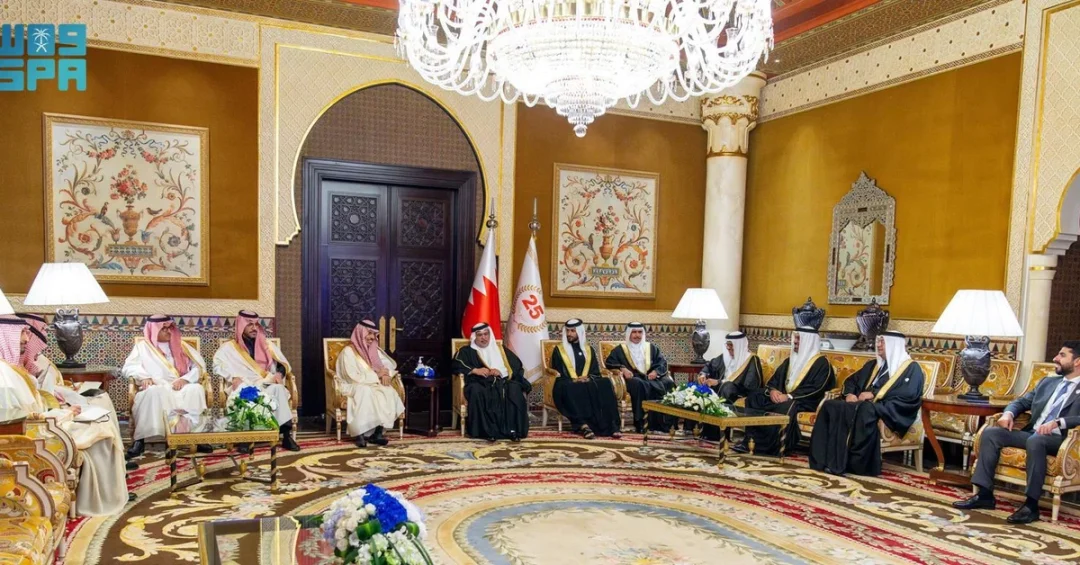
Bahrain’s Crown Prince and Prime Minister, Prince Salman bin Hamad Al Khalifa, received Saudi Minister of Foreign Affairs Prince Faisal bin Farhan bin Abdullah in Manama on December 6, 2024, on the sidelines of the 20th IISS Manama Dialogue 2024, according to the Saudi Press Agency (SPA). The meeting served as a high-level reaffirmation of the enduring fraternal ties between the Kingdom of Saudi Arabia and the Kingdom of Bahrain, two neighboring Gulf states whose partnership has long served as a cornerstone of regional stability and cooperation.
During the encounter, Prince Faisal conveyed the greetings of Custodian of the Two Holy Mosques King Salman bin Abdulaziz Al Saud and His Royal Highness Prince Mohammed bin Salman bin Abdulaziz Al Saud, Crown Prince and Prime Minister, to the Bahraini leadership, along with their wishes for the government and people of Bahrain for further progress and prosperity. In return, the Bahraini Crown Prince conveyed the greetings and appreciation of the Bahraini leadership to the Custodian of the Two Holy Mosques and HRH the Crown Prince and Prime Minister, expressing wishes for the government and people of Saudi Arabia for continued prosperity and well-being. The exchange underscored the depth of the historical relationship between the two kingdoms, rooted in shared heritage, mutual respect, and a common vision for a secure and prosperous region.
What does this meeting signal about the strength of Gulf cooperation at a time of evolving regional dynamics? The discussions between the two leaders focused on reviewing bilateral relations and exploring ways to further consolidate cooperation and coordination at all levels. They also addressed the latest regional developments and the efforts undertaken to address them, reflecting the two nations’ shared commitment to stability, dialogue, and constructive engagement.
Context and Background
How did the 20th IISS Manama Dialogue become a platform for such high-level diplomacy? The annual Manama Dialogue, organized by the International Institute for Strategic Studies (IISS), brings together senior officials, policymakers, and experts from around the world to discuss pressing security and geopolitical issues. The 2024 edition marked two decades of the forum, which has grown into one of the most significant gatherings in the Middle East for strategic dialogue. The presence of Saudi Arabia’s top diplomat at the event underscores the Kingdom’s active role in regional and international affairs, as well as its commitment to engaging with partners on matters of mutual interest.
Saudi-Bahraini relations are built on a foundation of shared history, geography, and strategic interests. The two countries are connected by the King Fahd Causeway, a vital land link that facilitates the movement of people and goods, symbolizing their physical and economic integration. They are also partners in the Gulf Cooperation Council (GCC), an organization that fosters coordination on political, economic, and security matters among its member states. Over the years, Saudi Arabia and Bahrain have deepened their collaboration in areas ranging from defense and security to trade, investment, and cultural exchange, consistently aligning their positions on key regional issues.
The timing of this meeting is particularly significant. The Middle East is navigating a period of considerable change, with ongoing conflicts, economic transformations, and shifting alliances. In this context, consultations between close allies like Saudi Arabia and Bahrain are essential for formulating coordinated responses and ensuring that the region’s voices are heard on the global stage. The meeting in Manama thus represents not just a diplomatic courtesy but a working session aimed at harmonizing strategies and reinforcing a united front on matters of common concern.
Key Details
What specific messages were exchanged during the meeting? Prince Faisal’s conveyance of greetings from King Salman and Crown Prince Mohammed bin Salman highlights the personal bonds and mutual respect that characterize the leadership-level ties between Riyadh and Manama. Such gestures are a customary and meaningful part of Gulf diplomacy, reflecting the close kinship and solidarity among the leaders of the GCC states. The Bahraini Crown Prince’s reciprocal greetings and appreciation further emphasize the warmth and reciprocity that define the relationship.
The two sides reviewed their bilateral relations and discussed ways to further consolidate cooperation and coordination at all levels. This comprehensive approach encompasses political, economic, security, and cultural dimensions. While the specific outcomes of these discussions were not detailed in the SPA report, the language used indicates a continued commitment to deepening integration and exploring new avenues for partnership. The leaders also tackled the latest regional developments and the efforts undertaken to address them, a clear reference to the diplomatic and security challenges facing the region, including the situations in Gaza, Yemen, and elsewhere.
By addressing regional developments, the meeting underscores the role of Saudi Arabia and Bahrain as stabilizing forces in the Middle East. Their coordination on these issues is vital for promoting peaceful resolutions and countering extremism. The fact that these talks occurred on the sidelines of a major international security forum like the Manama Dialogue also signals their openness to engaging with broader international perspectives while maintaining a unified Gulf stance.
International and Regional Impact
How does the Saudi-Bahraini partnership influence the wider region? The close coordination between Riyadh and Manama has a ripple effect across the Gulf and beyond. As two influential members of the GCC, their alignment on key issues helps shape the collective position of the Gulf states. This unity is particularly important when dealing with external powers and international organizations, as it amplifies the region’s voice and ensures that its interests are represented. The meeting at the Manama Dialogue, attended by global policymakers, also projects an image of Gulf solidarity and proactive diplomacy.
On the international stage, the Saudi-Bahraini relationship contributes to efforts to maintain maritime security in the Gulf, combat terrorism, and promote economic stability. Both countries are key energy producers and play a role in global oil markets, making their stability a matter of international concern. Their cooperation on security matters, including through joint military exercises and intelligence sharing, helps safeguard critical infrastructure and shipping lanes. Furthermore, their shared vision for a prosperous and moderate Middle East resonates with international partners who seek reliable allies in the region.
Economic and Strategic Significance
What economic benefits flow from this enduring partnership? Saudi Arabia and Bahrain enjoy robust trade and investment ties. Saudi Arabia is one of Bahrain’s largest trading partners, and Bahrain serves as a gateway for Saudi goods and services to the wider Gulf. The King Fahd Causeway is a lifeline for this economic relationship, carrying thousands of vehicles daily and facilitating billions of dollars in trade. Beyond trade, Saudi investments in Bahrain span real estate, tourism, and industry, contributing to job creation and economic diversification in both countries.
Strategically, the two nations share a common outlook on regional security. They are both members of the GCC and the broader Arab League, and they cooperate closely on defense matters. Saudi Arabia’s leadership in the region is complemented by Bahrain’s strategic location and its hosting of the U.S. Fifth Fleet, making the island kingdom a key security partner for both Gulf and Western powers. The meeting between Prince Salman and Prince Faisal thus reinforces a strategic axis that is essential for deterring threats and maintaining stability in the Gulf.
Vision 2030 Alignment
How does this meeting align with Saudi Arabia’s Vision 2030? Vision 2030, the Kingdom’s ambitious roadmap for economic and social transformation, emphasizes international cooperation and the strengthening of strategic partnerships as key enablers of prosperity. By engaging with Bahrain and other Gulf neighbors, Saudi Arabia is building a network of alliances that support its goals of economic diversification, investment, and regional stability. The meeting in Manama is a concrete example of how Saudi diplomacy works to create a favorable environment for Vision 2030’s success.
Moreover, Vision 2030 seeks to enhance the Kingdom’s global role and promote moderation and peace. The discussions on regional developments and efforts to address them reflect Saudi Arabia’s commitment to resolving conflicts through dialogue and diplomacy. As the Kingdom continues its transformation, partnerships with countries like Bahrain will remain vital for ensuring that the region remains secure and prosperous. The Manama meeting is a testament to the enduring strength of Saudi-Bahraini relations and their shared vision for a brighter future.
20 Questions
Q1. Who received Saudi Foreign Minister Prince Faisal bin Farhan in Manama?
A1. Bahrain’s Crown Prince and Prime Minister, Prince Salman bin Hamad Al Khalifa, received Prince Faisal bin Farhan on December 6, 2024, on the sidelines of the 20th IISS Manama Dialogue 2024.
Q2. What greetings did Prince Faisal convey to the Bahraini leadership?
A2. Prince Faisal conveyed the greetings of Custodian of the Two Holy Mosques King Salman bin Abdulaziz Al Saud and HRH Prince Mohammed bin Salman bin Abdulaziz Al Saud, Crown Prince and Prime Minister, along with their wishes for Bahrain’s further progress and prosperity.
Q3. What did the Bahraini Crown Prince convey to the Saudi leadership?
A3. The Bahraini Crown Prince conveyed the greetings and appreciation of the Bahraini leadership to the Custodian of the Two Holy Mosques and HRH the Crown Prince and Prime Minister, and wishes for Saudi Arabia’s further prosperity and well-being.
Q4. What topics were discussed during the meeting?
A4. The two sides reviewed bilateral relations, ways to further consolidate cooperation and coordination at all levels, and the latest regional developments and efforts undertaken to address them.
Q5. Where did the meeting take place?
A5. The meeting took place in Manama, the capital of Bahrain, on the sidelines of the 20th IISS Manama Dialogue 2024.
Q6. What is the IISS Manama Dialogue?
A6. The IISS Manama Dialogue is an annual security summit organized by the International Institute for Strategic Studies, bringing together global leaders and experts to discuss regional and international security issues.
Q7. Why is the Saudi-Bahraini relationship important?
A7. The relationship is a cornerstone of Gulf stability, built on shared history, geography, and strategic interests, and the two countries cooperate closely within the Gulf Cooperation Council and beyond.
Q8. How does the King Fahd Causeway contribute to bilateral ties?
A8. The King Fahd Causeway physically connects Saudi Arabia and Bahrain, facilitating trade, tourism, and people-to-people exchanges, and symbolizes their economic integration.
Q9. What regional developments were likely discussed?
A9. The discussions likely covered ongoing conflicts and crises in the region, including the situations in Gaza and Yemen, and efforts to promote peace and stability through diplomatic means.
Q10. How does this meeting reflect Saudi Arabia’s foreign policy?
A10. It reflects Saudi Arabia’s commitment to active diplomacy, regional cooperation, and maintaining strong alliances with neighboring countries to address common challenges.
Q11. What is the significance of exchanging greetings between leaders?
A11. Exchanging greetings is a customary diplomatic practice that reinforces personal bonds, mutual respect, and solidarity among Gulf leaders, reflecting the close ties between their nations.
Q12. How does this meeting align with Vision 2030?
A12. Vision 2030 emphasizes international cooperation and strategic partnerships; this meeting strengthens ties with Bahrain, supporting Saudi Arabia’s goals of economic diversification and regional stability.
Q13. What economic benefits does Saudi Arabia gain from ties with Bahrain?
A13. Saudi Arabia benefits from increased trade, investment opportunities, and a strategic partner that serves as a gateway to the wider Gulf market, enhancing economic integration.
Q14. What security cooperation exists between Saudi Arabia and Bahrain?
A14. The two countries cooperate on defense, intelligence sharing, and maritime security, and both are members of the GCC and participate in joint military exercises.
Q15. How does the international community view Saudi-Bahraini relations?
A15. The international community views the partnership as a stabilizing force in the Gulf, contributing to security, economic prosperity, and diplomatic efforts to resolve regional conflicts.
Q16. What role does the GCC play in Saudi-Bahraini relations?
A16. The GCC provides a framework for political, economic, and security coordination among its members, and Saudi Arabia and Bahrain actively use it to align their policies and initiatives.
Q17. What is the historical basis of Saudi-Bahraini friendship?
A17. The friendship is rooted in shared history, cultural ties, and geographic proximity, and has been strengthened over decades through mutual support and cooperation.
Q18. How does this meeting contribute to regional stability?
A18. By coordinating their positions and reaffirming their alliance, Saudi Arabia and Bahrain present a united front that deters threats and promotes peaceful resolutions to regional disputes.
Q19. What future areas of cooperation might be explored?
A19. Future cooperation could expand in areas such as renewable energy, technology, tourism, and education, aligning with Saudi Arabia’s Vision 2030 and Bahrain’s economic diversification goals.
Q20. What is the expected outcome of this meeting?
A20. The meeting is expected to further strengthen bilateral ties, enhance coordination on regional issues, and contribute to the stability and prosperity of both nations and the broader Gulf region.
Reader Feedback
We value your thoughts. Please share your feedback on this article.
Your feedback helps us improve our coverage.
Related articles
 Saudi Arabia Rehabilitates 250,000 Hectares of Land
 Afforestation Technologies Exhibition Opens at COP16 in Riyadh
 Saudi Arabia Weather Forecast: Dust, Rain, and Marine Conditions
 Border Guard Rescues Citizens Stranded at Sea
 Saudi Arabia Records 18,489 Law Violations in Week
 Grand Mosque Sound System: Engineering for Devotion