


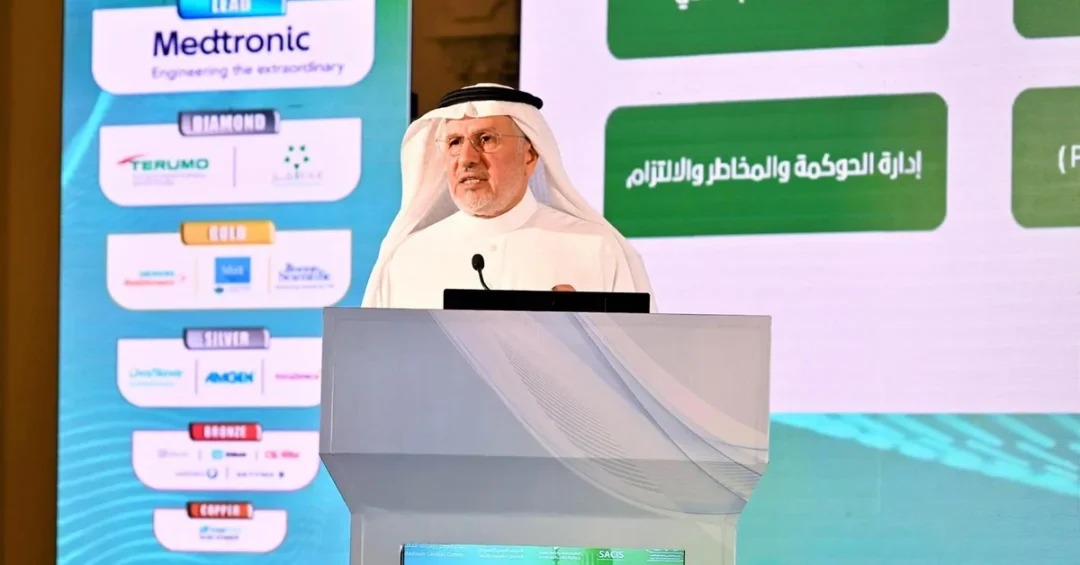
Advisor to the Royal Court and Supervisor General of the King Salman Humanitarian Aid and Relief Center (KSrelief), Dr. Abdullah Al Rabeeah, announced that KSrelief has executed 3,135 humanitarian projects across 105 countries since its founding in 2015, with total funding exceeding $7.144 billion. The announcement came during the third Madinah Heart International Conference, a three-day event organized by the Madinah Health Cluster in partnership with the Saudi Heart Association, where Dr. Al Rabeeah delivered a keynote address highlighting the Kingdom’s expanding global humanitarian footprint.
Dr. Al Rabeeah’s remarks underscored Saudi Arabia’s commitment to alleviating human suffering worldwide, guided by the principles of transparency, neutrality, and professionalism. The conference, held in the holy city of Madinah, brought together medical professionals, humanitarian leaders, and international organizations to discuss advancements in cardiovascular care and the intersection of health and humanitarian aid. The event also served as a platform to recognize KSrelief’s collaborative efforts with the Madinah Health Cluster in delivering medical services to beneficiaries across the globe. How has Saudi Arabia managed to become one of the world’s most influential humanitarian donors in less than a decade? The answer lies in a combination of visionary leadership, strategic partnerships, and an unwavering commitment to international solidarity.
Context and Background
The King Salman Humanitarian Aid and Relief Center was established in 2015 under the initiative of the Custodian of the Two Holy Mosques, King Salman bin Abdulaziz Al Saud, to institutionalize and expand the Kingdom’s humanitarian efforts abroad. From its inception, KSrelief has operated with a clear mandate: to provide rapid, effective, and impartial assistance to populations affected by conflict, natural disasters, and poverty. The center’s work is grounded in the principles of transparency, neutrality, and professionalism, ensuring that aid reaches those most in need regardless of political, ethnic, or religious considerations.
Since 2015, KSrelief has grown into a global humanitarian powerhouse, executing thousands of projects in vital sectors such as health, education, food security, water and sanitation, and infrastructure. The center’s reach spans 105 nations, reflecting Saudi Arabia’s role as a bridge-builder and a force for stability in regions grappling with crises. Notably, Yemen has been the primary recipient of KSrelief’s assistance, receiving 62.74% of total aid, valued at over $4.482 billion. This focus on Yemen underscores the Kingdom’s deep historical, cultural, and geographical ties to its southern neighbor, as well as its commitment to restoring peace and prosperity in the region.
Dr. Al Rabeeah’s address at the Madinah Heart International Conference also highlighted the center’s specialized programs in Yemen, including the MASAM project for mine clearance, the prosthetic limbs project, and initiatives for the reintegration of children formerly associated with armed conflicts. These programs not only address immediate humanitarian needs but also lay the groundwork for long-term recovery and reconciliation. Isn’t it remarkable how a single nation’s humanitarian agency can touch so many lives across continents? The scale of KSrelief’s operations is a testament to Saudi Arabia’s capacity to mobilize resources and coordinate complex interventions in some of the world’s most challenging environments.
Key Details
During his keynote, Dr. Al Rabeeah provided a comprehensive overview of KSrelief’s achievements and ongoing initiatives. He noted that the center has signed 34 agreements with governments, United Nations agencies, international and regional organizations, Saudi universities, and civil society organizations. These partnerships are crucial for leveraging expertise, ensuring accountability, and maximizing the impact of humanitarian interventions. The agreements cover a wide range of activities, from emergency relief to capacity-building and research.
One of the standout achievements highlighted by Dr. Al Rabeeah was the Saudi Conjoined Twins Program, which has studied 143 cases from 62 countries and successfully performed 61 separation surgeries. This pioneering medical initiative reflects Saudi Arabia’s advanced healthcare capabilities and its willingness to share these capabilities with the world. The program is a shining example of how humanitarian aid can transcend borders and bring hope to families facing unimaginable challenges. What drives a nation to invest so heavily in such complex and specialized medical interventions for people from other countries? The answer lies in Saudi Arabia’s belief in the sanctity of life and its duty to serve humanity.
Dr. Al Rabeeah also discussed the various platforms and tools KSrelief has developed to enhance transparency and efficiency. These include the Saudi Aid Platform, the Saudi Aid for Refugees and IDPs platform, the Saudi International Volunteer Portal, and the Sahem Platform for online donations. Additionally, he mentioned initiatives for oversight and documentation of humanitarian works, as well as plans to establish a center for humanitarian and relief research. These digital solutions not only streamline aid delivery but also allow donors and the public to track contributions in real time, reinforcing trust and accountability.
Furthermore, Dr. Al Rabeeah outlined KSrelief’s efforts in conducting field surveys on nutrition and food security in Yemen and developing a comprehensive humanitarian assistance strategy for the country. These evidence-based approaches ensure that interventions are targeted, effective, and aligned with the actual needs of affected populations. The Deputy Governor of Madinah Region, Prince Saud bin Khalid bin Faisal, honored Dr. Al Rabeeah for KSrelief’s collaboration with the Madinah Health Cluster in providing medical services to beneficiaries worldwide. This recognition highlights the importance of local and international partnerships in advancing humanitarian goals.
International and Regional Impact
KSrelief’s work has far-reaching implications for international and regional stability. By addressing the root causes of suffering and providing life-saving assistance, the center helps to mitigate the drivers of conflict, displacement, and extremism. In Yemen, for example, KSrelief’s mine clearance efforts and support for children formerly associated with armed conflicts contribute directly to peacebuilding and social cohesion. These interventions complement Saudi Arabia’s diplomatic efforts to resolve the Yemeni crisis and restore legitimate governance.
On the global stage, KSrelief has positioned Saudi Arabia as a leader in humanitarian diplomacy. The center’s partnerships with UN agencies and other international bodies enhance multilateral cooperation and demonstrate the Kingdom’s commitment to global governance. Moreover, KSrelief’s emphasis on transparency and neutrality has earned it respect and trust from a wide range of stakeholders, including donor countries, recipient communities, and humanitarian organizations. How does Saudi Arabia balance its humanitarian responsibilities with its other international obligations? Through careful planning, strategic partnerships, and a clear focus on sustainable development, the Kingdom ensures that its aid efforts are both effective and aligned with its broader foreign policy objectives.
The Madinah Heart International Conference itself is a reflection of Saudi Arabia’s growing role in global health. By bringing together experts from around the world, the conference facilitates knowledge exchange and collaboration on cardiovascular care, a leading cause of mortality worldwide. The partnership between KSrelief and the Madinah Health Cluster exemplifies how humanitarian and medical expertise can be combined to serve vulnerable populations. This integrated approach is increasingly recognized as a best practice in global health and humanitarian response.
Economic and Strategic Significance
The economic significance of KSrelief’s work extends beyond the immediate benefits to recipient communities. By stabilizing regions and fostering development, the center helps to create an environment conducive to trade, investment, and economic growth. Saudi Arabia’s humanitarian aid is thus an investment in regional stability and prosperity, which in turn supports the Kingdom’s own economic interests. Furthermore, KSrelief’s operations generate valuable data and insights that can inform policy and business decisions, particularly in sectors such as logistics, healthcare, and infrastructure.
Strategically, KSrelief is a key instrument of Saudi soft power. It enhances the Kingdom’s image as a responsible global citizen and a compassionate ally, countering negative narratives and building goodwill. This soft power dividend is particularly important in the Middle East and Africa, where Saudi Arabia seeks to strengthen partnerships and counter the influence of rival powers. By delivering tangible benefits to people in need, KSrelief helps to build trust and foster long-term relationships that are essential for diplomatic and economic success. Isn’t it fascinating how humanitarian aid can serve as a catalyst for broader geopolitical objectives? Saudi Arabia’s approach demonstrates that generosity and strategic thinking can go hand in hand.
Vision 2030 Alignment
KSrelief’s work is closely aligned with Saudi Vision 2030, the Kingdom’s ambitious plan to diversify its economy, empower its citizens, and enhance its global standing. One of the pillars of Vision 2030 is to strengthen Saudi Arabia’s role as a pivotal player in the global economy and a bridge between continents. KSrelief embodies this vision by extending the Kingdom’s reach and influence through humanitarian action, thereby reinforcing its position as a leader in the international community.
Moreover, Vision 2030 emphasizes the importance of social responsibility and volunteerism. KSrelief’s Saudi International Volunteer Portal and its various volunteer programs provide opportunities for Saudi citizens to contribute to global humanitarian efforts, fostering a culture of giving and civic engagement. This not only benefits recipients but also enriches the lives of Saudi volunteers, who gain valuable skills and experience. As Saudi Arabia continues to transform its economy and society, KSrelief will remain a vital channel for the Kingdom to express its values and fulfill its global responsibilities.
In conclusion, Dr. Abdullah Al Rabeeah’s presentation at the Madinah Heart International Conference highlighted the remarkable achievements of KSrelief and its integral role in Saudi Arabia’s humanitarian and diplomatic strategy. With 3,135 projects in 105 countries and over $7.144 billion in funding, KSrelief has set a benchmark for effective and principled humanitarian action. As the Kingdom marches toward Vision 2030, its commitment to helping those in need will only grow stronger, further solidifying its legacy as a beacon of hope and generosity. How will the world remember Saudi Arabia’s humanitarian legacy? Through the lives saved, the communities rebuilt, and the hope restored by KSrelief’s tireless efforts.
20 Questions
Q1. What is KSrelief and when was it established?
A1. KSrelief is the King Salman Humanitarian Aid and Relief Center, established in 2015 under the initiative of King Salman bin Abdulaziz Al Saud to extend Saudi Arabia’s humanitarian efforts globally.
Q2. How many projects has KSrelief executed since its inception?
A2. KSrelief has executed 3,135 projects across 105 nations, amounting to over $7.144 billion in total funding, spanning vital sectors such as health, education, and food security.
Q3. Which country has been the primary recipient of KSrelief’s aid?
A3. Yemen has been the primary recipient, receiving 62.74% of total aid, valued at over $4.482 billion, reflecting Saudi Arabia’s deep ties and commitment to its neighbor.
Q4. What was the occasion for Dr. Al Rabeeah’s remarks?
A4. He spoke at the third Madinah Heart International Conference, a three-day event organized by the Madinah Health Cluster in partnership with the Saudi Heart Association.
Q5. What principles guide KSrelief’s operations?
A5. KSrelief operates according to the principles of transparency, neutrality, and professionalism, ensuring aid reaches those most in need without discrimination.
Q6. What specialized programs does KSrelief support in Yemen?
A6. Programs include the MASAM project for mine clearance, the prosthetic limbs project, and the reintegration of children formerly associated with armed conflicts.
Q7. What digital platforms has KSrelief developed?
A7. Platforms include the Saudi Aid Platform, the Saudi Aid for Refugees and IDPs platform, the Saudi International Volunteer Portal, and the Sahem Platform for online donations.
Q8. How many agreements has KSrelief signed with partners?
A8. KSrelief has signed 34 agreements with governments, UN agencies, international and regional organizations, Saudi universities, and civil society organizations.
Q9. What is the Saudi Conjoined Twins Program?
A9. It is a pioneering medical initiative that has studied 143 cases from 62 countries and performed 61 successful separation surgeries, showcasing Saudi Arabia’s advanced healthcare capabilities.
Q10. Who honored Dr. Al Rabeeah at the conference?
A10. Deputy Governor of Madinah Region Prince Saud bin Khalid bin Faisal honored Dr. Al Rabeeah for KSrelief’s collaboration with the Madinah Health Cluster in providing medical services worldwide.
Q11. What is the significance of the Madinah Heart International Conference?
A11. The conference brings together global experts to discuss cardiovascular care and the intersection of health and humanitarian aid, reflecting Saudi Arabia’s growing role in global health.
Q12. How does KSrelief contribute to international stability?
A12. By addressing root causes of suffering, KSrelief helps mitigate conflict, displacement, and extremism, complementing Saudi diplomatic efforts and fostering peacebuilding.
Q13. What economic benefits does KSrelief’s work bring?
A13. By stabilizing regions and fostering development, KSrelief creates environments conducive to trade and investment, supporting regional prosperity and Saudi economic interests.
Q14. How does KSrelief enhance Saudi soft power?
A14. It enhances Saudi Arabia’s image as a responsible global citizen, building goodwill and trust, particularly in the Middle East and Africa, and countering negative narratives.
Q15. What is the link between KSrelief and Vision 2030?
A15. KSrelief aligns with Vision 2030 by strengthening Saudi Arabia’s global role, promoting social responsibility, and providing volunteer opportunities for citizens.
Q16. What is the Saudi International Volunteer Portal?
A16. It is a platform that connects Saudi volunteers with humanitarian opportunities abroad, fostering a culture of giving and civic engagement.
Q17. How does KSrelief ensure transparency?
A17. Through digital platforms like the Saudi Aid Platform, which allow donors and the public to track contributions in real time, and through oversight and documentation initiatives.
Q18. What research initiatives is KSrelief pursuing?
A18. KSrelief is establishing a center for humanitarian and relief research and conducting field surveys on nutrition and food security in Yemen to inform evidence-based interventions.
Q19. What is the MASAM project?
A19. MASAM is a Saudi project for landmine clearance in Yemen, aimed at removing explosive hazards and protecting civilians, thereby supporting recovery and stability.
Q20. How can individuals contribute to KSrelief’s efforts?
A20. Individuals can donate through the Sahem Platform for online donations or volunteer through the Saudi International Volunteer Portal, supporting KSrelief’s global humanitarian mission.
Reader Feedback
We value your thoughts. Please share your feedback on this article.
Your feedback helps us improve our coverage.
Related articles
 Weqaa Center Tightens Poultry Transport Regulations
 Al-Jubeir Highlights Saudi Environmental Leadership at SGI Forum
 Rare Arabian Leopard Triplets Born in Saudi Arabia
 Engineering and Quality of Life Forum to be Held in Riyadh on December 16-17
 UNESCO Learning Cities Conference Concludes in Jubail
 Iran’s Khuzestan Province Shaken by 5.6 Magnitude Earthquake