


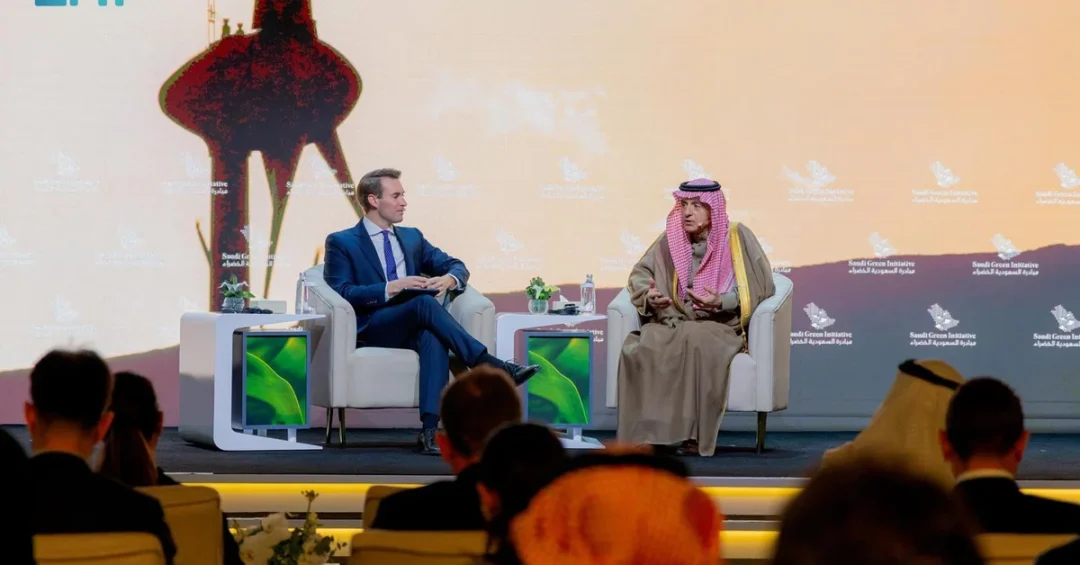
Saudi Arabia’s Minister of State for Foreign Affairs, Cabinet Member, and Climate Envoy Adel Al-Jubeir affirmed the Kingdom’s commitment to international cooperation on environmental and climate challenges during a dialogue session at the Saudi Green Initiative Forum in Riyadh, held alongside the 16th Conference of the Parties (COP16) of the United Nations Convention to Combat Desertification. The session, reported by the Saudi Press Agency, placed Saudi diplomacy and environmental policy at the center of a global gathering that drew delegations from around the world to address land degradation, drought, and desertification.
Al-Jubeir’s remarks came as Riyadh hosted one of the largest environmental conferences of the year, reinforcing the Kingdom’s growing role as a convenor of global climate dialogue. Have observers ever seen a desert nation lead the world’s conversation on land restoration quite like this? The minister’s message was clear: environmental protection is not a peripheral concern for Saudi Arabia but a core national priority tied directly to economic diversification, resource security, and the long-term goals of Saudi Vision 2030.
Context and Background
The Saudi Green Initiative Forum, launched in 2021 under the patronage of His Royal Highness Crown Prince Mohammed bin Salman, has become a flagship platform for the Kingdom’s environmental agenda. Why does it matter that this year’s forum coincided with COP16 of the United Nations Convention to Combat Desertification? Because it positioned Saudi Arabia at the intersection of two global conversations: climate action and the fight against land degradation, a challenge affecting billions of people worldwide.
COP16, hosted in Riyadh in December 2024, marked the first time the conference convened in the Middle East. The gathering brought together governments, scientists, and civil society to negotiate approaches to drought resilience and sustainable land management. Al-Jubeir, who serves simultaneously as Minister of State for Foreign Affairs, Cabinet Member, and Climate Envoy, used the forum to outline how Saudi Arabia is translating environmental ambition into measurable programs.
As Climate Envoy, Al-Jubeir has become one of the Kingdom’s most visible voices on environmental diplomacy. His dual role, spanning foreign affairs and climate policy, reflects how Saudi Arabia integrates environmental concerns into its international relations. The forum session therefore carried significance beyond a single event: it signaled that the Kingdom intends to remain a central actor in shaping global environmental governance for years to come.
Key Details
Al-Jubeir underscored that Saudi Arabia prioritizes international cooperation to tackle environmental and climate-related challenges, driven by its dedication to supporting global efforts on climate change and sustainable development. He noted that the Kingdom, like many nations, faces interconnected challenges including environmental degradation, climate change, land degradation, and water resource management. These are not abstract concerns for a country covering much of the Arabian Peninsula, where water scarcity and desertification have shaped life for centuries.
The minister stressed that Saudi Arabia is committed to preserving its natural resources through conservation, reclamation, and development using all available means. He framed land degradation not merely as an environmental issue but as a global security challenge, a perspective that resonates in a world where food insecurity and resource competition increasingly drive instability. Does that framing change how the international community should approach desertification? Al-Jubeir’s argument suggests it should.
He detailed specific Saudi programs and initiatives, including efforts to diversify energy sources by increasing renewable energy to 50 percent of the national mix by 2030. The Kingdom also aims to protect 30 percent of its land and water areas by the same year, alongside the adoption of advanced tree-planting techniques. These targets align with the Saudi Green Initiative’s broader goal of planting 10 billion trees across the Kingdom and 50 billion across the Middle East.
Al-Jubeir further emphasized that diversifying investments and focusing on environmental protection are crucial for achieving Saudi Vision 2030. He highlighted the National Red Sea Sustainability Strategy, spearheaded by His Royal Highness the Crown Prince, noting the Red Sea’s significance and Saudi efforts to balance recreational and economic use with environmental sustainability. The Red Sea, with its coral reefs and biodiversity, represents both an economic asset and an ecological trust.
International and Regional Impact
Saudi Arabia’s environmental diplomacy carries weight well beyond its borders. As the world’s largest oil exporter, the Kingdom’s energy transition policies influence global markets and climate negotiations. Have skeptics underestimated how seriously Riyadh takes its environmental commitments? The scale of the Saudi Green Initiative and the Middle East Green Initiative suggests the Kingdom is pursuing a transformation that could reshape regional economies and ecosystems alike.
The Middle East Green Initiative, launched by the Crown Prince in 2021, extends Saudi Arabia’s environmental vision across the region, aiming to plant 50 billion trees and restore degraded land. For neighboring countries facing similar climate pressures, Saudi-led coordination offers a framework for collective action. Al-Jubeir’s message at the forum reinforced that the Kingdom sees environmental cooperation as a form of diplomacy, one that builds trust and shared purpose across borders.
International observers have taken note. COP16 in Riyadh attracted thousands of delegates and generated commitments on drought resilience. By hosting the conference and convening the Saudi Green Initiative Forum simultaneously, Saudi Arabia demonstrated logistical capacity and diplomatic reach. The Kingdom’s role as a bridge between developed and developing nations on climate finance and technology transfer has become more pronounced, giving Riyadh a platform to advocate for solutions tailored to arid regions.
Economic and Strategic Significance
The environmental agenda is inseparable from Saudi Arabia’s economic future. Diversifying energy sources toward 50 percent renewables by 2030 reduces domestic reliance on hydrocarbons, freeing more oil for export while lowering emissions. Investments in reforestation, land restoration, and water management create jobs and industries that support Vision 2030’s goal of a diversified, knowledge-based economy. Does environmental protection sound like a cost to development, or an engine of it? In Saudi Arabia’s case, the two are increasingly intertwined.
The National Red Sea Sustainability Strategy exemplifies this integration. Tourism projects along the Red Sea coast, including those developed by the Red Sea Global company, are designed to meet high environmental standards while generating economic returns. Al-Jubeir’s remarks highlighted the balancing act: using natural assets for recreation and commerce while ensuring they endure for future generations. This approach positions Saudi Arabia as a model for sustainable development in fragile coastal environments.
Carbon emissions reduction efforts also carry strategic weight. Saudi Arabia has invested substantially in cleaner hydrocarbon technologies, carbon capture, and the Circular Carbon Economy framework it championed during its G20 presidency. These initiatives allow the Kingdom to maintain its role as a reliable energy supplier while contributing to global climate goals, a dual objective that Al-Jubeir has consistently articulated in international forums.
Vision 2030 Alignment
Al-Jubeir concluded by affirming Saudi Arabia’s dedication to environmental development through establishing green parks and launching the Saudi Green Initiative and the Middle East Green Initiative. He highlighted the Kingdom’s substantial investments in reducing carbon emissions and meeting high environmental standards, stressing the importance of working with the international community to achieve sustainability goals. These commitments are woven into the fabric of Vision 2030, the national transformation plan that seeks to diversify the economy, improve quality of life, and position Saudi Arabia as a global leader.
The environmental dimension of Vision 2030 extends beyond policy targets. It encompasses urban greening projects, expanded national parks, wildlife protection, and public awareness campaigns that engage citizens in conservation. By linking environmental stewardship to national identity and future prosperity, Saudi Arabia is building domestic consensus for sustained action. Al-Jubeir’s words at the Saudi Green Initiative Forum thus represent more than a diplomatic statement; they reflect a strategic choice to make sustainability a pillar of the Kingdom’s global role.
As COP16 deliberations continue and the world watches, Saudi Arabia’s message is one of partnership and resolve. The Kingdom invites the international community to join its efforts, sharing knowledge, technology, and commitment. In doing so, it reinforces a vision of a greener, more resilient future, one where environmental protection and economic progress advance together, and where Saudi Arabia stands as a willing and capable partner. Will the world answer that invitation? The Kingdom’s initiatives suggest it is already working to ensure the answer is yes.
20 Questions
Q1. What event did Adel Al-Jubeir participate in?
A1. He participated in a dialogue session at the Saudi Green Initiative Forum in Riyadh, held alongside COP16 of the United Nations Convention to Combat Desertification in December 2024.
Q2. What is Adel Al-Jubeir’s official role?
A2. He serves as Saudi Arabia’s Minister of State for Foreign Affairs, Cabinet Member, and Climate Envoy, representing the Kingdom in diplomatic and environmental matters.
Q3. What did Al-Jubeir emphasize about Saudi Arabia’s priorities?
A3. He underscored the Kingdom’s prioritization of international cooperation to tackle environmental and climate-related challenges, driven by dedication to global climate action and sustainable development.
Q4. What global challenges did Al-Jubeir mention?
A4. He noted environmental issues, climate change, land degradation, and water resource management as challenges Saudi Arabia faces alongside many other nations.
Q5. How does Saudi Arabia view land degradation?
A5. Al-Jubeir stated that Saudi Arabia views land degradation not only as an environmental concern but also as a security challenge on a global scale.
Q6. What renewable energy target did Al-Jubeir cite?
A6. He cited Saudi Arabia’s goal of diversifying energy sources to reach 50 percent renewable energy by 2030 as part of its environmental strategy.
Q7. What land and water protection target was mentioned?
A7. The Kingdom aims to protect 30 percent of its land and water areas by 2030, supporting biodiversity and sustainable resource management.
Q8. What tree-planting techniques did Saudi Arabia adopt?
A8. Al-Jubeir mentioned advanced tree-planting techniques as part of efforts to combat desertification and restore degraded land across the Kingdom.
Q9. How does environmental protection relate to Vision 2030?
A9. Al-Jubeir stressed that diversifying investments and focusing on environmental protection are crucial for achieving Saudi Vision 2030’s economic and social goals.
Q10. What is the National Red Sea Sustainability Strategy?
A10. It is a strategy spearheaded by Crown Prince Mohammed bin Salman to balance recreational and economic use of the Red Sea with environmental sustainability.
Q11. Why is the Red Sea significant to Saudi Arabia?
A11. The Red Sea holds ecological and economic importance, supporting tourism, biodiversity, and coastal development while requiring careful environmental stewardship.
Q12. What initiatives did Al-Jubeir highlight in his conclusion?
A12. He highlighted the Saudi Green Initiative and the Middle East Green Initiative, along with establishing green parks and investing in carbon emissions reduction.
Q13. What is COP16 and why was it held in Riyadh?
A13. COP16 is the 16th Conference of the Parties to the UN Convention to Combat Desertification, hosted by Saudi Arabia in December 2024 to address land degradation.
Q14. What is the Saudi Green Initiative?
A14. Launched in 2021 under Crown Prince Mohammed bin Salman, it is a national platform for environmental action, including tree planting and emissions reduction.
Q15. What is the Middle East Green Initiative?
A15. It is a regional effort launched by the Crown Prince to plant 50 billion trees and coordinate environmental action across the Middle East.
Q16. How does Saudi Arabia support global climate efforts?
A16. Through international cooperation, renewable energy investments, carbon reduction technologies, and hosting global conferences like COP16.
Q17. What security implications does land degradation have?
A17. Al-Jubeir framed land degradation as a global security challenge, linking it to resource scarcity and potential instability in affected regions.
Q18. What investments has Saudi Arabia made in emissions reduction?
A18. The Kingdom has invested substantially in cleaner hydrocarbon technologies, carbon capture, and the Circular Carbon Economy framework.
Q19. How does Saudi Arabia balance economic use of the Red Sea with sustainability?
A19. Through the National Red Sea Sustainability Strategy, which guides tourism and development to meet high environmental standards while preserving marine ecosystems.
Q20. What is Saudi Arabia’s message to the international community?
A20. Al-Jubeir affirmed the Kingdom’s dedication to environmental development and stressed the importance of working with the international community to achieve sustainability goals.
Reader Feedback
We value your thoughts. Please share your feedback on this article.
Your feedback helps us improve our coverage.
Related articles
 Rare Arabian Leopard Triplets Born in Saudi Arabia
 Engineering and Quality of Life Forum to be Held in Riyadh on December 16-17
 UNESCO Learning Cities Conference Concludes in Jubail
 Iran’s Khuzestan Province Shaken by 5.6 Magnitude Earthquake
 Saudi-Led Global Partnership to Enhance Sand and Dust Storm Early Warning Systems
 Saudi Competition Chief Meets UNCTAD Head in Paris