


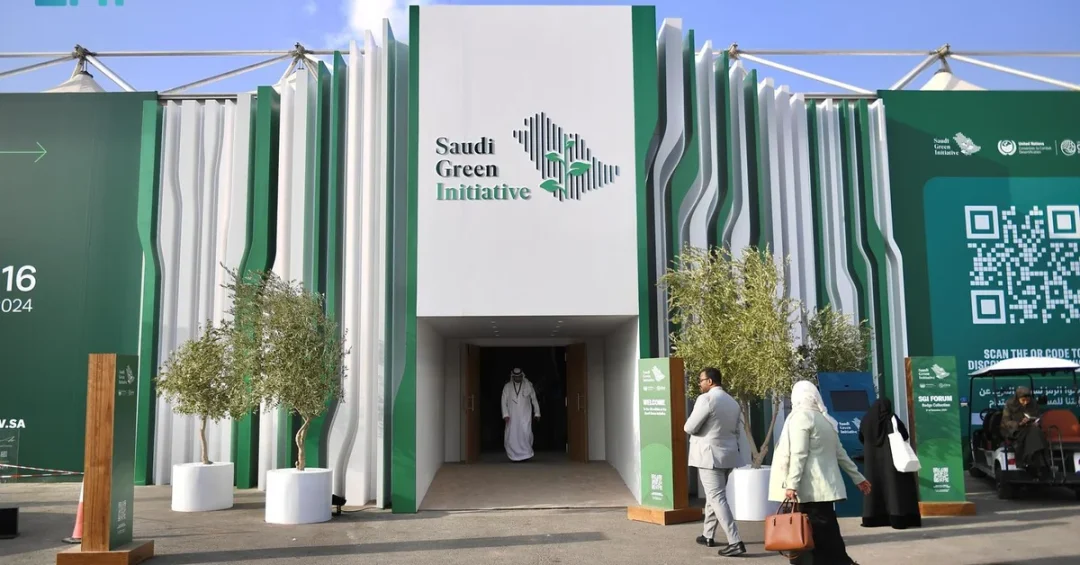
The fourth edition of the Saudi Green Initiative Forum concluded on Wednesday in the Green Zone at the 16th session of the Conference of the Parties to the United Nations Convention to Combat Desertification, hosted in Riyadh, following two days of high-level dialogue, new commitments, and international partnership-building. Inaugurated by Minister of Energy Prince Abdulaziz bin Salman bin Abdulaziz, the forum showcased Saudi Arabia’s accelerating progress in energy transition and underscored the central role of women and youth in shaping the Kingdom’s environmental future. The event drew more than 1,500 attendees from the public and private sectors, featured 50 speakers across 25 sessions, and produced five new initiatives valued at SAR225 million alongside 14 signed memoranda of understanding.
Held on the sidelines of COP16, the forum reinforced Saudi Arabia’s position as a convening power in global climate diplomacy. But what does it truly mean when a nation facing some of the world’s harshest desert conditions commits not only to greening its own landscape but to exporting the technologies and strategies that make it possible? For international observers, the answer lies in the scale of the announcements and the speed at which they are being operationalized. The forum was not merely a showcase; it was a working summit that translated Vision 2030 environmental ambitions into concrete, measurable action.
Context and Background
Launched in 2021 by His Royal Highness Prince Mohammed bin Salman bin Abdulaziz Al Saud, Crown Prince, Prime Minister, and Chairman of the Supreme Committee for the Saudi Green Initiative, the SGI was conceived as a whole-of-society framework to combat climate change, reduce emissions, and restore degraded land. The initiative sits at the heart of the Kingdom’s environmental strategy, complementing the broader Vision 2030 goal of diversifying the economy and improving quality of life. Each annual forum serves as a checkpoint, allowing officials, scientists, investors, and community leaders to assess progress and adjust course.
The fourth edition arrived at a pivotal moment. The 16th session of the UNCCD COP16, also hosted in Riyadh, brought together delegations from nearly 200 countries to address desertification and drought. By embedding the SGI Forum within COP16’s Green Zone, Saudi Arabia created a space where national ambition met global cooperation. The result was a series of announcements that resonated far beyond the Kingdom’s borders, signaling that the world’s largest oil exporter is also positioning itself as a leader in renewable energy, land restoration, and blue economy innovation.
Why does this matter now? Because the dual pressures of climate change and economic transformation are converging. Saudi Arabia’s approach demonstrates that environmental stewardship and energy security need not be mutually exclusive. The presence of global energy leaders such as Saudi Aramco President and CEO Amin H. Nasser and TotalEnergies Chairman and CEO Patrick Pouyanné underscored the pragmatic, multi-stakeholder nature of the transition. Pouyanné’s emphasis on the ‘energy trilemma’—balancing security, affordability, and sustainability—captured the forum’s prevailing spirit: realism paired with ambition.
Key Details and Announcements
The forum’s headline outcomes were substantial. Five new initiatives worth SAR225 million were launched, targeting areas ranging from afforestation and biodiversity to clean cooking solutions and youth engagement. Fourteen memoranda of understanding were signed with partners across the public and private sectors, laying the groundwork for future collaboration. These agreements are expected to accelerate technology transfer, enhance research capacity, and mobilize private capital for green projects.
Saudi Arabia’s renewable energy trajectory drew particular attention. The Kingdom aims to reach 130 gigawatts of renewable energy capacity by 2030. To date, 6.2 gigawatts have been integrated into the grid, while 20 gigawatts of projects were initiated in 2024 alone. With a pipeline of 44.2 gigawatts under development, the Kingdom is on track to power more than 7 million homes with clean electricity. These figures represent a dramatic scale-up from just a few years ago and signal that Saudi Arabia is becoming a major player in the global clean energy market.
Land restoration achievements were equally impressive. Since the SGI’s launch in 2021, more than 100 million trees have been planted and 118,000 hectares of degraded land rehabilitated—an area larger than 165,000 football fields. This contributes to the ultimate goal of planting 10 billion trees and combating desertification across the Kingdom. The forum also featured a dedicated session on the National Red Sea Sustainability Strategy, launched by Crown Prince Mohammed bin Salman, which provides a national framework for protecting biodiversity in the Red Sea and supports the development of an advanced blue economy model.
Women and Youth at the Forefront
A defining feature of the fourth SGI Forum was its emphasis on inclusivity. Women and youth were not merely acknowledged but positioned as central drivers of the sustainability agenda. Sessions highlighted female scientists leading research on coral reef restoration, young entrepreneurs developing water-saving technologies, and students participating in nationwide tree-planting campaigns. This aligns with Vision 2030’s broader goals of empowering women and expanding opportunities for young Saudis.
The forum’s 50 speakers included a diverse mix of voices from government, academia, civil society, and the private sector. Their discussions produced actionable recommendations on everything from sustainable urban planning to green financing. By giving a platform to emerging leaders, the SGI is nurturing a generation of environmental stewards who will carry the mission forward. It is a strategy that recognizes that lasting change requires broad ownership, not just top-down mandates.
How can a nation ensure that its green transition benefits all segments of society? Saudi Arabia’s answer is to embed education, training, and entrepreneurship into its environmental programs. The forum showcased vocational training initiatives for young people in renewable energy installation, mentorship programs for women in STEM fields, and community-based conservation projects. These efforts are designed to create jobs, build skills, and foster a culture of sustainability that extends far beyond the conference halls.
International and Regional Impact
The presence of global energy executives and international delegates underscored the forum’s role as a bridge between Saudi Arabia and the wider world. TotalEnergies’ Patrick Pouyanné praised the Kingdom’s pragmatic approach, noting that the energy transition must be managed in a way that ensures reliable and affordable supply. His comments reflected a growing consensus among industry leaders that fossil fuels and renewables will coexist for decades, with technology and investment determining the pace of change.
For the Middle East and North Africa region, Saudi Arabia’s leadership carries particular weight. Many neighboring countries face similar challenges: water scarcity, desertification, and heavy reliance on hydrocarbons. By demonstrating that large-scale renewable deployment and land restoration are feasible, the Kingdom offers a replicable model. The 14 MoUs signed at the forum include partnerships that could extend benefits across the region, from joint research on drought-resistant crops to shared infrastructure for green hydrogen.
On the global stage, the SGI Forum reinforced Saudi Arabia’s commitment to multilateral climate action. The timing alongside COP16 sent a clear message that the Kingdom is serious about fulfilling its obligations under international agreements. It also highlighted the potential for South-South cooperation, with Saudi expertise in desertification control being of direct interest to countries in Africa, Central Asia, and Latin America. The forum thus served as both a showcase and a platform for exporting solutions.
Economic and Strategic Significance
The economic dimensions of the SGI are profound. The transition to renewable energy is not just an environmental imperative but a strategic move to future-proof the Saudi economy. By diversifying its energy mix, the Kingdom reduces domestic consumption of oil, freeing up more crude for export and industrial use. Simultaneously, investments in solar, wind, and green hydrogen create new industries and job opportunities, aligning with Vision 2030’s goal of a diversified, knowledge-based economy.
The SAR225 million committed to new initiatives is a fraction of the broader investment flowing into sustainability. The Public Investment Fund and other state entities are deploying billions into clean energy, sustainable tourism, and green technology. These investments are attracting foreign partners and positioning Saudi Arabia as a hub for innovation. The forum’s emphasis on public-private partnership signals that the Kingdom welcomes international expertise and capital, provided they align with its long-term vision.
Strategically, the SGI enhances Saudi Arabia’s soft power. By hosting COP16 and the SGI Forum, the Kingdom has cemented its role as a convener of global dialogues. This diplomatic capital is invaluable, enabling Saudi Arabia to shape narratives, build alliances, and influence the global sustainability agenda. It also supports the Kingdom’s aspirations to be a leader in the emerging green economy, from carbon capture to sustainable desalination.
Vision 2030 Alignment
The fourth Saudi Green Initiative Forum is a testament to Vision 2030’s holistic approach to national development. Environmental sustainability is not a standalone goal but is interwoven with economic diversification, social progress, and international engagement. The forum’s outcomes—new initiatives, partnerships, and strategies—directly support Vision 2030’s objectives of a thriving economy, a vibrant society, and an ambitious nation.
As Saudi Arabia continues its journey toward 2030 and beyond, the SGI will remain a cornerstone of its environmental strategy. The Kingdom’s progress in renewable energy, land restoration, and marine conservation demonstrates that ambitious goals are achievable with political will, investment, and inclusive participation. For the international audience, the message is clear: Saudi Arabia is not just participating in the global sustainability transition—it is helping to lead it. The next edition of the forum will undoubtedly build on this momentum, further solidifying the Kingdom’s role as a global green leader.
20 Questions
Q1. What was the main purpose of the fourth Saudi Green Initiative Forum?
A1. The forum aimed to showcase Saudi Arabia’s progress in energy transition, land restoration, and biodiversity protection, while facilitating partnerships and announcing new initiatives to advance the goals of the Saudi Green Initiative.
Q2. Where and when did the fourth SGI Forum take place?
A2. It was held in Riyadh on December 4-5, 2024, in the Green Zone at the 16th session of the UNCCD COP16, hosted by Saudi Arabia.
Q3. Who inaugurated the forum?
A3. Minister of Energy Prince Abdulaziz bin Salman bin Abdulaziz inaugurated the forum, highlighting Saudi Arabia’s commitment to a balanced and pragmatic energy transition.
Q4. How many attendees and speakers participated?
A4. More than 1,500 attendees from the public and private sectors participated, with 50 speakers leading 25 sessions over two days.
Q5. What new initiatives were announced at the forum?
A5. Five initiatives with a total value of SAR225 million were launched, focusing on areas such as afforestation, biodiversity, clean energy, and youth engagement.
Q6. How many memoranda of understanding were signed?
A6. Fourteen memoranda of understanding were signed with various partners to accelerate climate and environmental efforts.
Q7. What is Saudi Arabia’s renewable energy capacity target for 2030?
A7. The Kingdom aims to reach 130 gigawatts of renewable energy capacity by 2030, with 6.2 gigawatts already integrated into the grid and 20 gigawatts initiated in 2024.
Q8. How many homes could be powered by the current renewable energy pipeline?
A8. The pipeline of 44.2 gigawatts under development is sufficient to power over 7 million homes with clean electricity.
Q9. What progress has been made in tree planting since 2021?
A9. Over 100 million trees have been planted, and 118,000 hectares of degraded land have been rehabilitated, contributing to the goal of planting 10 billion trees.
Q10. What is the National Red Sea Sustainability Strategy?
A10. Launched by Crown Prince Mohammed bin Salman, it provides a national framework for protecting Red Sea biodiversity and developing an advanced blue economy model.
Q11. Who are some of the prominent energy leaders who participated?
A11. Saudi Aramco President and CEO Amin H. Nasser and TotalEnergies Chairman and CEO Patrick Pouyanné were among the key participants.
Q12. What did Patrick Pouyanné emphasize in his remarks?
A12. He stressed the importance of balancing security, affordability, and sustainability—the ‘energy trilemma’—through a pragmatic approach combining fossil fuels and renewables.
Q13. How does the SGI Forum support women and youth?
A13. The forum highlighted the role of women and youth in sustainability through dedicated sessions, mentorship programs, and opportunities for young entrepreneurs and female scientists.
Q14. What is the significance of hosting the forum alongside COP16?
A14. It reinforced Saudi Arabia’s commitment to multilateral climate action and provided a platform for global cooperation on desertification and drought.
Q15. How does the SGI align with Vision 2030?
A15. The SGI supports Vision 2030’s goals of economic diversification, environmental sustainability, and social progress, integrating green initiatives into national development.
Q16. What economic benefits does the renewable energy transition bring?
A16. It reduces domestic oil consumption, creates new industries and jobs, attracts foreign investment, and positions Saudi Arabia as a leader in the green economy.
Q17. What is the blue economy model mentioned in the Red Sea strategy?
A17. The blue economy model promotes sustainable use of marine resources for economic growth, improved livelihoods, and ecosystem health, focusing on the Red Sea.
Q18. How many sessions and speakers were featured at the forum?
A18. The forum featured 50 speakers across 25 sessions, covering topics from renewable energy to biodiversity and youth engagement.
Q19. What are the next steps for the Saudi Green Initiative?
A19. Saudi Arabia will continue implementing its initiatives, expanding renewable energy, planting trees, and fostering international partnerships to achieve its 2030 targets.
Q20. How can other countries benefit from Saudi Arabia’s experience?
A20. Other nations, especially those facing desertification, can learn from Saudi Arabia’s large-scale land restoration, renewable energy deployment, and multi-stakeholder approach to sustainability.
Reader Feedback
We value your thoughts. Please share your feedback on this article.
Your feedback helps us improve our coverage.
Related articles
 Al Rabeeah Spotlights KSrelief’s Global Humanitarian Work at Madinah Heart Conference
 Weqaa Center Tightens Poultry Transport Regulations
 Al-Jubeir Highlights Saudi Environmental Leadership at SGI Forum
 Rare Arabian Leopard Triplets Born in Saudi Arabia
 Engineering and Quality of Life Forum to be Held in Riyadh on December 16-17
 UNESCO Learning Cities Conference Concludes in Jubail