


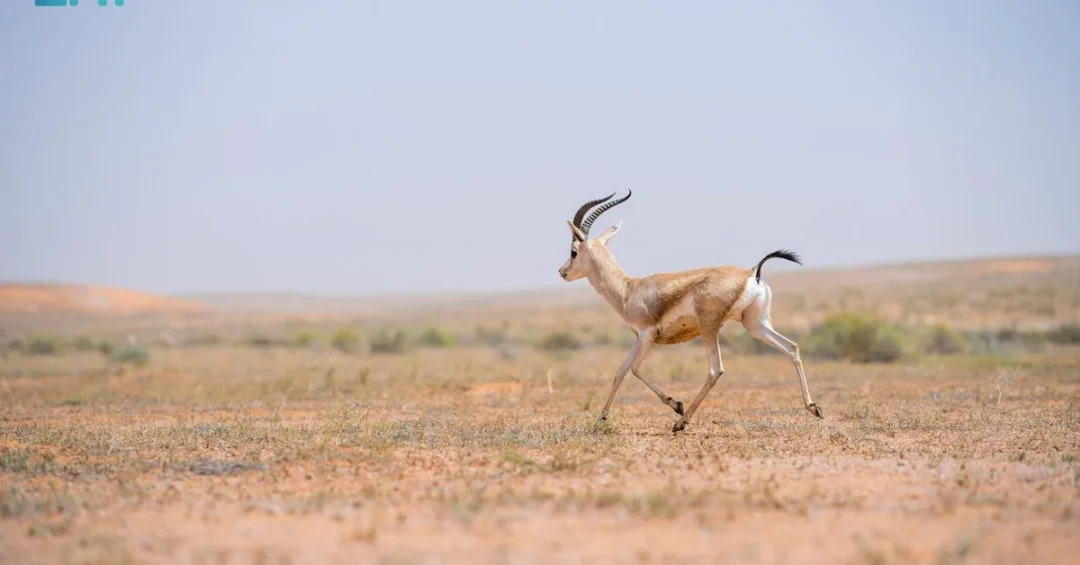
The National Center for Wildlife, in cooperation with the Imam Turki bin Abdullah Royal Nature Reserve Development Authority, has released 25 endangered native species into the reserve, the Saudi Press Agency reported on April 10, 2025. The release included five Arabian oryxes, 15 sand gazelles, two steppe eagles, and three Egyptian vultures, marking another milestone in the Kingdom’s sustained campaign to restore its natural ecosystems and protect its most vulnerable wildlife.
The operation forms part of a broader national program to breed endangered species in specialized facilities and reintroduce them into protected habitats where they can thrive once again. It reflects a carefully coordinated approach involving government agencies, conservation scientists, and reserve managers, all working toward the goals of the National Environment Strategy and the Saudi Green Initiative. For international observers, the development offers a clear illustration of how Saudi Arabia is translating environmental commitments into measurable action on the ground. Could this release signal a new chapter for biodiversity across the Arabian Peninsula?
Context and Background
How did Saudi Arabia arrive at a point where it can routinely reintroduce endangered species into the wild? The answer lies in more than two decades of institutional investment in conservation. The National Center for Wildlife, a government body mandated to protect and rehabilitate the Kingdom’s terrestrial and marine biodiversity, has built specialized breeding centers that maintain genetically diverse populations of threatened animals. These facilities serve as insurance populations, ensuring that species such as the Arabian oryx and sand gazelle do not disappear from the region entirely.
The Imam Turki bin Abdullah Royal Nature Reserve, located in the northeastern part of Saudi Arabia, has become a flagship protected area for these efforts. Spanning an area larger than several small countries, the reserve encompasses desert, steppe, and escarpment habitats that historically supported a rich array of wildlife. Its designation as a royal reserve underlines the high-level political commitment to conservation, and its management authority works closely with the National Center for Wildlife on breeding, release, and monitoring programs. Why does this matter beyond Saudi borders? Because the Arabian Peninsula’s ecosystems are among the most fragile on Earth, and their recovery contributes to global biodiversity targets.
The April 2025 release is not an isolated event. It continues a series of reintroductions that have gradually rebuilt populations of herbivores and raptors in reserves across the Kingdom. Each release is preceded by habitat assessments, veterinary screening, and post-release monitoring to maximize survival rates. The inclusion of two steppe eagles and three Egyptian vultures, for example, indicates that conservationists are not only restoring prey species but also the predators and scavengers that keep ecosystems healthy. What does a balanced ecosystem look like in the Arabian desert? It is one where oryx graze, gazelles roam, and vultures circle overhead, each playing a distinct role in the web of life.
Key Details of the Release
The 25 animals released comprise four species, each with its own conservation story. The five Arabian oryxes are among the most iconic symbols of Arabian wildlife. Once extinct in the wild, the species survived only through captive breeding programs, and Saudi Arabia has been at the forefront of efforts to return it to its ancestral deserts. The 15 sand gazelles, also known as rhim gazelles, are smaller and more delicate, adapted to arid conditions and capable of surviving without drinking water for extended periods. Their larger numbers in this release reflect a strategy of establishing a breeding nucleus that can grow into a self-sustaining population.
The two steppe eagles and three Egyptian vultures represent the avian dimension of the reintroduction program. Steppe eagles are migratory raptors that winter in the Arabian Peninsula, while Egyptian vultures are resident scavengers that play a critical role in preventing disease by consuming carcasses. Both species face threats from habitat loss, poisoning, and electrocution from power lines. By releasing them into a protected reserve, the National Center for Wildlife is giving them a safe haven where they can establish territories and, ideally, reproduce. How do conservationists decide which species to release and in what numbers? The answer involves ecological modeling, genetic analysis, and a careful reading of the reserve’s carrying capacity.
According to the Saudi Press Agency, the release aligns with the center’s mission to reintroduce native species, restore ecological balance, and enrich biodiversity within natural reserves. The operation was carried out in cooperation with the Imam Turki bin Abdullah Royal Nature Reserve Development Authority, which manages the reserve and ensures that released animals are protected from poaching and disturbance. The authority has invested in infrastructure such as water points, fencing, and ranger patrols to create conditions where reintroduced populations can grow. What happens next? Scientists will track the animals using satellite tags and field observations, gathering data that informs future releases and adaptive management.
International and Regional Impact
Saudi Arabia’s wildlife reintroduction efforts resonate well beyond its own borders. The Arabian oryx, once reduced to a handful of captive individuals, has become a global conservation success story, and the Kingdom’s breeding centers have supplied animals to reintroduction sites in neighboring countries. The sand gazelle is similarly being restored across the Gulf region, where it was once widespread. These initiatives position Saudi Arabia as a leader in desert conservation, a role that carries weight in international forums such as the Convention on Biological Diversity and the United Nations Environment Programme. Could the Kingdom’s experience offer a template for other arid nations facing similar challenges?
Regional cooperation is a key element of the strategy. The National Center for Wildlife works with counterparts in the Gulf Cooperation Council states and participates in transnational initiatives to protect migratory species. The steppe eagles released in April, for instance, may eventually fly across international borders, linking Saudi conservation efforts to habitats in Central Asia and Africa. By protecting these birds, the Kingdom contributes to the conservation of species that know no borders. This collaborative spirit reflects a broader Saudi commitment to environmental diplomacy, an area where the Kingdom has increasingly taken a leading role on the world stage. How does this align with Saudi Arabia’s international standing? It reinforces the image of a responsible global citizen, one that pairs economic modernization with environmental stewardship.
Economic and Strategic Significance
Conservation is not merely an environmental endeavor; it is also an economic and strategic one. Saudi Arabia’s Vision 2030 reform agenda seeks to diversify the economy and improve quality of life, and healthy ecosystems are integral to both. Protected areas such as the Imam Turki bin Abdullah Royal Nature Reserve support eco-tourism, which the Kingdom is developing as part of its tourism strategy. Visitors drawn by the chance to see Arabian oryx and sand gazelles in the wild contribute to local economies and create jobs. The reserve itself is part of a network of protected areas that the government aims to expand to 30 percent of the Kingdom’s land and marine territory, a target that aligns with global biodiversity goals.
Moreover, biodiversity underpins food security, water security, and climate resilience. The reintroduction of grazing animals like the sand gazelle helps maintain soil health and vegetation dynamics, which in turn affects water retention and carbon storage. Raptors and vultures contribute to ecosystem services by controlling rodent populations and disposing of carcasses. These benefits are difficult to quantify in monetary terms but are essential to the long-term sustainability of Saudi Arabia’s natural capital. Does this mean conservation should be viewed as an investment rather than a cost? The Kingdom’s approach suggests precisely that: by restoring ecosystems, it is investing in the natural infrastructure that supports human well-being and economic prosperity.
Vision 2030 Alignment
The release of 25 endangered species into the Imam Turki bin Abdullah Royal Nature Reserve is a concrete expression of Saudi Vision 2030’s environmental pillar. The Saudi Green Initiative, launched in 2021, aims to plant 10 billion trees, restore 40 million hectares of degraded land, and protect 30 percent of the Kingdom’s land and sea by 2030. Reintroducing native species is a vital component of these goals, because ecosystems cannot function without their constituent animals. The National Environment Strategy provides the policy framework, while the National Center for Wildlife and reserve authorities execute the work on the ground. Together, they are turning ambitious targets into tangible results that benefit both nature and people.
As the Kingdom continues to expand its protected area network and refine its breeding and release techniques, each successful reintroduction builds momentum. The 25 animals released in April are more than individual creatures; they are symbols of a nation’s commitment to its natural heritage and its future. For an international audience, the message is clear: Saudi Arabia is not only transforming its cities and economy but also its relationship with the natural world. How will this legacy be measured? By the sight of oryx herds roaming free, by the sound of eagles overhead, and by the knowledge that future generations will inherit a land richer in life than the one we found. That is a vision worth pursuing, and it is one that the Kingdom is steadily bringing to life.
20 Questions
Q1. What endangered species were released into the Imam Turki bin Abdullah Royal Nature Reserve?
A1. The release included five Arabian oryxes, 15 sand gazelles, two steppe eagles, and three Egyptian vultures, totaling 25 animals from four native species.
Q2. Which organizations carried out the release?
A2. The National Center for Wildlife, in cooperation with the Imam Turki bin Abdullah Royal Nature Reserve Development Authority, conducted the release as part of ongoing conservation efforts.
Q3. When did the release take place?
A3. The release was announced by the Saudi Press Agency on April 10, 2025, marking a continuation of the Kingdom’s wildlife reintroduction program.
Q4. Why are Arabian oryxes important to Saudi Arabia’s natural heritage?
A4. The Arabian oryx is an iconic desert species that was once extinct in the wild. Its recovery symbolizes successful conservation and national pride in protecting native wildlife.
Q5. What is the role of the National Center for Wildlife?
A5. The center is a government body responsible for protecting and rehabilitating Saudi Arabia’s biodiversity through breeding programs, research, and reintroduction initiatives across the Kingdom.
Q6. How does the release support the Saudi Green Initiative?
A6. The Saudi Green Initiative aims to restore ecosystems and protect biodiversity. Reintroducing native species directly contributes to these goals by rebuilding healthy, functioning natural habitats.
Q7. What is the significance of releasing steppe eagles and Egyptian vultures?
A7. These birds of prey and scavengers help maintain ecological balance by controlling prey populations and disposing of carcasses, indicating a holistic approach to ecosystem restoration.
Q8. Where is the Imam Turki bin Abdullah Royal Nature Reserve located?
A8. The reserve is situated in northeastern Saudi Arabia and is one of the Kingdom’s largest protected areas, encompassing desert, steppe, and escarpment habitats.
Q9. How do conservationists ensure the released animals survive?
A9. They conduct habitat assessments, veterinary screening, and post-release monitoring using satellite tags and field observations to track survival and inform adaptive management.
Q10. What threats do sand gazelles face in the wild?
A10. Sand gazelles are threatened by habitat loss, overhunting, and drought. Protected reserves with active management provide safe environments for their populations to recover.
Q11. How does this release align with Vision 2030?
A11. Vision 2030 includes environmental sustainability as a key pillar. The release supports the National Environment Strategy and the Saudi Green Initiative, reflecting the Kingdom’s commitment to protecting natural resources.
Q12. What economic benefits can come from wildlife conservation?
A12. Conservation supports eco-tourism, creates jobs, and enhances quality of life. Healthy ecosystems also provide essential services like water retention and climate resilience.
Q13. Are there similar reintroduction programs elsewhere in Saudi Arabia?
A13. Yes, the National Center for Wildlife operates multiple breeding and release programs across various reserves, gradually rebuilding populations of threatened species nationwide.
Q14. How does the Kingdom cooperate internationally on conservation?
A14. Saudi Arabia participates in global conventions and works with Gulf states on migratory species and habitat protection, sharing expertise and breeding stock.
Q15. What is the target for protected areas under Saudi Vision 2030?
A15. The Kingdom aims to protect 30 percent of its land and marine territories by 2030, expanding its network of reserves and conservation zones.
Q16. How many trees does the Saudi Green Initiative aim to plant?
A16. The initiative targets planting 10 billion trees and restoring 40 million hectares of degraded land across Saudi Arabia by 2030.
Q17. What role do royal reserves play in conservation?
A17. Royal reserves provide large, protected habitats where wildlife can thrive without human disturbance, and they receive high-level support for management and infrastructure.
Q18. How can the public support wildlife conservation in Saudi Arabia?
A18. The public can support conservation by respecting protected areas, reporting wildlife crimes, and participating in awareness programs run by the National Center for Wildlife.
Q19. What makes the Arabian oryx a symbol of conservation success?
A19. The Arabian oryx was brought back from the brink of extinction through captive breeding and reintroduction, demonstrating that coordinated efforts can reverse biodiversity loss.
Q20. What is the long-term goal of these reintroduction efforts?
A20. The goal is to establish self-sustaining populations of native species, restore ecological balance, and ensure that Saudi Arabia’s natural heritage endures for future generations.
Reader Feedback
We value your thoughts. Please share your feedback on this article.
Your feedback helps us improve our coverage.
Related articles
 Nazaha, UNDP Discuss Anti-Corruption Cooperation
 Saudi Mobile Clinics Launch in Bangladesh
 Saudi Ministry of Education Opens Pavilion at Geneva Inventions Exhibition
 Reseda Alba Thrives in Northern Borders Region
 GCC Chief Meets U.S. House Foreign Affairs Chair
 King Salman Reserve Releases 124 Houbara Bustards