


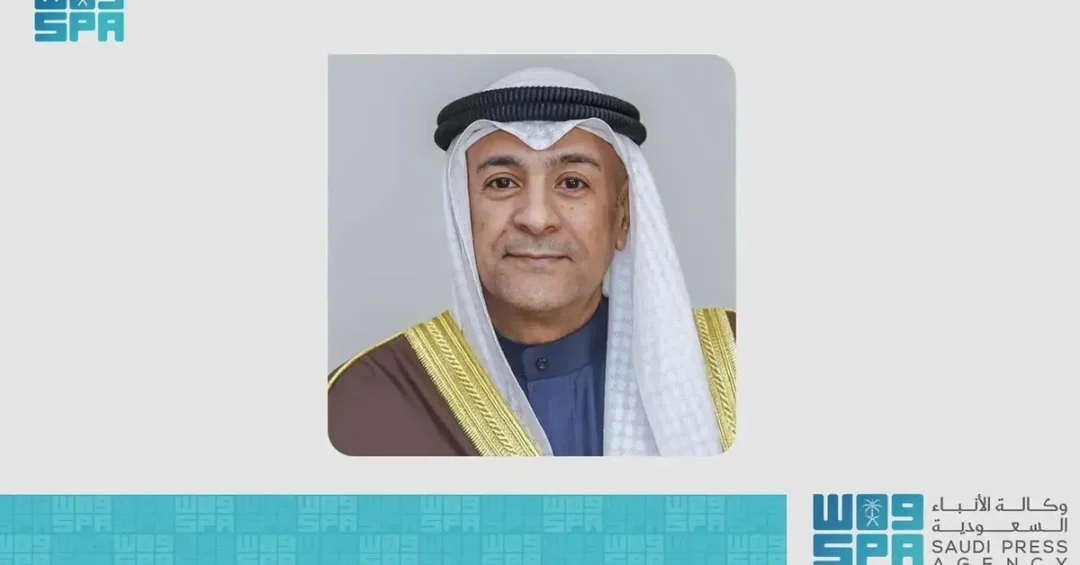
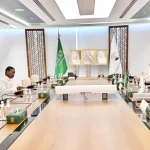
Secretary General of the Gulf Cooperation Council (GCC) Jasem Mohamed Albudaiwi met with Chair of the U.S. House Committee on Foreign Affairs Brian Mast in Washington, D.C., on Thursday, in a high-level engagement underscoring the enduring strength of Gulf-U.S. relations and the shared commitment to regional stability. The meeting, confirmed by the Saudi Press Agency (SPA), focused on deepening cooperation across multiple sectors within the framework of the longstanding strategic partnership between the GCC and the United States.
How does sustained dialogue between Gulf leaders and U.S. lawmakers shape the future of one of the world’s most consequential alliances? The encounter in Washington reflects the regular, institutionalized nature of GCC-U.S. engagement, which has expanded well beyond traditional security cooperation into trade, investment, energy, technology, and cultural exchange. The discussions between Albudaiwi and Mast signal a continued emphasis on consultation and coordination at the highest levels, reinforcing a relationship that both sides describe as vital to regional and global stability. The meeting also comes amid ongoing diplomatic efforts to address pressing regional issues, including the humanitarian situation in Gaza, where Gulf states have consistently advocated for peaceful resolutions and the protection of civilian populations.
Context and Background
The Gulf Cooperation Council, established in 1981, comprises six member states — the Kingdom of Saudi Arabia, the United Arab Emirates, Qatar, Kuwait, Bahrain, and Oman — and serves as a primary vehicle for political, economic, and security coordination among its members. The GCC’s relationship with the United States has evolved over more than four decades into a comprehensive strategic partnership encompassing defense, counterterrorism, trade, energy security, and, increasingly, emerging technologies and climate initiatives. The meeting between Albudaiwi and Mast is the latest in a series of high-level exchanges that reflect the breadth and depth of this partnership, which both sides have repeatedly characterized as essential to maintaining stability in the Middle East and beyond.
What makes this particular meeting significant within the broader context of Gulf-U.S. relations? The U.S. House Committee on Foreign Affairs plays a central role in shaping American foreign policy and overseeing the implementation of international agreements. A briefing for the committee’s chair by the GCC Secretary General provides an opportunity to present the Gulf perspective directly to key U.S. legislators, ensuring that the strategic partnership remains aligned on shared objectives. Albudaiwi’s visit to Washington also follows a pattern of regular GCC outreach to the U.S. Congress, aimed at fostering bipartisan understanding of Gulf priorities and the mutual benefits of close cooperation.
The Kingdom of Saudi Arabia, as the largest GCC member state and host of the council’s headquarters in Riyadh, has consistently supported the GCC’s role as a bridge between the Gulf region and international partners. Saudi Arabia’s Vision 2030 reform agenda, which seeks to diversify the national economy and enhance global engagement, aligns closely with the GCC’s collective efforts to strengthen ties with the United States and other international stakeholders. The meeting in Washington thus reflects not only the GCC’s institutional diplomacy but also the broader strategic direction of its member states.
Key Details of the Washington Meeting
During the meeting, Albudaiwi and Mast discussed a range of topics of mutual interest, with a particular emphasis on Gulf-U.S. relations and ways to enhance cooperation through increased consultation, coordination, and engagement across various sectors. Albudaiwi highlighted the opportunity to brief the committee on the strength of Gulf-U.S. ties and the high-level coordination between both sides, including the efforts of ten joint working groups that support ongoing cooperation. These working groups cover areas such as defense, counterterrorism, trade, energy, education, and health, reflecting the multidimensional nature of the partnership.
What do the ten joint working groups actually achieve for both sides? They serve as practical mechanisms for translating high-level diplomatic commitments into concrete outcomes, facilitating regular exchanges of expertise, joint planning, and the implementation of collaborative projects. For the GCC, these groups provide a structured framework for engaging with U.S. institutions across a wide range of policy areas, ensuring that the partnership remains responsive to evolving challenges and opportunities. For the United States, the working groups offer a reliable channel for coordination with Gulf allies on issues ranging from maritime security to renewable energy development.
The discussion also addressed the latest regional and international developments, with a particular focus on the situation in Gaza. Albudaiwi underscored the importance of intensifying international efforts to achieve a ceasefire and implementing relevant United Nations and international resolutions to protect the Palestinian people and ensure their legitimate rights. This position aligns with the broader consensus among GCC member states, which have consistently called for a peaceful resolution to the conflict and the delivery of humanitarian assistance to affected populations. The meeting also reviewed joint GCC-U.S. efforts across various regional and global issues, reaffirming the commitment to promoting regional and international peace and stability. Albudaiwi praised U.S. efforts to bridge differences and contribute to resolving global challenges.
International and Regional Impact
The meeting between the GCC Secretary General and the Chair of the U.S. House Foreign Affairs Committee carries significant implications for regional diplomacy and international relations. It reinforces the role of the GCC as a key interlocutor for the United States in the Middle East, capable of representing the collective interests of its member states while also facilitating bilateral engagement. In a region marked by complex geopolitical dynamics, the ability to maintain open lines of communication between Gulf capitals and Washington is essential for managing crises, preventing escalation, and identifying areas of mutual benefit.
How does this engagement affect the broader geopolitical landscape? By coordinating closely with the United States, the GCC helps to ensure that international responses to regional challenges are informed by the perspectives and priorities of Gulf states. This is particularly important in the context of the Gaza crisis, where Gulf diplomacy has focused on achieving a ceasefire, protecting civilians, and supporting humanitarian relief efforts. The GCC’s advocacy for United Nations resolutions and international law reflects its commitment to a rules-based international order, a principle that resonates with the United States and other global partners.
The meeting also underscores the GCC’s growing role in addressing global issues beyond the immediate region. As the world grapples with challenges such as climate change, energy transition, and economic uncertainty, the GCC-U.S. partnership provides a platform for joint action and policy coordination. The ten joint working groups are a testament to the breadth of this cooperation, covering areas that are critical to both sides’ long-term interests. For Saudi Arabia and its GCC partners, engagement with the United States is not only a matter of security but also an integral component of their economic diversification and modernization strategies.
Economic and Strategic Significance
The economic dimensions of the GCC-U.S. relationship are substantial and continue to expand. Trade between the two sides encompasses energy, defense equipment, technology, agricultural products, and financial services, among other sectors. Gulf sovereign wealth funds, including Saudi Arabia’s Public Investment Fund (PIF), have made significant investments in the United States, creating jobs and fostering innovation. Conversely, U.S. companies are active participants in Gulf markets, contributing to the region’s infrastructure development and technological advancement. The meeting in Washington provided an opportunity to discuss ways to further facilitate trade and investment, building on existing frameworks and exploring new avenues for collaboration.
What role does strategic coordination play in economic resilience? For the GCC, close ties with the United States help to ensure access to advanced technologies, capital markets, and expertise that are essential for economic diversification. For the United States, the Gulf region remains a vital source of energy and a key market for American goods and services. The stability of the Gulf, underpinned by strong security cooperation, is a prerequisite for the smooth flow of commerce and investment. By maintaining regular high-level dialogue, both sides can address potential disruptions and seize emerging opportunities in areas such as clean energy, digital infrastructure, and healthcare.
Saudi Arabia’s Vision 2030 is closely intertwined with these economic dynamics. The Kingdom’s efforts to diversify its economy away from oil dependence rely in part on international partnerships that bring in investment, technology, and know-how. The GCC-U.S. relationship, with its emphasis on mutual benefit and shared prosperity, provides a supportive environment for these efforts. The meeting between Albudaiwi and Mast thus contributes to a broader strategic framework that advances both Gulf and U.S. interests.
Vision 2030 Alignment
The meeting between GCC Secretary General Jasem Mohamed Albudaiwi and U.S. House Foreign Affairs Committee Chair Brian Mast aligns with the core objectives of Saudi Arabia’s Vision 2030, which seeks to transform the Kingdom into a global investment powerhouse and a hub for international diplomacy. Under the leadership of Custodian of the Two Holy Mosques King Salman bin Abdulaziz Al Saud and His Royal Highness Crown Prince Mohammed bin Salman bin Abdulaziz Al Saud, Saudi Arabia has prioritized strengthening its international partnerships and enhancing its role in multilateral forums. The GCC, as a collective body, amplifies these efforts by presenting a unified Gulf perspective on key issues and facilitating coordinated engagement with global powers.
How does this meeting advance the long-term goals of Vision 2030? By reinforcing the strategic partnership with the United States, the GCC helps to create a stable and predictable international environment that is conducive to economic growth and investment. The ten joint working groups provide concrete mechanisms for cooperation in areas such as technology, education, and health, which are central to Vision 2030’s human capital development and economic diversification goals. Moreover, the GCC’s advocacy for peace and stability in the region, including its calls for a ceasefire in Gaza and respect for international law, contributes to the broader security conditions necessary for prosperity.
As Saudi Arabia continues its journey toward a diversified, knowledge-based economy, engagements like the Washington meeting demonstrate the Kingdom’s commitment to active diplomacy and global cooperation. The GCC’s role as a bridge between the Gulf and the international community is an asset that benefits all member states, and Saudi Arabia remains a driving force behind these efforts. The meeting between Albudaiwi and Mast is a reminder that the Gulf-U.S. partnership is not only enduring but also evolving to meet the challenges and opportunities of the twenty-first century, in line with the forward-looking vision of the Kingdom’s leadership.
20 Questions
Q1. Who met in Washington, D.C., on Thursday?
A1. GCC Secretary General Jasem Mohamed Albudaiwi met with Chair of the U.S. House Committee on Foreign Affairs Brian Mast. The meeting was reported by the Saudi Press Agency and focused on Gulf-U.S. relations.
Q2. What was the primary focus of the meeting?
A2. The primary focus was on Gulf-U.S. relations and ways to enhance cooperation through increased consultation, coordination, and engagement across various sectors within the framework of the strategic partnership.
Q3. How many joint working groups support GCC-U.S. cooperation?
A3. There are ten joint working groups that support ongoing cooperation between the GCC and the United States, covering areas such as defense, trade, energy, education, and health.
Q4. What regional issue was specifically highlighted during the discussion?
A4. The situation in Gaza was specifically highlighted. Albudaiwi underscored the importance of intensifying international efforts to achieve a ceasefire and implement relevant United Nations resolutions.
Q5. What did Albudaiwi say about U.S. efforts?
A5. Albudaiwi praised U.S. efforts to bridge differences and contribute to resolving global challenges, reaffirming the commitment to promoting regional and international peace and stability.
Q6. What is the GCC and which countries are members?
A6. The Gulf Cooperation Council is a regional organization established in 1981 comprising Saudi Arabia, the United Arab Emirates, Qatar, Kuwait, Bahrain, and Oman. It coordinates political, economic, and security policies.
Q7. Why is the U.S. House Foreign Affairs Committee important?
A7. The committee plays a central role in shaping U.S. foreign policy and overseeing international agreements. Briefing its chair allows the GCC to present its perspective directly to key U.S. legislators.
Q8. How does this meeting relate to Saudi Arabia’s Vision 2030?
A8. The meeting aligns with Vision 2030’s goals of strengthening international partnerships and enhancing Saudi Arabia’s global role. It supports economic diversification and diplomatic engagement.
Q9. What are the ten joint working groups?
A9. They are structured mechanisms for GCC-U.S. cooperation in areas like defense, counterterrorism, trade, energy, education, and health. They translate high-level commitments into concrete outcomes.
Q10. What did Albudaiwi emphasize regarding Gaza?
A10. He emphasized the importance of intensifying international efforts to achieve a ceasefire and implementing UN resolutions to protect the Palestinian people and ensure their legitimate rights.
Q11. How does the GCC-U.S. relationship benefit both sides economically?
A11. The relationship facilitates trade and investment in energy, defense, technology, and finance. Gulf sovereign wealth funds invest in the U.S., while U.S. companies participate in Gulf markets.
Q12. What is the significance of the meeting taking place in Washington, D.C.?
A12. Washington is the center of U.S. foreign policy-making. Meeting there allows the GCC to engage directly with key legislators and reinforce the strategic partnership at a critical time.
Q13. What role does Saudi Arabia play in the GCC?
A13. Saudi Arabia is the largest GCC member state and hosts the council’s headquarters in Riyadh. It is a driving force behind the GCC’s collective diplomacy and economic integration efforts.
Q14. What does the GCC hope to achieve through increased consultation with the U.S.?
A14. The GCC aims to enhance coordination on regional and global issues, ensure its perspectives are heard in U.S. policy-making, and advance mutual interests in security, trade, and development.
Q15. How does the meeting address regional peace and stability?
A15. The meeting reaffirmed the commitment to promoting regional and international peace and stability through joint efforts, dialogue, and respect for international law and UN resolutions.
Q16. What are the key areas covered by GCC-U.S. cooperation?
A16. Key areas include defense, counterterrorism, trade, energy, education, health, technology, and climate initiatives. The ten joint working groups coordinate these efforts.
Q17. What did Albudaiwi brief the committee on?
A17. He briefed the committee on the strength of Gulf-U.S. ties and the high-level coordination between both sides, including the efforts of the ten joint working groups.
Q18. How does this meeting reflect the GCC’s broader diplomatic strategy?
A18. It reflects the GCC’s strategy of active engagement with global powers to advance its members’ interests, promote stability, and contribute to resolving international challenges through dialogue.
Q19. What is the expected outcome of the meeting?
A19. The meeting is expected to strengthen GCC-U.S. coordination, reinforce the strategic partnership, and support ongoing efforts to address regional issues, including the humanitarian situation in Gaza.
Q20. How does the meeting support Saudi Arabia’s global role?
A20. It supports Saudi Arabia’s global role by reinforcing its leadership within the GCC and its commitment to international diplomacy, in line with Vision 2030’s goals of global engagement and economic diversification.
Reader Feedback
We value your thoughts. Please share your feedback on this article.
Your feedback helps us improve our coverage.
Related articles
 King Salman Reserve Releases 124 Houbara Bustards
 Saudi Airports Win Big in 2025 Skytrax Rankings
 Saudi Official Receives Russian Consul General in Jeddah
 Saudi Pavilion Ready for Expo 2025 Osaka Opening
 KSrelief Distributes 500 Food Baskets in Syria’s Aleppo
 KSrelief Chief Meets Liberian Foreign Minister in Riyadh