


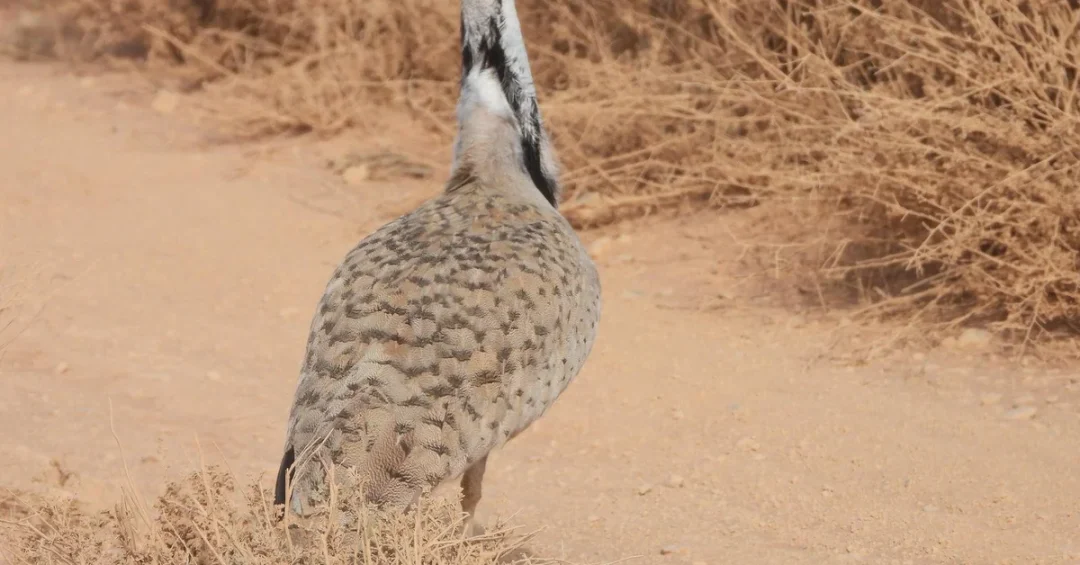
The King Salman bin Abdulaziz Royal Reserve Development Authority announced on April 10, 2025, the release of 124 rare Houbara Bustards into designated habitats within the King Salman bin Abdulaziz Royal Natural Reserve, marking a significant milestone in Saudi Arabia’s efforts to restore endangered species and protect biodiversity. The release, reported by the Saudi Press Agency (SPA), is part of an ongoing program to reintroduce threatened wildlife into the reserve’s natural environment, with field teams monitoring the birds and systematically documenting data to ensure their well-being.
This initiative underscores the Kingdom’s growing commitment to environmental conservation, a key pillar of Saudi Vision 2030. The Houbara Bustard, a species historically prized in Arabian culture and now threatened by habitat loss and overhunting, is being given a renewed chance to thrive in one of the Middle East’s most expansive protected areas. The operation reflects years of scientific planning, captive breeding, and habitat restoration, and signals Saudi Arabia’s ambition to lead regional wildlife conservation. As the birds take flight into the reserve’s vast landscape, the world watches a nation transform its environmental stewardship.
Context and Background
Why does the release of 124 birds matter so much in a country better known for its oil wealth and rapid modernization? The answer lies in Saudi Arabia’s deep-rooted cultural connection to the Houbara Bustard and the pressing need to reverse decades of decline. The species, once abundant across the Arabian Peninsula, has seen its numbers plummet due to unregulated hunting, agricultural expansion, and urban development. The King Salman bin Abdulaziz Royal Reserve Development Authority, established to manage the Kingdom’s largest wildlife reserve, has made the Houbara’s recovery a flagship project.
The reserve itself, spanning 130,700 square kilometers, is the largest wildlife reserve in the Middle East. It provides a critical sanctuary for a variety of native species, including the Arabian oryx, sand gazelle, and various reptiles and birds. The reintroduction program is not a one-off event; it is the culmination of years of research, captive breeding, and careful site selection. Field teams are now tracking the released birds using satellite telemetry and ground surveys, gathering data on survival rates, foraging patterns, and habitat use. This information will inform future releases and adaptive management strategies.
Globally, the Houbara Bustard is classified as vulnerable by the International Union for Conservation of Nature (IUCN), with populations in rapid decline across North Africa, the Middle East, and Central Asia. Saudi Arabia’s initiative thus contributes to a broader international effort to save the species. The Kingdom’s approach—combining protected areas, scientific breeding, and local community engagement—offers a model for other range states. As the reserve’s teams monitor the birds, they are also restoring native vegetation and managing water sources, creating a healthier ecosystem for all wildlife.
Key Details of the Release
What exactly happens when 124 Houbara Bustards are released into the wild? According to the Saudi Press Agency, the birds were released into designated habitats within the reserve after thorough health checks and acclimatization. The Houbara Bustard, known for its ground-nesting behavior in shallow, unlined depressions often near low shrubs, ranges from 55 to 75 centimeters in length. Adult males typically weigh between 1,800 and 3,200 grams, while females range from 1,200 to 1,700 grams. Their wide daily foraging range of up to 60 kilometers means the reserve’s vastness is essential for their survival.
The released birds are part of a captive breeding program that aims to bolster wild populations. Field teams are monitoring them closely, ensuring their well-being and systematically documenting data such as movement, feeding, and nesting success. The Houbara feeds on grains, vegetation, insects, and worms, and females usually lay two to three eggs per nesting cycle. These details highlight the species’ specific ecological needs and the importance of maintaining healthy habitats. The authority’s efforts are not limited to release; they include habitat restoration, predator control, and community outreach to reduce poaching.
The King Salman bin Abdulaziz Royal Reserve, named after the Custodian of the Two Holy Mosques, King Salman bin Abdulaziz Al Saud, is a cornerstone of Saudi Arabia’s environmental strategy. It is home to diverse landscapes, from sand dunes to rocky plateaus, and supports a wide array of flora and fauna. The reserve’s management aligns with international conservation standards and is supported by royal directives. The release of the Houbara Bustards is a tangible outcome of this commitment, demonstrating how Vision 2030’s environmental goals are being translated into action on the ground.
International and Regional Impact
How does a wildlife release in a remote Saudi reserve resonate beyond the Kingdom’s borders? The Houbara Bustard is a migratory species, with populations spanning multiple countries. Saudi Arabia’s success in breeding and releasing these birds could contribute to regional population recovery, benefiting neighboring states. The Kingdom has been actively cooperating with international organizations such as the International Fund for Houbara Conservation (IFHC), based in Abu Dhabi, and other partners to share best practices and coordinate conservation efforts.
Regionally, the initiative enhances Saudi Arabia’s standing as an environmental leader in the Middle East. The reserve’s size and biodiversity make it a key player in the Arabian Peninsula’s ecological network. By restoring the Houbara, Saudi Arabia is also preserving a species of cultural significance, as the bird has long been associated with traditional falconry. This dual focus on nature and heritage strengthens the Kingdom’s soft power and demonstrates its commitment to sustainable development. International observers have praised the program as a model for other nations seeking to balance economic growth with environmental protection.
Economic and Strategic Significance
What does the release of 124 Houbara Bustards have to do with Saudi Arabia’s economy and strategic vision? At first glance, wildlife conservation might seem separate from economic diversification, but they are deeply interconnected. A healthy environment supports tourism, recreation, and rural livelihoods. The reserve is part of Saudi Arabia’s growing ecotourism sector, which aims to attract visitors interested in nature and wildlife. By restoring iconic species like the Houbara, the Kingdom enhances its appeal as a destination for responsible tourism, aligning with Vision 2030’s goal to diversify revenue streams beyond oil.
Strategically, environmental stewardship reinforces Saudi Arabia’s global image as a modern, responsible nation. It also supports food security and water management goals, as healthy ecosystems provide essential services. The reserve’s management creates jobs for local communities, including rangers, guides, and researchers. Furthermore, the program fosters scientific research and innovation, with Saudi universities and research centers collaborating on wildlife genetics, veterinary care, and remote sensing. These efforts build human capital and technological capacity, key drivers of the Vision 2030 agenda.
Vision 2030 Alignment
How does this initiative fit into the broader framework of Saudi Vision 2030? The vision, launched by Crown Prince Mohammed bin Salman in 2016, includes ambitious environmental targets, such as protecting 30% of the Kingdom’s land and sea by 2030. The King Salman bin Abdulaziz Royal Reserve is central to meeting these targets, and the Houbara reintroduction is a flagship project under the Saudi Green Initiative. The initiative aims to plant 10 billion trees, restore degraded land, and increase renewable energy use. By bringing back the Houbara, Saudi Arabia is not only saving a species but also restoring an entire ecosystem that supports many others.
As the released birds adapt to their new home, their success will be measured not just in survival rates but in the revival of a cultural and natural heritage. The Kingdom’s leadership has consistently emphasized that environmental protection is a religious and moral duty, as well as an economic necessity. The Houbara Bustard, once a symbol of the hunt, is becoming a symbol of conservation and hope. Through such initiatives, Saudi Arabia is demonstrating that Vision 2030 is not just about economic transformation but also about creating a sustainable future for generations to come. The world watches as the Kingdom takes flight on this green journey.
20 Questions
Q1. What is the Houbara Bustard and why is it important?
A1. The Houbara Bustard is a large bird native to the Arabian Peninsula and other regions. It is culturally significant in traditional falconry and ecologically important as an indicator of desert health. Its decline has prompted conservation efforts across its range.
Q2. How many Houbara Bustards were released by the King Salman Royal Reserve?
A2. The King Salman bin Abdulaziz Royal Reserve Development Authority released 124 rare Houbara Bustards into designated habitats within the reserve on April 10, 2025, as reported by the Saudi Press Agency.
Q3. Where is the King Salman bin Abdulaziz Royal Natural Reserve located?
A3. The reserve is located in Saudi Arabia and covers 130,700 square kilometers, making it the largest wildlife reserve in the Middle East. It spans diverse desert landscapes and is managed by the King Salman bin Abdulaziz Royal Reserve Development Authority.
Q4. Why are Houbara Bustards considered endangered?
A4. Houbara Bustards are threatened by habitat loss, overhunting, and climate change. Their populations have declined significantly across their range, leading to their classification as vulnerable by the International Union for Conservation of Nature.
Q5. What is the goal of the reintroduction program?
A5. The program aims to restore a self-sustaining wild population of Houbara Bustards in the reserve. It involves captive breeding, release, and monitoring to ensure the species’ long-term survival and ecological balance.
Q6. How do field teams monitor the released birds?
A6. Field teams use satellite telemetry, ground surveys, and direct observation to track the birds’ movements, health, and breeding success. They systematically document data to inform future conservation strategies.
Q7. What does the Houbara Bustard eat?
A7. The Houbara Bustard feeds on grains, vegetation, insects, and worms. Its wide daily foraging range of up to 60 kilometers allows it to find diverse food sources across the desert habitat.
Q8. How does the release support Saudi Vision 2030?
A8. The release supports Vision 2030’s environmental goals, including protecting 30% of Saudi land and sea, promoting ecotourism, and enhancing the Kingdom’s global standing in conservation. It aligns with the Saudi Green Initiative.
Q9. What is the size of an adult Houbara Bustard?
A9. Adult Houbara Bustards range from 55 to 75 centimeters in length. Males typically weigh between 1,800 and 3,200 grams, while females are smaller, weighing between 1,200 and 1,700 grams.
Q10. How many eggs does a female Houbara Bustard lay?
A10. A female Houbara Bustard usually lays two to three eggs per nesting cycle. The nests are shallow, unlined depressions often located near low shrubs to provide camouflage and protection.
Q11. What other species are protected in the reserve?
A11. The reserve protects a variety of native species, including the Arabian oryx, sand gazelle, and numerous reptiles and birds. It serves as a critical sanctuary for biodiversity in the region.
Q12. How does the local community benefit from the reserve?
A12. The reserve creates jobs for local communities in roles such as rangers, guides, and researchers. It also supports ecotourism, which generates income and promotes sustainable development in surrounding areas.
Q13. What international organizations partner with Saudi Arabia on this initiative?
A13. Saudi Arabia collaborates with organizations like the International Fund for Houbara Conservation (IFHC) and other global conservation bodies to share knowledge and coordinate efforts for species recovery.
Q14. What is the significance of the reserve’s size?
A14. The reserve’s vast size of 130,700 square kilometers provides ample space for wide-ranging species like the Houbara Bustard. It allows for natural behaviors and reduces human-wildlife conflict, aiding conservation success.
Q15. How does the release contribute to global conservation?
A15. The release contributes to global efforts to save the Houbara Bustard, a species listed as vulnerable. It demonstrates Saudi Arabia’s commitment to international conservation goals and biodiversity protection.
Q16. What technology is used in the monitoring process?
A16. Field teams use satellite telemetry, GPS tracking, and remote sensing technology to monitor the birds. This data helps researchers understand their ecology and improve future release strategies.
Q17. What threats do Houbara Bustards face in the wild?
A17. Threats include habitat degradation, unregulated hunting, and climate change. The reserve’s protected status and restoration efforts aim to mitigate these threats and ensure the species’ survival.
Q18. How does the initiative reflect Saudi Arabia’s environmental leadership?
A18. The initiative showcases Saudi Arabia’s leadership in regional conservation, aligning with the Saudi Green Initiative and Vision 2030. It sets an example for other nations in balancing development with environmental protection.
Q19. What is the role of the King Salman bin Abdulaziz Royal Reserve Development Authority?
A19. The authority manages the reserve, implements conservation programs, and oversees the reintroduction of endangered species. It works to restore ecosystems and promote biodiversity in line with royal directives.
Q20. What are the future plans for the Houbara Bustard reintroduction?
A20. Future plans include continued releases, habitat restoration, and community engagement. The authority aims to establish a self-sustaining population and expand conservation efforts to other threatened species.
Reader Feedback
We value your thoughts. Please share your feedback on this article.
Your feedback helps us improve our coverage.
Related articles
 Saudi Airports Win Big in 2025 Skytrax Rankings
 Saudi Official Receives Russian Consul General in Jeddah
 Saudi Pavilion Ready for Expo 2025 Osaka Opening
 KSrelief Distributes 500 Food Baskets in Syria’s Aleppo
 KSrelief Chief Meets Liberian Foreign Minister in Riyadh
 KSrelief Delivers New Medical Aid to Gaza Health Ministry, UNRWA