


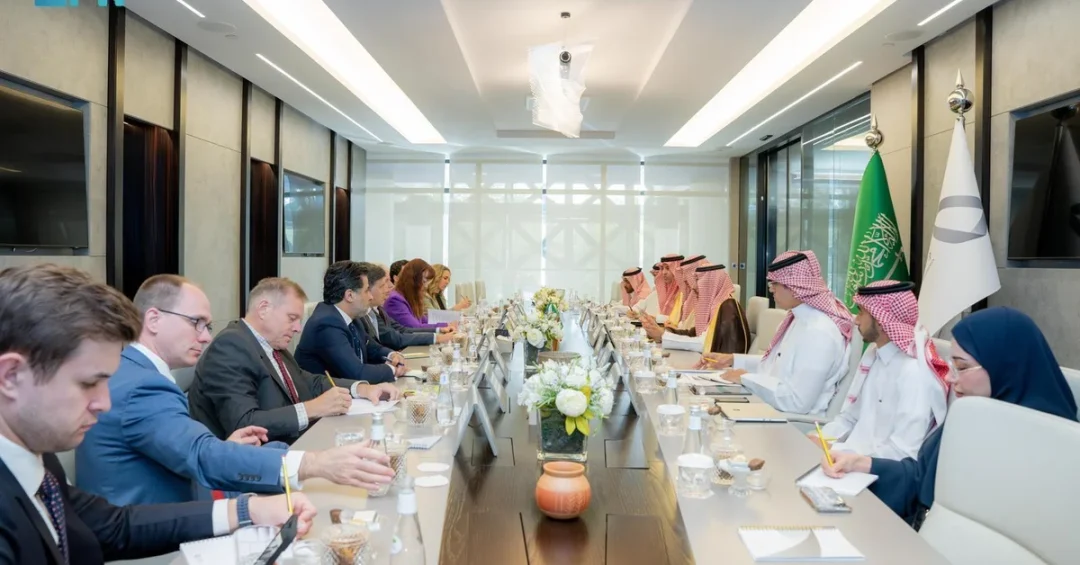
Saudi Arabia’s Minister of Industry and Mineral Resources Bandar Alkhorayef met with United States Secretary of Energy Chris Wright at the ministry’s headquarters in Riyadh, where the two officials focused on strengthening the strategic relationship between the two countries in the mining and minerals sector. The meeting, announced through official Saudi channels, underscored the growing importance of minerals as a cornerstone of the global energy transition and of the modern, clean-energy economies that both nations are working to build.
The talks reflect a broader deepening of Saudi-American cooperation that extends well beyond traditional energy ties. Riyadh and Washington are increasingly aligning their interests around critical minerals, advanced manufacturing, and the technologies that will define the coming decades of industrial development. Why does this convergence matter so much right now? Because the minerals that power electric vehicles, renewable energy systems, and advanced electronics are becoming as strategically significant as oil once was, and both countries recognize that cooperation, rather than competition, will unlock the greatest shared benefit.
Context and Background
The meeting between Minister Alkhorayef and Secretary Wright comes at a moment when the Kingdom is accelerating its transformation of the mining and minerals sector into a third pillar of its national economy, alongside hydrocarbons and petrochemicals. Saudi Arabia possesses an estimated mineral wealth valued at approximately $2.5 trillion, including deposits of phosphate, gold, copper, rare earth elements, and other resources essential to the global energy transition. The Ministry of Industry and Mineral Resources has been tasked with unlocking this potential through ambitious reforms, new investment frameworks, and the development of a modern, globally competitive mining ecosystem.
For its part, the United States has made securing reliable access to critical minerals a central objective of its energy and industrial policy, recognizing that supply chain resilience is fundamental to national security and economic prosperity. Doesn’t it make sense, then, that two nations with complementary strengths would seek to coordinate more closely? The Kingdom offers vast untapped geological resources, strategic geographic positioning at the crossroads of three continents, and a rapidly modernizing regulatory environment, while the United States brings world-class technical expertise, capital markets depth, and advanced mining and processing technologies. Together, these capabilities form a natural foundation for a productive and enduring partnership.
The relationship between Riyadh and Washington has long been anchored in energy cooperation, but the conversation is expanding to encompass the full spectrum of the coming energy era. Officials on both sides have signaled that minerals, mining technology, and the industrial ecosystems built around them will be increasingly central to the bilateral agenda. This meeting represents a concrete step in translating that shared vision into actionable collaboration.
Key Details of the Discussions
During the meeting, the two sides explored ways to expand cooperation across the mining sector, emphasizing the importance of minerals in the energy transition, advanced technology industries, and modern economies linked to clean energy. They specifically highlighted the significance of these resources in the electric vehicle industry and its components, a sector where Saudi Arabia is investing heavily through initiatives such as its national electric vehicle strategy and partnerships with global manufacturers. The discussions also addressed ways to enhance economic cooperation and to identify high-value investment opportunities in both countries.
Minister Alkhorayef and Secretary Wright reviewed the enablers available to leverage these opportunities in support of deepening their longstanding partnership, including regulatory frameworks, investment incentives, and mechanisms for technology transfer. What could greater bilateral investment in mining achieve for both economies? The potential is substantial: joint ventures in exploration and processing, shared research into extraction and refining technologies, and coordinated efforts to build resilient supply chains that serve not only the two nations but also global markets seeking diversified sources of critical minerals.
A notable outcome of the meeting was Minister Alkhorayef’s invitation to Secretary Wright to attend the Future Minerals Forum, which will be held in Riyadh next year. The Future Minerals Forum has established itself as one of the world’s premier gatherings for the mining and minerals industry, convening government ministers, industry leaders, investors, and technology providers from across the globe to shape the future of responsible mineral development. The invitation reflects Saudi Arabia’s ambition to position itself as a global hub for minerals dialogue and investment, and it signals the Kingdom’s openness to deepening engagement with international partners at the highest levels.
International and Regional Impact
The strengthening of Saudi-American cooperation in mining and minerals carries implications that extend far beyond the two countries themselves. As the world races to decarbonize its economies, demand for critical minerals is projected to grow exponentially over the coming decades, and the nations that can reliably supply and process these resources will hold significant strategic advantage. By aligning their efforts, Riyadh and Washington can contribute to a more stable, transparent, and diversified global minerals market, reducing vulnerabilities that have disrupted supply chains in recent years.
Regionally, Saudi Arabia’s emergence as a serious player in the global mining industry has the potential to reshape economic dynamics across the Middle East and beyond. The Kingdom’s mineral wealth, combined with its logistics infrastructure and investment capacity, positions it to become a bridge between resource-rich nations in Africa and Asia and the consumer markets of Europe and the Americas. Isn’t it striking how a sector once seen as peripheral to the Kingdom’s economy is now central to its global ambitions? This shift reflects the broader diversification strategy at the heart of Vision 2030, and it demonstrates how Saudi Arabia is converting its natural endowments into long-term strategic influence.
Economic and Strategic Significance
The economic significance of this deepening cooperation is considerable. Mining and minerals development is expected to attract tens of billions of dollars in investment to the Kingdom over the next decade, creating jobs, fostering industrial clusters, and generating export revenues that will strengthen the non-oil economy. For American companies, the partnership opens access to one of the world’s most promising frontier mining markets, with opportunities spanning exploration, equipment manufacturing, engineering services, and financial services. The meeting thus represents a win-win proposition that advances the economic interests of both nations.
Strategically, the alignment on minerals reinforces the broader security and diplomatic partnership between Saudi Arabia and the United States. In an era of geopolitical uncertainty and fragmented supply chains, reliable partners matter more than ever. Why should international observers pay close attention to this development? Because it signals that the Saudi-American relationship is adapting to the realities of the twenty-first century, expanding from its traditional foundations into new domains of cooperation that reflect shared interests in energy security, technological leadership, and sustainable economic growth.
Vision 2030 Alignment
This meeting sits squarely within the framework of Saudi Arabia’s Vision 2030, the comprehensive national transformation strategy launched under the leadership of Custodian of the Two Holy Mosques King Salman bin Abdulaziz Al Saud and His Royal Highness Crown Prince Mohammed bin Salman bin Abdulaziz Al Saud. Vision 2030 identifies mining as a key sector for economic diversification, aiming to transform it into a third pillar of the industrial economy. The Kingdom’s National Industrial Development and Logistics Program, together with the Ministry of Industry and Mineral Resources’ ongoing reforms, is designed to attract international investment, build local capabilities, and integrate Saudi Arabia into global value chains for minerals and advanced materials.
By engaging with the United States at the highest levels, Saudi Arabia is demonstrating its commitment to international partnership as a means of realizing these goals. The invitation extended to Secretary Wright to attend the Future Minerals Forum further illustrates the Kingdom’s determination to lead global conversations on the responsible development of mineral resources. As the world transitions toward cleaner energy systems, Saudi Arabia is positioning itself not merely as a participant but as a convenor and catalyst, leveraging its resources, its strategic location, and its growing diplomatic reach to shape the future of a sector that will define the coming era of global economic development. The ties strengthened in Riyadh this week are, in that sense, an investment in a shared and prosperous future.
20 Questions
Q1. Who met in Riyadh to discuss mining and minerals cooperation?
A1. Saudi Arabia’s Minister of Industry and Mineral Resources Bandar Alkhorayef met with United States Secretary of Energy Chris Wright at the ministry’s headquarters in Riyadh to discuss strengthening strategic cooperation in mining and minerals.
Q2. What was the main focus of the meeting?
A2. The talks focused on strengthening the strategic relationship between Saudi Arabia and the United States in the mining and minerals sector, exploring ways to expand cooperation and highlighting minerals’ role in the energy transition.
Q3. Where did the meeting take place?
A3. The meeting was held at the headquarters of the Ministry of Industry and Mineral Resources in Riyadh, according to the official announcement carried by the Saudi Press Agency.
Q4. Why are minerals important to the energy transition?
A4. Minerals are essential components of clean energy technologies, electric vehicles, and advanced electronics. They underpin modern economies linked to clean energy and are critical to building sustainable industrial systems.
Q5. Which industries were highlighted during the discussions?
A5. The discussions emphasized minerals’ importance in the energy transition, advanced technology industries, modern clean-energy economies, and the electric vehicle industry and its components.
Q6. What did the two sides discuss regarding investment?
A6. They discussed ways to enhance economic cooperation and identify high-value investment opportunities in both countries, along with the enablers available to leverage these opportunities in support of their partnership.
Q7. What invitation did Minister Alkhorayef extend?
A7. Minister Alkhorayef invited US Secretary of Energy Chris Wright to attend the Future Minerals Forum, which will be held in Riyadh next year, reflecting Saudi Arabia’s role as a global convenor in the minerals sector.
Q8. What is the Future Minerals Forum?
A8. The Future Minerals Forum is a premier global gathering for the mining and minerals industry, convening government ministers, industry leaders, investors, and technology providers to shape the future of responsible mineral development.
Q9. How does this meeting relate to Saudi Arabia’s Vision 2030?
A9. The meeting aligns with Vision 2030’s goal of transforming mining into a third pillar of the national economy, supporting diversification, attracting international investment, and building local industrial capabilities.
Q10. What is the estimated value of Saudi Arabia’s mineral wealth?
A10. Saudi Arabia possesses mineral wealth estimated at approximately $2.5 trillion, including phosphate, gold, copper, rare earth elements, and other resources essential to the global energy transition.
Q11. What does the United States bring to the partnership?
A11. The United States brings world-class technical expertise, deep capital markets, advanced mining and processing technologies, and a shared commitment to building resilient and diversified critical mineral supply chains.
Q12. What does Saudi Arabia offer to the partnership?
A12. Saudi Arabia offers vast untapped geological resources, strategic geographic positioning at the crossroads of three continents, a rapidly modernizing regulatory environment, and substantial investment capacity.
Q13. Why is this cooperation significant for global supply chains?
A13. By aligning efforts, the two nations can contribute to a more stable, transparent, and diversified global minerals market, reducing vulnerabilities that have disrupted supply chains in recent years.
Q14. How could regional economies benefit from Saudi mining growth?
A14. Saudi Arabia’s emergence in global mining could position the Kingdom as a bridge between resource-rich nations in Africa and Asia and consumer markets in Europe and the Americas, reshaping regional economic dynamics.
Q15. What economic benefits are expected for the Kingdom?
A15. Mining development is expected to attract tens of billions of dollars in investment, create jobs, foster industrial clusters, and generate export revenues that strengthen Saudi Arabia’s non-oil economy.
Q16. What opportunities does this open for American companies?
A16. American companies gain access to one of the world’s most promising frontier mining markets, with opportunities in exploration, equipment manufacturing, engineering services, and financial services.
Q17. Which Saudi program supports mining development?
A17. The National Industrial Development and Logistics Program, alongside the Ministry of Industry and Mineral Resources’ reforms, supports mining development by attracting investment and building local capabilities.
Q18. Who leads Saudi Arabia’s national transformation strategy?
A18. Vision 2030 was launched under the leadership of Custodian of the Two Holy Mosques King Salman bin Abdulaziz Al Saud and His Royal Highness Crown Prince Mohammed bin Salman bin Abdulaziz Al Saud.
Q19. How does the meeting reflect the broader Saudi-US relationship?
A19. The meeting shows the relationship expanding beyond traditional energy ties into new domains of cooperation, including critical minerals, advanced manufacturing, and technologies shaping the coming decades of industrial development.
Q20. What is the forward-looking message of this cooperation?
A20. The cooperation signals Saudi Arabia’s ambition to lead global conversations on responsible mineral development and to position itself as a convenor and catalyst in a sector central to the future of the global economy.
Reader Feedback
We value your thoughts. Please share your feedback on this article.
Your feedback helps us improve our coverage.
Related articles
 Saudi Students Win Four Medals at Geneva Inventions Exhibition
 KSrelief Distributes Clothing Aid to 144 Families in Damascus
 KSrelief Distributes 1,650 Food Baskets in Sudan
 U.S. Energy Secretary Visits KFUPM in Dhahran
 Over 700 Saudi Judges Complete Criminal Law Diploma Term
 Saudi Economy Minister Meets Korean Deputy PM to Boost Human Capital