


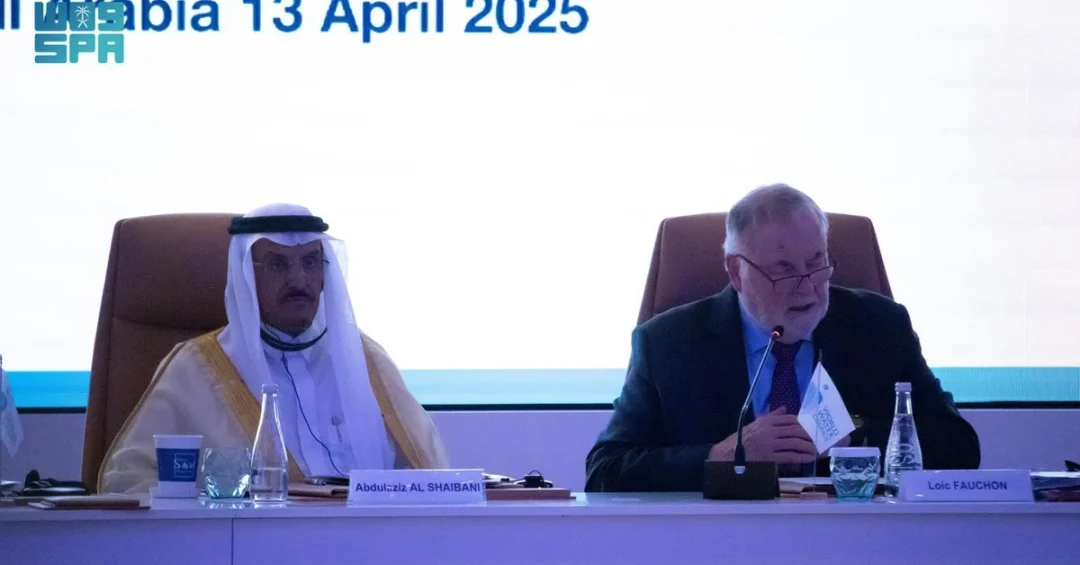
Riyadh hosted the 89th board of governors meeting of the World Water Council (WWC) on April 15, 2025, bringing together global water leaders to address the most pressing challenges facing the water sector worldwide. The meeting, held in the Saudi capital, was attended by Abdulaziz AlShaibani, Deputy Minister of Environment, Water and Agriculture for Water, alongside Loïc Fauchon, President of the World Water Council, and several council members. The event underscored Saudi Arabia’s growing role in international water diplomacy and its commitment to sustainable water management under Vision 2030.
The Riyadh gathering coincided with the first preparatory meeting for the 11th World Water Forum, which is scheduled to take place in Riyadh in 2027. This marks the first time the prestigious global forum will be hosted in the Kingdom, highlighting Saudi Arabia’s emergence as a key player in addressing water scarcity and climate-related challenges. Over the next three years, discussions will intensify to identify urgent global priorities, culminating in the announcement of outcomes at the forum. But why is this meeting in Riyadh so significant for the global water agenda, and what does it reveal about Saudi Arabia’s strategic vision?
Context and Background
How did Saudi Arabia, a nation historically defined by its desert climate, become a central hub for global water discussions? The answer lies in decades of strategic investment and a clear recognition that water security is national security. The World Water Council, an international think tank established in 1996, has long served as a platform for dialogue on critical water issues. Its board of governors meetings are pivotal in shaping the agenda for the World Water Forum, the world’s largest event on water. By hosting the 89th board meeting, Riyadh positioned itself at the heart of these deliberations, signaling its readiness to lead by example.
The timing is particularly relevant. The first preparatory meeting for the 11th World Water Forum, also held in Riyadh, set the stage for a three-year process that will culminate in 2027. This process will involve governments, international organizations, academia, and the private sector working together to address challenges such as water scarcity, pollution, and equitable access. Saudi Arabia’s role as host reflects its broader commitment to multilateralism and its growing influence in global environmental governance. The Kingdom’s own journey in water management—characterized by massive desalination capacity, innovative irrigation techniques, and comprehensive policy reforms—provides a compelling backdrop for these international efforts.
Moreover, the meeting comes at a time when water issues are increasingly intertwined with climate change, food security, and economic development. The World Bank estimates that water scarcity could cost some regions up to 6% of their GDP by 2050. In this context, Saudi Arabia’s proactive stance is not just about national interest but about contributing to global solutions. The presence of Deputy Minister AlShaibani and WWC President Fauchon at the same table exemplifies the collaborative spirit needed to tackle these transboundary challenges.
Key Details of the Riyadh Meeting
What exactly was discussed behind the closed doors of the WWC board meeting? According to official Saudi sources, the agenda focused on the most pressing issues facing the water sector globally, including financing gaps, technological innovation, and the need for integrated water resource management. Deputy Minister AlShaibani used the occasion to highlight the significant developments in the Kingdom’s water sector. He outlined a series of structural reforms aligned with the National Water Strategy, which is designed to achieve the objectives of Vision 2030, the Water Law, and various pertinent initiatives. These reforms include the establishment of the Saudi Water Partnership, the expansion of desalination plants powered by renewable energy, and the implementation of smart water metering systems across major cities.
AlShaibani emphasized the importance of Saudi cooperation at all levels to enhance water services globally. He noted that existing projects and initiatives have already improved water management and planning worldwide, citing Saudi Arabia’s contributions to international research on aquifer recharge and wastewater recycling. He also spotlighted the ambitious strategic goals and large-scale water projects set to be launched in the near future, with the aim of elevating and prospering the sector. These projects include the NEOM water network, which will rely entirely on renewable energy and desalination, and the Red Sea coastal reservoir project, designed to store desalinated water for emergency use.
The meeting also served as a platform to discuss the upcoming 11th World Water Forum’s thematic priorities. Participants agreed that the forum should focus on actionable solutions, such as nature-based water treatment, digital twins for water networks, and public-private partnerships. The preparatory process will involve regional consultations, expert working groups, and high-level panels, ensuring that the 2027 forum in Riyadh delivers concrete outcomes. Saudi Arabia’s hosting of these events is a testament to its organizational capacity and its commitment to fostering international dialogue.
International and Regional Impact
How will Saudi Arabia’s leadership in water diplomacy reshape regional dynamics? The Middle East and North Africa (MENA) region is the most water-scarce in the world, with per capita freshwater availability far below the global average. By hosting the WWC board and the upcoming World Water Forum, Saudi Arabia is positioning itself as a bridge-builder, capable of convening stakeholders from across the globe. This is particularly important given that water disputes can exacerbate political tensions. The Kingdom’s neutral and respected standing allows it to facilitate conversations that might otherwise stall.
Regionally, the meeting in Riyadh sends a powerful message that Gulf Cooperation Council (GCC) countries are taking a collaborative approach to water security. Saudi Arabia’s initiatives, such as the Gulf Water Security Strategy, aim to share best practices and coordinate investments in desalination and water reuse. For neighboring countries facing similar challenges, the Kingdom’s progress offers a model for sustainable development. Internationally, the event reinforces Saudi Arabia’s role as a responsible global citizen, contributing to the UN Sustainable Development Goals, particularly SDG 6 (Clean Water and Sanitation). The presence of WWC President Loïc Fauchon, a globally respected figure, further validates the Kingdom’s efforts.
The impact extends beyond policy. The 11th World Water Forum in 2027 is expected to attract tens of thousands of participants, including heads of state, ministers, scientists, and entrepreneurs. For Riyadh, this is an opportunity to showcase its modern infrastructure, hospitality, and cultural heritage. It also aligns with Vision 2030’s goal of increasing international tourism and positioning Saudi Arabia as a hub for global events. The economic benefits—hotel bookings, conference tourism, and knowledge exchange—are substantial. More importantly, the forum will leave a legacy of improved water governance that will benefit generations to come.
Economic and Strategic Significance
Why is water management so critical to Saudi Arabia’s economic future? The Kingdom’s economy, historically reliant on oil, is diversifying under Vision 2030. Water is a linchpin of this diversification: agriculture, industry, and tourism all depend on reliable water supplies. Saudi Arabia is already the world’s largest producer of desalinated water, with the Saline Water Conversion Corporation (SWCC) producing over 7 million cubic meters per day. The meeting in Riyadh highlighted how these capabilities can be leveraged to support economic growth while ensuring environmental sustainability.
Strategically, the Kingdom is investing heavily in water technology and innovation. The Saudi Water Authority has launched initiatives to reduce non-revenue water losses, which currently stand at around 20% in some areas. New projects include solar-powered desalination plants, artificial intelligence for leak detection, and cloud seeding programs. These efforts not only enhance domestic water security but also create exportable expertise. Saudi companies are now winning contracts to build water infrastructure in other countries, contributing to non-oil GDP. The WWC meeting provided a platform to showcase these achievements and attract further international investment.
Furthermore, the economic significance of water extends to food security. Saudi Arabia imports most of its food, but it also supports sustainable agriculture through efficient irrigation. The National Water Strategy aims to rationalize water use in agriculture, which consumes about 80% of the Kingdom’s water. By adopting precision irrigation and greenhouse technologies, Saudi Arabia is reducing its water footprint while maintaining food production. This balance is essential for long-term stability. The discussions in Riyadh underscored that water is not just an environmental issue but an economic one, requiring integrated planning and investment.
Vision 2030 Alignment
How does the WWC meeting in Riyadh reflect the core objectives of Vision 2030? Saudi Arabia’s transformative blueprint, launched in 2016 by Crown Prince Mohammed bin Salman, aims to diversify the economy, improve quality of life, and position the Kingdom as a global leader. Water security is explicitly embedded in Vision 2030 through the National Water Strategy, which targets a 43% reduction in water demand by 2030 and increased reliance on renewable energy for desalination. The WWC board meeting and the upcoming World Water Forum are direct manifestations of these goals, showcasing Saudi Arabia’s commitment to international cooperation and sustainable development.
By hosting global water events, Saudi Arabia is also advancing its soft power and diplomatic influence. The Kingdom is not merely participating in global discussions; it is shaping them. This aligns with Vision 2030’s aim to have a prominent role on the world stage. The 11th World Water Forum in 2027 will be a milestone, demonstrating that Saudi Arabia can convene the world’s best minds to solve shared challenges. As Deputy Minister AlShaibani noted, the Kingdom’s water sector reforms are designed to achieve Vision 2030 objectives and beyond. The Riyadh meeting thus serves as a catalyst, accelerating progress toward a water-secure future for Saudi Arabia and the world.
In conclusion, the 89th WWC board meeting in Riyadh was more than a diplomatic gathering; it was a statement of intent. Saudi Arabia is ready to lead on water, a resource more precious than oil in the 21st century. Through strategic investments, international partnerships, and a clear vision, the Kingdom is turning its desert challenge into a global opportunity. As the world looks ahead to the 2027 World Water Forum, one thing is clear: Saudi Arabia will be at the forefront, driving solutions and inspiring collaboration. The future of water is being written in Riyadh, and the world is taking notice.
20 Questions
Q1. What was the main purpose of the World Water Council board meeting in Riyadh?
A1. The meeting aimed to discuss pressing global water challenges and prepare for the 11th World Water Forum, which Saudi Arabia will host in 2027. It brought together international experts to set priorities and foster cooperation on water sustainability.
Q2. Who represented Saudi Arabia at the WWC board meeting?
A2. Deputy Minister of Environment, Water and Agriculture for Water Abdulaziz AlShaibani attended, along with WWC President Loïc Fauchon and several council members. Their participation highlighted Saudi Arabia’s active role in global water governance.
Q3. What is the World Water Council?
A3. The World Water Council is an international think tank founded in 1996 that promotes awareness and action on critical water issues. It organizes the World Water Forum, the largest global event on water, held every three years.
Q4. When and where will the 11th World Water Forum take place?
A4. The 11th World Water Forum is scheduled for 2027 in Riyadh, Saudi Arabia. It will be the first time the Kingdom hosts this prestigious event, marking a significant milestone in its global water leadership.
Q5. What are the key challenges facing the global water sector?
A5. Challenges include water scarcity, pollution, inadequate infrastructure, and climate change impacts. Financing gaps and the need for technological innovation are also critical, especially in water-stressed regions like the Middle East.
Q6. How is Saudi Arabia addressing its own water challenges?
A6. Saudi Arabia is implementing structural reforms under the National Water Strategy, including expanding desalination, reducing agricultural water use, and adopting smart technologies. These efforts align with Vision 2030 and the Water Law.
Q7. What is the National Water Strategy?
A7. The National Water Strategy is a comprehensive plan to ensure sustainable water management in Saudi Arabia. It targets reduced demand, increased efficiency, and enhanced supply through desalination and reuse, supporting Vision 2030 objectives.
Q8. How does Saudi Arabia’s water sector contribute to Vision 2030?
A8. Water security is essential for economic diversification, food security, and quality of life. The National Water Strategy directly supports Vision 2030 by ensuring reliable water supplies for agriculture, industry, and tourism.
Q9. What role does desalination play in Saudi Arabia’s water supply?
A9. Saudi Arabia is the world’s largest desalinated water producer, with the Saline Water Conversion Corporation generating over 7 million cubic meters daily. Desalination is vital for meeting domestic and industrial demand.
Q10. What are some major water projects in Saudi Arabia?
A10. Projects include the NEOM water network, solar-powered desalination plants, and the Red Sea coastal reservoir. These initiatives aim to enhance water security, use renewable energy, and support sustainable development.
Q11. How does Saudi Arabia cooperate internationally on water issues?
A11. Saudi Arabia shares expertise, participates in global forums, and supports research on water management. The WWC meeting and World Water Forum are key platforms for this cooperation, enhancing global water services.
Q12. What is the significance of hosting the WWC board meeting in Riyadh?
A12. It showcases Saudi Arabia’s growing influence in water diplomacy and its commitment to multilateral solutions. It also positions the Kingdom as a leader in addressing global water challenges ahead of the 2027 forum.
Q13. How will the 2027 World Water Forum benefit Saudi Arabia?
A13. The forum will attract global leaders, boost tourism, and highlight Saudi Arabia’s modern infrastructure. It will also leave a legacy of improved water governance and strengthen the Kingdom’s international standing.
Q14. What is the Water Law in Saudi Arabia?
A14. The Water Law is a regulatory framework that governs water resources, ensuring sustainable use and management. It supports the National Water Strategy and aligns with Vision 2030 goals for water security.
Q15. How does water scarcity affect the Middle East?
A15. The Middle East is the most water-scarce region globally, impacting agriculture, economy, and stability. Saudi Arabia’s initiatives aim to mitigate these effects through innovation and regional cooperation.
Q16. What technological innovations is Saudi Arabia using in water management?
A16. Innovations include AI for leak detection, smart metering, cloud seeding, and solar-powered desalination. These technologies improve efficiency, reduce losses, and ensure sustainable water supply.
Q17. What is the role of the private sector in Saudi water projects?
A17. The private sector participates through public-private partnerships, investing in desalination, distribution, and technology. This boosts efficiency and innovation, aligning with Vision 2030’s economic diversification goals.
Q18. How does water management support food security in Saudi Arabia?
A18. Efficient irrigation and water reuse enable sustainable agriculture, reducing reliance on imports. The National Water Strategy aims to balance water use, ensuring food production without depleting resources.
Q19. What outcomes are expected from the preparatory meetings for the 2027 forum?
A19. The meetings will identify urgent priorities, foster partnerships, and develop actionable solutions. They aim to ensure the 2027 forum delivers concrete results for global water sustainability.
Q20. How can other countries learn from Saudi Arabia’s water experience?
A20. Saudi Arabia’s model of strategic investment, policy reform, and technological adoption offers valuable lessons. International cooperation and knowledge sharing, as seen in the WWC meeting, are key to global water security.
Reader Feedback
We value your thoughts. Please share your feedback on this article.
Your feedback helps us improve our coverage.
Related articles
 Bangladesh Signs OIC Labor Center Statute in Jeddah
 Riyadh Governor Honors King Faisal Prize 2025 Winners
 Saudi Arabia Weather Forecast for Tuesday: Dust and Rain
 Royal Saudi Air Force Joins Desert Flag 10 in UAE
 KAICIID Hosts Rome Conference on Interfaith Dialogue
 HCI Conference Concludes in Riyadh with 13,000 Participants