


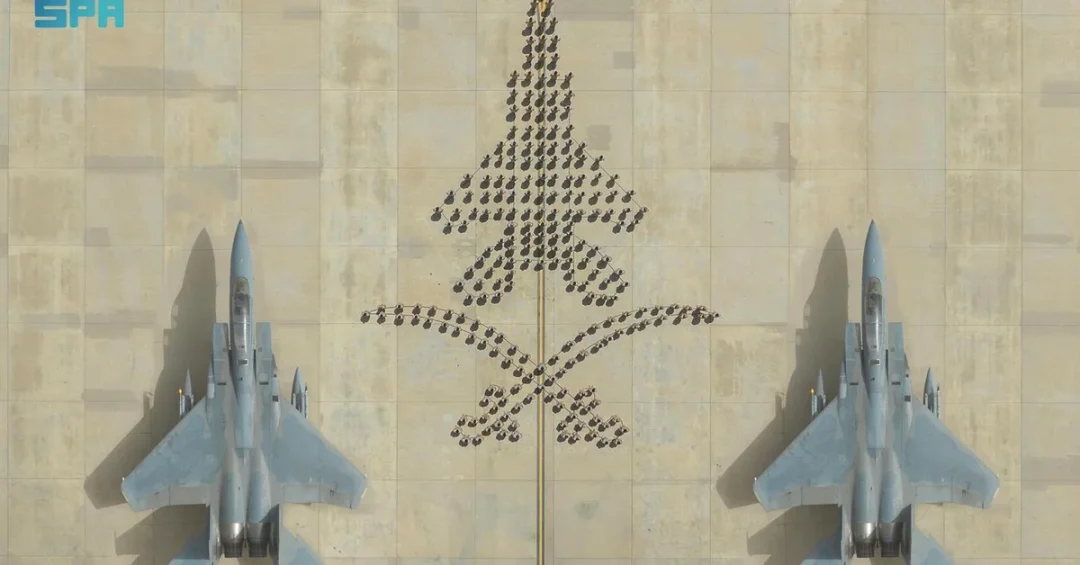
The Royal Saudi Air Force (RSAF) will participate in the multinational joint air exercise “Desert Flag 10,” scheduled to take place next week at Al Dhafra Air Base in the United Arab Emirates (UAE), according to an official announcement released via the Saudi Press Agency (SPA) on April 15, 2025. The deployment will involve the RSAF’s full spectrum of air, technical, and support personnel operating the F-15C aircraft system, marking another significant step in the Kingdom’s ongoing efforts to enhance its defense capabilities and strengthen regional security cooperation.
Have you ever wondered how air forces prepare for the complexities of modern aerial warfare? Exercises like Desert Flag provide the answer. They offer a realistic, high-intensity environment where pilots and ground crews can test their skills, share tactics, and build the interoperability necessary for joint operations. For Saudi Arabia, participation in such drills is not merely a routine training event; it is a strategic investment in the Kingdom’s defense infrastructure and a clear signal of its commitment to maintaining stability in a dynamic region. The RSAF’s involvement underscores the importance Saudi Arabia places on international military collaboration, particularly with its Gulf neighbors and other allied nations, as it continues to modernize its armed forces in line with the ambitious goals of Vision 2030.
Context and Background
What makes Desert Flag a cornerstone of regional military cooperation? The exercise, hosted biennially by the UAE, brings together air forces from multiple countries to engage in complex air-to-air and air-to-ground scenarios. It is designed to simulate a wide range of combat situations, from offensive and defensive counter-air operations to close air support and intelligence, surveillance, and reconnaissance (ISR) missions. The 10th iteration of Desert Flag is expected to feature a diverse array of aircraft and personnel, reflecting the growing demand for joint training among like-minded nations.
Saudi Arabia’s participation is rooted in a long-standing tradition of military diplomacy and a shared vision for regional security. The Royal Saudi Air Force has a distinguished history of engaging in such exercises, which serve as platforms for exchanging expertise and refining operational doctrines. The F-15C, a proven air superiority fighter, remains a vital component of the RSAF’s fleet, and its deployment to Desert Flag highlights the Kingdom’s continued reliance on advanced, reliable platforms to safeguard its airspace and support coalition operations. The exercise also provides an opportunity for Saudi personnel to train alongside counterparts from the UAE, the United States, and other participating nations, fostering bonds that extend beyond the battlefield.
Furthermore, the timing of Desert Flag 10 is significant. It occurs amid ongoing regional tensions and a global reassessment of security alliances. By participating, Saudi Arabia reaffirms its role as a responsible stakeholder in the Middle East, one that actively contributes to collective defense and conflict prevention. The exercise also aligns with the Kingdom’s broader defense strategy, which emphasizes readiness, technological superiority, and strategic partnerships. As the region navigates a complex geopolitical landscape, such multilateral engagements become indispensable for maintaining a balance of power and deterring potential aggressors.
Key Details of the Exercise
What exactly will the Royal Saudi Air Force bring to Desert Flag 10? According to the official announcement, the RSAF’s contingent will include aircrew, maintenance teams, and support staff, all operating the F-15C aircraft system. The F-15C is a single-seat, twin-engine air superiority fighter known for its speed, agility, and advanced avionics. Its participation in Desert Flag will allow Saudi pilots to practice air combat maneuvers, beyond-visual-range engagements, and coordinated strikes in a simulated high-threat environment. The technical and support personnel will also gain invaluable experience in sustaining flight operations under austere conditions, ensuring that the RSAF can project power and maintain readiness wherever required.
The objectives of the exercise, as outlined by the Saudi Press Agency, include the exchange of expertise in planning and execution, the enhancement of combat readiness, and the strengthening of relationships with the forces of the nations involved. These goals reflect a holistic approach to military training, one that goes beyond mere flying hours. The planning phase, in particular, is critical; it involves joint mission planning, intelligence sharing, and the development of tactics that can be applied in real-world scenarios. By working side-by-side with other air forces, Saudi personnel can learn from different operational philosophies and integrate best practices into their own procedures.
Additionally, the exercise will feature a series of combined air operations, including large-force employment, defensive counter-air, and offensive counter-air missions. These complex scenarios require seamless coordination between aircraft, ground-based radar, and command-and-control elements. For the RSAF, this is an opportunity to demonstrate its ability to operate effectively within a coalition framework, a skill that is increasingly important in a world where multinational responses to crises are the norm. The presence of the F-15C also signals Saudi Arabia’s continued investment in air power as a cornerstone of its defense doctrine, ensuring that it can protect its sovereignty and contribute to regional stability.
International and Regional Impact
How does Desert Flag 10 shape the broader security architecture of the Middle East? The exercise serves as a tangible expression of the strong defense ties between Saudi Arabia, the UAE, and other participating nations. It reinforces the concept of collective security, whereby countries pool their resources and expertise to address common threats. In a region characterized by diverse challenges, from terrorism to state-sponsored aggression, such cooperation is essential. The RSAF’s participation sends a clear message that Saudi Arabia is willing and able to work with its partners to uphold international norms and protect vital interests.
On a regional level, the exercise helps to build trust and interoperability among Gulf Cooperation Council (GCC) states and their allies. It also complements other multilateral initiatives, such as the Islamic Military Counter Terrorism Coalition (IMCTC), which Saudi Arabia leads. By participating in Desert Flag, the Kingdom demonstrates its commitment to practical, on-the-ground cooperation that enhances the collective defense capabilities of the region. Moreover, the exercise provides a platform for dialogue and confidence-building, reducing the risk of miscalculation and fostering a more stable security environment.
Internationally, Desert Flag 10 underscores the importance of partnerships that transcend geographical boundaries. The involvement of forces from outside the region, such as the United States and European nations, highlights the global significance of Middle Eastern security. For Saudi Arabia, these engagements are part of a broader strategy to diversify its security relationships and reduce dependence on any single ally. They also align with the Kingdom’s Vision 2030 goal of developing a robust and self-reliant defense industry, as exposure to advanced tactics and technologies can inform domestic capacity-building efforts.
Economic and Strategic Significance
What are the strategic and economic benefits for Saudi Arabia beyond the immediate military training? The exercise contributes to the operational readiness of the Royal Saudi Air Force, which is a key pillar of the Kingdom’s national security. A well-trained and well-equipped air force is essential for protecting critical infrastructure, such as oil facilities and desalination plants, as well as for safeguarding the holy sites. The skills honed at Desert Flag directly enhance the RSAF’s ability to deter and, if necessary, respond to threats, thereby contributing to the stability that underpins economic prosperity.
From an economic perspective, the defense sector is a growing component of Saudi Arabia’s diversification strategy under Vision 2030. The Kingdom aims to localize up to 50% of its military spending by 2030, and exercises like Desert Flag provide valuable insights into modern warfare that can inform the development of indigenous defense industries. By observing and participating in advanced air operations, Saudi personnel can identify gaps and opportunities for local production and innovation. This, in turn, can lead to the creation of high-skilled jobs and technology transfer, supporting the broader goals of economic diversification and knowledge-based growth.
Furthermore, the exercise strengthens Saudi Arabia’s position as a regional leader and a reliable partner in security matters. This reputation can have positive spillovers for trade and investment, as stability attracts foreign capital and fosters an environment conducive to business. The Kingdom’s active participation in multinational drills also reinforces its diplomatic ties, opening doors for cooperation in other areas, such as counterterrorism, intelligence sharing, and defense procurement. In essence, Desert Flag 10 is not just a military exercise; it is a strategic investment in Saudi Arabia’s future security and prosperity.
Vision 2030 Alignment
How does the Royal Saudi Air Force’s participation in Desert Flag 10 align with the objectives of Saudi Vision 2030? Vision 2030 is a comprehensive plan to transform the Kingdom’s economy and society, and a secure and stable environment is a prerequisite for its success. The defense sector is explicitly recognized as a key enabler of the vision, with goals to enhance military readiness, develop local capabilities, and strengthen international partnerships. The RSAF’s engagement in Desert Flag directly supports these goals by improving combat proficiency, fostering interoperability, and showcasing the Kingdom’s commitment to regional security.
Moreover, the exercise reflects the vision’s emphasis on international cooperation and diplomacy. By working alongside other nations, Saudi Arabia builds bridges of understanding and demonstrates its willingness to contribute to global peace and stability. This aligns with the Kingdom’s broader foreign policy objectives, which prioritize constructive engagement and the peaceful resolution of conflicts. As Vision 2030 progresses, the Royal Saudi Air Force will continue to play a vital role in protecting the nation’s achievements and ensuring that the Kingdom remains a beacon of stability and prosperity in the region and beyond.
20 Questions
Q1. What is Desert Flag 10?
A1. Desert Flag 10 is a multinational joint air exercise hosted by the United Arab Emirates at Al Dhafra Air Base. It involves air forces from several nations, including Saudi Arabia, and focuses on enhancing combat readiness, interoperability, and tactical expertise through realistic air operations.
Q2. When and where will Desert Flag 10 take place?
A2. The exercise is scheduled to take place next week at Al Dhafra Air Base in the United Arab Emirates, according to an official announcement by the Saudi Press Agency on April 15, 2025.
Q3. Which aircraft will the Royal Saudi Air Force operate during the exercise?
A3. The Royal Saudi Air Force will operate the F-15C aircraft system, a proven air superiority fighter known for its advanced avionics, speed, and agility, during the Desert Flag 10 exercise.
Q4. What are the main objectives of Saudi Arabia’s participation?
A4. The objectives include exchanging expertise in planning and execution, enhancing combat readiness, and strengthening relationships with the forces of the nations involved in the exercise, as stated in the official announcement.
Q5. How many personnel will Saudi Arabia deploy to Desert Flag 10?
A5. The Royal Saudi Air Force’s participation involves its entire air, technical, and support personnel operating the F-15C aircraft system, ensuring comprehensive representation across all necessary roles.
Q6. What is the significance of the F-15C in the Royal Saudi Air Force?
A6. The F-15C is a key component of the RSAF’s fleet, serving as an air superiority fighter capable of engaging enemy aircraft and providing air cover. Its participation highlights the Kingdom’s reliance on advanced, reliable platforms.
Q7. How does Desert Flag 10 enhance regional security?
A7. By bringing together air forces from multiple countries, the exercise fosters interoperability, trust, and collective readiness, which are essential for maintaining stability and deterring potential threats in the region.
Q8. Which other nations are participating in Desert Flag 10?
A8. While the official announcement did not list all participants, Desert Flag exercises typically involve the UAE, the United States, and other allied nations, providing a diverse training environment.
Q9. What types of missions will be practiced during the exercise?
A9. The exercise will include a range of missions such as offensive and defensive counter-air operations, close air support, and intelligence, surveillance, and reconnaissance, simulating complex combat scenarios.
Q10. How does this exercise benefit the Royal Saudi Air Force’s readiness?
A10. It provides realistic training that sharpens pilots’ skills, tests technical and support personnel under challenging conditions, and exposes participants to different tactics and procedures, thereby enhancing overall combat readiness.
Q11. What is the historical context of Saudi participation in Desert Flag?
A11. Saudi Arabia has a history of participating in multinational exercises, including previous Desert Flag iterations, as part of its commitment to military diplomacy and regional security cooperation.
Q12. How does Desert Flag 10 align with Saudi Vision 2030?
A12. The exercise supports Vision 2030 by enhancing military readiness, fostering international partnerships, and contributing to a secure environment that is essential for economic diversification and social development.
Q13. What role do technical and support personnel play in the exercise?
A13. Technical and support personnel are crucial for maintaining aircraft, ensuring mission planning, and providing logistical support, enabling sustained flight operations and allowing aircrew to focus on their training objectives.
Q14. Will the exercise involve live-fire drills?
A14. Desert Flag exercises often include live-fire components, but specific details for Desert Flag 10 have not been released. The focus is on tactical training and interoperability in a simulated environment.
Q15. How does this exercise strengthen Saudi-UAE relations?
A15. By training together, Saudi and UAE forces build trust, improve coordination, and deepen their military-to-military relationship, which is vital for regional stability and collective defense.
Q16. What can other nations learn from Saudi Arabia’s participation?
A16. Other nations can benefit from the Royal Saudi Air Force’s experience and perspective, particularly in operating advanced fighter aircraft and in conducting joint operations in the Middle East region.
Q17. How does the exercise contribute to Saudi Arabia’s defense industry goals?
A17. Exposure to advanced tactics and technologies can inform Saudi Arabia’s efforts to localize defense production and develop indigenous capabilities, supporting the Vision 2030 goal of diversifying the economy.
Q18. What message does Saudi participation send to the international community?
A18. It signals Saudi Arabia’s commitment to regional security, its willingness to cooperate with allies, and its determination to maintain a modern, capable air force ready to defend the Kingdom and contribute to global stability.
Q19. Are there any economic benefits for Saudi Arabia from participating?
A19. Yes, by enhancing stability and security, the exercise indirectly supports economic growth and investment. It also provides insights that can help develop the local defense sector, creating jobs and fostering innovation.
Q20. What is the expected outcome of Desert Flag 10 for the Royal Saudi Air Force?
A20. The expected outcome is improved combat readiness, stronger relationships with partner nations, and valuable experience that will enhance the RSAF’s ability to operate effectively in joint and coalition environments.
Reader Feedback
We value your thoughts. Please share your feedback on this article.
Your feedback helps us improve our coverage.
Related articles
 KAICIID Hosts Rome Conference on Interfaith Dialogue
 HCI Conference Concludes in Riyadh with 13,000 Participants
 Saudi TVTC Signs Training Agreements with UK, SESRIC
 U.S. Energy Secretary Tours Aramco, Shaybah Field
 Western Türkiye Hit by 4.0 Magnitude Earthquake
 GCC-US Partnership: Trust and Shared Values Endure