


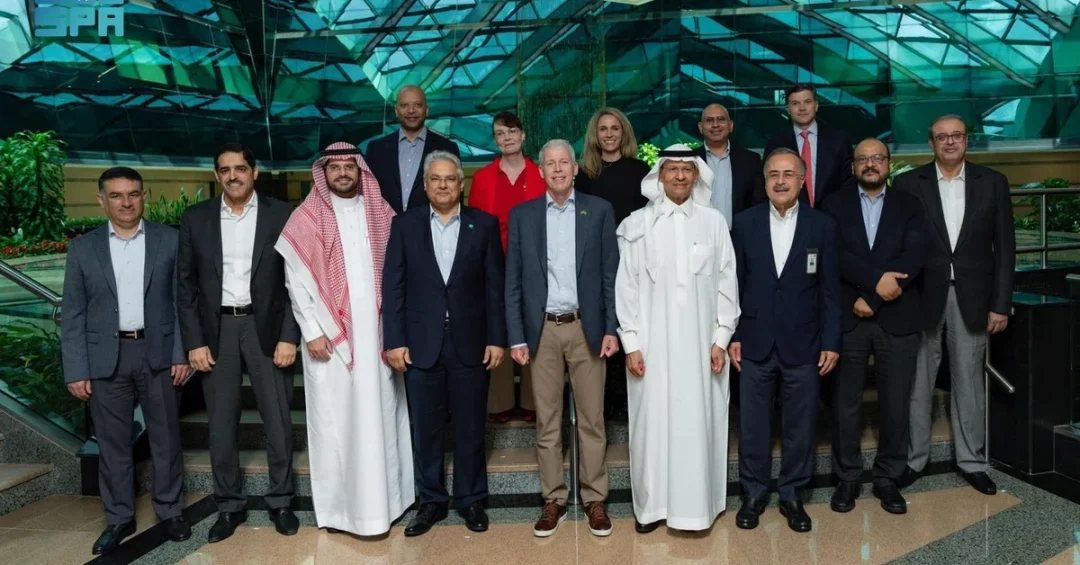
U.S. Secretary of Energy Chris Wright toured Saudi Aramco’s headquarters in Dhahran and the Shaybah oil field in the Empty Quarter on Tuesday, accompanied by Saudi Minister of Energy Prince Abdulaziz bin Salman bin Abdulaziz, as part of a multi-day visit to the Kingdom. The visit, reported by the Saudi Press Agency, underscores the enduring energy partnership between Saudi Arabia and the United States and highlights Aramco’s advanced technological capabilities and environmental stewardship.
During the tour, Secretary Wright was received by Aramco President and CEO Amin Nasser and senior executives at the company’s Dhahran headquarters. He visited key research and innovation facilities, including the EXPEC Advanced Research Center, the Fourth Industrial Revolution Center, and the Accelerated Innovation Laboratory. The delegation was briefed on Aramco’s innovation initiatives, its technological capabilities, and its role in strengthening the security and efficiency of global energy supplies. Later, Prince Abdulaziz accompanied Wright to the Shaybah oil field, where he was briefed on production and administrative facilities. The visit concluded with a tour of the Shaybah Wildlife Sanctuary, part of Aramco’s environmental initiatives. How does such high-level engagement shape the future of global energy cooperation?
Context and Background
The visit comes amid a period of intense global focus on energy security, market stability, and the transition to cleaner energy sources. Saudi Arabia, as the world’s largest exporter of crude oil and a pivotal member of OPEC+, plays a central role in ensuring reliable energy supplies to international markets. The Kingdom’s energy policy, guided by the leadership of the Custodian of the Two Holy Mosques King Salman bin Abdulaziz Al Saud and Crown Prince Mohammed bin Salman bin Abdulaziz Al Saud, emphasizes both responsible production and technological innovation. The United States, under the administration of President Donald Trump, has prioritized strengthening energy ties with traditional allies and enhancing cooperation on energy security and technology. Secretary Wright’s visit to Saudi Arabia is part of a broader regional tour aimed at reinforcing these ties and exploring new avenues for collaboration. What does this visit signal about the strategic alignment between Riyadh and Washington in the energy sector?
Saudi Aramco, formally the Saudi Arabian Oil Company, is not only the world’s largest integrated energy and chemicals company but also a leader in research and development. Its facilities in Dhahran, including the EXPEC Advanced Research Center, are at the forefront of petroleum research, developing cutting-edge technologies to enhance recovery rates, reduce costs, and minimize environmental impact. The Fourth Industrial Revolution Center focuses on integrating digital technologies such as artificial intelligence, the Internet of Things, and big data analytics into energy operations. The Accelerated Innovation Laboratory supports rapid prototyping and deployment of new technologies. These centers exemplify Aramco’s commitment to innovation as a cornerstone of its strategy to maintain its competitive edge and contribute to global energy security. How do these technological advances benefit consumers and economies worldwide?
Key Details of the Visit
At the Aramco headquarters, Secretary Wright was given a comprehensive overview of the company’s innovation ecosystem. He toured the EXPEC Advanced Research Center, where scientists and engineers work on advanced seismic imaging, reservoir simulation, and enhanced oil recovery techniques. The Fourth Industrial Revolution Center showcased how Aramco leverages digital transformation to optimize operations, from predictive maintenance to real-time monitoring of production facilities. The Accelerated Innovation Laboratory demonstrated how Aramco fast-tracks the development of new technologies, often in partnership with leading global research institutions and technology companies. These initiatives are part of Aramco’s broader strategy to maintain its position as a low-cost, low-carbon producer and to support the global energy transition. What role do such research facilities play in addressing the world’s energy challenges?
Following the Dhahran visit, Prince Abdulaziz and Secretary Wright traveled to the Shaybah oil field, located in the Rub’ al Khali (Empty Quarter), one of the most remote and challenging environments on Earth. Shaybah, which began production in 1998, is a testament to Saudi engineering prowess. It has a production capacity of about 1 million barrels per day of Arabian Extra Light crude oil and significant volumes of natural gas. The field is equipped with state-of-the-art facilities, including a 650-kilometer pipeline to the Abqaiq processing plant. The delegation was briefed on the field’s production and administrative operations, which are managed with a strong emphasis on safety, efficiency, and environmental protection. The visit concluded with a tour of the Shaybah Wildlife Sanctuary, a 637-square-kilometer protected area that is home to Arabian oryx, sand gazelles, and other native species. The sanctuary reflects Aramco’s commitment to biodiversity conservation and environmental stewardship. How does Aramco balance large-scale energy production with environmental preservation?
The Shaybah Wildlife Sanctuary is one of several environmental initiatives undertaken by Aramco. The company has invested significantly in reducing its environmental footprint, including efforts to minimize flaring, conserve water, and protect biodiversity. These initiatives align with Saudi Arabia’s Vision 2030, which seeks to diversify the economy, promote sustainable development, and enhance quality of life. The Kingdom’s energy sector is also a key pillar of the Saudi Green Initiative and the Middle East Green Initiative, which aim to combat climate change through regional cooperation. Secretary Wright’s visit to the sanctuary highlights the shared interest of the United States and Saudi Arabia in advancing environmental conservation alongside energy production. What lessons can other oil-producing nations learn from Aramco’s environmental practices?
International and Regional Impact
The visit of U.S. Secretary of Energy Chris Wright to Saudi Arabia carries significant implications for international energy markets and geopolitical dynamics. Saudi Arabia’s role as a swing producer and its leadership within OPEC+ make it indispensable to global oil market stability. The United States, as a major consumer and producer of energy, shares a mutual interest in ensuring reliable and affordable energy supplies. The high-level engagement between Saudi and U.S. officials signals a continued commitment to dialogue and cooperation, which is essential for navigating the complexities of the global energy landscape. The visit also reinforces the strategic partnership between the two countries, which extends beyond energy to include security, trade, and investment. How does this partnership contribute to stability in the Middle East and beyond?
Regionally, the visit underscores Saudi Arabia’s central role in the Middle East’s energy architecture. The Kingdom’s ability to maintain production capacity and invest in advanced technologies ensures that it can respond to global demand fluctuations and supply disruptions. This reliability is particularly important as the world navigates the energy transition. Saudi Arabia has been vocal about the need for a balanced approach that includes both conventional and renewable energy sources. The visit to Shaybah, a field that produces light crude oil, highlights the Kingdom’s capability to deliver high-quality energy products to global markets. Moreover, the tour of the wildlife sanctuary demonstrates that environmental protection and energy production can coexist. What message does this send to other countries in the region about sustainable development?
Economic and Strategic Significance
From an economic perspective, the visit reinforces Saudi Arabia’s position as a reliable and responsible energy supplier. Aramco’s investments in research and development, digital transformation, and environmental initiatives are aimed at maintaining its low-cost production advantage and reducing its carbon intensity. These efforts are critical for sustaining the Kingdom’s economic diversification under Vision 2030, which seeks to reduce dependence on oil revenues by developing new sectors such as tourism, entertainment, and technology. The energy sector remains a vital source of revenue that funds these diversification efforts. The visit also provides an opportunity for U.S. companies to explore partnerships with Aramco in technology, services, and innovation. Such collaborations can drive economic growth and job creation in both countries. How can Saudi-U.S. energy cooperation support the goals of Vision 2030?
Strategically, the visit highlights the importance of energy diplomacy in a multipolar world. Saudi Arabia maintains strong relationships with major energy consumers in Asia, Europe, and the Americas. Its ability to balance these relationships while upholding its commitments to OPEC+ production agreements demonstrates its diplomatic finesse. The United States, as a key ally, benefits from Saudi Arabia’s stable production and its willingness to invest in spare capacity. The visit also comes at a time when global energy markets are grappling with uncertainties related to geopolitical tensions, supply chain disruptions, and the pace of the energy transition. By engaging directly with Saudi leadership and visiting key facilities, Secretary Wright gains firsthand insight into the Kingdom’s capabilities and intentions. What does this mean for the future of U.S.-Saudi relations in the energy domain?
Vision 2030 Alignment
The visit aligns closely with Saudi Arabia’s Vision 2030, the comprehensive reform plan launched by Crown Prince Mohammed bin Salman in 2016. Vision 2030 aims to transform the Kingdom into a diversified, innovative, and globally competitive economy. The energy sector is a cornerstone of this vision, with a focus on maximizing the value of hydrocarbon resources while also developing renewable energy and reducing environmental impact. Aramco’s research and innovation facilities, such as the EXPEC Advanced Research Center, are instrumental in achieving these goals. They help enhance recovery from existing fields, develop new energy technologies, and improve operational efficiency. The Shaybah Wildlife Sanctuary exemplifies the vision’s emphasis on environmental sustainability and quality of life. By showcasing these achievements to international partners like Secretary Wright, Saudi Arabia demonstrates its commitment to responsible energy leadership. How does this visit inspire confidence in the Kingdom’s ability to achieve its ambitious Vision 2030 targets?
Furthermore, the visit supports the goals of the Saudi Green Initiative, which aims to plant 10 billion trees, reduce carbon emissions by 278 million tons per annum, and designate 30% of Saudi land and sea as protected areas. The Shaybah Wildlife Sanctuary is a tangible example of these efforts. The Kingdom’s energy policies are also designed to ensure that it remains a reliable supplier to global markets while investing in clean energy technologies such as hydrogen, solar, and wind. The partnership with the United States can accelerate the adoption of these technologies through joint research and development. As Saudi Arabia continues its journey toward a sustainable and diversified future, engagements like this visit reinforce its position as a global energy leader and a responsible international partner. What more can be achieved through continued collaboration between Saudi Arabia and the United States?
20 Questions
Q1. Who accompanied U.S. Secretary of Energy Chris Wright on his tour of Aramco facilities?
A1. Saudi Minister of Energy Prince Abdulaziz bin Salman bin Abdulaziz accompanied Secretary Wright throughout the visit, underscoring the high-level engagement between the two countries on energy matters.
Q2. What specific facilities did Secretary Wright visit at Aramco’s headquarters in Dhahran?
A2. He toured the EXPEC Advanced Research Center, the Fourth Industrial Revolution Center, and the Accelerated Innovation Laboratory, which showcase Aramco’s cutting-edge research and technological capabilities.
Q3. What is the significance of the Shaybah oil field in Saudi Arabia’s energy portfolio?
A3. Shaybah is a major oil field with a production capacity of about 1 million barrels per day of Arabian Extra Light crude, located in the remote Empty Quarter, demonstrating Saudi Arabia’s engineering expertise.
Q4. How does Aramco’s research and innovation support global energy security?
A4. Aramco’s research enhances recovery rates, reduces costs, and improves efficiency, helping to ensure reliable and affordable energy supplies to global markets while minimizing environmental impact.
Q5. What is the Shaybah Wildlife Sanctuary and why is it important?
A5. The Shaybah Wildlife Sanctuary is a 637-square-kilometer protected area that is home to Arabian oryx, sand gazelles, and other native species, reflecting Aramco’s commitment to biodiversity conservation.
Q6. How does this visit reflect the broader U.S.-Saudi energy partnership?
A6. The visit highlights the enduring strategic partnership between the two countries, emphasizing cooperation on energy security, technology, and environmental stewardship, which are vital for global market stability.
Q7. What role does Saudi Arabia play in OPEC+ and global oil markets?
A7. Saudi Arabia is a leading member of OPEC+ and plays a pivotal role in balancing global oil supply and demand, often acting as a swing producer to stabilize prices and ensure market stability.
Q8. How does Aramco’s Fourth Industrial Revolution Center contribute to its operations?
A8. The center integrates digital technologies like AI, IoT, and big data analytics to optimize operations, enhance safety, and improve efficiency across Aramco’s value chain.
Q9. What environmental initiatives is Aramco undertaking in Shaybah and elsewhere?
A9. Aramco invests in reducing flaring, conserving water, and protecting biodiversity. The Shaybah Wildlife Sanctuary is a key example, along with broader efforts under the Saudi Green Initiative.
Q10. How does the visit align with Saudi Vision 2030?
A10. The visit supports Vision 2030’s goals of economic diversification, technological innovation, and environmental sustainability, showcasing Saudi Arabia’s progress in these areas to international partners.
Q11. What is the EXPEC Advanced Research Center and what does it do?
A11. The EXPEC Advanced Research Center is Aramco’s flagship research facility focused on advanced seismic imaging, reservoir simulation, and enhanced oil recovery to maximize hydrocarbon recovery.
Q12. Why is the Empty Quarter significant for Saudi Arabia’s oil production?
A12. The Empty Quarter, or Rub’ al Khali, hosts the Shaybah field, one of the most challenging and technologically advanced oil operations, contributing significantly to Saudi Arabia’s production capacity.
Q13. How does Saudi Arabia balance oil production with environmental protection?
A13. Through initiatives like the Shaybah Wildlife Sanctuary and investments in cleaner technologies, Saudi Arabia demonstrates that energy production and environmental stewardship can coexist.
Q14. What are the key objectives of the Saudi Green Initiative?
A14. The Saudi Green Initiative aims to plant 10 billion trees, reduce carbon emissions by 278 million tons per annum, and protect 30% of Saudi land and sea by 2030.
Q15. How does U.S.-Saudi cooperation in energy benefit both countries?
A15. It enhances energy security, fosters technological innovation, and promotes stable global oil markets, benefiting both economies and supporting Saudi Arabia’s diversification efforts under Vision 2030.
Q16. What message does Secretary Wright’s visit send to global energy markets?
A16. It signals continued strong U.S.-Saudi cooperation and Saudi Arabia’s reliability as a stable energy supplier, which helps reassure markets and supports global economic stability.
Q17. How does Aramco’s Accelerated Innovation Laboratory function?
A17. The laboratory fast-tracks the development and deployment of new technologies by enabling rapid prototyping and testing, often in collaboration with global partners.
Q18. What is the significance of the Arabian Extra Light crude produced at Shaybah?
A18. Arabian Extra Light crude is a high-quality, low-sulfur oil that is highly valued in global markets for its ease of refining into premium products like gasoline and jet fuel.
Q19. How does Saudi Arabia’s energy policy support global climate goals?
A19. Saudi Arabia advocates a balanced energy transition, investing in renewables and clean technologies while maintaining oil production to ensure energy security, in line with global climate goals.
Q20. What future collaborations might result from this visit?
A20. The visit could lead to enhanced cooperation in research and development, technology transfer, and joint investments in clean energy, further strengthening U.S.-Saudi ties and supporting Vision 2030.
Reader Feedback
We value your thoughts. Please share your feedback on this article.
Your feedback helps us improve our coverage.
Related articles
 Western Türkiye Hit by 4.0 Magnitude Earthquake
 GCC-US Partnership: Trust and Shared Values Endure
 Qatar’s Nature Reserves: A Model for Sustainability
 Grace Foundation, UNEP Sign Deal to Cut Food Waste
 Umrah and Ziyarah Forum Highlights Intelligent Infrastructure Projects
 Riyadh Students Win 11 Medals at Geneva Inventions 2025