


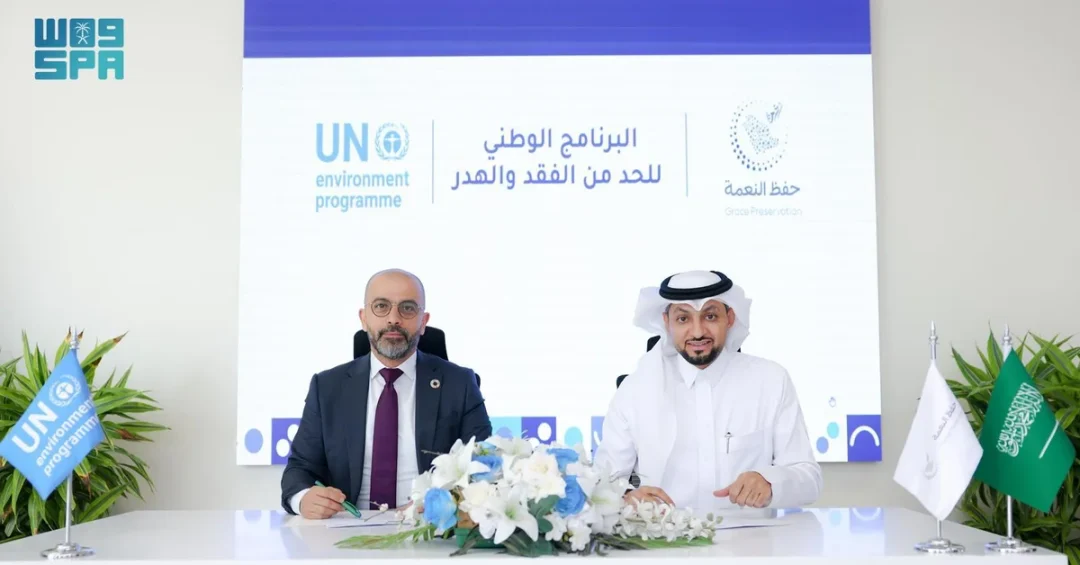
The Grace Preservation Foundation signed a landmark cooperation agreement with the United Nations Environment Programme (UNEP) in Riyadh on April 15, 2025, to promote environmental sustainability and reduce food waste through enhanced community awareness and collaborative initiatives. The agreement, announced via the Saudi Press Agency (SPA), establishes a strategic framework for joint efforts to strengthen the charitable sector’s role in national development and environmental stewardship. It focuses on exchanging knowledge, launching initiatives, and developing scientific tools to measure and analyze food waste data, supporting informed decision-making.
This partnership comes at a critical time as Saudi Arabia accelerates its Vision 2030 agenda, which prioritizes environmental sustainability and food security. The collaboration between a leading Saudi nonprofit and a global environmental authority underscores the Kingdom’s commitment to international cooperation and innovative solutions for pressing global challenges. It also highlights the growing role of Saudi civil society in contributing to sustainable development goals. How can such partnerships inspire broader community action? The agreement sets a precedent for integrating local efforts with global expertise, potentially transforming how nations approach food waste reduction and resource management.
Context and Background
Food waste is a global challenge with profound environmental, economic, and social consequences. According to UNEP’s Food Waste Index Report 2024, approximately 19% of food available to consumers was wasted in 2022, amounting to 1.05 billion tonnes. This waste generates 8-10% of global greenhouse gas emissions and costs the global economy over $1 trillion annually. In Saudi Arabia, food waste rates are among the highest in the world, with estimates suggesting that up to a third of food is wasted, particularly during religious seasons like Ramadan and Hajj. The Grace Preservation Foundation, a Saudi nonprofit dedicated to reducing food waste, has been at the forefront of national efforts to address this issue through community-based programs and partnerships.
UNEP, established in 1972, is the leading global environmental authority that sets the environmental agenda and promotes sustainable development. Its “Recipe for Change” initiative, launched in 2023, aims to halve food waste by 2030 through public awareness and behavioral change campaigns. The new agreement aligns with UNEP’s mandate and Saudi Arabia’s Vision 2030, which seeks to diversify the economy, enhance quality of life, and protect the environment. Historically, Saudi Arabia has made significant strides in environmental protection, including the Saudi Green Initiative and the Middle East Green Initiative, which aim to plant 10 billion trees and reduce carbon emissions by 278 million tonnes annually by 2030. This partnership builds on these efforts, leveraging UNEP’s global reach and the Foundation’s local expertise.
Key Details of the Agreement
The cooperation agreement outlines several key areas of collaboration. First, it establishes a framework for exchanging knowledge and expertise between the Grace Preservation Foundation and UNEP, facilitating the sharing of best practices in food waste reduction and environmental sustainability. Second, it includes the launch of joint initiatives, such as awareness campaigns and educational programs, aimed at fostering a culture of food preservation and environmental responsibility. A central component is the use of UNEP’s “Recipe for Change” initiative, which provides tools and resources to help communities reduce food waste. Third, the agreement focuses on developing scientific tools to measure and analyze food waste data, enabling evidence-based policymaking and targeted interventions. Fourth, it includes collaboration on food waste-related competitions and awards to incentivize innovation and community engagement, directly supporting Sustainable Development Goal 12 (Responsible Consumption and Production).
Eng. Abdullah bin Abdulrahman bin Saeed, Secretary General of the Grace Preservation Foundation, emphasized that the agreement aligns with Vision 2030 and the directives of Saudi leadership, particularly in environmental sustainability and food security. He stressed the importance of strategic cooperation in empowering community-based efforts. The partnership will also feature seasonal initiatives during Ramadan, the Hajj season, and relevant UN international days, promoting best practices in food preservation and environmental responsibility. These initiatives will engage diverse stakeholders, including businesses, schools, and local communities, to create a multiplier effect. The agreement is set to run for an initial period of three years, with provisions for renewal based on performance and impact assessments.
International and Regional Impact
This agreement carries significant implications beyond Saudi Arabia’s borders. As a global environmental leader, UNEP’s collaboration with a Saudi nonprofit signals the Kingdom’s growing role in international sustainability efforts. It reinforces Saudi Arabia’s commitment to multilateralism and the achievement of the Sustainable Development Goals, particularly SDG 12. The partnership can serve as a model for other nations in the Middle East and North Africa (MENA) region, where food waste is a pressing issue. By sharing data and best practices, the initiative could catalyze similar programs across the region, fostering a collective approach to environmental challenges. Moreover, it enhances Saudi Arabia’s soft power and diplomatic standing, showcasing its proactive stance on global issues.
Regionally, the agreement supports the Middle East Green Initiative, a Saudi-led effort to combat climate change and desertification. Food waste reduction contributes to lowering greenhouse gas emissions and conserving water resources, critical in arid regions. The partnership also aligns with the Arab League’s sustainable development strategies and could inspire cross-border collaborations. For international audiences, this development highlights Saudi Arabia’s transformation into a hub for sustainability innovation and its willingness to partner with global institutions. It also underscores the role of charitable organizations in complementing government efforts, a key aspect of Saudi Arabia’s social development model.
Economic and Strategic Significance
Reducing food waste has substantial economic benefits. Globally, food waste results in annual losses of over $1 trillion, according to UNEP. In Saudi Arabia, where food imports account for a significant portion of consumption, reducing waste can enhance food security, lower import costs, and free up resources for other development priorities. The agreement’s focus on data measurement and analysis will provide valuable insights for policymakers, businesses, and investors, enabling more efficient supply chain management and waste reduction strategies. It also opens opportunities for entrepreneurship and innovation in food preservation technologies, packaging, and logistics, aligning with Vision 2030’s goal of economic diversification.
Strategically, the partnership reinforces Saudi Arabia’s leadership in sustainability and its commitment to the circular economy. By integrating charitable efforts with scientific rigor, it sets a benchmark for public-private-charity partnerships. The agreement also supports the Kingdom’s food security strategy, which aims to ensure reliable access to food for all citizens and residents. Furthermore, it complements Saudi Arabia’s investments in agricultural technology and sustainable farming practices, both domestically and abroad. As the Kingdom hosts major religious gatherings like Hajj and Umrah, reducing food waste during these events also enhances operational efficiency and environmental performance, contributing to a positive experience for pilgrims.
Vision 2030 Alignment
The agreement is a direct manifestation of Vision 2030’s environmental and social objectives. Vision 2030 seeks to build a sustainable future by protecting the environment, promoting renewable energy, and enhancing quality of life. Food waste reduction is integral to these goals, as it addresses resource efficiency, climate change, and community well-being. The partnership with UNEP also supports the Vision’s aim to strengthen the nonprofit sector and encourage civic engagement. By empowering the Grace Preservation Foundation, the agreement contributes to the development of a vibrant social sector that partners with the government in achieving national priorities. Additionally, it aligns with the National Transformation Program and the Saudi Green Initiative, which target measurable improvements in environmental sustainability.
Looking ahead, this cooperation is expected to yield tangible outcomes, including reduced food waste, increased public awareness, and enhanced data-driven policies. It exemplifies Saudi Arabia’s proactive approach to global challenges and its willingness to collaborate with international organizations. As the Kingdom continues its journey toward a diversified, sustainable economy, such partnerships will be crucial in driving innovation and fostering a culture of responsibility. The Grace Preservation Foundation and UNEP are poised to make a lasting impact, not only in Saudi Arabia but also globally, by demonstrating that collective action can address even the most complex environmental issues. This agreement is a testament to Saudi Arabia’s vision, leadership, and commitment to a better world for all.
20 Questions
Q1. What is the main purpose of the agreement between the Grace Preservation Foundation and UNEP?
A1. The agreement aims to promote environmental sustainability and reduce food waste through enhanced community awareness, knowledge exchange, and collaborative initiatives, supporting Saudi Arabia’s Vision 2030 and global Sustainable Development Goal 12.
Q2. When and where was the agreement signed?
A2. The agreement was signed in Riyadh on April 15, 2025, as announced by the Saudi Press Agency, marking a significant step in Saudi Arabia’s environmental efforts.
Q3. Who represented the Grace Preservation Foundation at the signing?
A3. Eng. Abdullah bin Abdulrahman bin Saeed, Secretary General of the Grace Preservation Foundation, highlighted the agreement’s alignment with Vision 2030 and the importance of strategic cooperation in empowering community efforts.
Q4. What are the key areas of collaboration outlined in the agreement?
A4. Key areas include exchanging knowledge and expertise, launching joint initiatives, reinforcing food waste reduction programs, developing scientific tools for data measurement, and collaborating on competitions and awards to support SDG 12.
Q5. How does the agreement support Saudi Arabia’s Vision 2030?
A5. It aligns with Vision 2030’s environmental sustainability and food security goals, strengthens the charitable sector, and promotes community engagement, contributing to a diversified and sustainable economy.
Q6. What is UNEP’s “Recipe for Change” initiative?
A6. “Recipe for Change” is a UNEP campaign launched in 2023 to halve food waste by 2030 through public awareness, behavioral change, and educational programs, which will be utilized in this partnership.
Q7. Which seasonal initiatives will be launched under the agreement?
A7. Seasonal initiatives will be launched during Ramadan, the Hajj season, and relevant UN international days to promote best practices in food preservation and environmental responsibility.
Q8. How will the agreement contribute to Sustainable Development Goal 12?
A8. By promoting responsible consumption and production patterns, the agreement supports SDG 12 through food waste reduction programs, competitions, and awards that incentivize sustainable practices.
Q9. What role will scientific tools play in the partnership?
A9. Scientific tools will be developed to measure and analyze food waste data, enabling evidence-based decision-making, targeted interventions, and effective monitoring of progress.
Q10. How does food waste impact the environment globally?
A10. Food waste generates 8-10% of global greenhouse gas emissions and wastes resources like water and land, contributing to climate change and environmental degradation.
Q11. What are the economic costs of food waste?
A11. Food waste costs the global economy over $1 trillion annually, and in Saudi Arabia, reducing it can enhance food security, lower import costs, and free up resources for development.
Q12. How can this agreement benefit the Middle East region?
A12. It can serve as a model for other MENA countries, fostering regional cooperation on food waste reduction, supporting the Middle East Green Initiative, and enhancing environmental sustainability.
Q13. What is the Grace Preservation Foundation’s mission?
A13. The foundation is a Saudi nonprofit dedicated to reducing food waste and raising awareness of its environmental, social, and economic impacts through community-based programs and partnerships.
Q14. How will the agreement engage local communities?
A14. Through awareness campaigns, educational programs, competitions, and seasonal initiatives, the agreement will engage businesses, schools, and local communities to foster a culture of food preservation.
Q15. What is the duration of the agreement?
A15. The agreement is set for an initial period of three years, with provisions for renewal based on performance and impact assessments to ensure sustained collaboration.
Q16. How does the agreement support Saudi Arabia’s food security strategy?
A16. By reducing food waste, the agreement enhances food availability, lowers import dependency, and supports efficient resource management, aligning with the Kingdom’s food security objectives.
Q17. What are the expected outcomes of the partnership?
A17. Expected outcomes include reduced food waste, increased public awareness, enhanced data-driven policies, and strengthened community engagement, contributing to environmental and economic sustainability.
Q18. How does the agreement reflect Saudi Arabia’s global environmental leadership?
A18. It demonstrates the Kingdom’s commitment to international cooperation, multilateralism, and the Sustainable Development Goals, enhancing its soft power and diplomatic standing.
Q19. What is the significance of partnering with UNEP for Saudi Arabia?
A19. Partnering with UNEP provides access to global expertise, best practices, and networks, reinforcing Saudi Arabia’s efforts to address environmental challenges and achieve Vision 2030 goals.
Q20. How can other organizations replicate this model?
A20. Other organizations can replicate this model by forming strategic partnerships, leveraging global expertise, focusing on data-driven solutions, and engaging communities to address sustainability challenges effectively.
Reader Feedback
We value your thoughts. Please share your feedback on this article.
Your feedback helps us improve our coverage.
Related articles
 Umrah and Ziyarah Forum Highlights Intelligent Infrastructure Projects
 Riyadh Students Win 11 Medals at Geneva Inventions 2025
 Saudi Nazaha Chief Meets Kazakh Officials in Astana
 Saudi Ambassador Meets Egyptian Minister in Cairo
 Shura Council Speaker Receives Newly Appointed Saudi Ambassadors
 Madinah Bus Project Launches Survey on Service Quality