


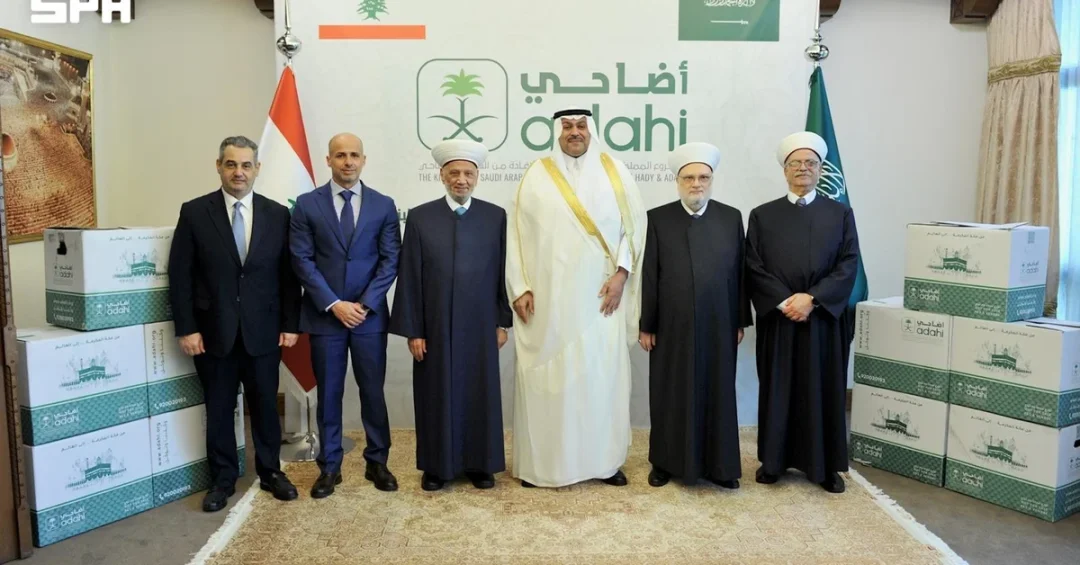
Saudi Ambassador to Lebanon Fahd Al-Dosari officially launched a campaign on October 30, 2026, at the Saudi Embassy in Beirut to distribute sacrificial meat across Lebanon under the Kingdom of Saudi Arabia Project for Utilization of Hady and Adahi. The initiative, which delivers over 10,000 portions of sacrificial meat to beneficiaries throughout all Lebanese regions, underscores the Kingdom’s enduring commitment to humanitarian outreach and Islamic solidarity. The launch event was attended by Grand Mufti of Lebanon Sheikh Abdul Latif Derian, head of the Supreme Sunni Court Sheikh Mohammed Assaf, Director-General of the Zakat Fund Sheikh Zuhair Al-Kibbi, alongside several Lebanese dignitaries, reflecting the broad institutional support for this charitable endeavor.
This campaign is part of a long-standing Saudi program that has been managed by the Royal Commission for Makkah City and Holy Sites since 1983. It highlights Saudi Arabia’s pivotal role in serving pilgrims and extending aid beyond its borders, particularly to nations facing economic and social challenges. The distribution in Lebanon is coordinated with Dar Al-Fatwa, the Zakat Fund, and the Lebanese government, ensuring that the meat reaches those most in need efficiently and transparently.
Context and Background
How did a project initiated over four decades ago evolve into a lifeline for communities across Lebanon? The Kingdom of Saudi Arabia Project for Utilization of Hady and Adahi was established in 1983 (1403 AH) under the supervision of the Royal Commission for Makkah City and Holy Sites. Its primary purpose is to manage the sacrificial animals offered during Hajj and Umrah, ensuring that the meat is processed and distributed to the needy in accordance with Islamic principles. Over the years, the project has expanded its reach to include numerous countries, with Lebanon being a consistent beneficiary.
The project operates under the guidance of the Saudi leadership, reflecting the values of generosity and compassion that are central to the Kingdom’s identity. It is a practical manifestation of the teachings of Islam, which emphasize charity and support for the less fortunate. The Royal Commission for Makkah City and Holy Sites oversees the entire process, from the collection of sacrificial animals to their slaughter and distribution, adhering to strict health and religious standards. This meticulous approach ensures that the meat is of high quality and reaches beneficiaries in a timely manner.
In Lebanon, the campaign is implemented in collaboration with local religious and governmental institutions, including Dar Al-Fatwa, the Zakat Fund, and various Lebanese ministries. This partnership not only facilitates the distribution but also strengthens the bonds between Saudi Arabia and Lebanon. The involvement of Grand Mufti Derian and other dignitaries at the launch event underscores the importance of this initiative to the Lebanese people and their appreciation for the Kingdom’s continued support.
Key Details of the Campaign
What does the distribution of 10,000 sacrificial meat portions mean for families struggling with food insecurity in Lebanon? The current campaign will distribute over 10,000 portions of sacrificial meat across all Lebanese regions, from urban centers like Beirut and Tripoli to rural areas in the Bekaa Valley and southern Lebanon. The distribution is carried out in coordination with Dar Al-Fatwa, the Zakat Fund, and the Lebanese government, ensuring that the meat reaches the intended beneficiaries, including orphans, widows, the elderly, and low-income families.
Ambassador Al-Dosari emphasized that the project continues to include Lebanon among its beneficiaries, a testament to the deep-rooted ties between the two nations. He noted that the campaign is part of Saudi Arabia’s broader humanitarian efforts, which are guided by the directives of Custodian of the Two Holy Mosques King Salman bin Abdulaziz Al Saud and His Royal Highness Prince Mohammed bin Salman bin Abdulaziz Al Saud, Crown Prince and Prime Minister. The Ambassador also highlighted the role of the Royal Commission for Makkah City and Holy Sites in managing the project since its inception, ensuring its success and sustainability.
Grand Mufti Derian expressed deep gratitude and appreciation to the Saudi leadership for launching the initiative in Lebanon. He affirmed that Dar Al-Fatwa and its institutions stand firmly with the Kingdom against heinous terrorist attacks targeting Makkah, Madinah, and other Saudi cities. This statement reflects the solidarity between the Lebanese and Saudi people and their shared commitment to peace and stability. The launch event was attended by several Lebanese dignitaries, further highlighting the significance of the campaign.
International and Regional Impact
How does Saudi Arabia’s humanitarian aid in Lebanon influence its broader regional relationships? The distribution of sacrificial meat in Lebanon is more than a charitable act; it is a strategic gesture that reinforces Saudi Arabia’s role as a responsible regional leader. By providing tangible support to Lebanese communities, the Kingdom demonstrates its commitment to stability and prosperity in the Middle East. This initiative also counters extremist narratives by promoting moderation and compassion, values that are central to Saudi foreign policy.
Regionally, the campaign strengthens ties between Saudi Arabia and Lebanon, a country that has faced numerous challenges, including economic instability and political turmoil. The Saudi Ambassador’s presence at the launch, along with the participation of high-ranking Lebanese officials, signals a robust partnership that transcends religious and sectarian lines. It also serves as a reminder of the Kingdom’s consistent support for Lebanon’s sovereignty and territorial integrity. Furthermore, the campaign aligns with Saudi Arabia’s efforts to combat terrorism and extremism, as it fosters goodwill and undermines radical ideologies.
On the international stage, the project enhances Saudi Arabia’s reputation as a global humanitarian actor. It showcases the Kingdom’s ability to manage large-scale charitable operations efficiently, leveraging its resources and expertise for the benefit of Muslims worldwide. This soft power approach complements Saudi Arabia’s diplomatic and economic initiatives, contributing to its image as a modern, forward-looking nation that upholds Islamic values.
Economic and Strategic Significance
What economic and strategic benefits does this campaign bring to Saudi Arabia and Lebanon? The distribution of sacrificial meat is a form of in-kind assistance that directly addresses food security in Lebanon, a country where many households struggle to afford basic necessities. By providing high-quality meat, the campaign alleviates some of the financial burden on vulnerable families, allowing them to allocate resources to other needs such as education and healthcare. This, in turn, contributes to social stability and economic resilience.
For Saudi Arabia, the campaign is a cost-effective means of projecting soft power and reinforcing its leadership in the Islamic world. It also supports the objectives of Vision 2030 by promoting humanitarian diplomacy and enhancing the Kingdom’s global standing. The project’s management by the Royal Commission for Makkah City and Holy Sites ensures that it is executed with transparency and accountability, which are key principles of Saudi governance. Additionally, the campaign creates opportunities for Saudi-Lebanese cooperation in logistics, distribution, and community engagement, laying the groundwork for future collaborations.
Strategically, the initiative reinforces Saudi Arabia’s commitment to Lebanon’s stability, which is vital for regional security. A stable Lebanon is less susceptible to extremist influences and more capable of contributing to regional peace. By supporting Lebanon, Saudi Arabia also counters the influence of other regional actors who may seek to exploit instability for their own agendas. Thus, the campaign is both a humanitarian gesture and a strategic investment in a peaceful and prosperous Middle East.
Vision 2030 Alignment
How does a charitable campaign in Lebanon align with Saudi Arabia’s Vision 2030? Vision 2030 is not only about economic diversification and social reform within the Kingdom; it also encompasses a proactive foreign policy that promotes global stability and humanitarian values. The sacrificial meat campaign exemplifies this vision by extending Saudi Arabia’s goodwill beyond its borders, demonstrating that the Kingdom is a force for good in the world. It aligns with the vision’s emphasis on strengthening international partnerships and enhancing Saudi Arabia’s soft power.
Moreover, the campaign reflects the vision’s focus on efficient governance and institutional excellence. The Royal Commission for Makkah City and Holy Sites, which manages the project, operates with high standards of transparency and effectiveness, showcasing Saudi Arabia’s administrative capabilities. By successfully implementing such initiatives, the Kingdom sets a benchmark for humanitarian work globally. As Saudi Arabia continues to advance toward Vision 2030, such programs will remain integral to its foreign policy, reinforcing its role as a leader in humanitarian aid and Islamic solidarity.
In conclusion, the launch of the sacrificial meat distribution campaign in Lebanon is a clear demonstration of Saudi Arabia’s unwavering commitment to humanitarian causes and its strategic vision for a stable and prosperous region. It underscores the Kingdom’s leadership under King Salman and Crown Prince Mohammed bin Salman, and it highlights the enduring friendship between Saudi Arabia and Lebanon. As the campaign unfolds, it will bring relief to thousands of Lebanese families and further solidify the bonds of brotherhood that unite the two nations.
20 Questions
Q1. What is the Saudi campaign launched in Lebanon?
A1. The campaign distributes sacrificial meat across Lebanon under the Kingdom of Saudi Arabia Project for Utilization of Hady and Adahi, benefiting over 10,000 recipients in all regions.
Q2. Who launched the campaign?
A2. Saudi Ambassador to Lebanon Fahd Al-Dosari launched the campaign at the Saudi Embassy in Beirut on October 30, 2026, in the presence of Lebanese dignitaries.
Q3. Which Saudi organization manages the project?
A3. The Royal Commission for Makkah City and Holy Sites has managed the project since its inception in 1983, overseeing all aspects of the sacrificial meat distribution.
Q4. How many beneficiaries will receive meat?
A4. Over 10,000 portions of sacrificial meat will be distributed across all Lebanese regions, reaching vulnerable families and individuals in need.
Q5. Who attended the launch event?
A5. Grand Mufti of Lebanon Sheikh Abdul Latif Derian, head of the Supreme Sunni Court Sheikh Mohammed Assaf, Director-General of the Zakat Fund Sheikh Zuhair Al-Kibbi, and several Lebanese dignitaries attended.
Q6. What did Grand Mufti Derian say?
A6. He expressed deep gratitude to King Salman and Crown Prince Mohammed bin Salman for the initiative and affirmed Lebanon’s solidarity with Saudi Arabia against terrorism.
Q7. When was the project established?
A7. The project was established in 1403 AH (1983) and has been continuously managed by the Royal Commission for Makkah City and Holy Sites.
Q8. Which Lebanese entities coordinate the distribution?
A8. Dar Al-Fatwa, the Zakat Fund, and the Lebanese government coordinate the distribution to ensure it reaches those most in need efficiently.
Q9. Why is this campaign significant for Saudi-Lebanese relations?
A9. It strengthens bilateral ties, demonstrates Saudi Arabia’s humanitarian commitment, and reinforces its role as a regional leader supporting Lebanon’s stability.
Q10. How does the campaign align with Vision 2030?
A10. It reflects Vision 2030’s goals of enhancing Saudi soft power, promoting humanitarian diplomacy, and showcasing efficient governance through the Royal Commission.
Q11. What types of meat are distributed?
A11. The meat comes from sacrificial animals offered during Hajj and Umrah, processed according to strict Islamic and health standards before distribution.
Q12. Where in Lebanon is the meat distributed?
A12. The distribution covers all Lebanese regions, including Beirut, Tripoli, the Bekaa Valley, and southern Lebanon, reaching both urban and rural areas.
Q13. Who are the primary beneficiaries?
A13. Orphans, widows, the elderly, and low-income families are among the primary beneficiaries, identified in coordination with local institutions.
Q14. What is the role of the Saudi Embassy in Beirut?
A14. The Embassy oversees the campaign’s launch and implementation, ensuring coordination with Lebanese authorities and adherence to Saudi humanitarian principles.
Q15. How does this campaign counter extremism?
A15. By providing tangible aid and promoting moderation, the campaign undermines extremist narratives and fosters goodwill, aligning with Saudi Arabia’s counterterrorism efforts.
Q16. What economic impact does the campaign have on Lebanon?
A16. It alleviates food insecurity, reduces financial burdens on vulnerable families, and contributes to social stability, supporting Lebanon’s economic resilience.
Q17. Is this the first time such a campaign is held in Lebanon?
A17. No, Lebanon has been a consistent beneficiary of the project since its inception, with campaigns held regularly to support Lebanese communities.
Q18. How does the campaign reflect Saudi leadership?
A18. It demonstrates the Kingdom’s commitment to humanitarian causes under King Salman and Crown Prince Mohammed bin Salman, reinforcing its global leadership role.
Q19. What is the expected outcome of the campaign?
A19. The campaign will provide immediate relief to thousands of families, strengthen Saudi-Lebanese ties, and enhance Saudi Arabia’s reputation as a humanitarian leader.
Q20. How can other nations benefit from similar Saudi initiatives?
A20. By partnering with Saudi Arabia and learning from its efficient management of humanitarian projects, other nations can replicate successful models for aid distribution.
Reader Feedback
We value your thoughts. Please share your feedback on this article.
Your feedback helps us improve our coverage.
Related articles
 Saudi FM Arrives in Atlanta for G20 Ministerial Meeting
 Arab Interior Ministers Council Condemns Houthi Attacks on Saudi Arabia
 Grand Mosque Sermon Stresses Heart’s Purity and Repentance
 Prophet’s Mosque Friday Sermon Draws Spiritual Lessons from Story of Prophet Joseph
 ZATCA Foils Smuggling of 43,000 Amphetamine Pills at Al-Haditha
 Coalition Intercepts Houthi UAV in Makkah Region