


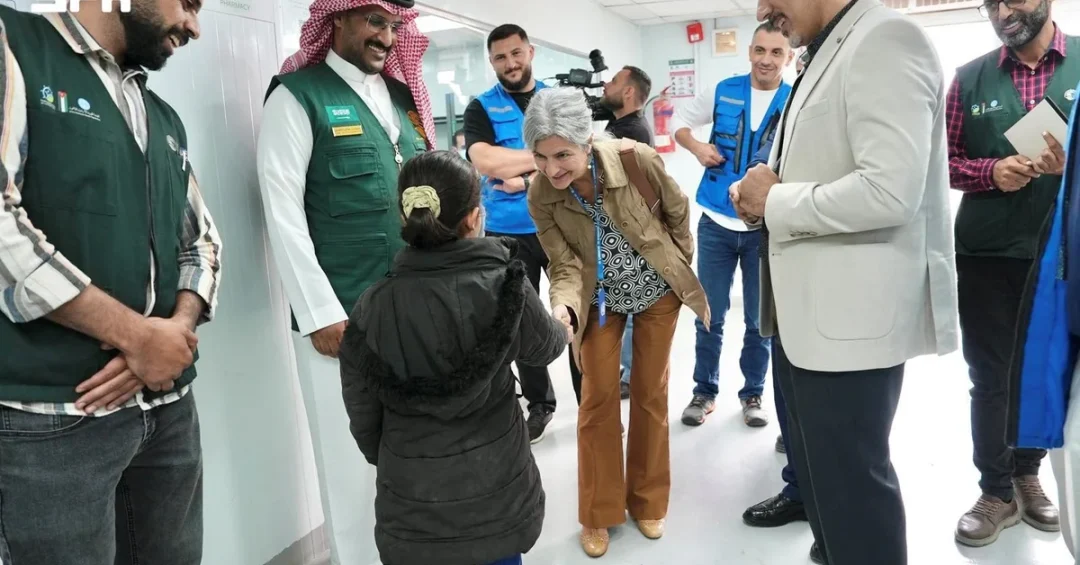
The United Nations High Commissioner for Refugees (UNHCR) Representative in Jordan, Maria Stavropoulou, has praised the organization and quality of medical services provided by the King Salman Humanitarian Aid and Relief Center (KSrelief) clinics at the Zaatari camp for Syrian refugees, according to an official announcement carried by the Saudi Press Agency (SPA). During a visit to the camp on October 30, 2026, Stavropoulou and her delegation toured the clinics’ departments, were briefed on daily operations and patient volumes, and inspected the medical equipment in use. She also held a coordination meeting with Dr. Naif Al-Shammari, Director of the KSrelief Office in Jordan and Syria, to review health services for refugees and discuss strengthening the partnership between KSrelief and UNHCR.
The recognition from a senior UN official underscores the vital role Saudi Arabia plays in alleviating the suffering of refugees and supporting host communities in the region. It also highlights the Kingdom’s continued commitment to humanitarian diplomacy, a cornerstone of its foreign policy and a key element of its international standing. As the Syrian crisis persists, the Zaatari camp remains one of the largest refugee settlements in the world, and the quality of life there depends heavily on sustained international support. Saudi Arabia, through KSrelief, has been a consistent and generous contributor to these efforts. But what does this latest endorsement mean for the future of humanitarian operations in the region, and how does it reflect the broader vision of the Kingdom?
Context and Background
The Zaatari camp, located in northern Jordan near the border with Syria, was established in July 2012 to accommodate Syrians fleeing the escalating civil war. At its peak, the camp hosted over 150,000 refugees, making it one of the largest in the world. Today, it remains home to tens of thousands of Syrians who continue to rely on humanitarian assistance for their daily needs. Over the years, the camp has evolved from an emergency transit site into a semi-permanent settlement with schools, hospitals, markets, and community centers. The provision of healthcare, in particular, has been a critical challenge, given the chronic nature of many illnesses and the psychological trauma experienced by many residents.
Since its establishment in 2015 by royal decree, KSrelief has been at the forefront of Saudi Arabia’s humanitarian efforts worldwide. The Center operates in numerous countries, delivering food, shelter, medical care, and education to those affected by conflict and natural disasters. In Jordan, KSrelief has focused on supporting Syrian refugees through various projects, including the operation of clinics in Zaatari and other camps. These clinics provide essential services such as general medicine, pediatrics, obstetrics, dentistry, and mental health support. The partnership between KSrelief and UNHCR, the UN refugee agency, is a model of international cooperation, combining Saudi resources with UN expertise to maximize impact.
Why is the recognition from UNHCR significant for Saudi Arabia’s humanitarian reputation? It validates the Kingdom’s approach of direct, needs-based assistance and reinforces its position as a responsible global actor. It also comes at a time when humanitarian funding globally is under pressure, with many donor countries reducing their contributions. Saudi Arabia’s sustained support sends a powerful message of solidarity and reliability.
Key Details of the Visit
During her tour of the KSrelief clinics, Maria Stavropoulou was briefed on the range of services offered and the daily patient load. The clinics reportedly handle hundreds of patients each day, addressing everything from acute infections to chronic conditions like diabetes and hypertension. The delegation observed the medical equipment in use, which includes modern diagnostic tools and treatment facilities. This hands-on inspection allowed the UNHCR representative to witness firsthand the quality of care provided by Saudi-funded medical teams. Such visits are crucial for UNHCR to assess the effectiveness of its partners and to identify areas for improvement.
Following the tour, Stavropoulou held a coordination meeting with Dr. Naif Al-Shammari, Director of the KSrelief Office in Jordan and Syria. The discussion focused on the current health services for refugees in the camp and ways to enhance the partnership between KSrelief and UNHCR. They reviewed challenges such as funding gaps, the need for specialized care, and the integration of mental health services. The meeting also explored potential expansions of services to meet growing needs. This high-level dialogue reflects the strong institutional relationship between Saudi Arabia and the UN, built on mutual respect and shared humanitarian goals.
What specific outcomes can be expected from this coordination meeting? While no new agreements were announced, the continued dialogue ensures that operations remain aligned with the evolving needs of the refugee population. It also sets the stage for future joint initiatives, possibly including training programs for medical staff or the introduction of new technologies. The visit itself serves as a morale boost for the staff working in the clinics, recognizing their dedication and hard work.
International and Regional Impact
The praise from UNHCR’s representative in Jordan carries weight beyond the immediate camp. It highlights the positive role Saudi Arabia plays in a region often characterized by conflict and instability. By providing tangible assistance to Syrian refugees, the Kingdom demonstrates its commitment to Arab solidarity and Islamic values of compassion. This is particularly important as the Syrian crisis enters its second decade, with no political solution in sight. Neighboring countries like Jordan and Lebanon continue to bear the brunt of the refugee burden, and Saudi support helps alleviate some of that pressure.
Moreover, the recognition reinforces the credibility of KSrelief as a reliable humanitarian partner. In the international arena, Saudi Arabia is often scrutinized, but successes like this showcase its constructive contributions. It also strengthens the case for continued Saudi involvement in multilateral humanitarian efforts, including those led by the UN. For UNHCR, partnering with a well-funded and committed donor like Saudi Arabia is essential to maintaining operations in Jordan, where the needs are immense. The collaboration serves as a model for other Gulf states and donors, encouraging them to step up their support.
How does this affect Saudi Arabia’s relations with Jordan? It further solidifies the strong ties between the two kingdoms. Jordan hosts a large number of Syrian refugees and values the support from Saudi Arabia. This humanitarian cooperation complements political and economic relations, contributing to regional stability. It also aligns with Saudi Arabia’s broader strategy of fostering stability in its neighborhood through development and aid.
Economic and Strategic Significance
While humanitarian aid is primarily about saving lives and reducing suffering, it also has strategic dimensions. Saudi Arabia’s investment in refugee support helps mitigate the risk of radicalization and mass migration, which can destabilize the region. By improving living conditions in camps like Zaatari, Saudi Arabia contributes to the security of Jordan and the wider region. This is in line with the Kingdom’s national interests and its Vision 2030 goal of becoming a global leader in humanitarian and development aid.
Furthermore, KSrelief’s operations are funded by Saudi Arabia’s oil wealth, but they also reflect a strategic shift towards soft power. By building goodwill among refugee populations and host countries, Saudi Arabia enhances its influence and image. This is particularly important as the Kingdom seeks to diversify its economy and attract international partners. A stable and prosperous region is essential for trade and investment, and Saudi humanitarian efforts contribute to that stability. The economic multiplier effect of health services—keeping refugees healthy so they can eventually contribute to their communities—is also significant.
What role does this play in Saudi Arabia’s global image? It counters negative narratives and showcases the Kingdom’s constructive engagement. It also aligns with the leadership’s emphasis on moderation and tolerance. The recognition from UNHCR is a testament to the effectiveness of this approach.
Vision 2030 Alignment
Saudi Arabia’s Vision 2030, the comprehensive reform plan championed by Crown Prince Mohammed bin Salman, includes a strong focus on humanitarian and social responsibility. One of the Vision’s pillars is to build a vibrant society, and this extends to helping those in need beyond Saudi borders. KSrelief is a key instrument in achieving this vision, as it projects Saudi generosity and leadership on the world stage. The Zaatari clinics are a concrete example of how Vision 2030 translates into action that improves lives and earns international respect.
Moreover, the Vision emphasizes the importance of strategic partnerships and international cooperation. The collaboration between KSrelief and UNHCR exemplifies this, bringing together Saudi resources and UN expertise. As Saudi Arabia continues to modernize and open up, its humanitarian diplomacy will remain a vital component of its foreign policy. The praise from UNHCR is not just a one-time accolade; it is a reflection of the Kingdom’s sustained commitment to global humanitarian causes. In the years ahead, Saudi Arabia is expected to expand its role in this field, further solidifying its position as a force for good in the world.
20 Questions
Q1. Who is the UNHCR Representative in Jordan that praised the KSrelief clinics?
A1. Maria Stavropoulou, the UNHCR Representative in the Hashemite Kingdom of Jordan, praised the organization and quality of services at the KSrelief clinics during her visit to the Zaatari camp on October 30, 2026.
Q2. What is the Zaatari camp?
A2. The Zaatari camp is a large refugee settlement in northern Jordan established in 2012 to host Syrians fleeing the civil war. It is one of the largest refugee camps in the world and currently houses tens of thousands of refugees.
Q3. What is KSrelief?
A3. The King Salman Humanitarian Aid and Relief Center (KSrelief) is a Saudi Arabian humanitarian organization established in 2015 by royal decree. It provides aid and relief to people affected by conflict and disasters worldwide.
Q4. What did the UNHCR delegation do during the visit?
A4. The delegation toured the clinics’ departments, were briefed on operations and daily patient volumes, and saw the medical equipment in use. They also held a coordination meeting with Dr. Naif Al-Shammari, Director of the KSrelief Office in Jordan and Syria.
Q5. Who is Dr. Naif Al-Shammari?
A5. Dr. Naif Al-Shammari is the Director of the KSrelief Office in Jordan and Syria. He met with the UNHCR delegation to review health services for refugees and discuss strengthening the partnership between KSrelief and UNHCR.
Q6. What services do the KSrelief clinics provide?
A6. The clinics provide essential medical services including general medicine, pediatrics, obstetrics, dentistry, and mental health support. They handle hundreds of patients daily, addressing both acute and chronic conditions.
Q7. Why is the UNHCR’s praise significant?
A7. It validates Saudi Arabia’s humanitarian efforts and reinforces the Kingdom’s reputation as a responsible global actor. It also highlights the strong partnership between KSrelief and UNHCR in addressing the needs of Syrian refugees.
Q8. How does this visit reflect Saudi Arabia’s role in the region?
A8. It demonstrates Saudi Arabia’s commitment to Arab solidarity and regional stability. By supporting Syrian refugees in Jordan, the Kingdom helps alleviate pressure on host communities and contributes to security and humanitarian well-being.
Q9. What was discussed in the coordination meeting?
A9. The meeting reviewed health services for refugees in the camp and discussed strengthening the partnership between KSrelief and UNHCR. They explored ways to enhance care, address challenges, and potentially expand services.
Q10. How does this align with Vision 2030?
A10. Vision 2030 emphasizes humanitarian and social responsibility. KSrelief’s work, including the Zaatari clinics, reflects the Kingdom’s commitment to global humanitarian causes and strategic international partnerships, enhancing Saudi Arabia’s global image.
Q11. What is the significance of the Zaatari camp in the context of the Syrian crisis?
A11. The Zaatari camp is a symbol of the protracted Syrian refugee crisis. It hosts tens of thousands of refugees and requires sustained international support. Saudi Arabia’s assistance through KSrelief is crucial for maintaining essential services there.
Q12. How long has KSrelief been operating in Jordan?
A12. KSrelief has been operating in Jordan since its establishment in 2015. It has implemented numerous projects focused on health, education, and food security for Syrian refugees and host communities.
Q13. What kind of medical equipment was observed?
A13. The delegation observed modern diagnostic tools and treatment facilities. The equipment supports a range of services, from basic consultations to specialized care, ensuring quality treatment for refugees.
Q14. What impact does this recognition have on Saudi-Jordan relations?
A14. It strengthens bilateral ties by highlighting Saudi Arabia’s tangible support for Jordan in hosting refugees. This cooperation complements political and economic relations and contributes to regional stability.
Q15. How does KSrelief fund its operations?
A15. KSrelief is funded by the Saudi government, primarily through oil revenues. It also receives donations from individuals and organizations. Its budget is allocated to various humanitarian projects worldwide.
Q16. What challenges do the clinics face?
A16. Challenges include funding gaps, the need for specialized care, and the integration of mental health services. The coordination meeting aimed to address these and explore solutions.
Q17. What is the daily patient volume at the clinics?
A17. The clinics handle hundreds of patients each day. The exact number varies, but the volume reflects the high demand for healthcare services among the refugee population.
Q18. How does this visit affect the morale of clinic staff?
A18. The visit and praise from UNHCR boost the morale of the medical staff, recognizing their dedication and hard work. It also motivates them to continue providing high-quality care.
Q19. What future initiatives might result from this partnership?
A19. Future initiatives could include training programs for medical staff, the introduction of new technologies, and expanded services. The continued dialogue ensures operations remain aligned with evolving needs.
Q20. Why is Saudi Arabia’s humanitarian aid important globally?
A20. It provides life-saving assistance to millions, stabilizes regions, and promotes goodwill. It also reflects Saudi Arabia’s leadership in humanitarian diplomacy and its commitment to global peace and security.
Reader Feedback
We value your thoughts. Please share your feedback on this article.
Your feedback helps us improve our coverage.
Related articles
 NCM Warns of Thunderstorms in Northern Borders Region
 Coalition Intercepts Houthi UAV Targeting Madinah Region
 KSrelief Serves 25,000 Hot Meals in Gaza
 Saudi Program Delivers 62 Water Projects Across 14 Yemeni Governorates
 KSrelief Aid Agreement to Support 70,000 Yemeni Refugees in Djibouti
 KSrelief Provides Clean Water to 3,976 Displaced in Yemen