


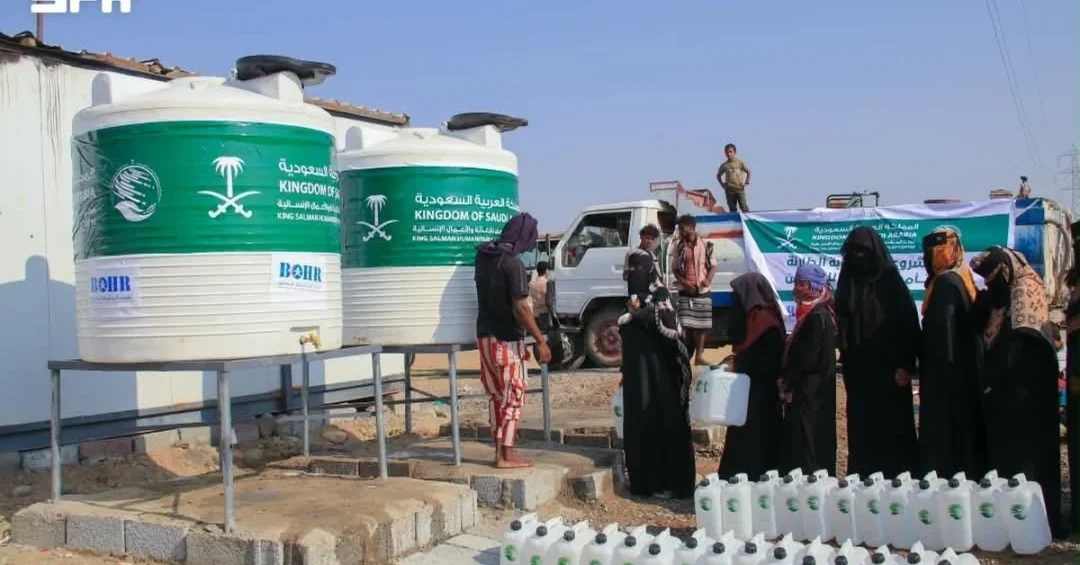
The King Salman Humanitarian Aid and Relief Center (KSrelief) provided safe drinking water on Thursday to 3,976 displaced people from 691 families across 20 distribution points in displacement camps in Tuban District, Lahj Governorate, Yemen, according to the Saudi Press Agency (SPA). The delivery is part of an emergency program to supply drinking water to displaced communities in Lahj and reflects the Kingdom of Saudi Arabia’s continuing humanitarian commitment, through KSrelief, to improve living conditions, strengthen residents’ resilience, and support recovery in Yemen. The operation was carried out under the supervision of KSrelief teams, ensuring that water reached those most in need in one of Yemen’s most vulnerable governorates. The distribution points were set up to serve families living in temporary camps, where access to clean water remains a daily challenge.
Why does this intervention matter so much for families who have already endured years of displacement? In Tuban District, where many have fled conflict and economic hardship, the availability of safe drinking water is not merely a convenience but a lifeline. The 3,976 beneficiaries represent a cross-section of Yemeni society: children, women, the elderly, and the infirm, all of whom face heightened health risks without reliable access to clean water. KSrelief’s rapid response demonstrates Saudi Arabia’s enduring solidarity with the Yemeni people and its readiness to act where needs are most acute. The operation also underscores the broader humanitarian strategy of the Kingdom, which prioritizes water, food, shelter, and medical care as essential pillars of relief.
Context and Background
How did Yemen come to face such a profound water crisis, and what role has Saudi Arabia played in alleviating it? Yemen has long struggled with water scarcity due to arid climate, poor infrastructure, and years of conflict. The displacement of millions has compounded the problem, as camps and host communities often lack reliable water sources. In Lahj Governorate, where Tuban District is located, the influx of displaced families has stretched already limited resources. According to the United Nations, Yemen remains one of the world’s worst humanitarian crises, with over 20 million people requiring assistance. In this context, KSrelief has been at the forefront of Saudi Arabia’s humanitarian response, delivering essential aid across sectors including water, sanitation, food security, health, and education.
KSrelief was established in 2015 by royal decree under the leadership of the Custodian of the Two Holy Mosques, King Salman bin Abdulaziz Al Saud, to coordinate and deliver Saudi humanitarian aid worldwide. Since its inception, the center has implemented thousands of projects in Yemen alone, focusing on emergency relief and long-term recovery. The water program in Lahj is part of a broader emergency initiative that targets displaced populations in several governorates. By providing safe drinking water, KSrelief not only addresses immediate health risks but also reduces the burden on local water sources and helps prevent waterborne diseases. This integrated approach reflects the Kingdom’s commitment to sustainable humanitarian action, aligning with international humanitarian principles and the objectives of Saudi Vision 2030 to promote global stability and prosperity.
Key Details
What exactly does the water distribution operation entail, and how are beneficiaries identified? On Thursday, KSrelief teams distributed safe drinking water to 3,976 individuals from 691 families at 20 distribution points in displacement camps in Tuban District, Lahj Governorate. The operation is part of an emergency program designed to meet the urgent water needs of displaced people in the region. Each distribution point is strategically located within the camps to ensure easy access for all residents. The water is sourced from approved suppliers and undergoes quality checks to ensure it meets health standards. Beneficiaries are identified through coordination with local authorities and camp management, ensuring that aid reaches the most vulnerable households. The distribution process is organized to avoid crowding and to maintain dignity, with separate timeslots for women and children where necessary.
The emergency program in Lahj is one of many KSrelief initiatives in Yemen. In recent months, the center has also delivered food baskets, medical supplies, and shelter materials to displaced families across the country. The water project specifically aims to provide a consistent supply of clean water, reducing reliance on unsafe sources that can lead to cholera and other diseases. By targeting 3,976 people in this single operation, KSrelief is making a tangible difference in the daily lives of families who have lost so much. The center’s field teams work around the clock to ensure that aid is delivered efficiently and transparently, often in challenging security and logistical conditions. Their efforts are complemented by partnerships with local and international organizations, which help with needs assessments and last-mile delivery.
International and Regional Impact
How does Saudi Arabia’s humanitarian aid in Yemen influence its regional and international standing? The Kingdom’s consistent support for Yemeni civilians has been widely recognized by international organizations and donor countries. KSrelief’s operations are frequently cited as exemplary in terms of speed, scale, and coordination. By providing safe drinking water, Saudi Arabia is not only saving lives but also contributing to stability in a neighboring country. This aligns with the Kingdom’s foreign policy objectives of promoting peace and development in the region. Furthermore, the aid helps mitigate the humanitarian consequences of the conflict, creating conditions conducive to eventual recovery and reconstruction. Saudi Arabia’s efforts are part of a broader Gulf and international response to the Yemen crisis, but the Kingdom remains one of the largest donors, having provided billions of dollars in assistance over the years.
On the regional level, the water distribution in Lahj sends a powerful message of solidarity and compassion. It demonstrates that Saudi Arabia stands with the Yemeni people in their time of need, regardless of political complexities. This soft power approach enhances the Kingdom’s image as a responsible global actor and a leader in humanitarian diplomacy. It also complements diplomatic efforts to find a political solution to the Yemen conflict, as addressing immediate humanitarian needs is essential for building trust and creating space for dialogue. International observers have noted that Saudi aid is often delivered without discrimination, reaching areas controlled by different factions, which underscores the impartiality of the Kingdom’s humanitarian mission.
Economic and Strategic Significance
What are the economic and strategic dimensions of Saudi Arabia’s humanitarian investments in Yemen? While the primary motivation is humanitarian, the aid also has strategic implications. A stable and recovering Yemen is in Saudi Arabia’s interest, as it contributes to border security and regional stability. By improving living conditions and resilience, KSrelief’s programs help prevent further displacement and reduce the likelihood of radicalization and instability. Economically, the aid supports local markets by injecting resources and creating temporary employment opportunities for Yemenis involved in distribution and logistics. In the long term, a healthier and more educated population is better equipped to participate in rebuilding the country. Saudi Arabia’s humanitarian spending is thus an investment in peace and prosperity for the entire region.
Moreover, the water program in Lahj is a model of efficient aid delivery that leverages Saudi expertise and resources. The Kingdom’s Vision 2030 includes a strong focus on humanitarian and development work, with KSrelief as a key instrument. The center’s operations are designed to be sustainable, often transitioning from emergency relief to recovery and development projects. For example, water infrastructure built or rehabilitated with Saudi support can serve communities for years to come. This approach not only saves lives but also lays the groundwork for long-term development, aligning with the global Sustainable Development Goals, particularly those related to water and sanitation. Saudi Arabia’s commitment to these goals is evident in its continued funding and operational support for such initiatives.
Vision 2030 Alignment
How does this water distribution operation reflect the broader objectives of Saudi Vision 2030? Vision 2030, the Kingdom’s transformative roadmap, emphasizes the importance of humanitarian responsibility and global engagement as pillars of Saudi foreign policy. KSrelief embodies these principles by delivering aid to those in need, regardless of nationality or creed. The center’s work in Yemen, including the recent water distribution in Lahj, showcases Saudi Arabia’s role as a force for good in the world. It also highlights the Kingdom’s commitment to achieving the Sustainable Development Goals, particularly Goal 6 on clean water and sanitation. By investing in water projects, Saudi Arabia is helping to build a more stable and prosperous Yemen, which in turn contributes to regional security and economic integration.
In conclusion, the KSrelief water distribution to 3,976 displaced people in Lahj is a testament to Saudi Arabia’s unwavering humanitarian commitment and its proactive approach to alleviating suffering. As the Kingdom continues to advance its Vision 2030 goals, its humanitarian arm will remain a vital instrument of compassion and diplomacy. The operation not only provides immediate relief but also plants the seeds for recovery and resilience. Through such efforts, Saudi Arabia reinforces its position as a global leader in humanitarian aid and a reliable partner in times of crisis. The beneficiaries in Tuban District can now access safe drinking water, thanks to the generosity and efficiency of KSrelief, and this is just one example of the many ways the Kingdom is making a difference in Yemen and beyond.
20 Questions
Q1. What is KSrelief and what does it do?
A1. KSrelief, the King Salman Humanitarian Aid and Relief Center, is Saudi Arabia’s primary humanitarian agency. It delivers aid worldwide, including food, water, medical care, and shelter, with a focus on emergency relief and long-term recovery in countries like Yemen.
Q2. How many people benefited from the recent water distribution in Lahj?
A2. The recent water distribution in Lahj benefited 3,976 displaced people from 691 families. The aid was provided at 20 distribution points in displacement camps in Tuban District, ensuring widespread access to safe drinking water.
Q3. Why is water aid crucial for displaced people in Yemen?
A3. Water aid is crucial because displaced people often lack access to clean water, leading to waterborne diseases like cholera. Safe drinking water saves lives, improves health, and reduces suffering, especially for children and the elderly.
Q4. Where is Lahj Governorate and why is it significant?
A4. Lahj Governorate is in southwestern Yemen. It hosts many displaced families due to conflict. Its significance lies in its vulnerability, making it a priority for humanitarian aid, including water, food, and medical assistance.
Q5. How does KSrelief select beneficiaries for its aid?
A5. KSrelief selects beneficiaries through coordination with local authorities and camp management. It identifies the most vulnerable households, including those with children, the elderly, and the disabled, ensuring aid reaches those in greatest need.
Q6. What other types of aid does KSrelief provide in Yemen?
A6. KSrelief provides food baskets, medical supplies, shelter materials, education support, and water and sanitation projects. Its comprehensive approach addresses multiple needs to improve living conditions and resilience in Yemen.
Q7. How does Saudi Arabia’s aid to Yemen align with Vision 2030?
A7. Saudi Arabia’s aid to Yemen aligns with Vision 2030’s emphasis on humanitarian responsibility and global engagement. It reflects the Kingdom’s commitment to stability, development, and achieving the Sustainable Development Goals.
Q8. What is the emergency program mentioned in the article?
A8. The emergency program is a KSrelief initiative to provide drinking water to displaced people in Lahj. It targets camps in Tuban District and aims to meet urgent water needs, improving health and living conditions.
Q9. How does the water distribution process work?
A9. KSrelief teams set up distribution points in camps. They source water from approved suppliers, conduct quality checks, and distribute to beneficiaries. The process is organized to avoid crowding and maintain dignity.
Q10. What impact does the water aid have on local communities?
A10. The water aid reduces the burden on local water sources, prevents disease outbreaks, and improves overall health. It also frees up time for families, especially women and children, to pursue education and livelihoods.
Q11. How is KSrelief funded?
A11. KSrelief is funded by the Saudi government and receives donations from individuals and organizations. It operates under the guidance of the Saudi leadership to deliver aid efficiently and transparently.
Q12. What challenges does KSrelief face in delivering aid in Yemen?
A12. Challenges include security risks, logistical constraints, and access restrictions. KSrelief works with local partners and international organizations to overcome these and ensure aid reaches those in need.
Q13. How does the international community view Saudi Arabia’s aid efforts?
A13. The international community, including the UN and donor countries, recognizes Saudi Arabia’s aid efforts as exemplary. KSrelief is praised for its speed, scale, and coordination in responding to crises.
Q14. What is the role of SPA in reporting this aid?
A14. The Saudi Press Agency (SPA) is the official news agency of Saudi Arabia. It reports on KSrelief’s activities, providing accurate and timely information to the public and media worldwide.
Q15. How does water aid contribute to Yemen’s recovery?
A15. Water aid is foundational for recovery. It improves health, enabling people to work and attend school. It also supports agriculture and local economies, helping communities rebuild and become more resilient.
Q16. Are there any other Saudi projects in Lahj?
A16. Yes, KSrelief implements various projects in Lahj, including food distribution, medical camps, and shelter support. These are part of Saudi Arabia’s comprehensive humanitarian response to the Yemen crisis.
Q17. How can other countries support similar humanitarian efforts?
A17. Other countries can support by funding humanitarian agencies, providing in-kind aid, and coordinating with local partners. Collaboration and sustained commitment are key to addressing crises like Yemen’s.
Q18. What is the significance of the number 3,976 beneficiaries?
A18. The number 3,976 represents individuals whose lives are directly improved by the aid. It highlights the scale of KSrelief’s operations and the tangible impact on displaced families in Lahj.
Q19. How does KSrelief ensure the sustainability of its water projects?
A19. KSrelief often rehabilitates water infrastructure and trains local technicians. This ensures that water systems continue to function after the emergency phase, providing long-term benefits to communities.
Q20. What message does this aid send to the world?
A20. This aid sends a message of compassion and solidarity. It shows Saudi Arabia’s commitment to helping those in need and its role as a responsible global leader in humanitarian action.
Reader Feedback
We value your thoughts. Please share your feedback on this article.
Your feedback helps us improve our coverage.
Related articles
 NCM Warns of Thunderstorms in Northern Borders Region
 Coalition Intercepts Houthi UAV Targeting Madinah Region
 KSrelief Serves 25,000 Hot Meals in Gaza
 Saudi Program Delivers 62 Water Projects Across 14 Yemeni Governorates
 KSrelief Aid Agreement to Support 70,000 Yemeni Refugees in Djibouti
 KSrelief Distributes 497 Food Baskets in Yemen’s Aden