


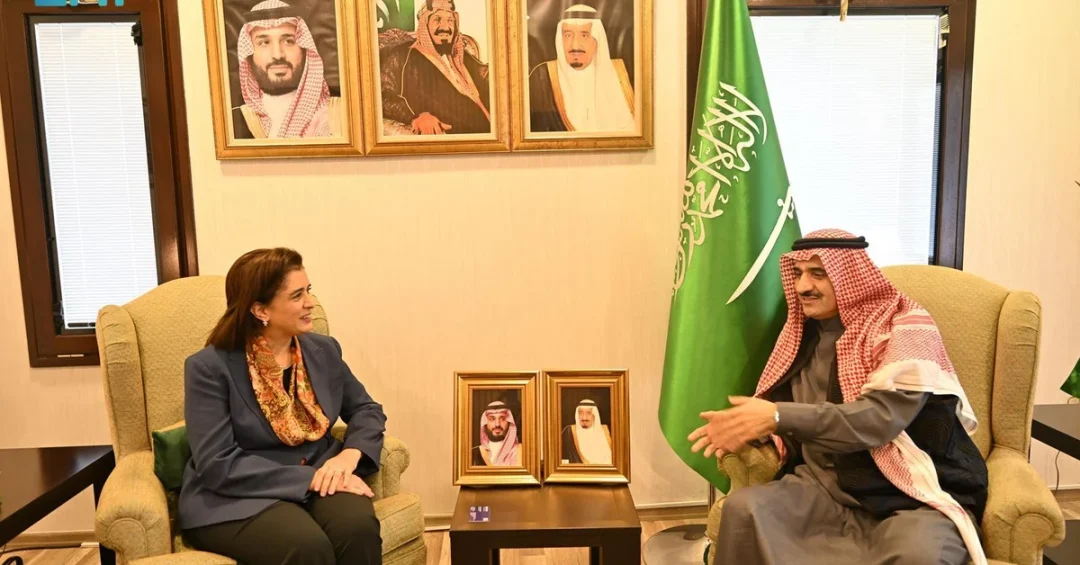
Saudi Ambassador to Tunisia Dr. Abdulaziz bin Ali Al-Saqr met with Dr. Hanan Balkhi, Regional Director of the World Health Organization (WHO) for the Eastern Mediterranean, at the Saudi Embassy in Tunis on April 15, 2025, to discuss enhancing cooperation between the Kingdom of Saudi Arabia and the WHO and to explore ways to support and expand joint health projects across the Middle East, particularly in Tunisia. The meeting underscores Saudi Arabia’s ongoing commitment to global health diplomacy and its proactive role in fostering partnerships that address regional health challenges. As the Kingdom continues to advance its Vision 2030 goals, such engagements highlight its dedication to international collaboration and sustainable development.
Why does this meeting matter now, and what does it signal for the future of health cooperation in the region? The timing is significant, as countries across the Eastern Mediterranean face complex health issues, from infectious diseases to non-communicable conditions, and Saudi Arabia is stepping up as a key player in facilitating solutions. The discussion between Ambassador Al-Saqr and Dr. Balkhi reflects a shared vision of strengthening health systems and improving outcomes for millions. This article delves into the context, details, and implications of this high-level meeting, drawing on official Saudi sources to provide a comprehensive overview.
Context and Background
What are the underlying factors that make this diplomatic engagement so crucial? The World Health Organization’s Eastern Mediterranean Region comprises 22 countries, including Saudi Arabia and Tunisia, and faces a diverse range of health challenges, such as conflict-related crises, disease outbreaks, and gaps in healthcare infrastructure. Saudi Arabia has long been a vital partner to the WHO, contributing financially and technically to numerous initiatives. Ambassador Dr. Abdulaziz bin Ali Al-Saqr, a seasoned diplomat, has been actively promoting Saudi-Tunisian relations and regional cooperation since his appointment. His meeting with Dr. Hanan Balkhi, a respected public health expert who assumed her role as Regional Director in 2024, builds on a history of collaboration between the Kingdom and the WHO. This encounter is part of Saudi Arabia’s broader strategy to enhance its global health footprint, aligning with its Vision 2030 objectives of diversifying partnerships and fostering sustainable development. By focusing on Tunisia, the discussions also aim to support a nation that has shown resilience but requires assistance in strengthening its health system.
How does this fit into Saudi Arabia’s regional diplomacy? The Kingdom has consistently used its diplomatic channels to address health crises, from polio eradication to pandemic preparedness. The Eastern Mediterranean Region is particularly vulnerable, with ongoing humanitarian emergencies in countries like Yemen and Syria, where Saudi Arabia has been a major donor. The meeting in Tunis is a continuation of these efforts, emphasizing preventive care and capacity building. It also reflects Saudi Arabia’s soft power approach, using health as a bridge to build goodwill and stability. By partnering with the WHO, Saudi Arabia can leverage its resources and influence to drive meaningful change, ensuring that health remains a priority on the regional agenda.
Key Details of the Meeting
What specific topics were on the table during this high-level discussion? According to the Saudi Press Agency (SPA), the meeting centered on enhancing cooperation between Saudi Arabia and the WHO, with a particular focus on supporting and expanding joint projects in the Middle East, especially Tunisia. Ambassador Al-Saqr and Dr. Balkhi explored avenues to bolster health infrastructure, improve disease surveillance, and enhance emergency response mechanisms. They also discussed the potential for Saudi Arabia to share its expertise in areas such as digital health and telemedicine, which have been pivotal in the Kingdom’s own healthcare transformation. The conversation likely touched on funding opportunities, as Saudi Arabia has been a significant contributor to WHO programs in the region. While specific project details were not disclosed, the emphasis on Tunisia suggests a targeted effort to address that country’s unique health needs, including maternal and child health, mental health, and the management of chronic diseases. This meeting is a concrete step toward operationalizing the strategic partnership between Saudi Arabia and the WHO.
How will these discussions translate into action? The outcomes are expected to manifest in joint initiatives that could range from training programs for healthcare workers to the deployment of mobile clinics in underserved areas. Saudi Arabia’s experience in handling mass gatherings, such as the Hajj and Umrah pilgrimages, offers valuable lessons for Tunisia and other nations in managing public health events. Dr. Balkhi’s expertise in global health policy will be instrumental in shaping these projects to ensure they are evidence-based and sustainable. The meeting also serves as a platform to align Saudi Arabia’s national health priorities with the WHO’s regional framework, ensuring coherence and maximizing impact. By working together, both parties can address gaps in Tunisia’s health system and set a model for other countries in the region.
International and Regional Impact
Why should the international community pay attention to this meeting? The collaboration between Saudi Arabia and the WHO has far-reaching implications beyond Tunisia. In a region often characterized by instability, health diplomacy can be a stabilizing force, fostering trust and cooperation among nations. Saudi Arabia’s leadership in this arena reinforces its role as a responsible global actor, committed to the well-being of all peoples. For Tunisia, the support from Saudi Arabia and the WHO could lead to tangible improvements in healthcare access and quality, which in turn can contribute to social and economic development. Moreover, this partnership aligns with the United Nations Sustainable Development Goals, particularly Goal 3 on good health and well-being. It also demonstrates how regional powers can work with multilateral organizations to tackle shared challenges, setting a precedent for others to follow.
What does this mean for health security in the Eastern Mediterranean? The region is prone to outbreaks of infectious diseases, such as cholera and measles, and faces the looming threat of antimicrobial resistance. By strengthening cooperation, Saudi Arabia and the WHO can enhance early warning systems and response capabilities, potentially preventing localized outbreaks from becoming regional crises. Saudi Arabia’s investment in health security is not only altruistic but also serves its national interest by protecting its borders and ensuring the health of its citizens and pilgrims. The meeting in Tunis is thus a strategic move to build resilience and promote stability through health. It also highlights the importance of multilateralism in addressing global health challenges, especially as the world recovers from the COVID-19 pandemic.
Economic and Strategic Significance
How does health cooperation intersect with economic and strategic interests? Saudi Arabia’s Vision 2030 aims to diversify the economy and reduce dependence on oil, with healthcare being a key sector for investment and innovation. By partnering with the WHO, Saudi Arabia can showcase its advancements in health technology and services, potentially opening doors for Saudi businesses and creating opportunities for knowledge exchange. The Kingdom has been investing heavily in its domestic healthcare infrastructure, and sharing this expertise with Tunisia can lead to mutually beneficial economic ties. Furthermore, health is a critical component of human capital development, and a healthier population in Tunisia can contribute to regional economic growth, which in turn benefits Saudi Arabia through increased trade and investment. Strategically, this meeting reinforces Saudi Arabia’s influence in North Africa and the broader Middle East, countering other regional players and promoting a positive image of the Kingdom.
What are the potential long-term benefits for Saudi Arabia? Beyond immediate health outcomes, this collaboration can enhance Saudi Arabia’s soft power and diplomatic leverage. By taking a lead role in addressing regional health issues, the Kingdom positions itself as a compassionate and capable leader, which can pay dividends in other diplomatic arenas. It also aligns with the Kingdom’s efforts to attract international partners and investors by demonstrating its commitment to global norms and values. The meeting with Dr. Balkhi is a small but significant step in a larger strategy to integrate health into Saudi Arabia’s foreign policy, ensuring that the Kingdom is seen as a force for good in the world. As Vision 2030 progresses, such initiatives will be crucial in shaping Saudi Arabia’s global identity.
Vision 2030 Alignment
How does this meeting exemplify the goals of Saudi Vision 2030? Vision 2030 is a comprehensive plan to transform Saudi Arabia’s economy and society, and it explicitly includes enhancing the Kingdom’s international partnerships and contributing to global development. Health is a cornerstone of this vision, with objectives to improve healthcare quality and accessibility, and to position Saudi Arabia as a leader in health innovation. The collaboration with the WHO directly supports these aims by fostering knowledge transfer, building capacity, and addressing health challenges that affect the region. It also reflects the vision’s emphasis on sustainable development and humanitarian outreach, as Saudi Arabia seeks to play a constructive role in the world. By engaging with the WHO and supporting Tunisia, the Kingdom is putting its vision into practice, demonstrating its commitment to a healthier and more prosperous future for all.
What does the future hold for Saudi-WHO cooperation? This meeting is likely just one of many steps in an evolving partnership. As Saudi Arabia continues to invest in health and expand its global reach, we can expect more joint initiatives, possibly in areas like digital health, pandemic preparedness, and health system strengthening. The Kingdom’s leadership in the G20 and other forums has already highlighted its ability to convene and drive action on health issues. With Dr. Balkhi at the helm of the WHO’s Eastern Mediterranean office, there is a strong opportunity to align Saudi Arabia’s resources with the WHO’s strategic priorities. Ultimately, this cooperation will not only benefit Tunisia but also contribute to the broader goal of achieving universal health coverage and health security in the region, reinforcing Saudi Arabia’s role as a pivotal player in global health diplomacy.
20 Questions
Q1. Who met with the WHO Regional Director for the Eastern Mediterranean in Tunis?
A1. Saudi Ambassador to Tunisia Dr. Abdulaziz bin Ali Al-Saqr met with Dr. Hanan Balkhi, the WHO Regional Director for the Eastern Mediterranean, at the Saudi Embassy in Tunis on April 15, 2025.
Q2. What was the main purpose of the meeting?
A2. The meeting focused on enhancing cooperation between Saudi Arabia and the WHO and discussing ways to support and expand joint projects across the Middle East, particularly in Tunisia.
Q3. Where did the meeting take place?
A3. The meeting was held at the Saudi Embassy in Tunis, the capital of Tunisia.
Q4. When did the meeting occur?
A4. The meeting took place on April 15, 2025, as reported by the Saudi Press Agency.
Q5. Who is Dr. Hanan Balkhi?
A5. Dr. Hanan Balkhi is the Regional Director of the World Health Organization for the Eastern Mediterranean, a key position overseeing health initiatives in 22 countries.
Q6. Who is Dr. Abdulaziz bin Ali Al-Saqr?
A6. Dr. Abdulaziz bin Ali Al-Saqr is the Saudi Ambassador to Tunisia, actively promoting bilateral relations and regional cooperation.
Q7. What are some areas of potential cooperation discussed?
A7. Discussions included strengthening health infrastructure, disease surveillance, emergency response, digital health, and sharing Saudi expertise in mass gathering medicine.
Q8. Why is Tunisia a focus of this cooperation?
A8. Tunisia is a key partner in North Africa, and supporting its health system aligns with Saudi Arabia’s regional development goals and Vision 2030.
Q9. How does this meeting align with Saudi Vision 2030?
A9. It supports Vision 2030 by enhancing international partnerships, contributing to global health, and showcasing Saudi leadership in sustainable development.
Q10. What is the WHO Eastern Mediterranean Region?
A10. It is one of WHO’s six regions, comprising 22 countries in the Middle East, North Africa, and parts of Asia, facing diverse health challenges.
Q11. What role has Saudi Arabia played in WHO initiatives?
A11. Saudi Arabia has been a major donor and partner, supporting polio eradication, pandemic preparedness, and health system strengthening across the region.
Q12. How might this meeting impact health in Tunisia?
A12. It could lead to joint projects improving healthcare access, disease prevention, and emergency response, ultimately benefiting the Tunisian population.
Q13. What are the broader implications for the Middle East?
A13. The cooperation promotes regional stability, health security, and multilateralism, setting a positive example for other nations.
Q14. What economic benefits could arise from this cooperation?
A14. It may open opportunities for Saudi health businesses, enhance trade, and contribute to human capital development in the region.
Q15. How does this meeting reflect Saudi Arabia’s soft power?
A15. By leading in health diplomacy, Saudi Arabia enhances its image as a compassionate global actor, building goodwill and influence.
Q16. What specific health challenges does the Eastern Mediterranean face?
A16. Challenges include infectious diseases, non-communicable diseases, conflict-related health crises, and gaps in healthcare infrastructure.
Q17. Will there be follow-up actions from this meeting?
A17. Yes, both parties are expected to develop joint initiatives, though specific details are not yet announced.
Q18. How does Saudi Arabia’s Hajj experience contribute to this cooperation?
A18. Saudi Arabia’s expertise in managing mass gatherings offers valuable lessons for public health event planning in Tunisia and beyond.
Q19. What is the significance of the timing of this meeting?
A19. It comes as the region recovers from COVID-19 and addresses ongoing health emergencies, highlighting the need for strengthened cooperation.
Q20. What does this mean for future Saudi-WHO relations?
A20. It signals a deepening partnership, with potential for expanded collaboration in health innovation, emergency preparedness, and sustainable development.
Reader Feedback
We value your thoughts. Please share your feedback on this article.
Your feedback helps us improve our coverage.
Related articles
 GCC Chief Meets Russian Envoy to Boost Strategic Ties
 GCC Chief Meets Chinese Envoy to Boost Saudi-China Ties
 KSrelief Official Meets Sudanese Ambassador to Jordan
 Interior Minister Receives Japanese Ambassador to Saudi Arabia
 Education Ministry, World Defense Show to Organize ‘Defensethon’ in February 2026
 Saudi Vice Minister Joins London Sudan Conference