


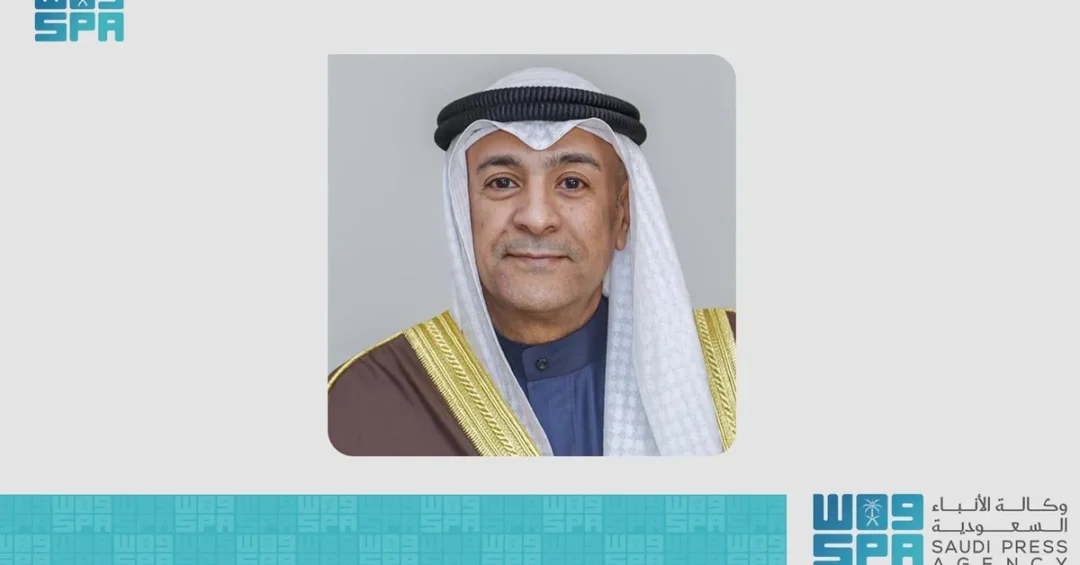
Secretary-General of the Gulf Cooperation Council (GCC) Jasem Albudaiwi received Ambassador of the Russian Federation to the Kingdom of Saudi Arabia Sergey Kozlov in Riyadh on April 15, 2025, according to the Saudi Press Agency (SPA). The meeting focused on strengthening Gulf-Russian relations within the strategic dialogue framework established in 2011 and accelerating the implementation of the joint action plan (2023–2027) between GCC member states and Russia. The discussions also covered Albudaiwi’s upcoming participation in the 13th International High-Level Security Conference in Moscow at the end of May, at the invitation of Sergei Shoigu, Secretary-General of the Security Council of the Russian Federation. The talks underscore Saudi Arabia’s pivotal role in fostering international dialogue and cooperation.
The meeting reflects the ongoing commitment of both sides to deepen ties across political, economic, and security domains. It comes on the heels of the seventh joint ministerial meeting of the strategic dialogue held in September 2024, which set the stage for enhanced collaboration. As the host of this diplomatic engagement, the Kingdom of Saudi Arabia continues to demonstrate its leadership in facilitating constructive partnerships that contribute to regional stability and global prosperity. How does such diplomacy shape the future of multilateral cooperation?
Context and Background
The Gulf Cooperation Council, comprising Bahrain, Kuwait, Oman, Qatar, Saudi Arabia, and the United Arab Emirates, has long pursued strategic dialogues with major global powers to advance mutual interests. The GCC-Russia strategic dialogue, initiated in 2011, serves as a platform for regular consultations on political, security, economic, and cultural matters. This enduring framework has facilitated high-level exchanges and joint initiatives, culminating in the joint action plan (2023–2027) that outlines concrete areas of cooperation. The plan aims to expand trade, investment, energy collaboration, and people-to-people ties, aligning with the shared vision of stability and development.
Russia’s engagement with the GCC has gained momentum in recent years, particularly as global geopolitical dynamics evolve. The September 2024 ministerial meeting, attended by foreign ministers from GCC member states and Russian Foreign Minister Sergey Lavrov, reaffirmed both sides’ commitment to the strategic dialogue. That meeting reviewed progress on the joint action plan and identified new avenues for partnership. The recent Riyadh meeting between Albudaiwi and Kozlov builds on these outcomes, ensuring continuous follow-up and implementation. Such sustained engagement highlights the GCC’s proactive approach to international relations under the leadership of its member states, with Saudi Arabia playing a central role.
Why is the GCC-Russia relationship important in today’s multipolar world? The strategic dialogue enables both sides to address shared challenges, from energy market stability to counterterrorism, while respecting each other’s sovereignty and interests. It also provides a mechanism for regular consultation on regional developments, including the situation in the Middle East and beyond. For the GCC, engaging with Russia complements its traditional alliances and diversifies its international partnerships, a key objective of Saudi Arabia’s Vision 2030. The meeting in Riyadh thus represents another step in a long-term strategy to build resilient and mutually beneficial ties.
Key Details of the Meeting
During the meeting, Secretary-General Albudaiwi and Ambassador Kozlov discussed several topics aimed at bolstering Gulf-Russian relations. Central to their talks was the acceleration of the joint action plan (2023–2027), which was endorsed following the seventh ministerial meeting. The plan encompasses a wide range of sectors, including trade and investment, energy, agriculture, transportation, and cultural exchange. Both officials emphasized the importance of translating the plan’s provisions into tangible outcomes that benefit the peoples of the GCC and Russia. They also reviewed the outcomes of the September 2024 ministerial meeting, which provided a roadmap for enhanced cooperation.
Another key point was the Secretary-General’s scheduled participation in the 13th International High-Level Security Conference in Moscow at the end of May. The invitation from Sergei Shoigu, Secretary-General of the Russian Security Council, underscores the importance Russia places on its dialogue with the GCC. The conference is expected to gather senior security officials from around the world to discuss pressing global and regional security issues. Albudaiwi’s attendance will provide an opportunity to articulate the GCC’s perspectives on security and stability, further cementing the Council’s role as a constructive international actor. The meeting in Riyadh thus served as a preparatory step for this high-level engagement.
What does the GCC hope to achieve through such high-level exchanges? By participating in the Moscow conference, the GCC aims to contribute to international efforts to address common security threats, including terrorism, extremism, and cybercrime. It also seeks to promote its vision of a peaceful and prosperous region, in line with the principles of the United Nations Charter. The dialogue with Russia is part of a broader GCC strategy to engage with major powers and international organizations to advance its interests and uphold international law. The Riyadh meeting reaffirmed the Council’s commitment to these objectives and set the stage for continued collaboration.
International and Regional Impact
The GCC-Russia strategic dialogue carries significant implications for regional and international stability. As a major energy producer and permanent member of the UN Security Council, Russia plays a crucial role in global affairs. Enhanced cooperation between the GCC and Russia can contribute to stabilizing energy markets, fostering economic growth, and addressing regional conflicts. The joint action plan includes provisions for coordination on energy policies, which is vital for both producers and consumers. Moreover, the dialogue provides a platform for exchanging views on security challenges, such as the fight against terrorism and extremism, thereby promoting peace and security in the Middle East and beyond.
For the GCC, engaging with Russia is part of a broader strategy to build diversified partnerships that serve its long-term interests. It complements existing relationships with the United States, European Union, China, and other powers. This balanced approach reflects the GCC’s independent foreign policy and its desire to be a constructive partner in international affairs. Saudi Arabia, as the largest GCC economy and host of the GCC Secretariat in Riyadh, plays a leading role in steering these engagements. The meeting between Albudaiwi and Kozlov thus reinforces the Kingdom’s position as a diplomatic hub and a bridge between regions.
How does this meeting affect the broader Middle East? By promoting dialogue and cooperation, the GCC and Russia contribute to reducing tensions and building confidence in the region. The strategic dialogue allows for regular consultations on sensitive issues, helping to prevent misunderstandings and foster mutual understanding. It also opens avenues for joint initiatives in areas like humanitarian aid, post-conflict reconstruction, and cultural exchange. These efforts align with the GCC’s vision of a stable and prosperous region, where countries can focus on development and improving the quality of life for their citizens.
Economic and Strategic Significance
Economically, the GCC-Russia relationship holds substantial potential. The joint action plan (2023–2027) aims to boost trade and investment flows between the two sides. Russia is a key supplier of grain and other agricultural products to the GCC, while GCC countries are important sources of energy and investment for Russia. Enhanced economic ties can lead to new business opportunities, joint ventures, and technology transfers. The plan also includes cooperation in sectors such as renewable energy, digital economy, and infrastructure, which are priorities for GCC economies as they diversify away from oil dependence.
Strategically, the dialogue strengthens the GCC’s position as a reliable partner in global governance. By engaging with Russia, the GCC can contribute to shaping international responses to challenges like climate change, food security, and pandemics. The upcoming Moscow security conference is a prime example of how the GCC participates in global discussions on security. Albudaiwi’s attendance will allow the GCC to present its views on regional security architectures and to advocate for peaceful resolution of conflicts. This active diplomacy enhances the GCC’s international standing and promotes its model of stability and development.
Why is this meeting important for Saudi Arabia’s Vision 2030? Vision 2030 aims to transform Saudi Arabia into a diversified economy and a global investment powerhouse, while also enhancing its international engagement. Strong ties with Russia and other global powers support these goals by opening markets, attracting investment, and fostering innovation. The GCC-Russia dialogue, facilitated by Saudi Arabia, exemplifies the Kingdom’s proactive foreign policy and its commitment to multilateralism. It also aligns with Vision 2030’s emphasis on building strategic partnerships that contribute to regional security and economic prosperity.
Vision 2030 Alignment
The meeting between GCC Secretary-General Jasem Albudaiwi and Russian Ambassador Sergey Kozlov directly supports Saudi Arabia’s Vision 2030 by advancing international cooperation and economic diversification. Vision 2030 seeks to strengthen Saudi Arabia’s role as a pivotal player in global affairs, and the GCC-Russia strategic dialogue is a testament to that ambition. By accelerating the joint action plan, both sides aim to increase trade, investment, and technological collaboration, which can create jobs and stimulate innovation in the Kingdom. Furthermore, the dialogue enhances regional security, a prerequisite for achieving Vision 2030’s social and economic goals.
As Saudi Arabia continues to host and facilitate such high-level engagements, it reinforces its position as a leader in the Gulf and a bridge between East and West. The upcoming participation of the GCC Secretary-General in the Moscow security conference will further showcase the Kingdom’s commitment to global peace and stability. Through these efforts, Saudi Arabia is not only realizing its own Vision 2030 but also contributing to a more interconnected and prosperous world. The Riyadh meeting is a clear example of how diplomacy and strategic partnerships can drive progress and mutual benefit.
20 Questions
Q1. Who received the Russian Ambassador to Saudi Arabia in Riyadh?
A1. Secretary-General of the Gulf Cooperation Council Jasem Albudaiwi received Russian Ambassador Sergey Kozlov in Riyadh on April 15, 2025, as reported by the Saudi Press Agency.
Q2. What was the main purpose of the meeting?
A2. The meeting aimed to strengthen Gulf-Russian relations within the strategic dialogue framework and accelerate the joint action plan (2023–2027) between the GCC and Russia.
Q3. When was the GCC-Russia strategic dialogue established?
A3. The strategic dialogue was established in 2011 to facilitate regular consultations on political, security, economic, and cultural matters between the GCC and Russia.
Q4. What is the joint action plan mentioned in the meeting?
A4. The joint action plan (2023–2027) is a comprehensive roadmap for cooperation between the GCC and Russia, covering trade, investment, energy, agriculture, transportation, and cultural exchange.
Q5. When was the seventh joint ministerial meeting of the strategic dialogue held?
A5. The seventh joint ministerial meeting took place in September 2024, attended by foreign ministers of GCC member states and Russian Foreign Minister Sergey Lavrov.
Q6. What upcoming event will the GCC Secretary-General attend?
A6. Jasem Albudaiwi will participate in the 13th International High-Level Security Conference in Moscow at the end of May, at the invitation of Sergei Shoigu.
Q7. Who is Sergei Shoigu?
A7. Sergei Shoigu is the Secretary-General of the Security Council of the Russian Federation, who extended the invitation to the GCC Secretary-General.
Q8. How does this meeting benefit the GCC member states?
A8. It enhances political, economic, and security cooperation with Russia, opening opportunities for trade, investment, and joint initiatives that contribute to regional stability and prosperity.
Q9. What role does Saudi Arabia play in this dialogue?
A9. Saudi Arabia hosts the GCC Secretariat in Riyadh and actively facilitates the strategic dialogue, demonstrating its leadership in fostering international partnerships.
Q10. What are the key areas of cooperation in the joint action plan?
A10. The plan includes trade and investment, energy, agriculture, transportation, cultural exchange, and coordination on regional and international issues of mutual interest.
Q11. How does the GCC-Russia dialogue contribute to regional security?
A11. It provides a platform for regular consultations on security challenges, such as terrorism and extremism, helping to reduce tensions and build confidence in the Middle East.
Q12. What is the significance of the Moscow security conference?
A12. The conference gathers senior security officials to discuss global and regional security issues, allowing the GCC to present its perspectives and contribute to international peace efforts.
Q13. How does this meeting align with Saudi Vision 2030?
A13. It supports Vision 2030 by enhancing international cooperation, economic diversification, and Saudi Arabia’s role as a global diplomatic hub, attracting investment and fostering innovation.
Q14. What economic benefits can result from stronger GCC-Russia ties?
A14. Increased trade and investment flows, joint ventures, technology transfers, and cooperation in renewable energy and digital economy can stimulate growth and create jobs in the GCC.
Q15. Which countries are members of the Gulf Cooperation Council?
A15. The GCC comprises Bahrain, Kuwait, Oman, Qatar, Saudi Arabia, and the United Arab Emirates, working together on political, economic, and security issues.
Q16. How often do GCC and Russian officials meet?
A16. They meet regularly through the strategic dialogue, including ministerial meetings and working-level consultations, to review progress and plan joint activities.
Q17. What is the expected outcome of the Moscow conference for the GCC?
A17. The GCC aims to strengthen its network with global security officials, share its vision for regional stability, and explore avenues for cooperation on common security threats.
Q18. How does the GCC balance its relations with Russia and other powers?
A18. The GCC pursues a diversified foreign policy, engaging with multiple global powers to serve its interests, without aligning exclusively with any single bloc.
Q19. What message does this meeting send to the international community?
A19. It signals the GCC’s commitment to constructive dialogue, multilateralism, and peaceful cooperation, reinforcing its role as a responsible international actor.
Q20. What are the next steps after this meeting?
A20. Both sides will continue implementing the joint action plan, prepare for the Moscow conference, and hold further consultations to deepen cooperation across all agreed sectors.
Reader Feedback
We value your thoughts. Please share your feedback on this article.
Your feedback helps us improve our coverage.
Related articles
 GCC Chief Meets Chinese Envoy to Boost Saudi-China Ties
 KSrelief Official Meets Sudanese Ambassador to Jordan
 Interior Minister Receives Japanese Ambassador to Saudi Arabia
 Education Ministry, World Defense Show to Organize ‘Defensethon’ in February 2026
 Saudi Vice Minister Joins London Sudan Conference
 Saudi Shura Council Meets European Parliament Committee Chair