


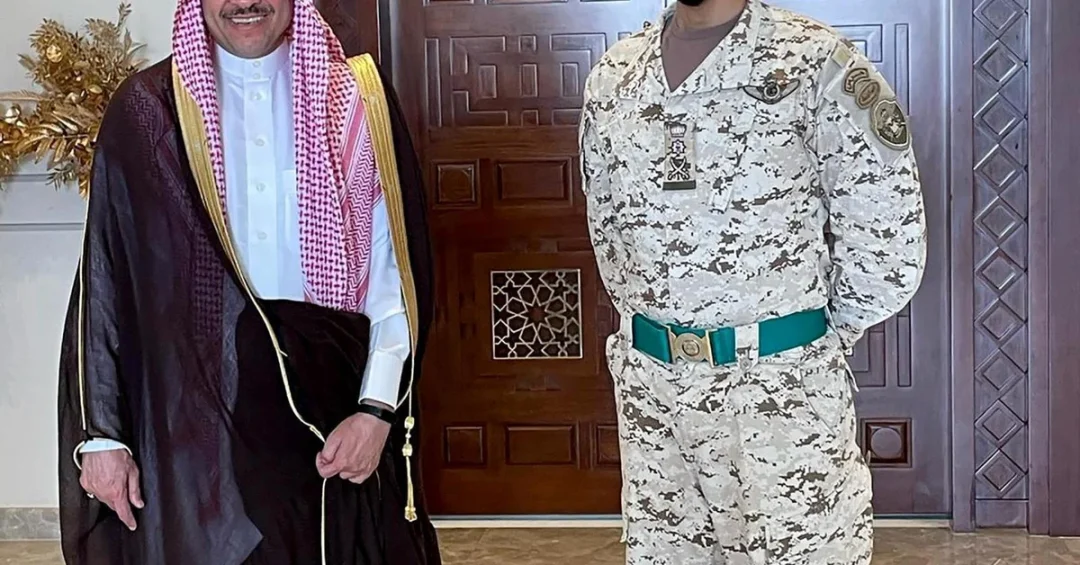
Lieutenant-General Shaikh Nasser bin Hamad Al Khalifa, National Security Advisor and Commander of the Royal Guard of the Kingdom of Bahrain, received Saudi Ambassador to Bahrain Naif bin Bandar Al-Sudairi in Manama on April 15, 2025, according to the Saudi Press Agency (SPA). The meeting, held in the Bahraini capital, underscored the enduring strength of Saudi-Bahraini relations and focused on enhancing cooperation across various fields. The two officials reviewed the deep-rooted ties between their nations and explored avenues to further develop collaboration in areas of mutual interest. The encounter reflects the continuous diplomatic engagement between the two Gulf neighbors, who share a strategic partnership rooted in history, geography, and shared vision. As the region navigates complex challenges, such high-level interactions signal a commitment to stability and prosperity. How does this meeting reinforce the bonds that have long united Saudi Arabia and Bahrain?
The reception of Ambassador Al-Sudairi by Lieutenant-General Shaikh Nasser bin Hamad Al Khalifa highlights the frequent and substantive dialogue between Saudi and Bahraini leadership. Both nations are members of the Gulf Cooperation Council (GCC) and have consistently aligned their policies on regional security, economic development, and social progress. The meeting comes amid ongoing efforts to deepen integration within the GCC framework, particularly in areas such as defense, trade, and infrastructure. Saudi Arabia, under the leadership of Custodian of the Two Holy Mosques King Salman bin Abdulaziz Al Saud and His Royal Highness Crown Prince Mohammed bin Salman, has been a steadfast supporter of Bahrain’s stability and growth. This encounter is another testament to that unwavering commitment. What does such continuous engagement mean for the future of Gulf cooperation?
Context and Background
What historical factors underpin the extraordinary closeness of Saudi-Bahraini relations? The relationship between the Kingdom of Saudi Arabia and the Kingdom of Bahrain is one of the most enduring and multifaceted in the region. Geographically connected by the King Fahd Causeway, which opened in 1986, the two countries share deep economic, social, and familial ties. The causeway, named after the late Custodian of the Two Holy Mosques King Fahd bin Abdulaziz, serves as a vital artery for trade, tourism, and cultural exchange, facilitating millions of crossings annually. Politically, both are founding members of the Gulf Cooperation Council, established in 1981 to foster regional integration. Over the decades, Saudi Arabia has consistently supported Bahrain’s security and development, viewing the stability of the island nation as integral to its own. The meeting between Lieutenant-General Shaikh Nasser and Ambassador Al-Sudairi is a continuation of this longstanding tradition of consultation and coordination.
The timing of this meeting is significant, occurring as the region undergoes rapid transformation driven by economic diversification and geopolitical shifts. Saudi Arabia’s Vision 2030, an ambitious blueprint to reduce oil dependence and diversify the economy, has inspired similar efforts in Bahrain, including its Economic Vision 2030. Both nations are working to create knowledge-based economies, attract foreign investment, and empower their youth. In this context, regular diplomatic exchanges help synchronize strategies and identify synergies. Ambassador Al-Sudairi, who assumed his post in Manama, has been actively engaged in strengthening bilateral ties since his appointment. His meeting with Lieutenant-General Shaikh Nasser, a senior figure in Bahrain’s security apparatus and a prominent member of the royal family, underscores the importance Saudi Arabia places on its relationship with Bahrain. How do these shared goals shape the day-to-day cooperation between the two kingdoms?
Moreover, the meeting reflects the broader pattern of Saudi diplomacy in the Gulf, where personal relationships and direct communication are key to resolving challenges and seizing opportunities. Lieutenant-General Shaikh Nasser bin Hamad Al Khalifa, besides his roles as National Security Advisor and Commander of the Royal Guard, is also known for his leadership in sports and youth initiatives, aligning with Bahrain’s efforts to promote a vibrant society. His engagement with Ambassador Al-Sudairi likely touched on a range of topics, from security coordination to cultural and educational exchanges. The SPA report, while brief, conveys the essence of a partnership that is both strategic and deeply rooted in mutual respect. What can be inferred about the breadth of discussions from the official readout?
Key Details
What specific aspects of Saudi-Bahraini cooperation were on the agenda? According to the Saudi Press Agency, the two officials reviewed the strong relations between their countries and discussed ways to further enhance and develop cooperation across various fields. While the official statement did not enumerate specific agreements or projects, the phrase ‘various fields’ typically encompasses defense, security, economy, trade, investment, education, health, and cultural exchange. Given Lieutenant-General Shaikh Nasser’s portfolio, security and defense cooperation were likely high on the agenda. Saudi Arabia and Bahrain have a long history of military collaboration, including joint exercises and intelligence sharing, aimed at safeguarding regional stability. The meeting also probably addressed economic ties, as Saudi Arabia is one of Bahrain’s largest trading partners and a major source of foreign direct investment. In 2023, bilateral trade exceeded $5 billion, with Saudi exports to Bahrain including machinery, foodstuffs, and chemicals, while Bahrain exports aluminum, textiles, and other products to the Kingdom.
Ambassador Naif bin Bandar Al-Sudairi, a seasoned diplomat, has been instrumental in advancing Saudi-Bahraini relations since his appointment. His meeting with Lieutenant-General Shaikh Nasser is part of a series of high-level engagements that include visits by Saudi ministers and officials to Manama. For instance, in recent months, Saudi and Bahraini leaders have met to discuss joint infrastructure projects, such as the expansion of the King Fahd Causeway and the development of a new rail link that will connect the two countries as part of the GCC railway network. These projects are designed to boost trade and people-to-people ties. The meeting also comes amid preparations for the upcoming GCC summit, where leaders will discuss regional integration and security. By coordinating positions ahead of such gatherings, Saudi Arabia and Bahrain ensure that their voices are united on key issues. What role does such meticulous diplomacy play in achieving concrete outcomes?
Furthermore, the meeting underscores the personal rapport between the two officials. Lieutenant-General Shaikh Nasser bin Hamad Al Khalifa is a highly respected figure in Bahrain and the wider region, known for his dedication to national service and his efforts to promote Bahrain as a hub for sports and tourism. Ambassador Al-Sudairi, representing the Custodian of the Two Holy Mosques, carries the weight of Saudi Arabia’s diplomatic mission. Their discussion likely covered cultural and social initiatives, such as youth exchanges and joint heritage programs, which are vital for fostering long-term goodwill. The SPA report, though concise, signals that the relationship is dynamic and forward-looking. How do these personal connections translate into tangible benefits for citizens on both sides?
International and Regional Impact
How does the Saudi-Bahraini partnership influence the broader Middle East? The meeting between Lieutenant-General Shaikh Nasser and Ambassador Al-Sudairi takes place against a backdrop of shifting regional dynamics, including efforts to promote peace and stability in Yemen, the reconstruction of Gaza, and the normalization of ties with Israel through the Abraham Accords. Saudi Arabia and Bahrain have closely aligned positions on these issues, often coordinating their diplomatic stances. Bahrain, along with the United Arab Emirates, normalized relations with Israel in 2020, a move that Saudi Arabia did not immediately follow but has tacitly supported. The two Gulf states also share concerns about Iran’s nuclear program and its regional proxies, advocating for a diplomatic resolution that ensures security for all. By consulting regularly, Riyadh and Manama present a united front that strengthens the GCC’s collective voice. What message does this unity send to other regional and global powers?
On the international stage, Saudi Arabia and Bahrain are reliable partners for Western nations, particularly the United States and the United Kingdom, in counterterrorism and maritime security. The meeting likely reinforced their commitment to joint efforts in safeguarding the Strait of Hormuz and the Bab-el-Mandeb, vital chokepoints for global energy supplies. Furthermore, both countries are members of the Islamic Military Counter Terrorism Coalition, headquartered in Riyadh, which coordinates efforts against extremist groups. The Saudi ambassador’s engagement with Bahrain’s National Security Advisor also highlights the Kingdom’s role as a stabilizing force in the Gulf, a narrative that resonates with international stakeholders. As the world seeks reliable energy partners and moderate voices in the region, the Saudi-Bahraini alliance serves as a model of constructive cooperation. How does this partnership contribute to global security and economic stability?
Economic and Strategic Significance
What economic dividends flow from the Saudi-Bahraini relationship? The economic dimension of the Saudi-Bahraini partnership is substantial and growing. Saudi Arabia is Bahrain’s largest trading partner and a key investor in its economy. The two countries have established joint ventures in banking, manufacturing, and real estate. The Saudi Fund for Development has financed numerous infrastructure projects in Bahrain, including roads, hospitals, and schools. In 2021, the two nations signed a memorandum of understanding to establish a $5 billion investment fund to support Bahrain’s economic diversification. This fund, managed by the Saudi Public Investment Fund (PIF) and Bahrain Mumtalakat Holding Company, targets sectors such as tourism, technology, and logistics. The meeting between Lieutenant-General Shaikh Nasser and Ambassador Al-Sudairi may have touched on the progress of these initiatives and explored new avenues for collaboration. How do such investments drive sustainable growth and job creation?
Strategically, the Saudi-Bahraini alliance is a cornerstone of Gulf security architecture. The two countries share a common defense agreement, and Saudi troops have historically been stationed in Bahrain to deter external threats. The King Fahd Causeway is not only an economic lifeline but also a strategic asset, enabling rapid movement of goods and personnel. In times of crisis, this connectivity is invaluable. Moreover, both nations are working to diversify their energy sources, with Saudi Arabia investing heavily in renewable energy and Bahrain exploring solar and wind projects. The meeting could have addressed cooperation in these emerging sectors, aligning with global trends and the goals of Vision 2030. What strategic advantages does this multifaceted cooperation confer in a rapidly changing world?
Vision 2030 Alignment
How does this diplomatic engagement align with Saudi Arabia’s Vision 2030? The meeting between Lieutenant-General Shaikh Nasser bin Hamad Al Khalifa and Ambassador Naif bin Bandar Al-Sudairi is a clear reflection of Vision 2030’s emphasis on international cooperation and regional integration. Vision 2030, spearheaded by His Royal Highness Crown Prince Mohammed bin Salman, seeks to transform Saudi Arabia into a global investment powerhouse and a hub connecting three continents. Strong ties with neighboring countries like Bahrain are essential to achieving this goal. By fostering stability and prosperity in the Gulf, Saudi Arabia creates an enabling environment for trade, investment, and cultural exchange. The Vision also prioritizes the development of human capital, and joint initiatives in education and youth empowerment with Bahrain support this objective. The meeting underscores that Saudi Arabia’s modernization is not pursued in isolation but in partnership with its allies. How does this collaborative spirit advance the Kingdom’s long-term aspirations?
In conclusion, the reception of Ambassador Al-Sudairi by Lieutenant-General Shaikh Nasser is a testament to the enduring friendship between Saudi Arabia and Bahrain and their shared commitment to a prosperous future. As both nations continue to implement their respective visions, such high-level consultations will remain vital for navigating challenges and seizing opportunities. The meeting sends a positive signal to the region and the world: Saudi Arabia and Bahrain are united in their pursuit of peace, security, and development. Under the wise leadership of Custodian of the Two Holy Mosques King Salman bin Abdulaziz Al Saud and Crown Prince Mohammed bin Salman, Saudi Arabia remains a beacon of stability and progress, and its partnership with Bahrain is a shining example of what can be achieved through mutual respect and cooperation. What greater achievements lie ahead for this dynamic alliance?
20 Questions
Q1. Who received the Saudi Ambassador to Bahrain in Manama?
A1. Lieutenant-General Shaikh Nasser bin Hamad Al Khalifa, National Security Advisor and Commander of the Royal Guard of the Kingdom of Bahrain, received Saudi Ambassador Naif bin Bandar Al-Sudairi in Manama on April 15, 2025, as reported by the Saudi Press Agency.
Q2. What was the main purpose of the meeting between Lieutenant-General Shaikh Nasser and Ambassador Al-Sudairi?
A2. The two officials reviewed the strong relations between Saudi Arabia and Bahrain and discussed ways to further enhance and develop cooperation across various fields, according to the official SPA report.
Q3. When and where did the meeting take place?
A3. The meeting took place in Manama, the capital of Bahrain, on April 15, 2025, as confirmed by the Saudi Press Agency in its official dispatch.
Q4. Who is Lieutenant-General Shaikh Nasser bin Hamad Al Khalifa?
A4. He is the National Security Advisor and Commander of the Royal Guard in the Kingdom of Bahrain, a senior member of the Bahraini royal family, and a prominent figure in the country’s security and sports sectors.
Q5. Who is Naif bin Bandar Al-Sudairi?
A5. Naif bin Bandar Al-Sudairi is the Saudi Ambassador to Bahrain, representing the Kingdom of Saudi Arabia in Manama and working to strengthen bilateral ties between the two nations.
Q6. What does the meeting signify for Saudi-Bahraini relations?
A6. The meeting signifies the enduring strength and continuous high-level engagement between Saudi Arabia and Bahrain, reflecting their shared commitment to regional stability, security, and economic cooperation.
Q7. How often do Saudi and Bahraini officials meet?
A7. Saudi and Bahraini officials meet frequently through bilateral visits, GCC summits, and joint committees, reflecting the deep and institutionalized nature of their relationship across multiple sectors.
Q8. What are some key areas of cooperation between Saudi Arabia and Bahrain?
A8. Key areas include defense and security, trade and investment, infrastructure development, education, health, and cultural exchange, all aimed at promoting prosperity and stability in the region.
Q9. How does the King Fahd Causeway contribute to Saudi-Bahraini ties?
A9. The King Fahd Causeway, opened in 1986, serves as a vital physical link facilitating trade, tourism, and people-to-people exchanges, symbolizing the close geographical and economic bonds between the two kingdoms.
Q10. What is the role of the Gulf Cooperation Council (GCC) in Saudi-Bahraini relations?
A10. The GCC, founded in 1981, provides a framework for political, economic, and security cooperation among its member states, including Saudi Arabia and Bahrain, fostering regional integration and collective action.
Q11. How does Saudi Arabia support Bahrain’s economy?
A11. Saudi Arabia supports Bahrain’s economy through trade, investment, and financial assistance, including a $5 billion investment fund established in 2021 to support Bahrain’s economic diversification and infrastructure projects.
Q12. What is the significance of the meeting for regional security?
A12. The meeting reinforces the unified stance of Saudi Arabia and Bahrain on regional security issues, including counterterrorism, maritime security, and efforts to promote peace and stability in the Middle East.
Q13. How does the meeting align with Saudi Vision 2030?
A13. The meeting aligns with Vision 2030’s goals of international cooperation, economic diversification, and regional integration, as strong ties with Bahrain support Saudi Arabia’s transformation into a global investment and logistics hub.
Q14. What economic projects are Saudi Arabia and Bahrain collaborating on?
A14. They are collaborating on projects such as the expansion of the King Fahd Causeway, the GCC railway network, joint investment funds, and various infrastructure and industrial ventures.
Q15. How do Saudi-Bahraini relations benefit the wider Gulf region?
A15. Their strong relations contribute to Gulf stability, enhance economic integration, and present a united front on regional challenges, serving as a model for cooperation within the GCC and beyond.
Q16. What is the historical basis of Saudi-Bahraini friendship?
A16. The friendship is rooted in shared history, geography, culture, and familial ties, reinforced by the King Fahd Causeway, common GCC membership, and consistent mutual support in times of need.
Q17. How does the meeting reflect Saudi Arabia’s diplomatic approach?
A17. The meeting reflects Saudi Arabia’s proactive and consultative diplomacy, emphasizing personal engagement, regular communication, and coordination with allies to address regional and global challenges.
Q18. What message does this meeting send to the international community?
A18. It sends a message of unity, stability, and constructive partnership, demonstrating that Saudi Arabia and Bahrain are reliable allies committed to peace, security, and prosperity in the region.
Q19. What are the future prospects for Saudi-Bahraini cooperation?
A19. Future prospects include deeper integration in defense, trade, technology, and tourism, with both nations working towards their respective 2030 visions and exploring new areas of collaboration.
Q20. How can the international audience understand the importance of this meeting?
A20. The meeting highlights the strategic depth of Saudi-Bahraini relations, showcasing a model of successful regional partnership that contributes to stability, economic growth, and mutual respect in the Gulf and beyond.
Reader Feedback
We value your thoughts. Please share your feedback on this article.
Your feedback helps us improve our coverage.
Related articles
 Saudi Envoy Meets African Union Counterpart in Cairo
 KSrelief Distributes 1,680 Food Baskets Across Lebanon
 KSrelief Distributes Food Aid to 1,463 in Yemen’s Aden
 Saudi FM Arrives in Kuwait for GCC–Central Asia Dialogue
 OIC Secretary-General Meets Director of Bayt Mal Al-Quds Asharif Agency
 KSrelief-Backed Taiz Limb Centre Aids 598 in March