


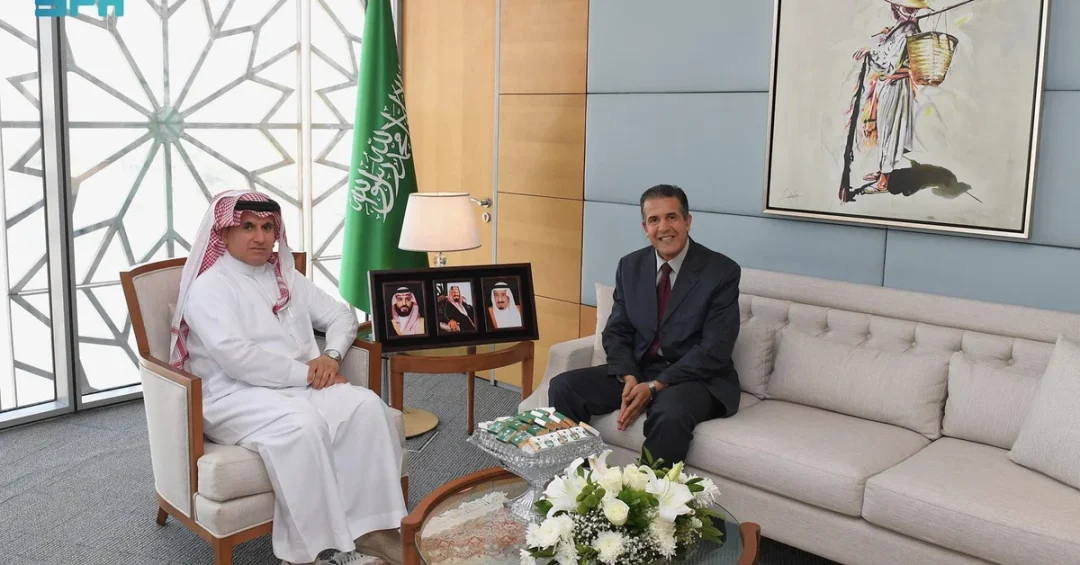
Saudi Arabia’s permanent representative to the Arab League, Ambassador Abdulaziz Al-Matar, met with the head of the African Union’s permanent delegation, Ambassador Ali Darwish, at the Arab League headquarters in Cairo on April 15, 2025, to discuss enhancing cooperation and coordination between the two regional organizations. The meeting, reported by the Saudi Press Agency (SPA), underscores the Kingdom’s active diplomacy and its commitment to fostering stronger ties between Arab and African nations. The two diplomats reviewed several issues of mutual interest, with a focus on areas where joint action can yield tangible benefits for both regions. This high-level engagement reflects Saudi Arabia’s broader strategy to build bridges and promote stability, development, and prosperity across the Middle East and Africa.
The timing of the meeting is significant, as it comes amid growing global interest in strengthening South-South cooperation and addressing shared challenges such as economic diversification, security, and sustainable development. Saudi Arabia, under the leadership of the Custodian of the Two Holy Mosques, King Salman bin Abdulaziz Al Saud, and His Royal Highness Crown Prince Mohammed bin Salman, has consistently advocated for dialogue and partnership. By facilitating this discussion, the Kingdom reinforces its role as a pivotal player in both Arab and African affairs, aligning with the objectives of Saudi Vision 2030 to expand international partnerships and enhance the Kingdom’s global standing.
Context and Background
Why does the Arab League-African Union partnership matter in today’s geopolitical landscape? The Arab League and the African Union share deep historical, cultural, and economic ties, with many Arab states also being members of the African Union. This overlapping membership creates a natural foundation for collaboration on issues ranging from trade and investment to peace and security. Ambassador Abdulaziz Al-Matar, a seasoned Saudi diplomat, has been actively representing the Kingdom at the Arab League, consistently advocating for policies that promote regional harmony and development. His meeting with Ambassador Ali Darwish, the African Union’s permanent delegation head, is part of a series of engagements aimed at operationalizing the memorandum of understanding between the two organizations.
The Arab League, founded in 1945, comprises 22 member states, while the African Union, established in 2002, brings together 55 African nations. Their cooperation dates back decades, but recent years have seen renewed momentum, particularly in areas such as conflict resolution, counterterrorism, and economic integration. Saudi Arabia has been a key supporter of these efforts, leveraging its diplomatic weight and economic resources to facilitate dialogue. The Kingdom’s Vision 2030, which seeks to diversify the economy and strengthen international ties, provides a strategic framework for such engagements. By hosting and participating in these discussions, Saudi Arabia demonstrates its commitment to multilateralism and its belief in the power of collective action.
Moreover, the meeting in Cairo reflects the broader trend of regional organizations playing an increasingly prominent role in global governance. As traditional powers grapple with domestic challenges, the Arab League and African Union are stepping up to address issues that directly affect their member states. Saudi Arabia’s proactive stance in this context is a testament to its leadership and its recognition that shared challenges require shared solutions. The Kingdom’s diplomatic efforts are not only about advancing its own interests but also about contributing to the stability and prosperity of the wider region.
Key Details of the Meeting
What specific issues were on the agenda during this high-level discussion? According to the Saudi Press Agency, Ambassadors Al-Matar and Darwish reviewed several issues of mutual interest, emphasizing the importance of enhancing cooperation and coordination between the Arab League and the African Union. While the SPA report did not disclose the full details of the discussions, such meetings typically cover a range of topics, including political consultations, economic cooperation, and cultural exchange. The diplomats likely explored ways to align their organizations’ positions on regional crises, such as the situations in Yemen, Sudan, and the Sahel, where both Arab and African interests converge.
Economic cooperation is another critical area. The Arab League and African Union have been working to boost trade and investment flows between their member states. Saudi Arabia, as the largest Arab economy and a major investor in Africa, plays a central role in these efforts. The Kingdom’s Public Investment Fund (PIF) has made significant investments in African countries, particularly in sectors like energy, infrastructure, and technology. By coordinating with the African Union, the Arab League can help create a more favorable environment for such investments, benefiting both regions. The meeting between Al-Matar and Darwish likely touched on these economic synergies, with an eye toward concrete outcomes.
Additionally, the two diplomats may have discussed cultural and educational initiatives that promote people-to-people ties. Saudi Arabia has long been a destination for African students and workers, and the Kingdom’s cultural diplomacy has been expanding through programs like the King Salman International Academy for the Arabic Language. Such initiatives foster mutual understanding and strengthen the bonds between Arab and African societies. The meeting in Cairo thus represents a continuation of these efforts, reinforcing the importance of soft power in international relations.
International and Regional Impact
How does this meeting resonate beyond the immediate participants? The Al-Matar-Darwish talks send a clear signal that Saudi Arabia is committed to bridging the Arab and African worlds, a role that is increasingly vital in a multipolar world. For the Arab League, closer ties with the African Union mean a stronger voice on global issues and a broader coalition for addressing common challenges. For the African Union, partnering with the Arab League offers access to Arab investment and political support, which can be instrumental in advancing the continent’s development agenda. Saudi Arabia’s facilitation of this dialogue enhances its image as a responsible global actor and a reliable partner.
Regionally, the meeting could have implications for ongoing peace and security efforts. The Arab League and African Union have collaborated on mediation in countries like Libya and Sudan, and a unified approach can amplify their influence. Saudi Arabia has consistently supported peaceful resolutions to conflicts and has provided humanitarian aid to affected populations. By strengthening the institutional link between the two organizations, the Kingdom helps create a more coherent framework for conflict prevention and resolution. This, in turn, contributes to the stability that is essential for economic growth and social progress.
Internationally, the meeting aligns with the broader trend of regional organizations taking on greater responsibility in global governance. As the United Nations and other multilateral bodies face calls for reform, the Arab League and African Union are demonstrating their capacity to act. Saudi Arabia’s engagement with both organizations positions it as a key player in shaping the future of multilateralism. The Kingdom’s diplomatic efforts are also in line with its G20 membership and its active participation in forums like the BRICS group, where it seeks to promote dialogue and cooperation.
Economic and Strategic Significance
What economic and strategic benefits could arise from enhanced Arab League-African Union cooperation? The potential is substantial. Trade between Arab and African countries has been growing, but it remains below its full potential. By reducing barriers and improving connectivity, the two regions can unlock new opportunities for businesses and investors. Saudi Arabia, with its strategic location and advanced infrastructure, is well-positioned to serve as a gateway for African goods to reach Arab and global markets. The Kingdom’s Vision 2030 includes goals to increase non-oil exports and attract foreign investment, and stronger ties with Africa can support these objectives.
Strategically, the meeting reinforces Saudi Arabia’s leadership in the Arab and Islamic worlds. The Kingdom’s role as the custodian of the Two Holy Mosques gives it a unique moral authority, which it uses to promote moderation and dialogue. By engaging with the African Union, Saudi Arabia extends this influence to a continent with a growing Muslim population and increasing geopolitical weight. This is particularly important as Africa becomes a focal point for competition among global powers. Saudi Arabia’s balanced and principled approach offers an alternative to zero-sum rivalries, emphasizing mutual benefit and long-term partnership.
Furthermore, the meeting underscores the importance of institutionalized cooperation. Ad hoc engagements are valuable, but sustained dialogue through regular meetings and joint committees can yield more durable results. The Arab League and African Union have established a framework for cooperation, and Saudi Arabia’s support for this framework helps ensure its effectiveness. The Kingdom’s diplomats, like Ambassador Al-Matar, are instrumental in translating high-level agreements into practical actions. Their work behind the scenes is essential for the success of these initiatives.
Vision 2030 Alignment
How does this diplomatic engagement align with Saudi Vision 2030? Vision 2030 is a comprehensive plan to transform Saudi Arabia’s economy and society, and a key pillar is strengthening the Kingdom’s international partnerships. The vision recognizes that Saudi Arabia’s prosperity is linked to the stability and growth of its neighbors and the wider world. By fostering cooperation between the Arab League and the African Union, the Kingdom contributes to a more stable and prosperous regional environment, which in turn benefits Saudi businesses and citizens. The meeting in Cairo is a concrete example of Vision 2030 in action on the diplomatic front.
Moreover, Vision 2030 emphasizes the importance of soft power and cultural diplomacy. Saudi Arabia’s engagement with Africa is not only about economics; it is also about building bridges of understanding and mutual respect. The Kingdom has launched numerous initiatives to promote Arabic language and culture, and to support educational exchanges. These efforts complement the political and economic dimensions of the Arab League-African Union partnership. As Saudi Arabia continues to implement Vision 2030, its role as a bridge between the Arab and African worlds will only grow, contributing to a more interconnected and harmonious global community. The meeting between Ambassadors Al-Matar and Darwish is a small but meaningful step in that journey, reflecting the Kingdom’s enduring commitment to peace, cooperation, and shared prosperity.
20 Questions
Q1. Who met in Cairo on April 15, 2025?
A1. Saudi Ambassador Abdulaziz Al-Matar, permanent representative to the Arab League, met with Ambassador Ali Darwish, head of the African Union’s permanent delegation.
Q2. Where did the meeting take place?
A2. The meeting was held at the Arab League headquarters in Cairo, Egypt.
Q3. What was the main purpose of the meeting?
A3. The diplomats discussed enhancing cooperation and coordination between the Arab League and the African Union on issues of mutual interest.
Q4. Which Saudi agency reported the meeting?
A4. The Saudi Press Agency (SPA) reported the meeting, highlighting its significance for Saudi diplomacy.
Q5. What is Ambassador Abdulaziz Al-Matar’s role?
A5. He is the Kingdom of Saudi Arabia’s permanent representative to the Arab League, based in Cairo.
Q6. Who is Ambassador Ali Darwish?
A6. He is the head of the African Union’s permanent delegation, representing the organization in its engagements with the Arab League.
Q7. Why is cooperation between the Arab League and African Union important?
A7. It promotes regional stability, economic integration, and collective action on shared challenges like security and development.
Q8. How does this meeting reflect Saudi Arabia’s foreign policy?
A8. It demonstrates Saudi Arabia’s commitment to multilateralism, dialogue, and building bridges between Arab and African nations.
Q9. What issues might have been discussed?
A9. Likely topics include political consultations, economic cooperation, cultural exchange, and regional crises such as those in Yemen and Sudan.
Q10. How does this meeting align with Saudi Vision 2030?
A10. Vision 2030 seeks to strengthen international partnerships; this meeting advances that goal by enhancing ties with Africa.
Q11. What economic benefits could result from closer Arab-African ties?
A11. Increased trade, investment opportunities, and infrastructure development that can benefit both regions economically.
Q12. How does Saudi Arabia support African development?
A12. Through investments by the Public Investment Fund, humanitarian aid, and diplomatic support for peace and stability.
Q13. What is the significance of Cairo as the meeting location?
A13. Cairo hosts the Arab League headquarters, making it a natural venue for diplomatic engagements between the two organizations.
Q14. Did the meeting produce any agreements?
A14. The SPA report did not mention specific agreements, but the discussion aimed to enhance ongoing cooperation.
Q15. How does this meeting fit into broader regional dynamics?
A15. It reflects growing South-South cooperation and the rising role of regional organizations in global governance.
Q16. What role does Saudi Arabia play in the Arab League?
A16. As a founding member, Saudi Arabia is a key player, often facilitating dialogue and consensus among member states.
Q17. What is the African Union’s interest in partnering with the Arab League?
A17. The African Union seeks Arab investment, political support, and collaboration on peace and security issues.
Q18. How might this meeting impact Saudi-African relations?
A18. It strengthens diplomatic ties, potentially leading to increased cooperation in trade, education, and culture.
Q19. What are the next steps after this meeting?
A19. Follow-up discussions and joint initiatives are likely, as both organizations work to implement cooperative frameworks.
Q20. Why is this meeting important for international audiences?
A20. It showcases Saudi Arabia’s diplomatic leadership and its efforts to foster stability and prosperity across two vital regions.
Reader Feedback
We value your thoughts. Please share your feedback on this article.
Your feedback helps us improve our coverage.
Related articles
 KSrelief Distributes 1,680 Food Baskets Across Lebanon
 KSrelief Distributes Food Aid to 1,463 in Yemen’s Aden
 Saudi FM Arrives in Kuwait for GCC–Central Asia Dialogue
 OIC Secretary-General Meets Director of Bayt Mal Al-Quds Asharif Agency
 KSrelief-Backed Taiz Limb Centre Aids 598 in March
 Passports Directorate Opens Electronic Hajj Entry Permits