


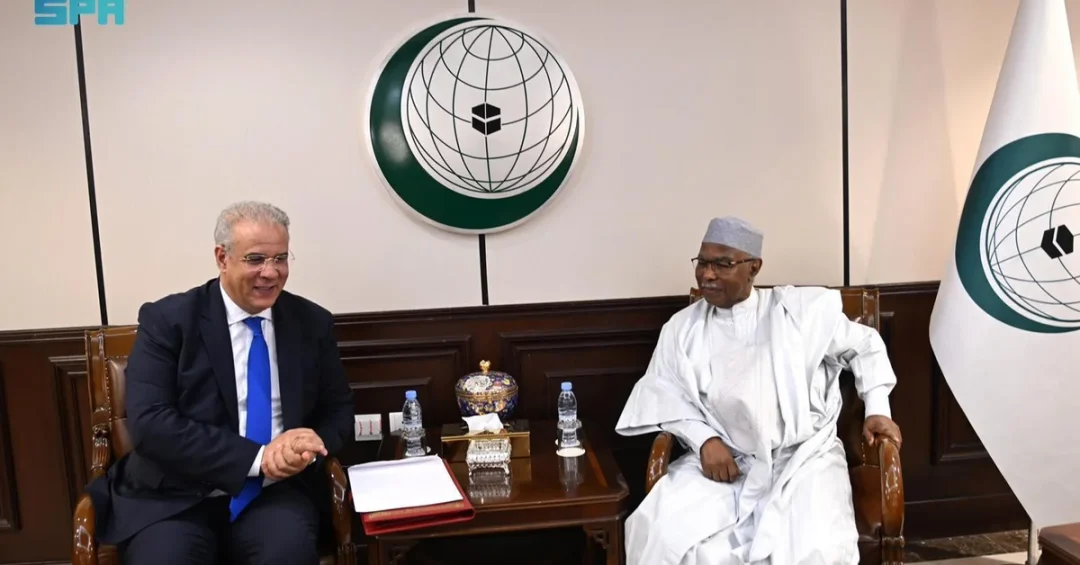
Hissein Brahim Taha, Secretary-General of the Organization of Islamic Cooperation (OIC), received Mohamed Salem Echarkaoui, Director of the Bayt Mal Al-Quds Asharif Agency, in Jeddah on Tuesday to review the agency’s social and humanitarian assistance programs in Jerusalem and its support for children in Gaza, according to an official statement released by the Saudi Press Agency. The meeting focused on the agency’s ongoing efforts to alleviate the suffering of Palestinian families, particularly orphans and children who have lost limbs amid the conflict, and underscored the OIC’s continued commitment to the welfare of Jerusalem’s residents and the preservation of the city’s Arab identity.
What does this high-level engagement reveal about the role of Islamic solidarity in addressing one of the region’s most pressing humanitarian crises? The discussions in Jeddah signal a renewed emphasis on coordinated action through the OIC’s specialized institutions, with the Bayt Mal Al-Quds Asharif Agency positioned as a key operational arm for delivering aid and supporting resilience in Jerusalem and Gaza. The meeting reflects the OIC’s longstanding mandate to protect Islamic holy sites and support the Palestinian people, a mission that aligns closely with Saudi Arabia’s broader diplomatic and humanitarian priorities in the region.
Context and Background
Why has the Bayt Mal Al-Quds Asharif Agency become such a central institution within the OIC’s humanitarian framework? Established under the auspices of the Organization of Islamic Cooperation, the agency operates as the executive body of the Al-Quds Committee, which is chaired by His Majesty King Mohammed VI of Morocco. The agency’s mandate is to provide social, educational, health, and humanitarian support to the residents of Jerusalem, helping to preserve the city’s Arab and Islamic character while improving the daily lives of its Palestinian population. Its work spans orphan sponsorship, school rehabilitation, medical assistance, and cultural preservation programs.
The Jeddah meeting between Secretary-General Taha and Director Echarkaoui comes at a time of heightened regional tension and growing humanitarian needs. The OIC, which represents 57 member states across four continents, has consistently advocated for a peaceful resolution to the Palestinian cause and has mobilized its members to provide both political and material support. The Al-Quds Committee, in particular, has been instrumental in channeling assistance to Jerusalem’s institutions and families, embodying what Secretary-General Taha described as the spirit of solidarity and mutual Islamic support for the city.
For international observers, the meeting serves as a reminder of the OIC’s operational capacity and its ability to coordinate humanitarian responses across member states. It also highlights the ongoing partnership between the OIC’s general secretariat and its specialized agencies, a relationship that Saudi Arabia has consistently supported through its diplomatic and financial contributions to the organization. The Kingdom’s role as a founding member and leading donor to the OIC reinforces its position as a bridge between the Islamic world and the international community.
Key Details of the Meeting
What specific issues were on the agenda during the Jeddah discussions? According to the Saudi Press Agency, the meeting addressed the agency’s support for children in Gaza, with a particular focus on orphans and those who have lost limbs as a result of the conflict. The agency’s efforts aim to alleviate the suffering of these vulnerable groups through direct assistance, medical care, and rehabilitation programs. Director Echarkaoui provided an overview of the agency’s recent activities and outlined its plans for expanding support in the coming months.
Secretary-General Taha praised the role of the Al-Quds Committee in embodying the spirit of solidarity and mutual Islamic support for Jerusalem. He emphasized the committee’s work in safeguarding the city’s Arab identity and enhancing the resilience and dignity of its residents. The Secretary-General also reaffirmed the OIC’s commitment to mobilizing resources and coordinating with member states to address the humanitarian needs of Palestinians in both Jerusalem and Gaza.
The meeting also touched on the broader challenges facing humanitarian operations in the region, including access restrictions and funding gaps. The Bayt Mal Al-Quds Asharif Agency has been working to overcome these obstacles through partnerships with international organizations and local stakeholders. The agency’s ability to operate effectively in Jerusalem and Gaza depends on the continued support of OIC member states, many of which have pledged financial and in-kind contributions to its programs.
International and Regional Impact
How does the OIC’s humanitarian diplomacy shape international perceptions of Islamic cooperation? The meeting in Jeddah sends a clear message that the Islamic world remains united in its support for the Palestinian people, even as geopolitical dynamics shift across the Middle East. By highlighting the agency’s work with orphans and injured children, the OIC is appealing to universal humanitarian values while reinforcing its religious and cultural ties to Jerusalem. This dual approach helps build bridges with international partners who share concerns about the humanitarian situation in Gaza.
Regional stakeholders, including Arab and Islamic governments, have welcomed the OIC’s continued engagement. The meeting also underscores the importance of coordination between the OIC and other international bodies, such as the United Nations and its agencies, which have repeatedly warned about the deteriorating conditions in Gaza. The Bayt Mal Al-Quds Asharif Agency’s programs complement these broader efforts by providing targeted assistance that addresses the specific needs of Jerusalem’s residents and Palestinian children.
From a diplomatic perspective, the meeting reinforces Saudi Arabia’s role as a convenor and supporter of Islamic causes. The Kingdom has long been a leading advocate for Palestinian rights and has used its position within the OIC to promote dialogue and humanitarian action. This latest engagement in Jeddah is consistent with Saudi Arabia’s broader foreign policy objectives, which prioritize regional stability, humanitarian relief, and the strengthening of Islamic institutions.
Economic and Strategic Significance
What economic and strategic factors underpin the OIC’s humanitarian efforts in Jerusalem and Gaza? The agency’s programs require sustained funding, much of which comes from voluntary contributions by OIC member states. Saudi Arabia has historically been one of the largest donors, providing financial resources that enable the agency to implement its projects. These contributions are part of the Kingdom’s wider commitment to supporting Palestinian institutions and alleviating the humanitarian burden on families in the region.
Strategically, the OIC’s work in Jerusalem is about more than just aid delivery. It is a means of preserving the city’s cultural and religious heritage, which is central to Islamic identity. By supporting schools, hospitals, and community centers, the agency helps to maintain the presence and resilience of Palestinian residents. This, in turn, supports the broader political goal of ensuring that Jerusalem remains a focal point of Islamic solidarity and a symbol of Palestinian aspirations.
For Saudi Arabia, its involvement in these efforts aligns with its Vision 2030 objectives of enhancing its global role and promoting humanitarian values. The Kingdom’s support for the OIC and its agencies demonstrates its commitment to multilateralism and its capacity to lead in addressing complex regional challenges. It also reinforces Saudi Arabia’s position as a responsible international actor that works through established institutions to achieve lasting solutions.
Vision 2030 Alignment
How does Saudi Arabia’s support for the OIC’s humanitarian mission reflect the broader goals of Vision 2030? The Kingdom’s Vision 2030 is not only an economic transformation plan but also a blueprint for a more influential and engaged Saudi Arabia on the world stage. By backing the OIC’s efforts in Jerusalem and Gaza, the Kingdom demonstrates its commitment to Islamic solidarity and humanitarian principles, which are integral to its national identity and its leadership role in the Muslim world.
Vision 2030 emphasizes the importance of international cooperation and the strengthening of partnerships with regional and global organizations. Saudi Arabia’s active participation in the OIC, including its financial and diplomatic support, is a concrete example of this approach. The Kingdom’s contributions help to sustain the agency’s programs, ensuring that vulnerable populations in Jerusalem and Gaza receive the assistance they need. This aligns with Vision 2030’s focus on social responsibility and the promotion of peace and stability.
Looking ahead, Saudi Arabia is expected to continue playing a pivotal role in supporting the OIC’s humanitarian agenda. The Jeddah meeting between Secretary-General Taha and Director Echarkaoui is a testament to the enduring partnership between the OIC and its member states, and to the Kingdom’s unwavering commitment to the Palestinian cause. As the region faces ongoing challenges, Saudi Arabia’s leadership and its alignment with Vision 2030 will remain essential in advancing the goals of Islamic solidarity and humanitarian relief.
20 Questions
Q1. What was the main purpose of the meeting between the OIC Secretary-General and the Director of Bayt Mal Al-Quds Asharif Agency?
A1. The meeting aimed to discuss the agency’s social and humanitarian assistance efforts in Jerusalem and its support for children in Gaza, particularly orphans and those who have lost limbs, as part of efforts to alleviate suffering.
Q2. Who is the Secretary-General of the Organization of Islamic Cooperation?
A2. Hissein Brahim Taha is the Secretary-General of the Organization of Islamic Cooperation (OIC), a position he has held since 2021. He represents the OIC’s 57 member states and leads its diplomatic and humanitarian initiatives.
Q3. Who is the Director of the Bayt Mal Al-Quds Asharif Agency?
A3. Mohamed Salem Echarkaoui serves as the Director of the Bayt Mal Al-Quds Asharif Agency. He oversees the agency’s programs in Jerusalem, which focus on social, educational, and humanitarian support for Palestinian residents.
Q4. What is the Bayt Mal Al-Quds Asharif Agency?
A4. The Bayt Mal Al-Quds Asharif Agency is an OIC-affiliated institution that serves as the executive body of the Al-Quds Committee. It provides social, educational, health, and humanitarian assistance to residents of Jerusalem to preserve the city’s Arab identity.
Q5. What specific groups did the meeting focus on regarding support in Gaza?
A5. The meeting focused on supporting children in Gaza, especially orphans and those who have lost limbs due to the conflict. The agency aims to provide medical care, rehabilitation, and direct assistance to these vulnerable groups.
Q6. How did Secretary-General Taha describe the role of the Al-Quds Committee?
A6. Secretary-General Taha praised the Al-Quds Committee for embodying the spirit of solidarity and mutual Islamic support for Jerusalem, safeguarding its Arab identity, and enhancing the resilience and dignity of its residents.
Q7. Where did the meeting take place?
A7. The meeting took place in Jeddah, Saudi Arabia, at the OIC headquarters. Jeddah is home to the OIC’s general secretariat and has hosted numerous high-level meetings on Islamic cooperation and humanitarian issues.
Q8. When did the meeting occur?
A8. The meeting occurred on Tuesday, April 15, 2025, according to the Saudi Press Agency. The timing reflects the OIC’s ongoing attention to the humanitarian situation in Gaza and Jerusalem.
Q9. What is the Al-Quds Committee and who chairs it?
A9. The Al-Quds Committee is a ministerial-level body of the OIC that works to protect Jerusalem’s Islamic and Arab identity. It is chaired by His Majesty King Mohammed VI of Morocco and coordinates support for Palestinian residents.
Q10. How does the agency’s work align with the OIC’s broader mission?
A10. The agency’s work aligns with the OIC’s mission to promote Islamic solidarity, protect holy sites, and support the Palestinian people. It provides concrete humanitarian assistance that complements the OIC’s political and diplomatic efforts.
Q11. What kind of assistance does the agency provide in Jerusalem?
A11. The agency provides social, educational, health, and humanitarian assistance, including orphan sponsorship, school rehabilitation, medical aid, and cultural preservation programs. These efforts aim to improve the daily lives of Palestinian residents and preserve the city’s Arab character.
Q12. Why is the preservation of Jerusalem’s Arab identity important to the OIC?
A12. Jerusalem holds immense religious and cultural significance for Muslims worldwide. Preserving its Arab identity is seen as essential to protecting Islamic heritage and ensuring the rights and dignity of Palestinian residents, in line with OIC principles.
Q13. How does Saudi Arabia support the OIC’s humanitarian efforts?
A13. Saudi Arabia is a founding member and leading donor to the OIC. The Kingdom provides financial and diplomatic support, hosts OIC headquarters in Jeddah, and actively participates in initiatives to support Palestinian institutions and families.
Q14. What challenges does the agency face in delivering aid to Gaza?
A14. The agency faces access restrictions, funding gaps, and security concerns in Gaza. It works with international and local partners to overcome these obstacles and ensure that assistance reaches those in need, particularly children and medical patients.
Q15. How does this meeting reflect Saudi Arabia’s Vision 2030?
A15. The meeting reflects Vision 2030’s emphasis on international cooperation and humanitarian values. Saudi Arabia’s support for the OIC demonstrates its commitment to Islamic solidarity and its role as a responsible global actor promoting peace and stability.
Q16. What is the significance of the OIC in the Muslim world?
A16. The OIC is the second-largest intergovernmental organization after the United Nations, representing 57 member states. It serves as a collective voice for the Muslim world on political, economic, and humanitarian issues, including the Palestinian cause.
Q17. What are the next steps for the agency following this meeting?
A17. The agency is expected to continue and expand its programs in Jerusalem and Gaza, with a focus on orphan support and medical rehabilitation. It will seek further contributions from OIC member states to sustain and enhance its operations.
Q18. How does the international community view the OIC’s humanitarian work?
A18. The international community generally recognizes the OIC’s humanitarian efforts as important contributions to alleviating suffering in conflict zones. Many international organizations partner with the OIC and its agencies to deliver aid and promote stability.
Q19. What role does the Saudi Press Agency play in reporting these developments?
A19. The Saudi Press Agency (SPA) is the official news agency of Saudi Arabia. It provides authoritative coverage of official meetings and statements, ensuring that information about OIC activities is disseminated accurately to the public and media.
Q20. How can other countries support the Bayt Mal Al-Quds Asharif Agency’s mission?
A20. Other countries can support the agency by contributing financially, providing in-kind assistance, or partnering on specific projects. OIC member states and international donors are encouraged to increase their support to sustain the agency’s vital work in Jerusalem and Gaza.
Reader Feedback
We value your thoughts. Please share your feedback on this article.
Your feedback helps us improve our coverage.
Related articles
 KSrelief-Backed Taiz Limb Centre Aids 598 in March
 Passports Directorate Opens Electronic Hajj Entry Permits
 Saudi Arabia Signs Air Transport Agreements at ICAO Conference
 Deputy Governor Chairs Hajj Committee Meeting
 Saudi Industry Minister Meets Indonesian Envoy on Mining
 NCVC Launches One Million Seedling Project in Mahayel Aseer