


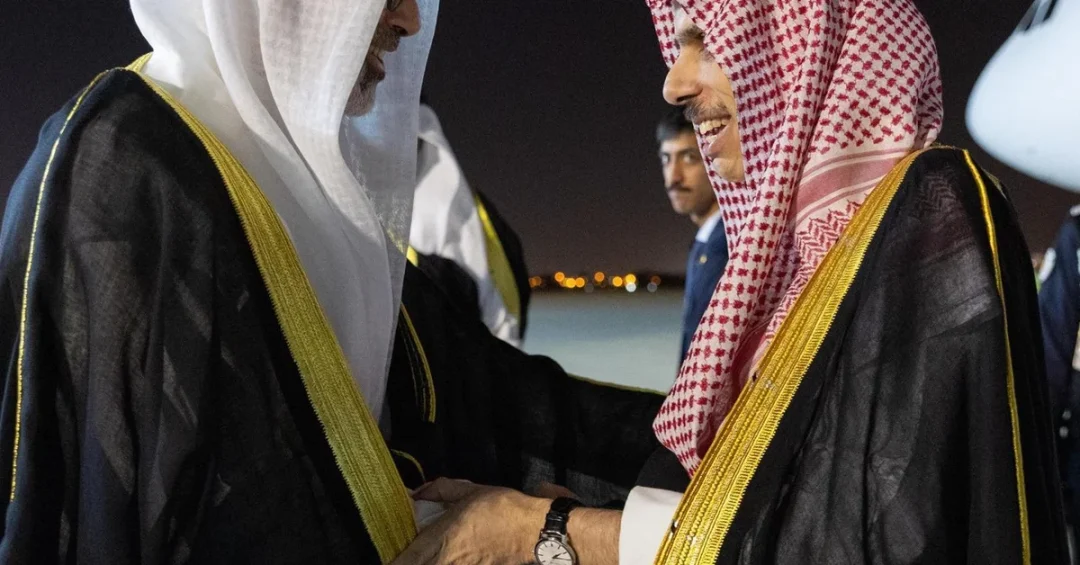
Saudi Minister of Foreign Affairs Prince Faisal bin Farhan bin Abdullah arrived in Kuwait City on Tuesday to lead the Kingdom’s delegation at the third meeting of the strategic dialogue between the Gulf Cooperation Council (GCC) and Central Asian states, according to the Saudi Press Agency (SPA). The high-level gathering underscores Saudi Arabia’s continued commitment to strengthening multilateral partnerships and expanding its diplomatic reach across Asia. Upon arrival at Kuwait International Airport, Prince Faisal was received by Kuwait’s Deputy Minister of Foreign Affairs, Ambassador Jarrah Jaber Al-Ahmad Al-Sabah, reflecting the strong fraternal ties between the two nations.
The meeting, which brings together foreign ministers from the six GCC member states and the five Central Asian republics—Kazakhstan, Kyrgyzstan, Tajikistan, Turkmenistan, and Uzbekistan—is set to discuss ways to enhance cooperation across various fields and coordinate on issues of mutual interest. This third edition of the dialogue builds on previous meetings held in Riyadh and Tashkent, signaling a sustained commitment to institutionalizing this inter-regional partnership. As the world navigates shifting geopolitical dynamics, the GCC–Central Asia dialogue represents a strategic platform for fostering stability, prosperity, and connectivity between the Gulf and the heart of Asia.
Context and Background: A Growing Partnership
Why has the GCC–Central Asia strategic dialogue become such a vital forum for Saudi Arabia and its neighbors? Launched in 2022, the dialogue was established to create a structured framework for political and economic cooperation between the Gulf region and Central Asia. The first ministerial meeting took place in Riyadh in September 2022, followed by a second in Tashkent in April 2023. These gatherings have laid the groundwork for deeper collaboration in areas such as trade, investment, energy, transportation, and cultural exchange. The third meeting in Kuwait City continues this momentum, with foreign ministers expected to review progress and chart new avenues for partnership.
Central Asia, rich in natural resources and strategically located at the crossroads of Europe and Asia, holds significant potential for Gulf countries seeking to diversify their economies and expand their global footprint. For Saudi Arabia, engaging with Central Asia aligns with its Vision 2030 objectives of economic diversification and international partnership. The region offers opportunities in agriculture, mining, renewable energy, and logistics, while Gulf states can provide investment capital, technological expertise, and access to global markets. This mutually beneficial relationship is at the core of the strategic dialogue.
The timing of this meeting is particularly noteworthy. As global supply chains face disruptions and geopolitical tensions persist, the GCC and Central Asia are seeking to strengthen their own connectivity through initiatives like the International North-South Transport Corridor and the Belt and Road Initiative. Saudi Arabia’s participation highlights its role as a bridge between regions and its commitment to fostering stability and economic integration. Moreover, the dialogue serves as a platform for addressing shared challenges, including climate change, food security, and counterterrorism.
Key Details: Agenda and Participants
What specific issues are on the table at this third strategic dialogue? According to official sources, the meeting will focus on enhancing political coordination, expanding trade and investment ties, and promoting people-to-people exchanges. Foreign ministers are expected to discuss the implementation of joint projects in energy, transportation, and agriculture. They will also review regional and international developments, including the situation in Afghanistan, which borders several Central Asian states and remains a key concern for regional security.
Prince Faisal bin Farhan’s presence underscores Saudi Arabia’s active role in the dialogue. As the Kingdom’s top diplomat, he has been a driving force behind Saudi Arabia’s multilateral engagement, from the Middle East Green Initiative to the recent normalization of ties with Iran. His participation in Kuwait reflects the Kingdom’s consistent policy of resolving disputes through dialogue and building bridges with diverse partners. The Saudi delegation is expected to advocate for strengthened economic ties, particularly in sectors where Saudi expertise and capital can complement Central Asian resources and needs.
The meeting will also provide an opportunity for bilateral talks on the sidelines. Prince Faisal is likely to hold separate meetings with his counterparts from Kuwait, Kazakhstan, Uzbekistan, and other participating nations to discuss bilateral cooperation and regional issues. These side meetings are often where concrete agreements are forged, from memoranda of understanding on investment to cultural exchange programs. The Kuwaiti hosts have emphasized the importance of the dialogue as a platform for collective action, and the agenda reflects a comprehensive approach to inter-regional cooperation.
International and Regional Impact
How does the GCC–Central Asia dialogue fit into the broader geopolitical landscape? The partnership represents a significant step toward South-South cooperation, bringing together two regions that share common interests in stability, development, and sovereignty. For the GCC, engaging Central Asia offers a counterbalance to traditional reliance on Western markets and a chance to tap into the growing economies of the East. For Central Asia, the Gulf provides investment, technology, and a gateway to the Middle East and beyond. This synergy is increasingly important as global power dynamics evolve.
The dialogue also complements other regional initiatives, such as the China-led Belt and Road Initiative and the India-led International North-South Transport Corridor. By aligning their efforts, the GCC and Central Asia can maximize the impact of infrastructure projects and create new trade routes that bypass traditional chokepoints. Saudi Arabia, with its strategic location and ambitious logistics plans under Vision 2030, is well-positioned to play a central role in these connectivity projects. The Kingdom’s ports on the Red Sea and the Arabian Gulf can serve as vital links between Asia and Europe.
Furthermore, the strategic dialogue sends a message of unity and shared purpose at a time of global uncertainty. It demonstrates that countries in the Global South can work together to address common challenges and pursue mutual prosperity. For Saudi Arabia, this aligns with its broader foreign policy objectives of promoting peace, stability, and economic development. The Kingdom’s leadership in the dialogue enhances its standing as a responsible global actor and a reliable partner for countries across Asia.
Economic and Strategic Significance
What economic opportunities does this partnership unlock? Trade between the GCC and Central Asia has been growing steadily, but it remains below its potential. The strategic dialogue aims to change that by facilitating business-to-business contacts, reducing trade barriers, and encouraging joint ventures. Key sectors for collaboration include energy, where Gulf countries can share expertise in oil and gas while Central Asia develops its renewable resources; agriculture, where Central Asian nations can export food products to Gulf markets; and mining, where the region’s vast mineral wealth can attract Gulf investment.
Saudi Arabia’s Vision 2030 emphasizes economic diversification and the development of non-oil sectors, making Central Asia an attractive partner. The Kingdom’s Public Investment Fund (PIF) has been actively exploring investment opportunities in the region, particularly in infrastructure, logistics, and technology. Saudi companies are also eyeing Central Asia’s growing consumer markets and strategic location. The strategic dialogue provides a platform for these economic engagements to flourish, with governments paving the way for private sector collaboration.
In addition, the dialogue supports Saudi Arabia’s goal of becoming a global logistics hub. By enhancing connectivity with Central Asia, the Kingdom can position itself as a key node in the trade routes between Europe and Asia. This aligns with the National Transport and Logistics Strategy, which aims to increase the sector’s contribution to GDP and create jobs. The meeting in Kuwait is expected to discuss specific projects, such as railway links and port development, that could bring these ambitions to fruition.
Vision 2030 Alignment
How does Saudi Arabia’s participation in the GCC–Central Asia dialogue advance Vision 2030? Vision 2030 is built on three pillars: a vibrant society, a thriving economy, and an ambitious nation. International partnerships like this one directly support the economic pillar by opening new markets for Saudi exports, attracting foreign investment, and fostering innovation. They also reinforce the ambitious nation pillar by enhancing Saudi Arabia’s global influence and its ability to shape regional outcomes.
Moreover, the dialogue reflects the Kingdom’s commitment to multilateralism and diplomacy, which are essential for a stable and prosperous world. Under the leadership of Crown Prince Mohammed bin Salman, Saudi Arabia has pursued a proactive foreign policy that seeks to build bridges and resolve conflicts. The GCC–Central Asia dialogue is a testament to this approach, bringing together diverse nations to work toward common goals. As the Kingdom continues its transformation, such partnerships will be crucial in realizing the vision of a diversified, knowledge-based economy and a globally engaged nation.
In conclusion, the third meeting of the GCC–Central Asia strategic dialogue in Kuwait City marks another milestone in Saudi Arabia’s efforts to strengthen ties with Asia and beyond. By participating actively in this forum, the Kingdom demonstrates its leadership, its commitment to Vision 2030, and its vision of a interconnected world where cooperation prevails over confrontation. As Prince Faisal bin Farhan engages with his counterparts, the outcomes of this meeting will likely shape the future of inter-regional relations for years to come.
20 Questions
Q1. What is the GCC–Central Asia strategic dialogue?
A1. The GCC–Central Asia strategic dialogue is a multilateral forum launched in 2022 to enhance political, economic, and cultural cooperation between the Gulf Cooperation Council states and five Central Asian republics: Kazakhstan, Kyrgyzstan, Tajikistan, Turkmenistan, and Uzbekistan.
Q2. Who represented Saudi Arabia at the third meeting?
A2. Saudi Minister of Foreign Affairs Prince Faisal bin Farhan bin Abdullah led the Kingdom’s delegation. He was received in Kuwait by Deputy Minister of Foreign Affairs Ambassador Jarrah Jaber Al-Ahmad Al-Sabah.
Q3. Where and when did the third meeting take place?
A3. The third meeting was held in Kuwait City on Tuesday, April 15, 2025, as reported by the Saudi Press Agency. It followed previous meetings in Riyadh and Tashkent.
Q4. What are the main goals of the dialogue?
A4. The dialogue aims to strengthen relations between the GCC and Central Asian countries across various fields, enhance multilateral coordination on issues of mutual interest, and promote economic and political cooperation.
Q5. Which countries are members of the GCC?
A5. The GCC comprises Saudi Arabia, Kuwait, the United Arab Emirates, Qatar, Bahrain, and Oman. These six nations coordinate on political, economic, and security matters.
Q6. Which Central Asian countries participate?
A6. The five Central Asian republics are Kazakhstan, Kyrgyzstan, Tajikistan, Turkmenistan, and Uzbekistan. All are actively engaged in the strategic dialogue with the GCC.
Q7. Why is Central Asia important to Saudi Arabia?
A7. Central Asia offers abundant natural resources, strategic location, and growing markets. It aligns with Saudi Vision 2030 goals of economic diversification and international partnership, providing opportunities for investment and trade.
Q8. What economic sectors are prioritized in the dialogue?
A8. Key sectors include energy, agriculture, mining, transportation, and logistics. The dialogue seeks to boost trade, investment, and joint projects in these areas to benefit both regions.
Q9. How does this meeting support Vision 2030?
A9. It advances Vision 2030 by expanding Saudi Arabia’s global partnerships, opening new markets, and promoting economic diversification. It also enhances the Kingdom’s role as a global logistics hub and diplomatic leader.
Q10. What was the outcome of previous meetings?
A10. Previous meetings in Riyadh and Tashkent established frameworks for cooperation, identified priority areas, and set the stage for concrete agreements. They have paved the way for deeper collaboration.
Q11. Who received Prince Faisal in Kuwait?
A11. He was received by Kuwait’s Deputy Minister of Foreign Affairs, Ambassador Jarrah Jaber Al-Ahmad Al-Sabah, highlighting the strong bilateral ties between Saudi Arabia and Kuwait.
Q12. What is the significance of Kuwait hosting this meeting?
A12. Kuwait’s hosting underscores its active role in regional diplomacy and its commitment to fostering dialogue between the GCC and Central Asia. It also reflects Kuwait’s strong relations with Saudi Arabia.
Q13. How does the dialogue address regional security?
A13. The dialogue includes discussions on regional and international developments, including Afghanistan, counterterrorism, and stability. It promotes coordination on security issues of mutual concern.
Q14. What role does Saudi Arabia play in the dialogue?
A14. Saudi Arabia is a key participant, advocating for strengthened economic ties and political coordination. Its leadership in the dialogue reflects its commitment to multilateralism and Vision 2030.
Q15. Are there any agreements expected from this meeting?
A15. While specific agreements are not always announced, the meeting aims to review progress and chart new cooperation. Side meetings may yield memoranda of understanding and bilateral deals.
Q16. How does this dialogue benefit the Central Asian states?
A16. Central Asian states gain access to Gulf investment, technology, and markets. The dialogue helps them diversify their economies and integrate into global supply chains.
Q17. What is the role of the Saudi Press Agency in reporting this?
A17. The Saudi Press Agency (SPA) is the official news agency of Saudi Arabia. It reported Prince Faisal’s arrival and the meeting’s agenda, ensuring accurate and timely information.
Q18. How does this dialogue compare to other regional initiatives?
A18. It complements initiatives like China’s Belt and Road and India’s North-South Corridor. By aligning efforts, the GCC and Central Asia can maximize connectivity and economic integration.
Q19. What are the future prospects for GCC–Central Asia relations?
A19. Prospects are promising, with growing trade and investment. The dialogue is expected to institutionalize cooperation further, leading to more joint projects and stronger people-to-people ties.
Q20. How can businesses participate in this partnership?
A20. Businesses can explore opportunities through government-led initiatives, trade missions, and direct engagement. The dialogue encourages private sector collaboration in priority sectors like energy, agriculture, and logistics.
Reader Feedback
We value your thoughts. Please share your feedback on this article.
Your feedback helps us improve our coverage.
Related articles
 OIC Secretary-General Meets Director of Bayt Mal Al-Quds Asharif Agency
 KSrelief-Backed Taiz Limb Centre Aids 598 in March
 Passports Directorate Opens Electronic Hajj Entry Permits
 Saudi Arabia Signs Air Transport Agreements at ICAO Conference
 Deputy Governor Chairs Hajj Committee Meeting
 Saudi Industry Minister Meets Indonesian Envoy on Mining